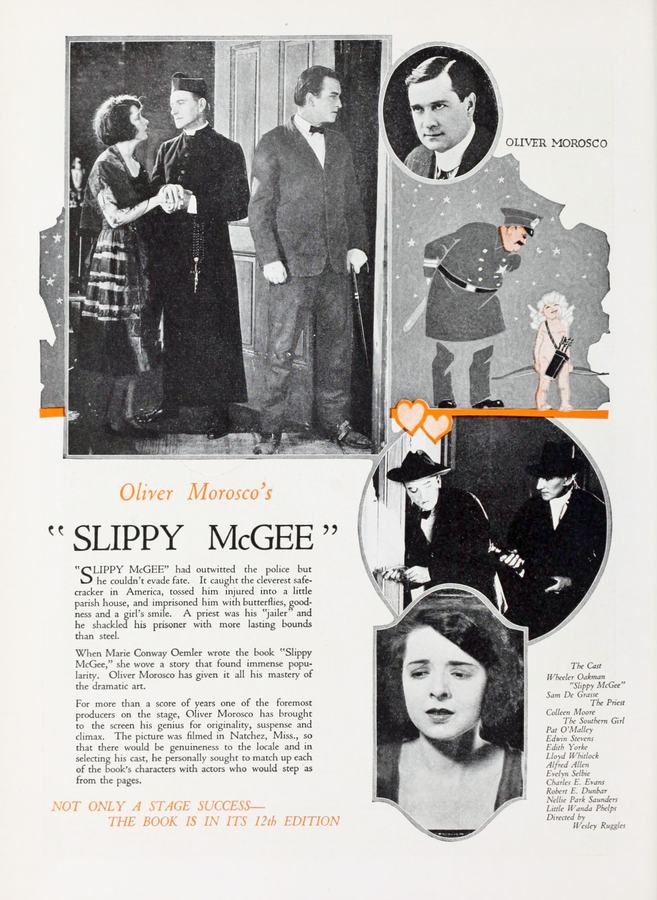
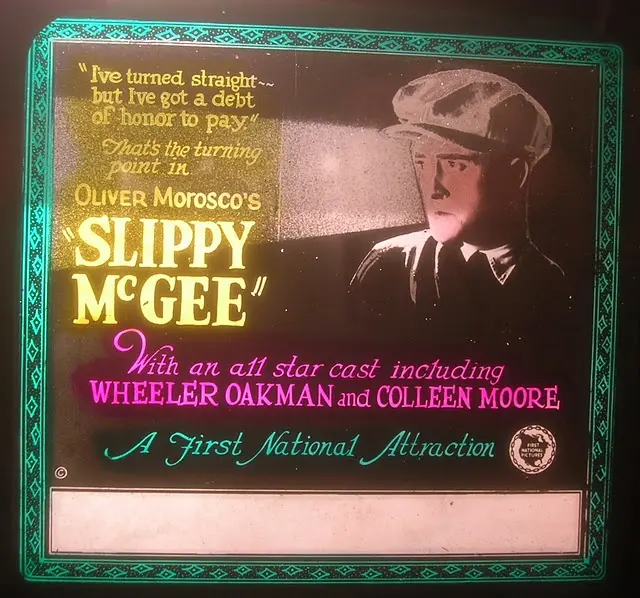
To watch Slippy McGee (1923) in the modern era is to witness the delicate machinery of early 20th-century morality plays operating at their peak efficiency. While contemporary cinema often treats redemption as a cynical marketing beat, this 1923 silent treasure treats the soul's salvage as a matter of life, death, and intricate mechanical skill. Directed with a steady hand that prioritizes character over mere spectacle, the film avoids the freneticism found in contemporaries like The Speed Girl, opting instead for a slow-burn psychological metamorphosis that feels startlingly intimate.
The Architecture of a Fallen Man
Wheeler Oakman, playing the eponymous Slippy, delivers a performance that transcends the typical gesticulations of the silent era. His initial portrayal of the 'yegg'—a safecracker with a heart of ice—is grounded in a physical arrogance that makes his subsequent maiming all the more harrowing. When his leg is amputated following an accident, the loss is not merely a plot point; it is a symbolic castration of his criminal identity. He is stripped of his mobility, his trade, and his autonomy. This stripping away is essential for the spiritual grafting that follows. Unlike the somewhat lighter tone of The Pest, Slippy McGee treats the physical cost of crime with a gravity that borders on the funereal.
The arrival of Father De Rance, played with a quiet, luminous authority by Edmund Stevens, introduces a theological weight to the proceedings. The priest does not merely offer shelter; he offers a mirror. In the quiet rectory, Slippy is confronted not with the threat of the law, but with the terrifying prospect of unconditional kindness. It is here that the film diverges from the gritty realism of The Girl of Hell's Agony, leaning instead into a pastoral idealism that feels both aspirational and deeply moving.
Colleen Moore: The Luminous Catalyst
One cannot discuss this film without centering the performance of Colleen Moore as Mary Virginia. Before she became the bob-haired icon of the Jazz Age, Moore possessed a dramatic range that was often overlooked. Her Mary Virginia is the emotional ballast of the film. She represents a purity that is not naive, but active. Her nursing of Slippy is portrayed with a tactile tenderness that avoids the saccharine traps of the period. There is a chemistry between Oakman and Moore that is built on silence and shared spaces, a far cry from the overt theatricality of The Liar.
Mary Virginia’s own heart, however, is a contested territory. Her commitment to Lawrence Mayne (played by Lloyd Whitlock) creates a tragic irony: Slippy is saved by a woman he can never truly possess. This unrequited love becomes the fuel for his transformation. He doesn't just change for her; he changes to be worthy of the world she inhabits. The film handles this with a sophistication that rivals the nuanced character work in Other Men's Daughters.
The Villainy of Social Ruin
Sam De Grasse, a veteran of cinematic antagonism, brings a chilling precision to George Inglesby. Inglesby is not a mustache-twirling villain but a social predator. His attempt to blackmail Mary Virginia into marriage using incriminating letters is a masterful depiction of how power is wielded in 'polite' society. This conflict elevates the film from a simple redemption story to a critique of class and reputation. While films like Mixed Blood explored societal boundaries through the lens of heritage, Slippy McGee explores them through the lens of leverage.
The tension that De Grasse injects into the second act is palpable. He represents the immovable force of the past—the idea that one's mistakes or family secrets can never truly be buried. He is the antithesis of Father De Rance's grace. Where the priest offers a clean slate, Inglesby offers a permanent stain. This thematic clash sets the stage for the film's most controversial and satisfying resolution.
The Paradox of the Final Job
The climax of Slippy McGee is a masterstroke of dramatic irony. To save the woman he loves from a fate worse than death, Slippy must return to the very darkness he has spent years escaping. He must use his 'cursed' skills—his ability to manipulate the tumblers of a safe—for a righteous cause. The scene where Slippy, still physically impaired, approaches the safe is filmed with a tension that anticipates the great noir capers of the 1940s. The lighting becomes more expressionistic, the shadows stretching like the fingers of his former life reaching out to reclaim him.
This 'virtuous crime' raises fascinating ethical questions. Does the end justify the means? Is a talent for theft inherently evil, or is it merely a tool? The film suggests that Slippy’s redemption is not complete until he can integrate his past skills with his new moral compass. He doesn't just forget who he was; he repurposes his old self. This complexity is often missing in simpler moral tales like Her Atonement.
Technical Mastery and Aesthetic Choices
Visually, the film is a testament to the sophistication of 1923 cinematography. The use of natural light in the rectory scenes creates a sense of divine presence, while the harsher, more contrasted lighting of the robbery sequence underscores the danger of Slippy's regression. The editing, particularly during the safe-cracking climax, is rhythmic and purposeful, avoiding the haphazard cuts seen in lesser productions like 'Twas Henry's Fault. The screenplay, adapted from Marie Conway Oemler's novel by Avery Hopwood and Edward E. Rose, retains the literary depth of its source material while translating the internal struggles of the characters into compelling visual metaphors.
The entomological motif—Slippy’s fascination with butterflies—serves as a poignant metaphor for his own metamorphosis. The crawling caterpillar of the criminal underworld becomes the winged creature of the spiritual world. It is a recurring image that provides a visual shorthand for his growth, much like the symbolic objects used in Aladdin's Other Lamp.
A Legacy of Grace
Looking back at the 1923 cinematic landscape, Slippy McGee stands out as a work of profound empathy. It doesn't judge its characters for their failures; it observes their attempts to climb out of the pits they've dug for themselves. The supporting cast, including Edith Yorke and Pat O'Malley, provide a rich tapestry of community that makes the small-town setting feel lived-in and authentic. This isn't just a story about one man; it's a story about how a community can either crush or cultivate a soul.
While it may lack the exoticism of Mysteries of India, Part II: Above All Law, its stakes are no less high. The battle for Slippy's soul is as epic as any adventure, fought in the quiet corners of a library and the cold metal of a locked safe. It reminds us that the most significant transformations are often the ones that happen in the silence between the words.
In conclusion, Slippy McGee is a quintessential example of the silent era's ability to tackle complex moral themes with grace and visual power. It is a film that demands to be seen not just as a historical curiosity, but as a vibrant, breathing piece of storytelling that still resonates with the universal desire for a second chance. It avoids the pitfalls of its era to deliver a narrative that is as sturdy and well-crafted as the safes Slippy once broke into. A true gem of 1920s cinema.