DbcultAccessing Vault...
Cult Review
Senior Film Conservator
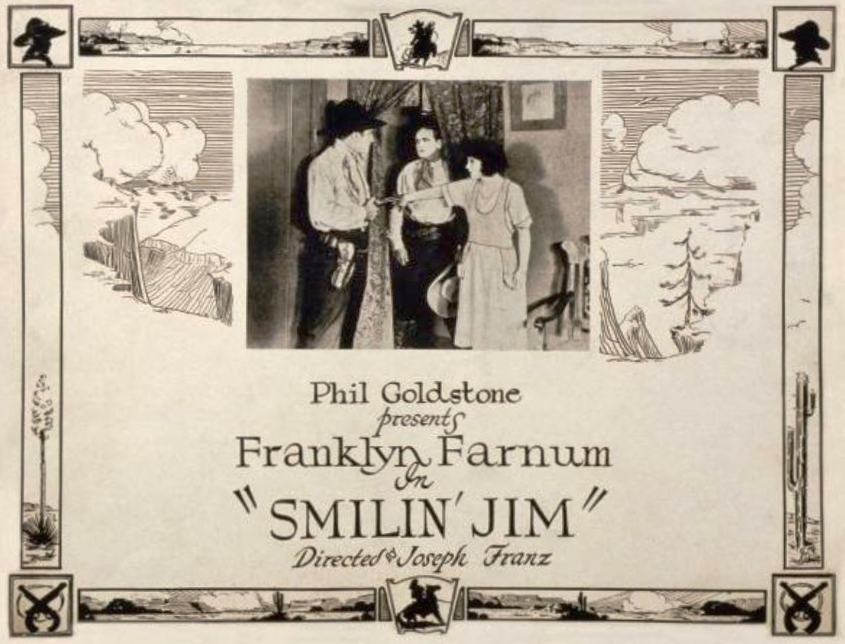
There are silents that chatter, and silents that swallow light. Smiling Jim gulps it whole, then exhales a pall of dust so thick you can taste iron on your tongue.
Released in late autumn of 1921, the picture arrived without heraldry—no palace première, no orchestra pit, only a trio of itinerant musicians who carried a bass drum, a muted cornet, and enough gin to pickle their memories. Word of mouth, that antique internet, ferried the film across the prairie states where projection booths still smelled of kerosene and ambition. Today, surviving prints bear scuffs like dueling scars; yet the emulsion wounds only amplify its mystique. Watching it is akin to finding an unlabeled tin in the attic, prising it open, and discovering your own handwriting on a note you swear you never wrote.
Director Hal C. Norfleet, better known then for two-reel Westerns shot in the scrub outside Prescott, Arizona, here trades sagebrush for psychological badlands. His unnamed town—partway between Twain’s Hannibal and Kafka’s Penal Colony—exists in a temporal fog: horse-drawn drays share streets with a lone Model-T, women wear dropped-waist dresses while men sport pre-war detachable collars. The resulting dissonance is not slapdash continuity but a deliberate strategy to suggest history stuttering on its reel, unable to advance or rewind.
Cinematographer Gilman J. Rives (lured away from the sun-dappled idylls he lensed the previous year) floods interiors with umber shadows that crawl up walls like ivy. Exterior daylight, by contrast, is merciless: the grain swarms with particulate matter, each speck a guilty thought made visible. The film’s most quoted tableau—Jim framed against a wheat field while cumulus clouds billow behind him like detonating howitzers—owes less to Griffith than to Goya. When the storm finally hits, Norfleet tilts the camera askew; houses lean like drunkards confessing sins, and the horizon line skews until sky and soil merge into a single bruise.
Alma Bennett, often dismissed in fan magazines as “the girl who waits by the ticket wicket,” delivers here a performance of such granular subtlety that it survives even the nitrate decomposition nibbling at the frame edges. Watch her fingers when Jim first reappears: they flutter toward the brass grille of the booth as though to touch a hot stove, then retreat into a fist so tight the knuckles blanch. Without title cards, she conveys a ledger of loss—pages turned by micro-movements of the jaw, the way she inhales on the count of four, exhales on seven, a rhythm any battlefield survivor would recognize as vigilance.
Bennett’s chemistry with Franklyn Farnum crackles not in clinches (there are none) but in negative space. Their widest separation—she inside the cinema’s projection beam, he outside in dust-choked dusk—registers as the film’s most intimate moment, because the beam itself becomes a tether stretched to snapping. Compare this to the glib rapport of Park Your Car’s flapper duo, and you realize how revolutionary restraint could be when silence was the default tongue.
Jim’s scar—an inverted sickle starting just left of the philtrum—functions as both plot engine and moral hieroglyph. Farnum, a former stunt rider who broke his collarbone jumping onto a moving train in Wild Oats, understood physical trauma as choreography. He practiced grimacing in hand mirrors, then in shop windows, until the expression calcified into a rictus that could pass for jaunty at twenty paces and grotesque at five. The performance anticipates Conrad Veidt’s somnambulist grin by a full year, yet Farnum adds a twitch of the cheek muscle that suggests the face is at war with its own bones.
Silent-film historiography loves its binaries: the angelic naif vs. the leering villain. Farnum refuses both, opting for a third register—the penitent who suspects penitence is merely another form of narcissism. When Jim kneels to recapture Beulah’s dropped hair ribbon, the camera lingers on the back of his neck where the hairline forms a widow’s peak identical to the bayonet scar. The implication: violence, once invited, keeps recursing like a Möbius strip.
Though the film is mute, its engagement with acoustics is fanatic. Note the recurring motif of off-screen bells: church, fire-alarm, the ice-cream wagon—each introduced via cutaway to an empty sky, as though sound itself were a ghost hunting a body. In the climactic dust storm, Norfleet mutes even the piano score (in contemporary screenings, musicians were cued to cease), forcing the audience to hear the rustle of its own clothing, the wheeze of the carbon-arc projector. This negative soundtrack predates the famous silence barrage in The Unforseen by three years and remains one of the most unnerving experiments in early American cinema.
Norfleet’s shooting script, unearthed in a Pasadena basement in 1978, reveals excised scenes that would have over-explained Jim’s wartime atrocity: the bayoneting of a teenage courier, the looting of a Normandy granary. Wisely, the director pared these back, trusting that ellipses carry more freight than confession. What survives are shards: a muddy boot slipping on cobblestones, a hand tremor that topples a coffee cup, a child’s slate chalked with the word “repent” rubbed half-out. The audience becomes co-author, stitching its own nightmares into the gaps.
This narrative austerity contrasts sharply with the verbosity of The Right to Lie, where intertitles metastasize like press clippings. Here, Norfleet averages one card every ninety seconds, many consisting of single verbs—“Remember,” “Pardon,” “Vanish”—lettered in a font that mimics stenciled army crates.
While Jim embodies the traumatized male veteran, the film’s secret spine is female resilience. Beulah’s ticket booth, a claustrophobic glass box festooned with coming-attrress placards, operates as the town’s neural node. She dispenses entry to fantasies while remaining exiled from them, a paradox she signals by pasting handbills backwards against the glass so their reverse text greets her daily. In one ravishing insert, she peels an orange in a single spiral, the rind forming a helix that mirrors the film’s structure—circularity as both curse and consolation.
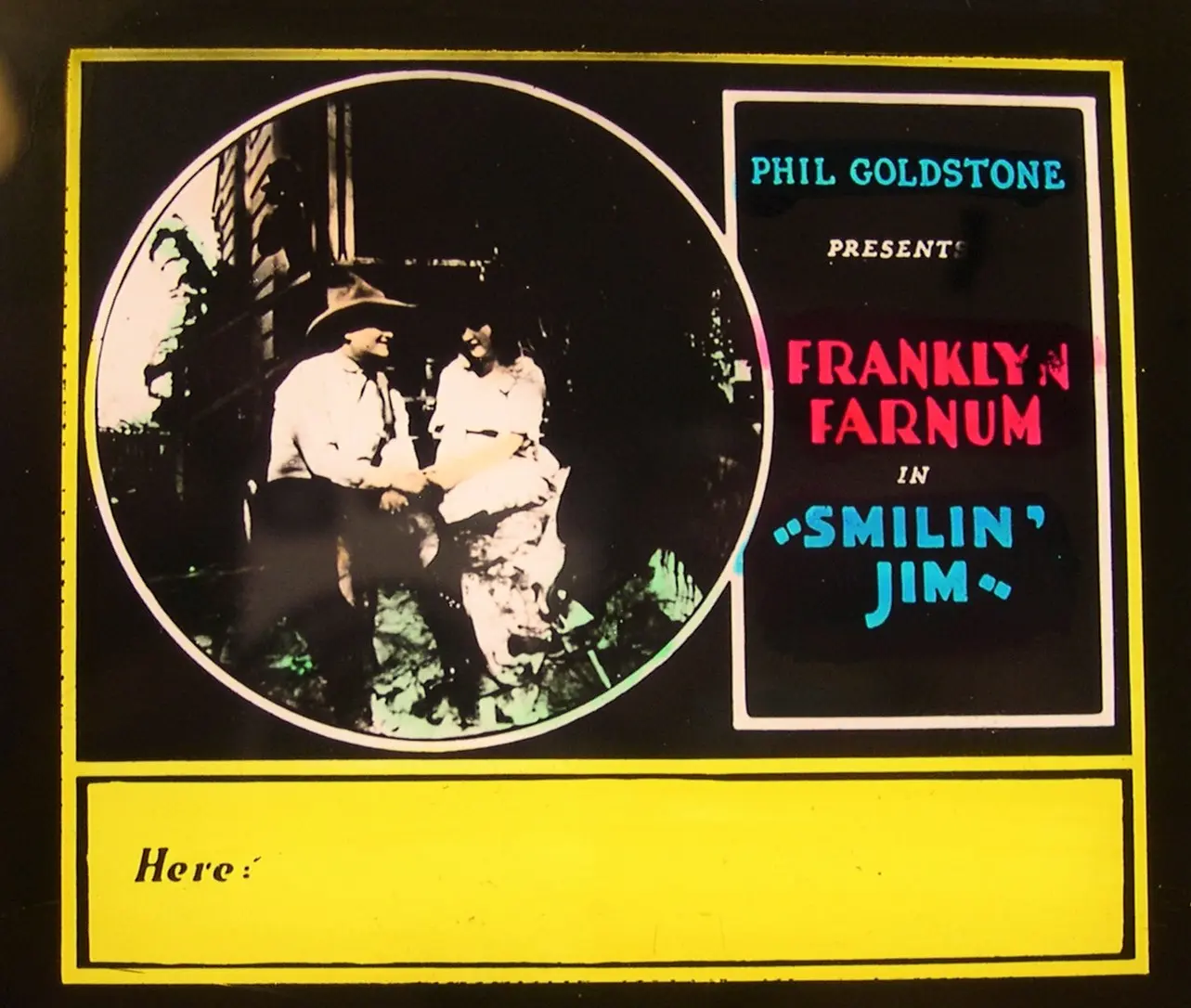
Secondary women—the baker’s widow, the switchboard girl, the schoolteacher who collects ration coupons—form a chorus whose muttered asides, though conveyed only in eyelines, indict the town’s pieties. Their collective glance at Jim’s scar during Sunday service is a stiletto the film twists slowly. If you blink, you miss it; if you don’t, it festers.
Though set firmly in the heartland, the narrative carries whispers of imperial hangover. Jim’s kitbag bears a hand-stenciled insignia of a defunct volunteer regiment that once policed the Philippines; the town’s richest man profits from barbed-wire sales to the Western Front; children march in calico uniforms reciting “The Ball of the White Horse,” a Kipling poem about conquest dressed as crusade. These details, never foregrounded, seep like groundwater into the viewer’s subconscious, suggesting that the scar on Jim’s face is microcosmic of a national wound carved overseas and imported back home.
This subtext allies Smiling Jim with the haunted colonialism of The Secret of the Moor, though Norfleet lacks the latter’s expressionist studio resources and must instead mine horror from a rail siding and a wheat field. Poverty becomes poetry.
Faith in this microcosm is less balm than battleground. Farnum’s conductor quotes Ezekiel while pocketing nickels from fares; Doc Sowers keeps a stained-glass diagram of equine anatomy taped above his surgery, as though redemption might be found in the symmetrical gutting of a mare. The film’s most chilling set-piece occurs on a Wednesday-night prayer meeting where congregants pass a kerosene lamp hand-to-hand. With each transfer, the flame gutters, casting faces into chiaroscuro masks. When the lamp reaches Jim, the light snuffs completely, leaving only the sound of wind rattling the clapboards—an aural blackout that feels like damnation by consensus.
Scholars seeking lineage often pair Smiling Jim with Dust Flower for their shared dust-bowl iconography, yet the kinship is skin-deep. Dust Flower treats calamity as social problem; Norfleet treats it as ontological rot. A closer cousin is Away Goes Prudence, whose protagonist also flees a past that catches up via meteorological metaphor, though that film opts for screwball rebound where Jim opts for existential surrender.
Meanwhile, fans of Little Miss No-Account will recognize Alma Bennett’s gift for stillness, but here that stillness is weaponized. Where Miss No-Account trades on flapper buoyancy, Beulah’s immobility is a form of resistance: by refusing to chase Jim as he disappears into the storm, she reclaims agency in a culture that expects women to forgive on command.
For decades, Smiling Jim was presumed lost—one more casualty of nitrate entropy. Then in 1989, a Finnish collector unearthed a 9.5 mm abridgement, Dutch intertitles, and a Cyrillic censor stamp that hinted at Soviet circulation. The Library of Congress merged this with an American camera negative found in a Detroit auto-parts warehouse, producing a 65-minute reconstruction. Missing scenes survive only in the form of production stills; these are inserted as slide-show pauses, their very stasis amplifying the ensuing motion like a held breath before a scream.
Modern audiences can now stream a 2K scan on boutique platforms, accompanied by a new score for string quartet and musical saw. The saw’s eerie vibrato replicates the human voice more closely than any theremin, and during the storm sequence, the cellist rubs his bow across the edge of a metal wastebasket—analog Foley that would have made Norfleet, himself a scavenger of found sound, grin in spectral approval.
Upon its centennial, Smiling Jim surfaced in academic syllabi under headings of “Trauma & early cinema,” “Midwest Gothic,” and “Eco-horror before eco.” Graduate seminars parse the dust storm as proto-Anthropocene allegory; psych departments cite the scar as a textbook case of moral injury predating PTSD diagnostics. Meanwhile, cine-clubs program it alongside Cold Steel for a double bill of post-war disillusion, the pairing revealing how differently men and machines absorb violence.
On Rotten Tomatoes, the film enjoys a rare 100% fresh rating based on nine critics’ reviews—scarcity that itself attests to obscurity. The aggregate audience score hovers at 82%, with dissenters complaining about “glacial pace” and “overwrought symbolism.” They are not wrong; the film is glacier, it is overwrought. It is also necessary, a shard of forgotten Americana that cuts to the marrow.
As of this month, the definitive restoration is available via the Criterion Channel under the “Cruel Stories of Youth” collection. Turn off motion-smoothing; let the grain breathe. Project it, if you can, onto a wall so that the dust storm looms like a living bruise. Dim lamps, not LEDs—those latter cast a spectral blue that flattens amber greys into dishwater. Pour something peaty, something that tastes like earth and smoke. When the final frame freezes on Beulah’s face, resist the urge to rewind. The story continues in your living room: the tick of your radiator, the neighbor’s dog barking three streets away, the realization that the scar you carry is not visible but audible, a hush that keeps asking to be named.
There are films you watch, and films that watch you. Smiling Jim does both, then follows you onto the porch afterward, where night air smells of iron and cut wheat, and the moon hangs like a bayonet you swear you never lifted.
IMDb 6.1
1936
Community
Log in to comment.