DbcultAccessing Vault...
Cult Review
Senior Film Conservator
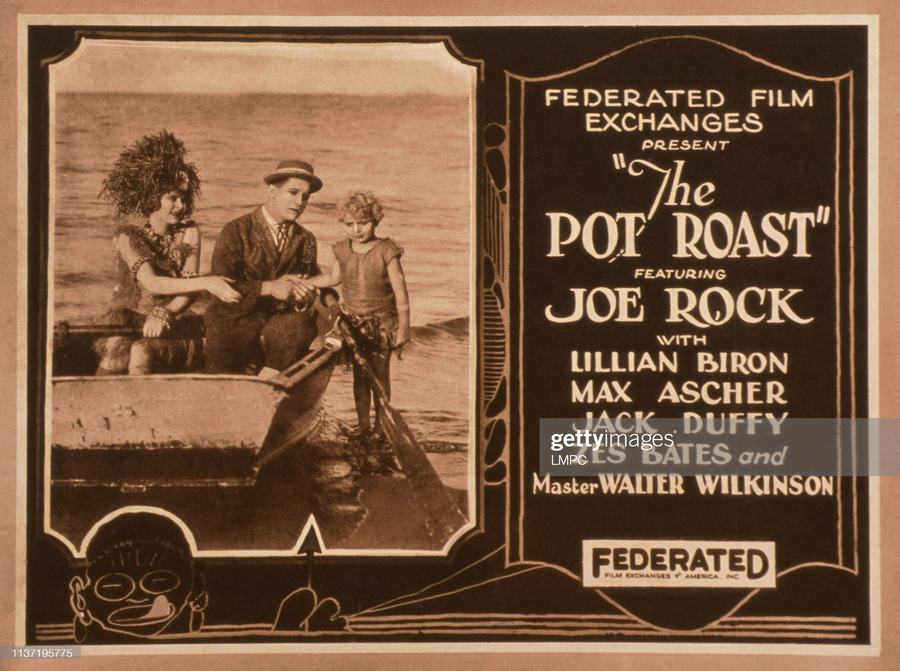
There is a moment—roughly three minutes in, if you’re counting by the flicker lines etched into the surviving 28-mm print—when the camera simply watches the roast. No actors, no titles, just the arterial glisten of beef rendered mythic under carbon-arc light. That tableau alone vaults Pot Roast from disposable one-reeler into something approaching altar-piece: a joke-stuffed meditation on American hunger, both gastric and existential.
The film’s premise reads like a Henny Youngman gag shrunk to fit a nickelodeon program: household prepares celebratory roast; roast escapes; pandemonium. Yet the execution ricochets past mere knockabout toward a cubist dissection of social strata. Max Asher’s patriarch, equal parts bourgeois jailer and anxious provider, treats the meat like a dowry for his upwardly mobile offspring. His frantic cartwheels—executed with the balletic precision Mary Pickford wished she could patent—externalize the terror that one false slip will collapse the illusion of middle-class security. Every sliding butter-knife, every airborne dumpling, becomes a referendum on 1918’s wartime ration-book psyche.
Joe Rock, whose later producing savvy would midwife the Sinbad fantasias, here embodies the trickster-proletariat. His greasepaint eyebrows semaphore Groucho a decade avant la lettre; his gangly form folds through keyholes, transom windows, even the roast’s serving platter itself. Watch how he samples gravity—skidding across a flour-dusted kitchen floor, he pauses mid-slide to sniff a bouquet of parsley as though it were Ophelia’s posy. The gag lasts maybe twelve frames, but it plants the film’s credo: appetite is performative, and performance is brief.
Jack Duffy’s police officer, walrus mustache aquiver, operates as walking metaphor for municipal incompetence. His truncheon seeks order yet instigates only entropy—mirroring the national mood as influenza stalked the home-front. Duffy’s crescendo arrives when, attempting to arrest the runaway entrée, he instead snares a lace tablecloth, yanking an entire banquet into the street. The resulting cascade—china, crystal, aspic—spills like a pageant of prosperity upended by historical trauma.
Lillian Biron, saddled with thankless ingénue duties elsewhere, here weaponizes ingenue expectation. She pirouettes between pursuers, skirt hem snapping semaphore flags warning of imminent collapse. In one sublimely nonsensical intertitle (hand-lettered, slightly smeared) she declares, “A roast lost is a future husband gained.” The line lands absurdly yet reveals the era’s transactional marriage market, where culinary prowess substituted for dowry coin.
Shot largely in over-exposed daylight that turns marble countertops into mirror-blades, the cinematographer (unsigned, as was wont) allows deep-focus clutter to teem: flypaper strips, cast-iron stoves, icebox advertisements for patriotic lard. Background detritus vibrates with lives unglimpsed, the same way Edward Hopper’s cafeterias hum with off-canvas melodrama. The roast itself—gigantic, glistening—receives halo-lighting whenever chaos pauses for breath. You half expect a choirboy to swing a thurible of onion fumes.
Comedy, Buster Keaton insisted, is mathematics—set-up, payoff, acceleration. The anonymous editors of Pot Roast flunked that algebra gleefully. Scenes end on half-beats; characters exit frame then inexplicably re-enter from the same vector, as though space itself were dyslexic. The resulting disorientation weaponizes viewer expectation: just when you’ve braced for punchline, a stray cat launches through foreground, or a coal scuttle topples, or a random title card screams “MONDAY!” in 96-point Bodoni. The joke is less the gag than the arrhythmia.
Archival notes indicate the reel toured with a synchronized “chef’s orchestra”—pots, pans, wooden spoons struck in time. Contemporary festival programmers often pair it with nuevo-percussion scores; I prefer the vacuum. Let the splice-lines click like metronomes, let the vinegar tang of nitrate seep through the room. Silence amplifies the film’s thesis: abundance is noise; loss is echo.
Released weeks after the Armistice, Pot Roast channels shortages and ration-fatigue into carnival. Government posters urged citizens to observe “Meatless Tuesdays”; the film retorts with a bacchanalia of protein. Yet the roast’s eventual annihilation—devoured by street mongrels as society’s pillars grovel in flour—reads less triumph than fatalistic shrug: enjoy excess while you can; tomorrow we may queue for turnip water.
Compare it to the same year’s Form, an experimental animation preaching modernist abstraction, or to Dick Whittington’s feline mercantile fantasy. Where those chase higher art, Pot Roast wallows in the gutter of appetite, discovering there a mirror held to national psyche.
Notice how the men compete to consume while the women compete to serve. Biron’s character never tastes the prize; her triumph lies in reclamation, not ingestion. The film thus encodes patriarchal dread: if women renounce the serving spoon, the feast—and by extension civilization—turns savage. Yet the closing image undercuts that dread: the roast reduced to gristle, Biron strolls away arm-in-arm with Rock’s hobo, leaving Asher’s patriarch choking on a sprig of parsley. Revolution, the film whispers, may begin in the kitchen, but it ends on the rooftop.
For decades historians listed Pot Roast among the lost weekend casualties, until a 2019 eBay auction coughed up a vinegar-tinted 28-mm dupe. Restored by Bologna’s lab, the print still bears scabs: emulsion bubbling like hot fat, scratches that resemble claw-marks. Imperfection becomes aesthetic—Cavellian “doomed to be repeated” aura. Each fleck reminds viewers the film itself, like the roast, barely survived the gauntlet of time.
Place it beside A Broadway Cowboy’s urbane swagger and you see Pot Roast’s urbanity inverted: both trade on city velocity, yet where Cowboy woos with rhinestone confidence, Roast courts via gastrointestinal anxiety. Stack it against submarine prison-melodrama and you find mirrored claustrophobia—domesticity as submerged terror.
Modern food television fetishizes the table; Pot Roast fetishizes the chase, reminding us consumption begins with pursuit. In the era of swipe-to-order dinners, the notion that supper might outrun us feels both quaint and apocalyptic. The film ends not on reconciliation but on belch; the mongol dogs gnaw bones, the humans nurse bruised ribs and egos. Curtain. No moral, unless the moral is entropy seasoned with parsley.
Seek it out when the archive visits your city; bring bib and skepticism. For 22 minutes the roast gallops, the social order wobbles, and cinema’s first law—images move, therefore we laugh—asserts itself with the blunt elegance of a cast-iron skillet to the occiput. You will exit both ravenous and relieved dinner escaped unscathed—this time.
IMDb —
1925
Community
Log in to comment.