DbcultAccessing Vault...
Cult Review
Senior Film Conservator
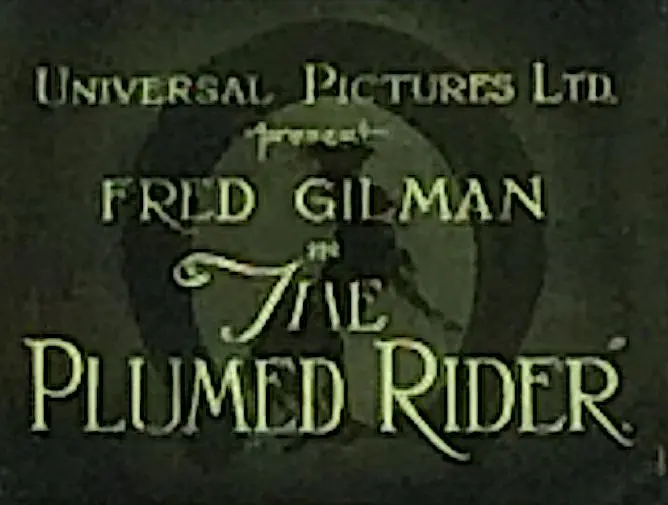
No, 'The Plumed Rider' is not a film for everyone, nor is it a forgotten classic waiting to be rediscovered. It is, however, a curious artifact for a specific audience. This early Western, featuring Fred Gilman, offers a peculiar look at the nascent grammar of cinematic storytelling, but its narrative thinness and often stiff execution will test the patience of most.
This film works because it offers an unvarnished glimpse into the raw, unpolished energy of a filmmaking era still figuring out its own language. Its value lies almost entirely in its historical context, showing a genre in its infancy, before sophisticated techniques or complex narratives became standard. Fred Gilman, while not a nuanced performer, possesses a certain physical presence that anchors the rudimentary action sequences.
This film fails because its plot is almost non-existent beyond a series of simple actions and reactions. The acting is largely wooden, the pacing often feels arbitrary, and there's a profound lack of emotional depth to anything happening on screen. It never manages to transcend its technical limitations to deliver genuine engagement.
You should watch it if you are a serious film historian, a student of early American cinema, or someone with an exceptionally high tolerance for primitive storytelling and a keen interest in observing the foundational elements of a genre taking shape. For a casual viewer, it will likely prove frustratingly inert.
'The Plumed Rider' functions less as a story and more as a demonstration of basic Western iconography. We see horses, dusty trails, and a solitary figure in a distinctive hat – the 'plume' itself is almost more interesting than the character beneath it. The camera often feels like it's simply documenting events rather than interpreting them, frequently static, capturing scenes with a functional rather than artistic eye. There's a particular shot of Gilman riding across an open plain that feels less like a dramatic moment and more like a simple recording of a man on a horse.
The pacing is peculiar, a common trait in films of this period. Scenes can linger for an uncomfortable length, seemingly waiting for something to happen, only to cut abruptly to an entirely new situation with little establishing context. This creates a disjointed experience, almost like flipping through a series of still photographs that occasionally animate. The chases, which should be the film's energetic core, often feel more like a leisurely trot than a desperate pursuit.
William Berke, credited as writer, seems to have been working with a template rather than a script. The narrative beats are predictable: arrival, minor conflict, a chase, resolution. There's no real sense of escalation or genuine danger. The world of 'The Plumed Rider' feels small, almost like a stage play shot outdoors, lacking the expansive, mythic quality that even slightly later Westerns would achieve. Compare this to the more deliberate visual storytelling in something like The Spy, and the differences in ambition become apparent.
Fred Gilman, as the titular Plumed Rider, embodies the early silent film actor's dilemma: how to convey emotion without words, often with limited directorial guidance. Gilman primarily relies on broad, physical gestures and a general stoicism. He is a capable horseman, no doubt, and his movements are athletic when called for. But his face, largely impassive, offers little insight into any inner turmoil or motivation his character might possess.
When he's meant to be determined, he squints. When surprised, his eyes widen slightly. It's a performance that tells you what's happening externally, but never what's happening internally. This isn't necessarily a fault of Gilman alone; it's indicative of the acting conventions of the time. However, it does make connecting with the character a challenge. He's a prop, albeit a very active one, around which the sparse plot revolves.
His interactions with other characters are similarly functional. There's no detectable chemistry, no nuanced exchange of glances, just people occupying the same frame, performing their designated actions. The emotional stakes, if they exist at all, remain entirely on the surface. You never feel for the Plumed Rider, nor do you particularly root for him. He simply exists, moving from one point to the next, much like a piece on a board game.
There's a certain raw charm to 'The Plumed Rider' that comes purely from its age and its lack of sophistication. It feels handmade, almost accidental in its composition. The rough editing, the inconsistent shot composition, the lack of continuity between cuts – these aren't flaws in the modern sense, but rather markers of a medium still finding its footing. It’s a document of trial and error.
However, this 'charm' has its limits. For all its historical interest, the film struggles to maintain even a basic level of engagement. The novelty of seeing early cinema wears off quickly when the narrative offers so little in return. Unlike films such as Dolly's Vacation, which might offer a comedic spark, or The Broken Violin, which hints at more complex emotional dynamics, 'The Plumed Rider' remains stubbornly simplistic.
Its technical shortcomings are not just quaint; they actively impede the storytelling. The visual quality, while understandable for its era, is often murky, making it difficult to discern details. The intertitles are sparse and functional, providing minimal context. This isn't a film that feels ahead of its time; it feels very much of its time, and perhaps even a little behind its more ambitious contemporaries. Its historical value is often overstated compared to its actual viewing pleasure.
'The Plumed Rider' exists primarily as an academic curiosity. It offers a straightforward, if rudimentary, example of the early Western, showcasing the bare bones of a genre that would soon become a cornerstone of American cinema. While its historical significance as an artifact is undeniable, its artistic merit and entertainment value for a contemporary audience are severely limited. Watch it if your interest is purely in the evolution of film; otherwise, there are countless more engaging silent Westerns to explore.
IMDb —
1920
Community
Log in to comment.