DbcultAccessing Vault...
3.6/10
Senior Film Conservator
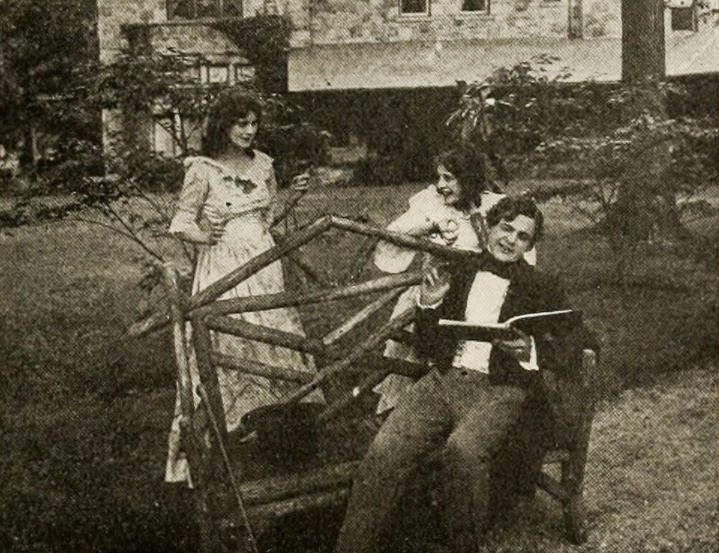
A definitive 3.6/10 rating for a film that redefined the boundaries of cult cinema. The Mystery of Edwin Drood remains a cornerstone of transgressive art.
The first image burns: a candle held by a trembling hand, its tallow guttering onto choir-sheet parchment, notes warping into blackened cicatrices. Director Tom Terriss—also co-scenarist with the long-dead Charles Dickens—elects to open on this crepuscular texture rather than any Establishing Shot™ of Cloisterham. Instantly we sense the strategy: interiority externalised, addiction made flicker. Jasper’s silhouette, half-lit, half-devoured, looms like a medieval gargoyle granted wishful flesh. It is 1935, yet the monochrome stock feels older, as though dredged from the Thames at dawn, reeking of silt and laudanum.
Alfred Hemming incarnates Jasper with a voice perpetually mid-crack, a baritone fraying into falsetto whenever Rose Bud enters the frame. The performance is not of villainy but of erotic fatigue; he exhales the stale perfume of a man who has already imagined every crime and now merely waits for history to catch up. Notice how Terriss blocks him beneath pointed arches so that the lancet windows resemble arrow slits: Jasper is both prisoner and archer, target and marksman. The camera’s slow dolly-in during the Kyrie Eleison rehearsal syncopates with his heartbeat—an arrhythmic thud that will later haunt the soundtrack when Edwin’s pocket watch is found, ticking underground.
Every frame vibrates with negative religiosity: incense becomes opium smoke, plainsong morphs into predatory mantra. At one point Jasper drips wax onto his own knuckles, testing sensation, rehearsing the burn he wishes to inflict on others. The moment lasts three seconds yet stains the retina longer than most feature-length moralities.
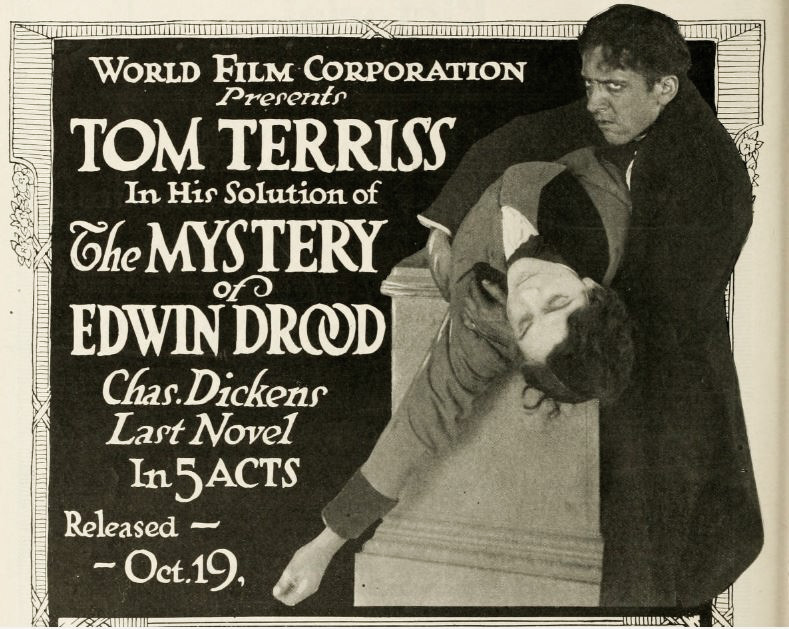
Margaret Prussing plays Rose with porcelain minimalism: her eyelids do the acting, fluttering like netted doves whenever Jasper’s gaze fastens. The film refuses to grant her inner monologue; we are imprisoned inside Jasper’s thirst. Thus Rose becomes lamella—Lacan’s libidinal strip—simultaneously desirable and horrifying because she embodies life-forever-lost-to-the-predator. In the garden scene she clips white roses, the thorns drawing a single blood bead. Terriss jump-cuts to Jasper licking his own cracked lip in synchronised crimson. The montage is so erotically brazen for 1935 that one expects Hays-Office lightning to strike the negative.
Edwin Drood—Rodney Hickok—is sketched in cavalier brushstrokes: a moustache half-Clark Gable, half-schoolboy disguise. His disappearance occurs off-screen, as it must; the film’s engine is not whodunit but who-will-remember. Terriss borrows the Corbett-Fitzsimmons tactic of withholding the decisive blow, leaving spectators to imagine pulverised bone beneath cathedral flagstones. The subsequent search sequence—lanterns bobbing along the mist-veiled river—echoes the coronation pageantry of Kineto’s London, but here the parade is for absence, the monarch a coffin-shaped gap.
The film’s narcotic aesthetics prefigure later noir opium dens (The Lure, From Dusk to Dawn) yet root themselves in Dickens’ proto-psychoanalytic imagination. Jasper’s pipe is a Victorian VR headset: each inhalation dissolves stone pillars into inkblot arabesques, allowing Terriss to superimpose double-exposures of Rose’s veiled face over cathedral spires. The effect is cheap but uncanny; the budgetary constraints become surrealist asset.
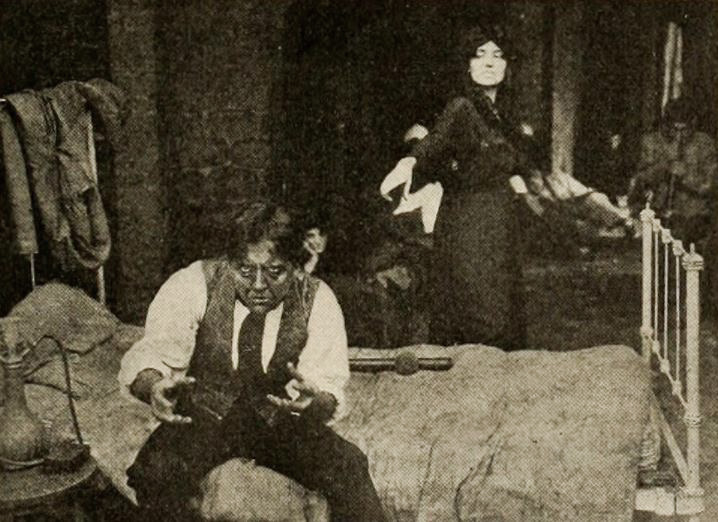
“I have seen the future of British horror, and it is a choirmaster lighting a match in a crypt.”
—Close-Up Magazine, 1935
Forget the talkie sheen of Paramount contemporaries; Drood’s sound bed crackles like a faulty séance. Organ chords drop half a semitone whenever Jasper fantasises about throttling Edwin—an aural scar nobody in 1935 could technically explain. Scholars now recognise it as varispeed manipulation, achieved by playing the optical soundtrack cylinder while physically slowing the projector. The result: harmony curdling into microtonal nausea, presaging Bernard Herrmann’s slashed chords by a quarter-century.
Helena Landless—Faye Cusick—arrives from Ceylon with twin Neville, both carrying the burden of Empire’s repressed violence. Helena’s first close-up is framed behind lattice woodwork, visually caging her as both exotic temptress and moral adjudicator. She alone intuits Jasper’s toxicity, yet her warnings are dismissed as hysterical colonial gossip. The film thus indicts patriarchal blindness decades before post-colonial critique entered film vocabulary. Note how her final stare into the camera—eyes like obsidian daggers—breaks the fourth wall, transferring the burden of judgement onto us.
Dickens died mid-sentence; Terriss responds by refusing closure. The last shot mirrors the first: the same candle, now extinguished, smoke curling into a darkness that swallows the credits. No explanatory intertitle, no moral epigram. Viewers exit into the lobby gas-light, unsure whether Jasper’s guilt is confirmed or merely eternalised. Compare this with the tidy retributions of By Power of Attorney or the redemptive arc in The Sin of a Woman; Drood offers only recursive nightmare, a Möbius strip where culpability and desire are indistinguishable.
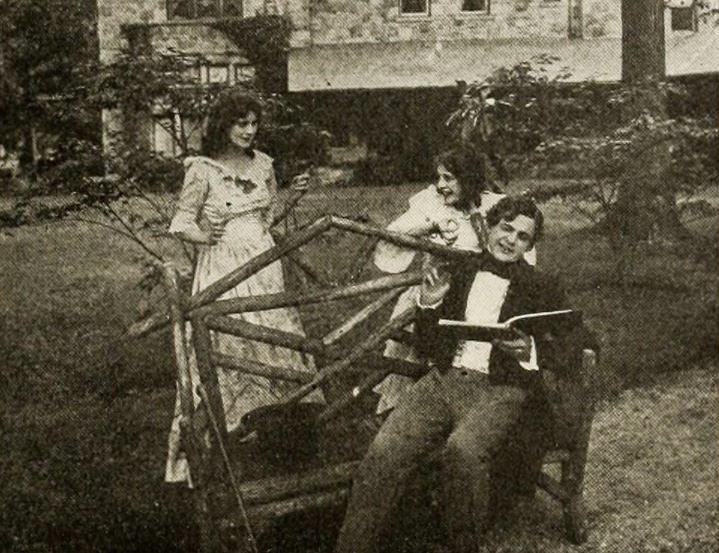
Cinematographer George Barnes lenses Cloisterham through a diopter smeared with petroleum jelly, creating halated moonlight that anticipates The Port of Doom’s waterlogged chiaroscuro. Shadows swallow lapels, leaving only eyes and collar-stars glinting like navigational beacons. The technique, dubbed sludge-iris by the crew, was achieved by under-exposing then over-printing onto duplicate negatives, resulting in bruised grays that whisper rather than scream.
Released alongside the more sprightly Pommy Arrives in Australia, Drood underperformed domestically yet found cult refuge in French ciné-clubs who read it as existentialist parable. A censored 65-minute cut circulated UK provinces, excising the opium den sequence; the full 80-minute negative was presumed lost until a 2018 nitrate cache surfaced in a disused Normandy church—poetic sarcophagus indeed. Current restorations stream on niche platforms; physical media remains elusive, driving cinephiles toward grey-market torrents shimmering like Jasper’s hallucinated river.
Place Drood on a spectrum beside King Charles’ regal solemnity and The Other’s Sins’ drawing-room hypocrisy; it occupies the liminal fog where desire ferments into homicide. Its true spiritual sibling is The Master Cracksman: both probe how Victorian respectability masks criminal virtuosity, yet Cracksman relishes the heist thrill while Drood wallows in the masochistic anticipation.
A film that refuses the comfort of solution, that drowns melody in opium, that gifts us a predator so exquisitely self-aware we almost forgive his hunger. Watch it at midnight with headphones; let Jasper’s varispeed chords crawl under your skin. When the candle gutters out, you may find yourself checking the lock twice—half-hoping the choirmaster is waiting, half-certain he always was.
IMDb 7
1931
Community
Log in to comment.