DbcultAccessing Vault...
Cult Review
Senior Film Conservator
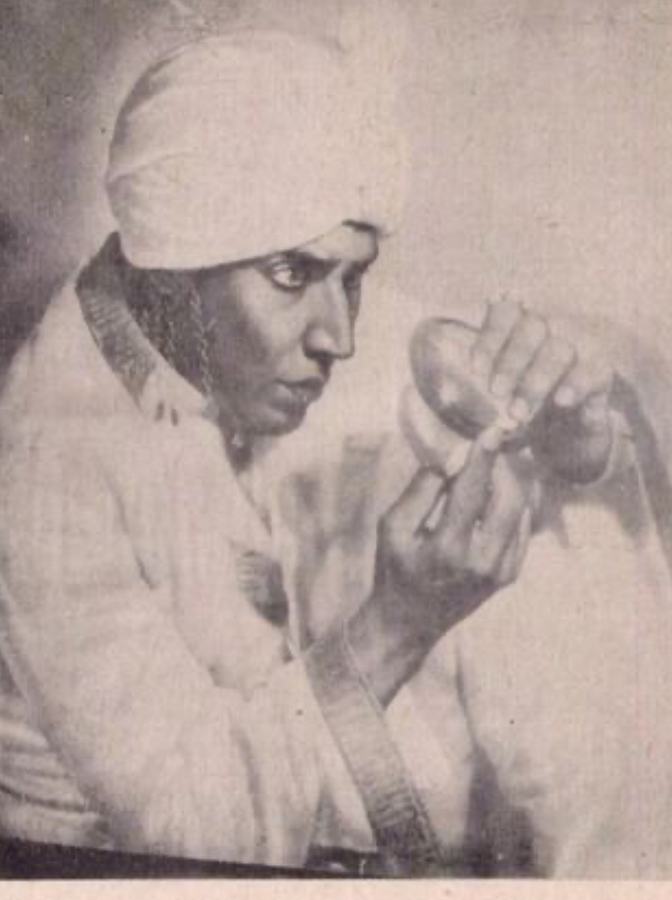
Stepping into the world of Al-Maharaja's Revenge is akin to unearthing a forgotten treasure from the annals of cinematic history. This isn't merely a film; it's a grand, sweeping epic that delves into the very core of human nature, exploring themes of betrayal, honor, and the relentless pursuit of justice. From its opening frames, the picture establishes a palpable sense of gravitas, drawing the viewer into a meticulously crafted universe where political intrigue and personal vendetta intertwine with devastating consequences. The narrative's intricate tapestry is woven with threads of deception and destiny, presenting a story that, despite its seemingly familiar premise of a wronged heir, manages to feel fresh and profoundly impactful through its execution and the sheer force of its performances.
The film's most potent asset, undoubtedly, is the commanding presence of Youssef Wahbi. As the estranged prince, he delivers a performance that transcends mere acting; it's an immersive embodiment of a soul consumed by a righteous quest. Wahbi, known for his ability to convey profound emotion with subtle gestures and piercing gazes, brings an unparalleled depth to his character. We witness his transformation from an unassuming, almost naive young man, unaware of his regal heritage, to a formidable strategist, meticulously plotting the downfall of those who usurped his family's throne. His portrayal is a masterclass in controlled intensity, oscillating between moments of quiet introspection and explosive declarations of intent. The weight of his lineage, the burden of his father's memory, and the immense responsibility of restoring justice to his people are all palpable in every frame he occupies. His journey is not one of straightforward vengeance but a complex psychological odyssey, making him an enduring figure in the pantheon of cinematic heroes.
The thematic richness of Al-Maharaja's Revenge is truly its beating heart. At its core, it is a meditation on the nature of justice itself. Is it merely an eye for an eye, or something far more profound – a restoration of balance, a reclamation of truth? The film posits that true revenge lies not in mirroring the cruelty of one's oppressors, but in dismantling their power structure with intellectual superiority and moral fortitude. This nuanced approach elevates the narrative beyond a simple action-revenge flick, imbuing it with a philosophical depth that resonates long after the credits roll. The concept of identity also plays a crucial role. Wahbi's character grapples with who he is versus who he is destined to be, a struggle that informs much of his internal conflict and external actions. His adopted identity serves not as a shield, but as a weapon, allowing him to navigate the treacherous waters of the court undetected, gathering intelligence and forging alliances under the very noses of his enemies. This layered exploration of selfhood is a testament to the film's sophisticated writing.
Visually, the film is a spectacle, even by today's standards. The cinematography immerses the audience in the opulent, yet often suffocating, world of Chandragarh. Grand palaces, intricate costumes, and lush landscapes are captured with an artistic sensibility that speaks volumes about the era it depicts. The use of shadow and light is particularly striking, often mirroring the moral ambiguities faced by the characters. Dark, cavernous interiors frequently symbolize the clandestine plots unfolding, while expansive, sun-drenched exteriors hint at the hope for a brighter, more just future. The direction masterfully balances intimate character moments with sweeping crowd scenes, ensuring that the personal stakes are never overshadowed by the grandeur of the setting. Each frame feels deliberately composed, contributing to an overall aesthetic that is both luxurious and deeply atmospheric. One can almost feel the weight of history and the tension of political maneuvering emanating from the screen.
The narrative structure of Al-Maharaja's Revenge is a testament to skillful storytelling. It eschews a linear, predictable path, instead opting for a methodical, almost investigative unfolding of events. The audience is privy to the prince's meticulous planning, his calculated risks, and the subtle manipulations he employs to achieve his objectives. This slow burn approach builds an incredible amount of tension, making the eventual confrontations all the more impactful. The pacing, while deliberate, is never languid; every scene serves a purpose, advancing either the plot or the character development. There are moments of heart-stopping suspense, particularly as Wahbi's character skirts perilously close to discovery, reminiscent of the intricate cat-and-mouse games seen in films like Trapped in the Air, though here the stakes are not just personal freedom, but the fate of an entire kingdom. The film's ability to maintain a high level of engagement despite its length is a mark of its enduring quality.
Comparatively, Al-Maharaja's Revenge stands tall against other cinematic narratives of its time, and even those that followed. While it shares thematic echoes with tales of political upheaval and personal vendetta, it carves out its own distinct identity. The complex interplay of loyalty and betrayal might bring to mind the intricate power dynamics explored in Held by the Enemy, but Al-Maharaja's Revenge elevates these concepts through its exploration of cultural identity and the specific nuances of a princely state. The film's focus on a protagonist fighting for a lost birthright and the restoration of a noble lineage offers a more profound resonance than a mere skirmish. Similarly, the romantic subplot, handled with a delicate touch, avoids cliché, reminiscent of the nuanced emotional struggles in A Fight for Love, but in Al-Maharaja's Revenge, love often becomes another pawn in the grand game of power, adding layers of sacrifice and difficult choices for our hero.
The moral landscape of the film is not painted in stark black and white, but in shades of grey, allowing for a more intellectually stimulating experience. The antagonist, Prime Minister Jairaj, is not a cartoonish villain, but a man driven by ambition and a warped sense of entitlement. His motivations, while deplorable, are understandable within the context of unchecked power, making him a more compelling foil for Wahbi's righteous prince. This complexity of character is a hallmark of superior storytelling, where even the forces of evil possess a certain human dimension, however twisted. This nuanced portrayal of villainy ensures that the audience's engagement remains high, as the conflict feels less like a simple good-versus-evil struggle and more like a clash of deeply held, albeit opposing, ideologies. It's a testament to the script's depth that it avoids simplifying human motivations for the sake of clear-cut heroism.
One cannot discuss Al-Maharaja's Revenge without acknowledging its societal commentary. While set in a fictional past, the film subtly critiques the corrupting influence of absolute power and the fragility of justice in the face of unchecked ambition. It serves as a potent reminder that even the most benevolent systems can be undermined by human avarice and deceit. The plight of the common people, suffering under the tyrannical rule of Jairaj, is subtly depicted, providing a powerful backdrop for the prince's personal crusade. His fight is not just for his family's honor, but for the welfare of his kingdom, transforming his revenge into an act of profound patriotism and duty. This societal dimension elevates the film beyond a personal drama, making it a timeless commentary on governance and the responsibility of leadership. It echoes the kind of social consciousness sometimes found in films like Race Suicide, though with a different focus on the mechanisms of societal decay.
The climax of Al-Maharaja's Revenge is a masterstroke of dramatic tension and emotional release. It eschews gratuitous violence in favor of a meticulously crafted public revelation, where truth, rather than brute force, becomes the ultimate weapon. Wahbi's character, having spent years in the shadows, finally confronts his adversary in a setting designed to expose his treachery to all. The scene is a tour de force of acting and direction, with every line, every expression, carrying the weight of years of suffering and meticulous planning. The audience is held captive, watching with bated breath as the layers of deceit are peeled away, culminating in a deeply satisfying moment of justice. This profound denouement solidifies the film's message: that true revenge is not about destruction, but about restoration, about setting right the wrongs that have festered for too long. It’s a powerful conclusion that resonates with the themes of destiny and consequence, much like the intricate unfolding of fate in A Game with Fate, but with a more triumphant and redemptive arc.
The meticulous attention to detail in the film's production design further contributes to its immersive quality. Every set, every prop, every piece of costume feels authentic to the period and culture it aims to represent, creating a believable and vibrant world for the story to unfold within. This dedication to verisimilitude is crucial in an epic of this scale, grounding the fantastical elements of royalty and intrigue in a tangible reality. The score, often overlooked in discussions, is another unsung hero, weaving through the narrative with soaring melodies and somber undertones, perfectly accentuating the emotional beats of the story. It never overpowers the dialogue or the performances, instead acting as a subtle yet powerful underscore to the unfolding drama, elevating moments of triumph and despair with equal grace. This thoughtful integration of various cinematic elements ensures a cohesive and deeply engaging experience.
Ultimately, Al-Maharaja's Revenge is more than just a historical drama or a revenge tale; it's a timeless allegory about the enduring struggle between good and evil, the resilience of the human spirit, and the unyielding power of truth. Youssef Wahbi's unforgettable performance anchors a narrative that is both intellectually stimulating and emotionally resonant. Its legacy lies not only in its compelling storyline and masterful execution but also in its profound exploration of universal themes that continue to captivate audiences across generations. It’s a film that demands to be seen, pondered upon, and celebrated for its significant contribution to cinematic artistry. Its influence can be seen in later works that tackle similar themes of hidden identity and righteous retribution, proving its foundational strength. This is a work that transcends mere entertainment, offering a rich tapestry of human experience and a powerful testament to the enduring allure of a well-told story, placing it in a league with other classics that explore the human condition against grand backdrops, perhaps even resonating with the intricate character studies found in films like The Charming Mrs. Chase, albeit with a vastly different scale and context. The sheer ambition and flawless execution make it a benchmark for epic storytelling.

IMDb 7.2
1930
Community
Log in to comment.