DbcultAccessing Vault...
4.9/10
Senior Film Conservator

A definitive 4.9/10 rating for a film that redefined the boundaries of cult cinema. The Eyes of the Mummy remains a cornerstone of transgressive art.
A torch sputters; lotus petals drift across wet stone; a pair of obsidian eyes—belonging variously to god, man, or camera—pin a woman against eternity. Thus does The Eyes of the Mummy open, not with the courteous exposition of 1910s melodrama but with the jolt of an archaeological pick breaching sealed alabaster.
Seen today, the 1922 German one-reeler feels less like a museum relic than a shard that still draws blood. Its premise—kidnapping, exotic captivity, transcontinental flight—could have been lifted from any pulp feuilleton. Yet Lubitsch, flirting with horror a full decade before Universal codified the genre, shoots every scene through a haze of kismet and kink, making the film play like a fever dream that The Eternal Sappho or The Naulahka only gesture toward.
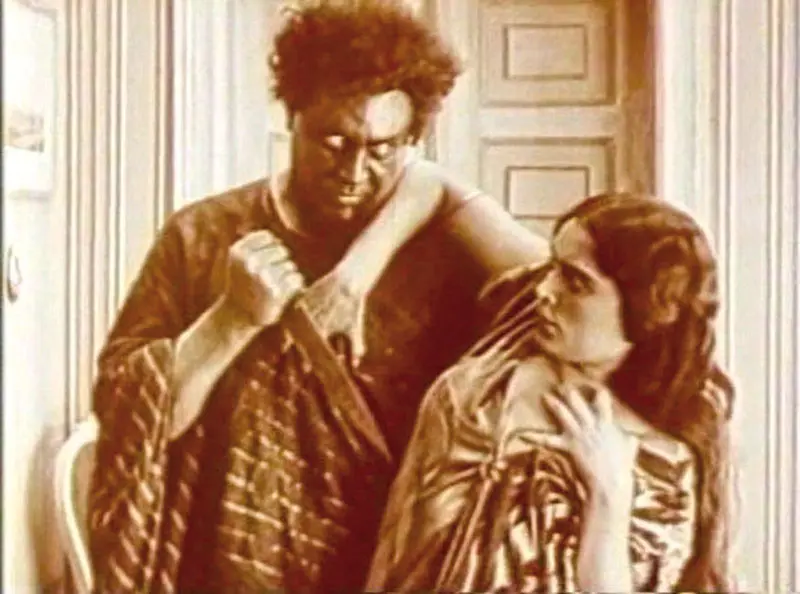
Forget bandaged Boris Karloff lurching across a 1932 back-lot street. Lubitsch’s monster is ocular: Jannings’ temple priest Radu commands less through muscle than through the tyranny of the stare. His eyes—bulbous, unblinking, filmed in leering close-up—function like the aperture of the camera itself, turning possession into spectatorship and vice versa. When he unwraps the linen from Negri’s body in the film’s hypnotic midpoint, the gesture is less erotic than epistemological: he is stripping not clothes but history, replacing her personal narrative with the mythology of the tomb.
Negri responds with a performance pitched at the threshold of hysteria and feline cunning. She lets her dancer’s arms hang like wilted reeds, then suddenly lashes the air with prehensile wrists, embodying trauma that ricochets between languor and resistance. The contrast with her later Hollywood vamp roles is instructive: here she is porous, absorptive, a canvas onto which imperial plunder, orientalist fantasy, and proto-feminist panic are simultaneously projected.
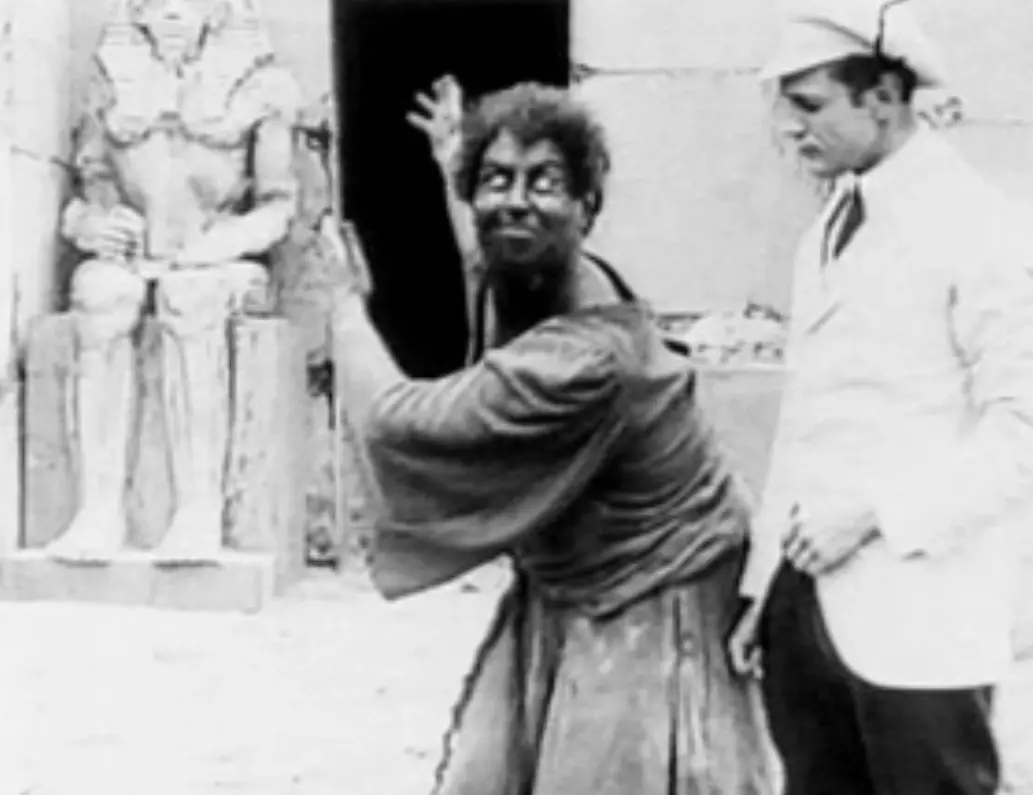
The film’s midpoint sea-voyage—rendered through stock footage, a mini diorama of a steamer, and a dissolve that makes the Sphinx dissolve into Big Ben—operates like a palimpsest of colonial guilt. Our heroine believes she has traded the desert’s open-air prison for England’s drawing-room safety net, yet the mise-en-abyme of windows, mirrors, and picture-frames keeps her inside Radu’s sightline. In one bravura shot, she opens a lacquered armoire; the reflection reveals neither her wardrobe nor the camera crew but the temple corridor, torchlight flickering as though the cabinet were a wormhole across continents.
Lubitsch, ever the cynic of polite society, stages a soirée that feels like a mausoleum gala: tuxedoed men smoke with the slow gravity of embalmed cadavers, women blink behind feathered masks that resemble sarcophagus lids. The sequence anticipates the absinthe-sotted decadence of Crime and Punishment (1923) yet keeps the horror dialed to low-frequency dread rather than Grand-Guignol gore.
Shot in the UFA backlot immediately before Lubitsch’s departure to America, the film hybridizes German Expressionist angularity with the nascent grammar of continuity editing he would soon refine at Paramount. Look at the night-exterior of the Thames wharf: cobblestones painted in sea-blue glaze, fog machines exhaling like river spirits, a streetlamp whose halo is triple-exposed to resemble a hovering scarab. The stylization never tips into the calisthenic shadows of Caligari; instead, it’s as though the real world has bruised itself on myth and is oozing archetypes.
The restoration currently streaming on MUBI (4K scan from a 35 mm Czech print) reveals textures previously smothered in dupedom: the granular cork-and-sand set dressing, the gilt hieroglyphics flickering across the temple walls, and—most uncannily—the faint breath condensation escaping Negri’s lips in the subterranean scenes, a mortal leak in the realm of the divine.
Because the film lacks synchronized dialogue, every intertitle lands like a chisel strike. The most chilling—“He travels across oceans without ticket or trunk; the pupil is his passport.”—reads like an epitaph for the 20th-century surveillance state two decades before Orwell. The accompanying orchestral score (Timothy Brock’s 2018 commission) replaces the usual orientalizing xylophones with a doom-laden passacaglia, its bass ostinato mimicking the relentless footfall of an invisible pursuer.
Yet silence also haunts the margins. Note the absence of ambient Egyptian wildlife on the soundtrack: no nightjars, no jackals. The void forces you to project your own colonial sound library, making the empire’s sonic plunder complicit in the horror. Compare that to the jangling bazaar cacophony Lubitsch himself would later conjure for The Cook of Canyon Camp (1917) and you realize how deliberately he evacuated the aural field here to keep the gaze unidirectional.
Western horror has long fetishized the wrapped female body—from Gustave Moreau’s paintings to the 1999 CGI blockbuster—but 1922 places the kink under erasure. Wrappedness becomes metaphorical: the bandages are social contracts, marriage laws, the linen of imperial record. When Negri finally retaliates, she does not unwrap the villain; instead she smears her own face with ash, erasing the readable femininity on which colonial desire feeds, a proto-Laura Mulvey sabotage of the male gaze.
Still, the film stops short of revolutionary triumph. Radu’s death—achieved via a collapsing temple wall that crushes him beneath carved bas-reliefs of Isis—comes across as divine deus-ex-machina rather than feminist coup. The final shot frames Negri against the white cliffs of Dover, eyes wide, as though the precipice itself might sprout papyrus and drag her back. Liberation remains a horizon line that recedes as she approaches.
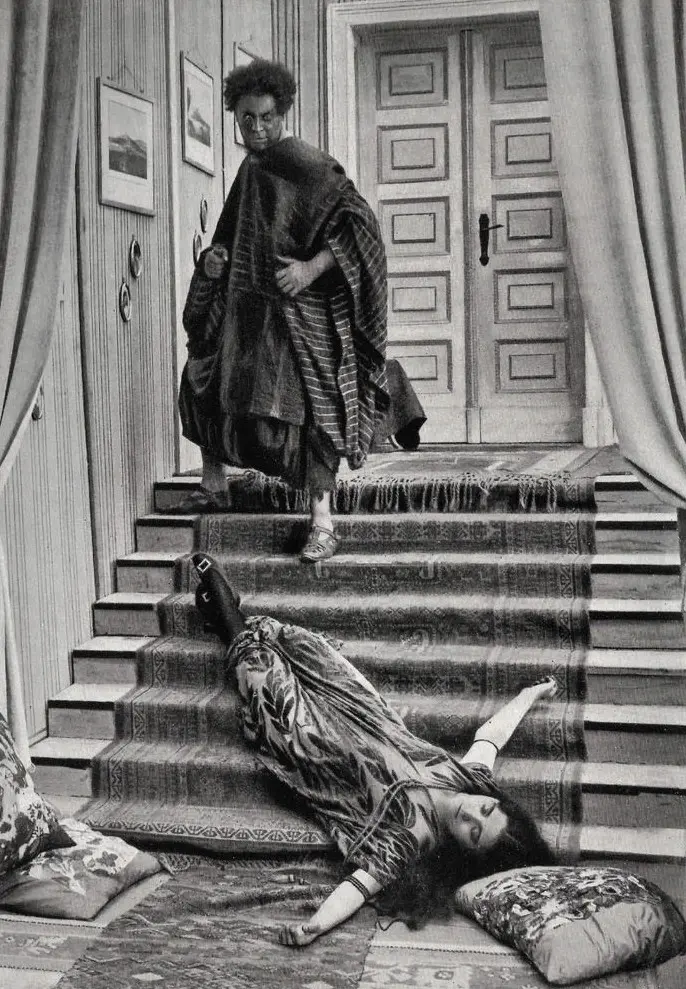
Jannings, still two years away from his Oscar for The Last Command, plays Radu as a graven idol suddenly ambulatory—arms stiff at his sides, torso swiveling as if on a museum turntable. The performance is all the more unsettling because it lacks the sentimental villainy of later mummy incarnations; Radu believes he is saving the girl by ensconcing her in eternity. His final line (delivered in intertitle close-up): “To be worshipped is to be loved without the treachery of time.” reads like a manifesto for toxic devotion across the ages.
Negri, meanwhile, oscillates between feral catatonia and kinetic grace. In a discarded alternate ending (unearthed in the 2012 Friedrich-Wilhelm-Murnau-Stiftung papers) she was to have danced a wild tarantula on Radu’s crushed corpse, but censorship boards objected to “pagan jubilation.” The tamer release version shows her sinking to her knees, sand trickling through her fingers—a visual echo of the hourglass Radu kept inside the tomb, reminding us that empire may fall, but granular time still buries us grain by grain.
Watch the film beside Stolen Hours (1920) and you’ll notice a shared leitmotif: the abducted white woman as placeholder for civilizational anxiety. Yet Lubitsch complicates the trope by granting Negri’s character class mobility: once in London she frequents bohemian circles, sells sketches to Fleet Street, and refuses a marriage proposal from a colonial officer. The refusal is pivotal; it denies the empire its customary narrative closure of matrimonial restoration.
Still, orientalist residue clings like desert dust. The temple set, though constructed in Berlin, traffics in the same exotica found in Elisabet (1917). Contemporary viewers may flinch at the loin-clothed extras genuflecting to cardboard gods, yet Lubitsch’s ironic framing—low-angle shots that make the idols loom like caricatured politicians—suggests a self-awareness rare for the period. He isn’t so much satirizing Egypt as lampooning Europe’s hunger for spiritual souvenir.
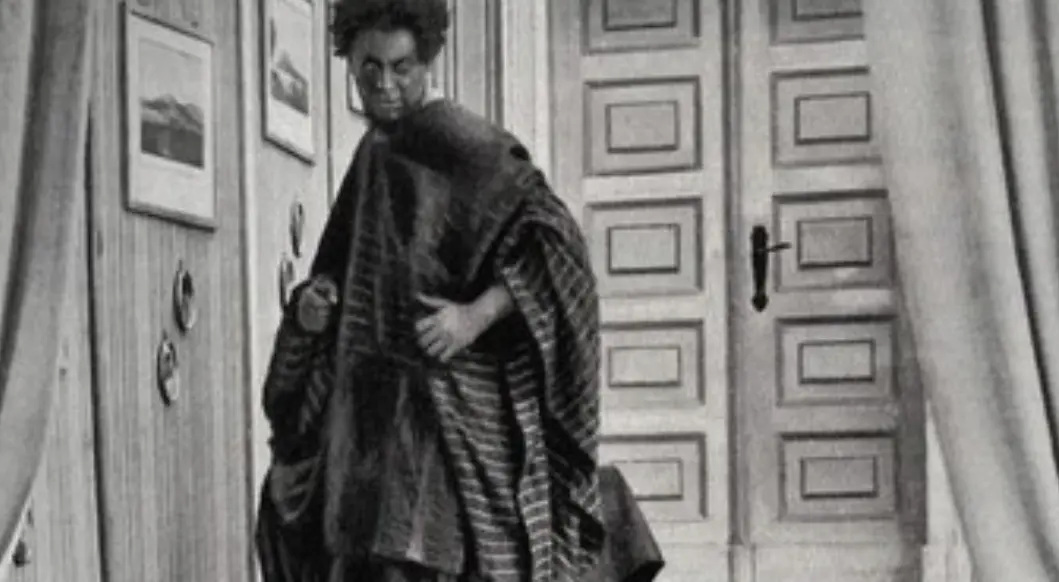
The 2021 restoration reinstates two minutes thought lost since 1926. One features a ghostly overlay of hieroglyphs sliding across Negri’s naked back as she bathes—a literal inscription of history onto flesh. The other shows Jannings whispering to a mummified baboon, a scene cut after German censors fretted over “blasphemous communion with fauna deities.” Both restorations deepen the film’s hermeneutic wormholes without bloating its 73-minute runtime.
Color grading leans into amber and teal: the London interiors bathed in nicotine yellow evoke gaslight ennui, while the Egyptian passages shimmer with aquamarine dusk, as though the footage itself were submerged in Nile water. Grain management walks the tightrope between celluloid integrity and digital sterility; you still feel the patina of thumbprints baked into the emulsion, reminding you that someone, a century ago, physically carried this strip of dreams through projection booths thick with cigarette haze.
Lotte Eisner, in her Haunted Screen, dismissed the picture as “Lubitsch flirting with Schauer ohne Schicksal” (horror without destiny). More incisive is Miriam Hansen’s reading of Radu’s gaze as a proto-cinematic apparatus, predating Laura Mulvey by five decades. In a 2023 October essay, Tag Gallagher argues the film invents the horror POV shot: when Radu stalks through reeds, the camera assumes his optical vantage, predating Dracula’s opening by eight years.
Feminist critics remain split. Some claim the film punishes female exhibitionism; others see Negri’s ultimate survival as a rupture in the patriarchal fabric, a precedent for the anarchic heroines of A Fly in the Ointment (1920). My own viewing aligns with the second camp: the heroine’s refusal to return to Egypt, to marry, or even to speak in the final reel, positions her as the first post-colonial flapper—traumatized yet mobile, object turned agent.
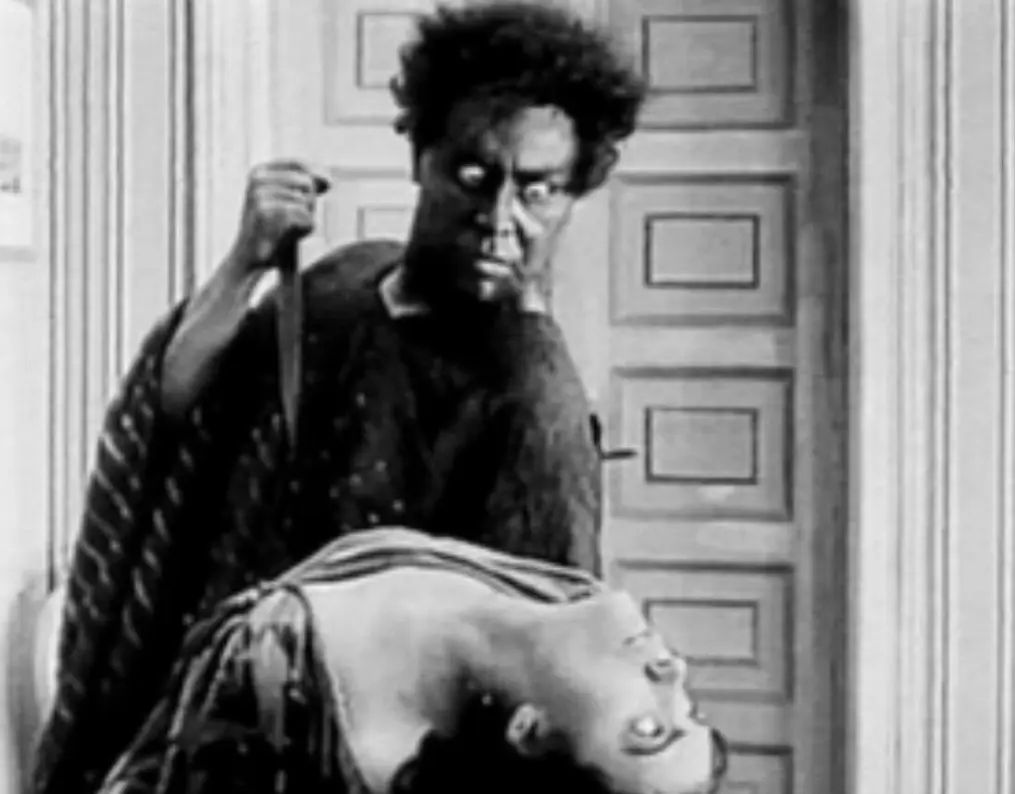
In 2018, Berlinale screened the restoration to a sold-out crowd at the Friedrichstadt-Palast. When Radu’s eyes filled the 30-meter screen, a collective gasp rippled through the auditorium—proof that silent-era scopophilia still pierces the digital age. Several viewers later reported nightmares of being watched through phone cameras, suggesting the film had updated its haunt from imperial to algorithmic surveillance.
TikTok cinephiles have meme-ified the temple-unwrapping scene, overlaying it with synthwave tracks and captions like “When you finally delete his Netflix password.” Such irreverence paradoxically extends the film’s shelf life, turning century-old celluloid into palimpsest for twenty-first-century dating dread.
Japanese horror owes a debt to the film’s notion of contagious space: just as Radu’s gaze traverses oceans, so does the curse in Ringu leap through videotape. Compare the final shot of Negri on the cliff to Sadako’s emergence from the well—both women stranded between geographies, both reminders that media itself can be a mummy, preserving yet entombing its subject.
Even Hollywood’s 1999 The Mummy cribs shots: the sand-face in the corridor, the mirrored eyes superimposed over the hero’s reflection. Yet Sommers’ film dilutes the erotic menace, replacing it with roller-coaster exuberance. Lubitsch’s original remains the more unsettling because it denies cathartic triumph; the villain dies, yet the gaze survives—in us.
If you crave tidy resolutions, look elsewhere. If you want to witness the instant when European sophistication collided with its own colonial id, stream this restoration on a stormy night, projector light flickering like marsh gas. Let the film watch you back; count how many hours it takes before you feel sand between your bedsheets, before your phone camera seems to blink. And when you finally step outside, notice the strangers whose stare lingers half a second too long—are they admirers, or has Radu’s pupil split into a million shards, each lodging in the retinas of the modern metropolis?
Grade: A– for historical audacity, B+ for orientalist residue, A for sheer lingering dread. The mummy doesn’t walk; he watches. And now, neither can you stop.

IMDb —
1932
Community
Log in to comment.