DbcultAccessing Vault...
Cult Review
Senior Film Conservator
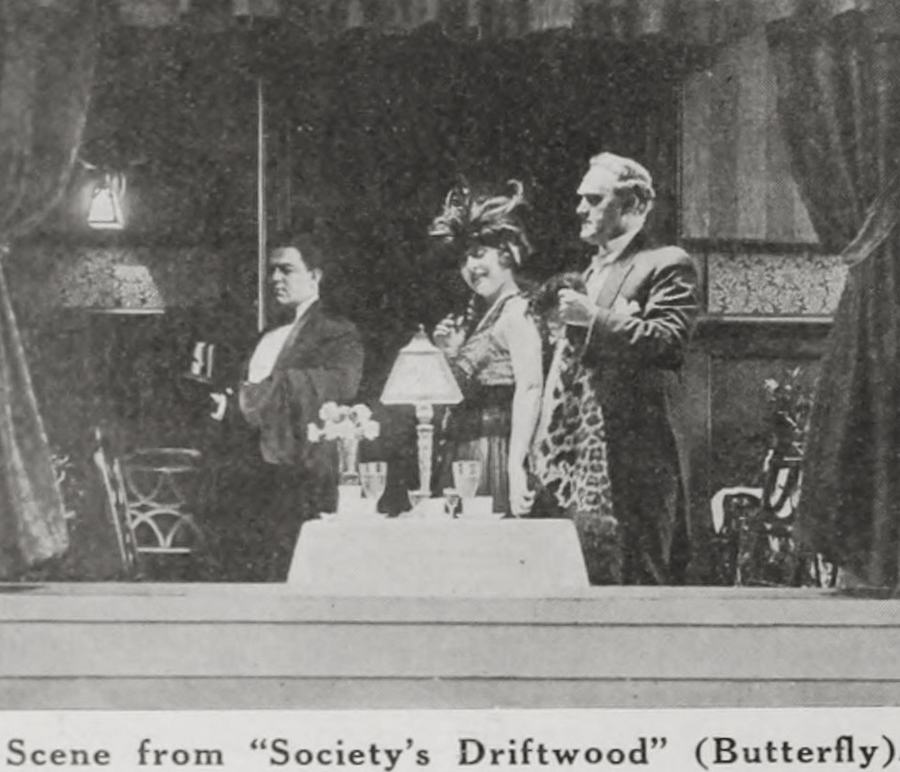
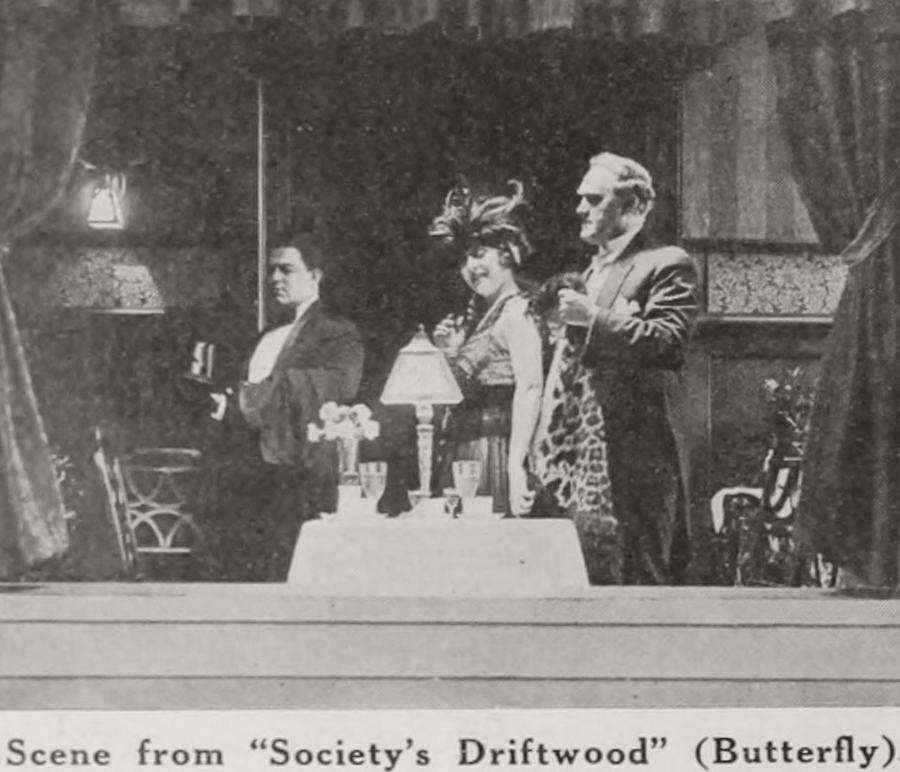
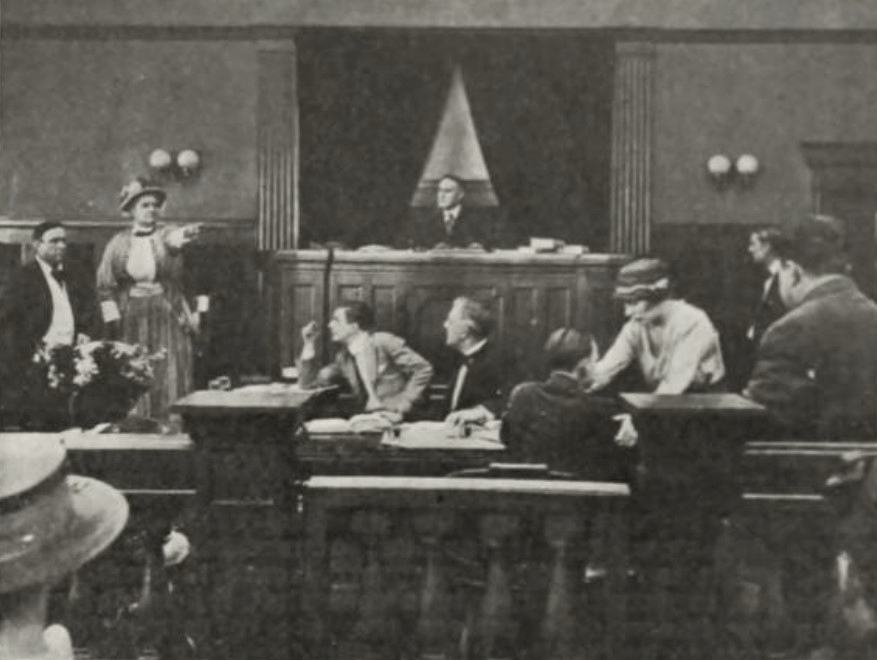
Harvey Gates’ Society’s Driftwood—five reels of nitrate trembling on the brink of oblivion—oozes the clammy perfume of moral rot long before noir had a name. From the first iris-in on Judge Grant’s hawkish profile, the film announces itself as an anatomy of power’s elastic conscience: courtroom marble cannot scrub the stench of expedience. William Musgrave plays Grant with the velvet-sheathed menace of a man who believes jurisprudence is merely another commodity to corner, his smile a scalpel that flays precedent.
A Symphony of Betrayals
Notice how cinematographer Frank Wilson frames Grant’s ascent to corporate Valhalla: elevator gates clang like prison bars in reverse, a visual rhyme with Paul’s earlier cell-door slam. The symmetry is delicious—justice and capitalism share the same cage, only the signage changes. When the judge skims profits, the intertitle card burns white-on-black like a fiscal migraine: "Shares plummet—honor follows." No need for talkies; the silence screams.
Grace Cunard’s Lena is the film’s voltaic core, a proto-femme fatale who refuses to be shorthand for lust. Her vengeance arrives perfumed with competence: she studies stock tables by candle, dresses like Wall Street’s own Delilah. Watch the sequence where she first invades Grant’s oak-paneled lair—camera dollies past rows of leather-bound law tomes, each volume a mute co-conspirator. Cunard’s smile flickers at 18 fps yet pulses modern agency; she weaponizes vulnerability the way others shoulder a revolver.
Love as Collateral Damage
Joseph W. Girard’s Tison is the ethical foil carved from idealist clay. He scribbles truths on cigarette papers while his surname corrodes around him. The brothers’ rooftop confrontation—wind whipping coats like tattered flags—plays like a Jacobean duel minus swords; words are rapiers, and blood arrives via off-screen thunder. Their final exchange, muffled by distance yet captioned in trembling intertitles, crystallizes the picture’s icy thesis: blood may be thicker than water, yet scandal is thicker still.
Comparative cinephiles will detect DNA strands linking Society’s Driftwood to The Unpardonable Sin in its distrust of institutional sanctity, while its corporate skulduggery anticipates the board-room carnage of The Lion and the Mouse. Yet Gates’ film is leaner, meaner, closer to Dostoyevsky stripped of snow and salvation; Paul’s prison years pass in a single smash-cut, suggesting time itself is another corruptible ledger.
Visual Lexicon of Corruption
Color palette? Monochrome, yes—but metaphorically drenched in bruised orange of dying gas lamps and the cyan chill
Musgrave’s death scene deserves scholarly dissection. He collapses against a safe whose combination dial keeps spinning, an inexorable roulette invoking the arbitrary spin of justice. Blood—represented by a spreading ink blot on his waistcoat—marries corporate fraud to bodily demise with silent-era bluntness that predates the Hays Code squeamishness.
Gender & Power Under the Microscope
Cunard’s Lena negotiates the era’s restrictive corsets—literal and societal—with sly dexterity. She wields the threat of sexual revelation yet never relinquishes narrative control, unlike heroines in Susan’s Gentleman whose fates hinge on male arbitration. When she finally confesses her scheme to Tison, the camera frames her in medium-close-up, eyes welling but unbroken, signaling remorse without repentance—a nuance modern thrillers still struggle to calibrate.
One can’t ignore the sibling motif coursing through Gates’ script: Paul and Lena’s loyalty versus the Grant brothers’ fratricidal fracture. The Rogers’ blood bond is forged in persecution; the Grants’ in privilege. Their mirrored downfalls intimate that America’s class ladder is greased on both rails.
Performances Calibrated at 18 Frames
Charles West’s Paul, though off-screen for the film’s meatiest middle, haunts the negative space. His jail-cell prayer—hands clasped, eyes rolled heavenward—lingers as a tableau of stoic resignation. Upon release, he prowls rather than walks, shoulders angled like a pocketknife half-opened. His final confession, delivered while life leaks into floorboards, carries the solemn timbre of a man rewriting his own epitaph in real time.
Girard, saddled with the thankless ‘moral compass’ role, injects Tison with jittery newspaperman energy: pencil forever perched behind ear, trench-coat flapping like a mis-timed moral flag. His chemistry with Cunard is tentative, as though love itself were an investigative assignment he’s still verifying.
Narrative Economy—Ruthless & Revelatory
At a brisk 58 minutes, the picture practices narrative slash-and-burn; no scene outstays its welcome. Compare with Pierre of the Plains, which luxuriates in pastoral digressions, or Ivanhoe, bloated by pageantry. Gates’ pulp concision anticipates B-movie noir of the ’40s: every shot a punch, every intertitle a cigarette burn.
Sound of Silence: Score Recommendations
Surviving prints are mute; modern festivals should court composers willing to braid Bernard Herrmann stabs with tango accordion, reflecting the film’s waltz between elegance and sleaze. A motif built around ticking typewriter percussion could underscore Tison’s deadline desperation, while muted trumpet might glide through Lena’s seduction scenes like perfume diffusing in closed rooms.
Archivists at MoMA and Bologna have expressed cautious optimism that a 9.5 mm Pathé duplicate may languish in a Sao Paolo basement; should it resurface, a 4K photochemical rescue would unveil the granular detail of Wilson’s chiaroscuro. Until then, we piece the film together via surviving stills, continuity script at Library of Congress, and a 1921 Motion Picture News review that labeled it "a tonic for those who like their drama straight, no chaser."
Trace the lineage and you’ll detect prefigurations of The Maltese Falcon’s perfumed treachery, of Double Indemnity’s eroticized complicity. Gates’ ruthless circularity—justice perverted, then reinstated via extralegal killing—prefigures the cynicism of post-war noir. Even the title, Society’s Driftwood, feels prophetic: in an age where billionaires float above accountability while the powerless wash ashore, the metaphor only sharpens.
Final verdict: hunt this phantom. Badger archivists, scour eBay for mislabeled reels, petition your local cinematheque. To watch Society’s Driftwood is to witness American cinema’s nascent ability to indict capitalism while still inside its cradle. The film may be lost, but its after-image burns like a magnesium flare—brief, blinding, impossible to forget.

IMDb 5.9
1919
Community
Log in to comment.