DbcultAccessing Vault...
6.7/10
Senior Film Conservator
A definitive 6.7/10 rating for a film that redefined the boundaries of cult cinema. Fortune's Mask remains a cornerstone of transgressive art.
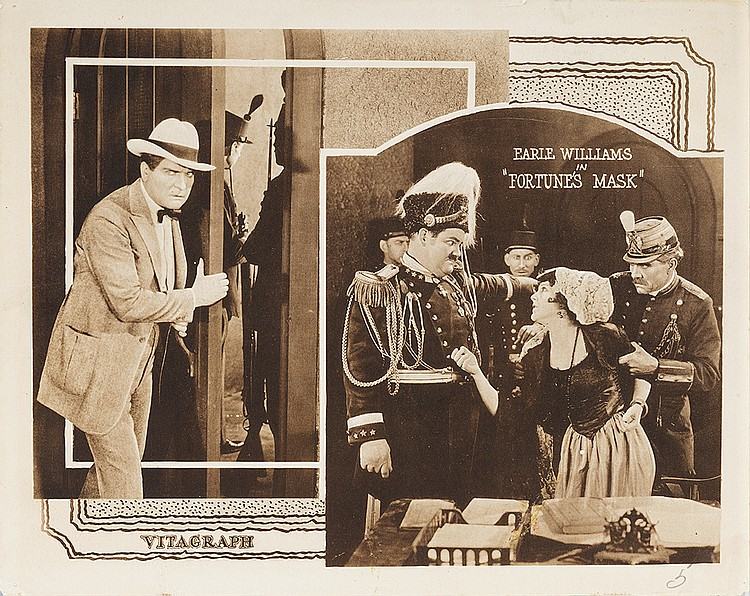
To witness Fortune's Mask in the modern era is to step into a time capsule of early 20th-century geopolitical fascination, filtered through the whimsical, often ironic lens of O. Henry. This 1922 Vitagraph production, directed by Robert Ensminger and adapted by C. Graham Baker, serves as a poignant reminder of the era's obsession with the "Banana Republic"—a term coined by O. Henry himself. The film isn't merely a swashbuckling adventure; it is a nuanced exploration of identity, legacy, and the performative nature of power, anchored by a cast that includes the legendary Earle Williams and a young, pre-slapstick Oliver Hardy.
Earle Williams, who by 1922 was a titan of the silent screen, brings a sophisticated duality to the role of Dicky Maloney. Unlike his more somber, morally conflicted turn in The Chattel, Williams here pivots toward a roguish magnetism. He portrays Maloney not as a desperate wanderer, but as a man playing a high-stakes game of chess against an entire nation. His performance is defined by a series of micro-expressions—a knowing smirk here, a flash of steel in the eyes there—that signal to the audience that the Irishman is far more than the sum of his charming parts.
In many ways, Williams’ Dicky Maloney is the quintessential O. Henry protagonist: a man whose exterior is a carefully constructed artifice. The way he navigates the social hierarchies of Coralio suggests a profound understanding of human nature, a theme frequently explored in silent dramas of the time, such as Pillars of Society. However, where other films might focus on the crushing weight of social expectation, Fortune's Mask celebrates the liberation found in adopting a persona to achieve a righteous end.
The screenplay, based on the short story "The Fourth in Salvador," retains the wry, observational wit that made O. Henry a literary sensation. The narrative structure is a slow burn, eschewing the frantic pacing of contemporary action films for a more deliberate accumulation of character beats. We see Maloney winning over the hearts of the common folk, not through grand speeches, but through small acts of defiance against the military governor. This grassroots approach to revolution mirrors the thematic depth found in The Birth of Patriotism, though with a decidedly more cynical, tropical flair.
The "mask" of the title is multi-layered. It refers to Maloney’s Irish facade, the hidden lineage of the presidency, and the general deception inherent in political upheaval. The film masterfully handles the reveal of Maloney's true identity. It isn't a jarring twist but rather a satisfying click of a puzzle piece falling into place. This narrative sophistication was a hallmark of Vitagraph at its peak, providing a stark contrast to the more straightforward moral plays like The Penitentes.
For modern cinephiles, perhaps the most arresting element of Fortune's Mask is the presence of Oliver Hardy. Long before he became the exasperated half of cinema's greatest comedy duo, Hardy was a prolific character actor, often cast as the "heavy" or the villainous foil. In this film, his physicality is utilized to convey menace rather than mirth. Watching Hardy navigate a dramatic landscape provides a fascinating glimpse into the versatility that he would later channel into his comedic timing. His interactions with Williams create a palpable tension that elevates the stakes of the revolution.
Hardy’s performance here is a testament to the diverse talent pool of the early 1920s. It reminds us that the boundaries between genres were far more porous than they are today. One could jump from a high-stakes political drama like this to a lighthearted romp like So Long Letty without losing professional credibility. Hardy’s presence adds a weight to the antagonist forces that makes Maloney’s eventual victory feel earned rather than inevitable.
Technically, Fortune's Mask is a marvel of its time. The cinematography captures the sweltering atmosphere of the Central American setting with a clarity that feels almost tactile. The use of light and shadow—chiaroscuro techniques that were becoming increasingly sophisticated in the early 20s—helps to differentiate between the oppressive, sun-drenched streets and the cool, secretive interiors of the revolutionary hideouts. This visual language is reminiscent of the stark environmental storytelling seen in The Great White Trail, though adapted for a lush, humid locale.
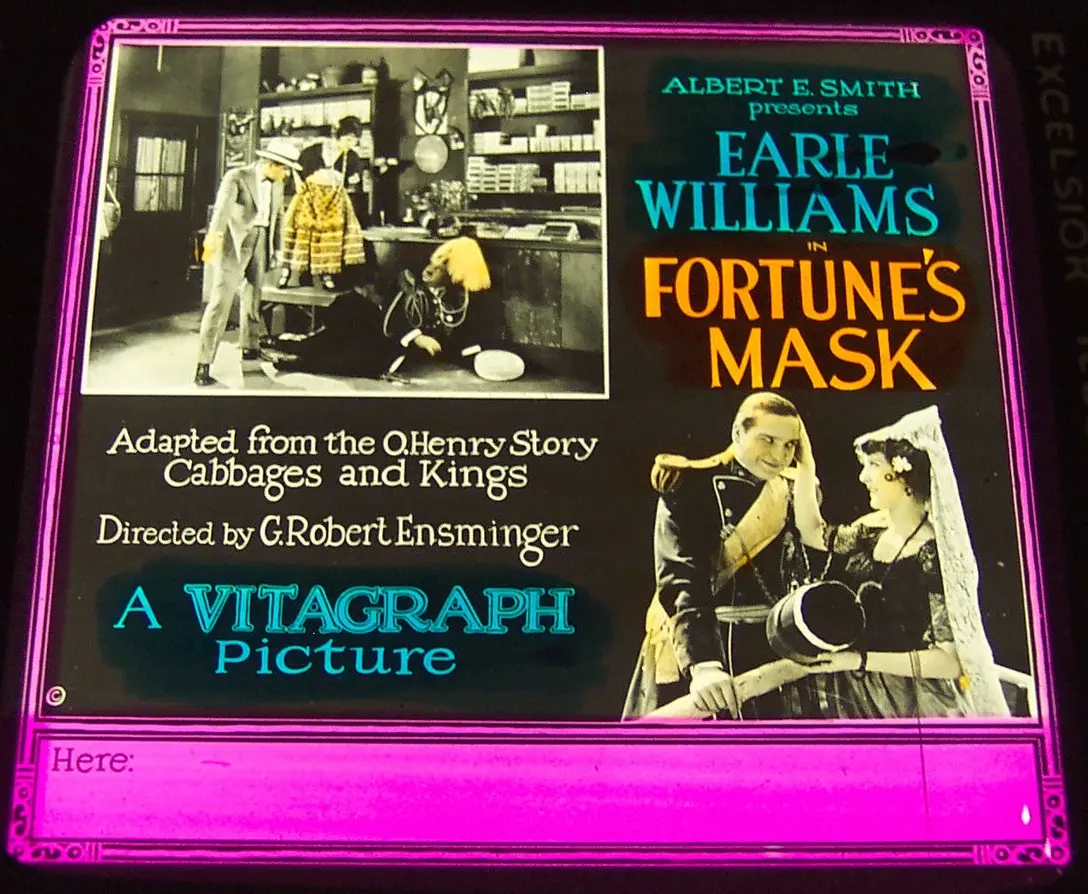
The production design successfully avoids the caricature that often plagued "exotic" films of this era. While it certainly plays into the romanticized notion of the Latin American revolution, there is a groundedness to the sets and costumes that lends the film an air of authenticity. The contrast between Maloney’s rugged, dusty attire and the ornate, stiff uniforms of the military junta serves as a visual metaphor for the clash between populist freedom and autocratic rigidity.
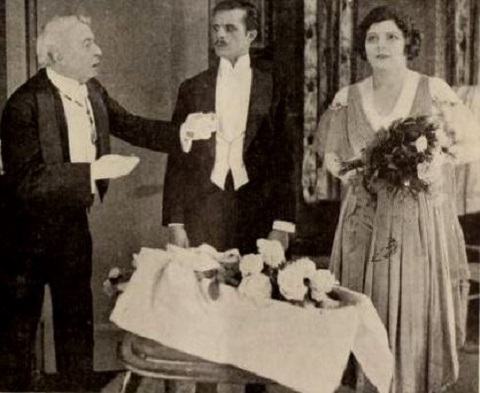
As Pasa Ortiz, Patsy Ruth Miller delivers a performance of remarkable vibrancy. In an era where female leads were often relegated to the role of the "damsel," Miller’s Pasa is a woman of agency and conviction. Her chemistry with Earle Williams is the emotional engine of the film. It isn't just a romance of convenience; it is a partnership born of shared ideals. Her role here can be compared to the spirited heroines of The Wild Girl or The Joan of Arc of Loos, where the woman’s commitment to a cause is as fierce as her commitment to her lover.
Miller’s ability to convey complex emotions through the silent medium is exemplary. The scenes where she realizes Maloney’s true purpose are handled with a subtlety that avoids the histrionics common in lesser silent melodramas. She represents the heart of the nation Maloney seeks to save, making the political stakes deeply personal.
When we compare Fortune's Mask to other films of the period involving wealth and secret identities, such as Brewster's Millions or A Rich Man's Darling, we see a more serious undercurrent. While those films often treat hidden status as a comedic or romantic plot device, Fortune's Mask treats it as a burden of destiny. Maloney’s return to his father’s seat of power is portrayed not as a personal triumph of ego, but as the restoration of a broken lineage.
The film’s climax—the revolution itself—is staged with a surprising amount of scale. The choreography of the skirmishes and the eventual storming of the palace reflect a high level of technical ambition. It lacks the primitive staginess of earlier efforts like The Primitive Call, opting instead for a dynamic, moving camera that puts the viewer in the middle of the fray. This sense of momentum is what makes the film’s conclusion so satisfying.
Fortune's Mask stands as a quintessential example of the "prestige" silent adventure. It successfully blends the wit of O. Henry with the star power of Earle Williams and the emerging talent of Patsy Ruth Miller and Oliver Hardy. It deals with themes that are still relevant today: the manipulation of public image, the cycles of political power, and the search for one's true place in the world.
While it may not have the surrealist experimentation of It's a Bird or the sheer cultural impact of some of its contemporaries, it remains a vital piece of cinematic history. It captures a moment when the Vitagraph Company was still a force to be reckoned with, producing films that were as intelligent as they were entertaining. For those interested in the evolution of the political thriller or the early career of Oliver Hardy, Fortune's Mask is an essential viewing experience. It is a film that reminds us that behind every mask of fortune, there is a human story of ambition, love, and the relentless pursuit of justice.
Whether compared to the tribal dynamics of El signo de la tribu or the pioneer spirit of The Bushman's Bride, this film carves out its own unique territory in the sun-drenched landscapes of 1920s cinema. It is a masterclass in silent storytelling that deserves a place in the pantheon of early adventure classics.
IMDb 5.8
1934
Community
Log in to comment.