DbcultAccessing Vault...
Cult Review
Senior Film Conservator
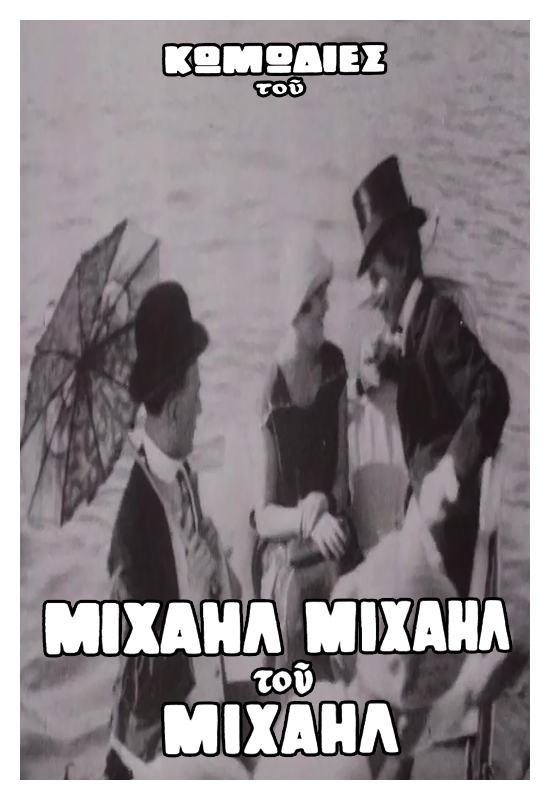
To witness O Villar eis ta gynaikeia loutra tou Falirou is to observe the very birth of the Greek comedic star system. In the early 1920s, the Hellenic film industry was a fledgling enterprise, often mimicking the sophisticated slapstick of the French and the relentless pacing of the Americans. Yet, in the hands of Nikolaos Sfakianos, the character of Villar transcends mere imitation. This film represents a pivotal moment where local idiosyncrasies began to meld with international cinematic grammar, creating a hybrid form of entertainment that resonated deeply with an Athenian public hungry for modernity.
Sfakianos, who would eventually become an indelible icon of the interwar period, possesses a physicality that is both jarring and balletic. Unlike the more somber dramatic efforts of the era, such as Lorena, Villar’s work is predicated on the immediate impact of the body in motion. In the baths of Phaleron, his movements are not just reactions to the environment but a deconstruction of the space itself. He treats the architecture of the bathhouse as an obstacle course, a playground where the rigid social hierarchies of the time are literally knocked over in a flurry of limbs and splashes.
The choice of the women's baths as a setting is particularly audacious for the time. It taps into a primal, almost transgressive curiosity. While films like The Daring of Diana explored the agency of women in a more structured narrative sense, Villar’s foray into this forbidden feminine sanctum is pure, unadulterated burlesque. It is a comedy of the 'gaze,' where the protagonist’s desire to see becomes the catalyst for a series of increasingly absurd escalations.
When we situate Villar within the broader context of global silent cinema, the parallels are striking. The film shares a certain DNA with the urban explorations found in While New York Sleeps, though it replaces the gritty noir undertones with the sun-drenched levity of the Mediterranean. There is a raw, unpolished energy here that contrasts sharply with the more theatrical and staged productions like My Official Wife. Sfakianos isn't playing to the back row of a theater; he is playing to the lens, understanding intuitively that the camera captures the micro-expressions of panic and triumph that define great comedy.
The writing, credited to Villar himself, demonstrates a keen understanding of the 'snowball effect.' A minor infraction—perhaps a misplaced glance or a stumble—quickly gathers momentum until the entire social order of the Phaleron beach is in disarray. This structural integrity is something we also see in the thematic depth of The Tongues of Men, where the consequences of human folly are explored, albeit through a much more dramatic lens. Villar, however, prefers the catharsis of laughter over the weight of moralizing.
Technically, the film is a fascinating study in location shooting. The harsh Greek sun provides a high-contrast palette that emphasizes the whiteness of the bathhouse structures against the dark shimmering sea. This visual starkness mirrors the binary of the plot: the 'in-group' of the bathers versus the 'outlier' that is Villar. The cinematography doesn't shy away from the logistical challenges of the seaside; rather, it embraces the spontaneity of the wind and the unpredictable movement of the water.
In many ways, this film acts as a time capsule. It captures a specific moment in Athenian life before the massive urban shifts of the later 20th century. We see the influence of European fashion, the burgeoning culture of health and fitness, and the subtle tensions of a society trying to reconcile its Byzantine heritage with a modern, secular identity. It lacks the existential dread of Blind Chance, opting instead for a joyous embrace of the present moment, however chaotic it may be.
While Sfakianos is undoubtedly the sun around which the film orbits, the supporting cast, including Mihail M. Mihail and Tala Krakovska, provides the necessary friction to make the comedy work. Krakovska, in particular, represents the 'modern woman' of the 1920s—poised, somewhat perplexed by the antics surrounding her, yet an integral part of the film’s visual appeal. The chemistry between the performers suggests a troupe that was well-versed in the rhythms of live performance, successfully translating that energy to the screen.
The film’s pacing is relentless. It avoids the narrative lulls often found in contemporary works like Captivating Mary Carstairs. Every frame is dedicated to the progression of the gag. Even when the plot seems thin, the sheer inventiveness of the physical stunts keeps the viewer engaged. It is a masterclass in economy of storytelling; we don't need a complex backstory for Villar to understand his motivations. He is the eternal trickster, the disruptor of peace, a character archetype as old as Aristophanes.
To dismiss *O Villar eis ta gynaikeia loutra tou Falirou* as mere fluff would be a grave critical error. It laid the groundwork for the golden age of Greek cinema that would follow decades later. By establishing a local hero who could compete with the likes of Chaplin, the film gave Greek audiences a sense of cultural ownership over the medium. It proved that the Greek landscape—both physical and social—was fertile ground for cinematic exploration.
When compared to the more somber international offerings of the time, such as Woe to the Conqueror; or, The Law of War, Villar’s work feels revolutionary in its refusal to take itself seriously. It is a celebration of the 'now,' a defiant shriek of laughter in a world that was still reeling from the aftermath of the Great War. This film is the antithesis of the 'waxen' rigidity seen in The Waxen Doll; it is fluid, breathing, and vibrantly alive.
The enduring appeal of Villar lies in his relatability. Despite the outlandish scenarios, there is a vulnerability to Sfakianos’s performance. We see it in the way he adjusts his hat after a fall, or the fleeting look of terror when he is nearly discovered. This is the 'human' element that separates great slapstick from mere tumbling. It is the same quality that makes The End of the Tour so resonant in its own modern way—the recognition of the person behind the persona.
Ultimately, *O Villar eis ta gynaikeia loutra tou Falirou* is a triumph of spirit over budget. It utilizes the natural beauty of the Greek coast to frame a story that is as much about the joy of cinema as it is about the bathhouse high-jinks. It stands as a testament to the power of the comic image to transcend language and time. For anyone interested in the roots of Mediterranean humor or the evolution of the silent film star, this is essential viewing. It is a sparkling, salty, and thoroughly irreverent gem that continues to shine a century later.
Whether one views it as a historical curiosity or a genuine comedic masterwork, the film’s impact is undeniable. It paved the way for future explorations of Greek identity on screen, much like A Vermont Romance did for its own regional cinema. Villar is more than just a character; he is a beacon of the burgeoning Greek creative spirit, reminding us that even in the most segregated of spaces, laughter has a way of breaking through the barriers.
Community
Log in to comment.