DbcultAccessing Vault...
Cult Review
Senior Film Conservator
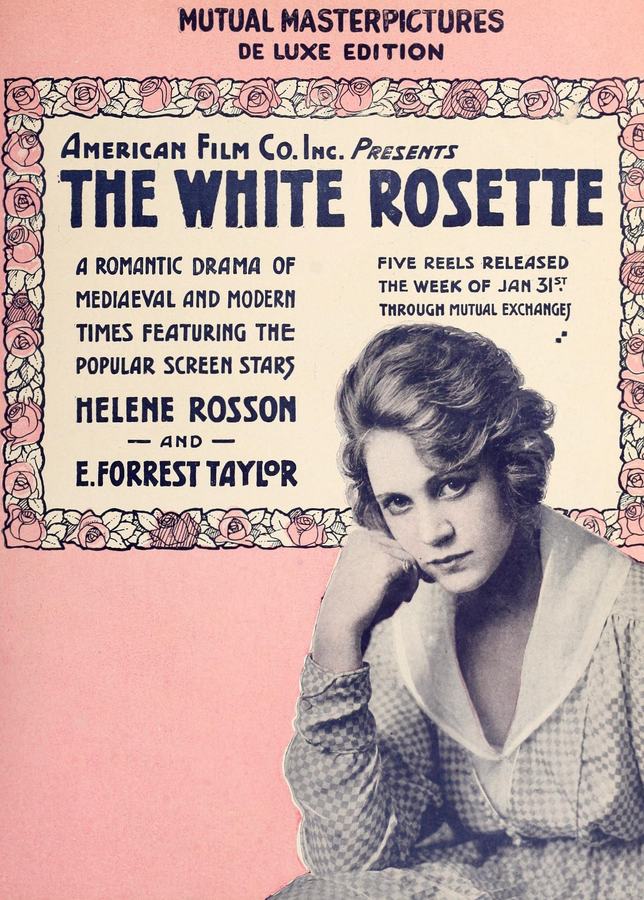
In the annals of silent cinema, few works attempt the sheer ontological reach of The White Rosette. This is not merely a film; it is a sprawling meditation on the permanence of the soul and the cyclical nature of human error. By juxtaposing the rugged, honor-bound world of the eleventh century with the cutthroat, stock-market-driven reality of the early 1900s, the director creates a dialogue between eras that feels both visceral and intellectually stimulating. The cinematic language employed here transcends the standard melodrama of its time, opting instead for a haunting, atmospheric exploration of how the sins of the past echo through the corridors of the future. It shares a certain thematic DNA with The Eternal Law, yet it carves out a unique niche by focusing specifically on the burden of a broken vow.
The medieval prologue is captured with a surprising degree of grit. Sir Errol, played with a stoic intensity by the cast, is the quintessential knight-errant whose return to the castle of Baron Edward serves as the catalyst for a tragedy of Shakespearean proportions. The visual contrast between the purity of Lady Maud and the serpentine ambition of Lady Elfrieda is established through sharp lighting and costume design that signifies their internal moral states long before a single title card is read. The white rosette itself, pinned over Errol's heart, serves as a beacon of innocence in a world increasingly shrouded by the shadows of Elfrieda’s conspiracy. It is a recurring motif that suggests that while the flesh may wither and the armor may rust, the symbols of our highest aspirations remain immutable.
The betrayal of Baron Edward is not merely a political coup; it is a spiritual collapse. When Elfrieda schemes with Lord Kerrigan to usurp the baronetcy, she is not just seeking power, but the total possession of Errol. This predatory love is a recurring theme in the era's cinema, often seen as a cautionary tale against the 'vamp' archetype, yet here it is elevated by the historical context. The moment Lady Maud dons the disguise of a 'maiden knight' to save her lord, the film reaches a crescendo of tragic irony. Her death at the hands of the assassins is a gut-wrenching sequence that highlights the cost of silence and the danger of misunderstood intentions.
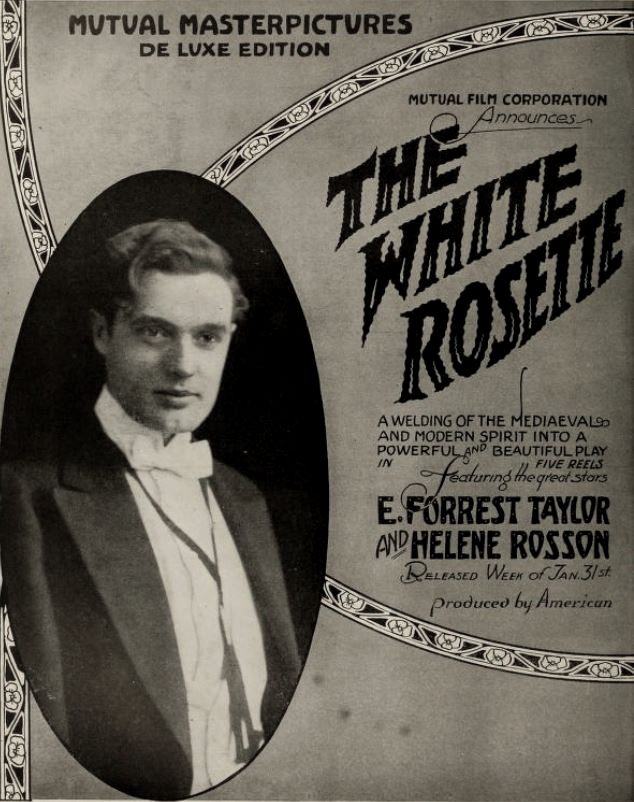
Errol’s subsequent renunciation of Elfrieda and his oath of atonement on the hilt of his sword is a powerful cinematic image. It establishes the 'Karmic Debt' that will drive the rest of the narrative. This sequence mirrors the high-stakes moral dilemmas found in The White Terror, though it replaces the social critique of the latter with a more personal, metaphysical struggle. The director uses the medieval setting to strip away the complexities of modern life, presenting honor in its most primal, unadulterated form, making the subsequent transition to the modern world all the more jarring.
As the film pivots to the twentieth century, we encounter Thomas Eric, a civil engineer whose life is a mirror image of Sir Errol’s. The shift from the castle to the boardroom is handled with a sophisticated understanding of parallel editing. Pierpont Carewe, the railroad magnate, is the modern Baron Edward—wealthy, powerful, and ultimately blind to the machinations of his wife, Frieda. The casting of the same actors in these dual roles is a stroke of genius, emphasizing the inescapable nature of their destinies. The modern setting allows the film to explore themes of financial corruption and personal honor that resonate with the audience of the time, much like the narrative thrust of Graft.
Frieda’s plan to exile the Long family to Bermuda and her subsequent attempt to entrap Eric in a web of debt and scandal is a fascinating update to the medieval conspiracy. Instead of swords and poison, the weapons are stock certificates and social ruin. The tension builds as Eric finds himself squeezed between his loyalty to his employer and the manipulative advances of a woman who represents the darkest aspects of the human psyche. The film brilliantly illustrates how 'civilized' society has merely refined the methods of cruelty seen in the Dark Ages, rather than eradicating them. The psychological pressure on Eric is palpable, and the cinematography during his boudoir confrontation with Frieda uses claustrophobic framing to reflect his increasing entrapment.
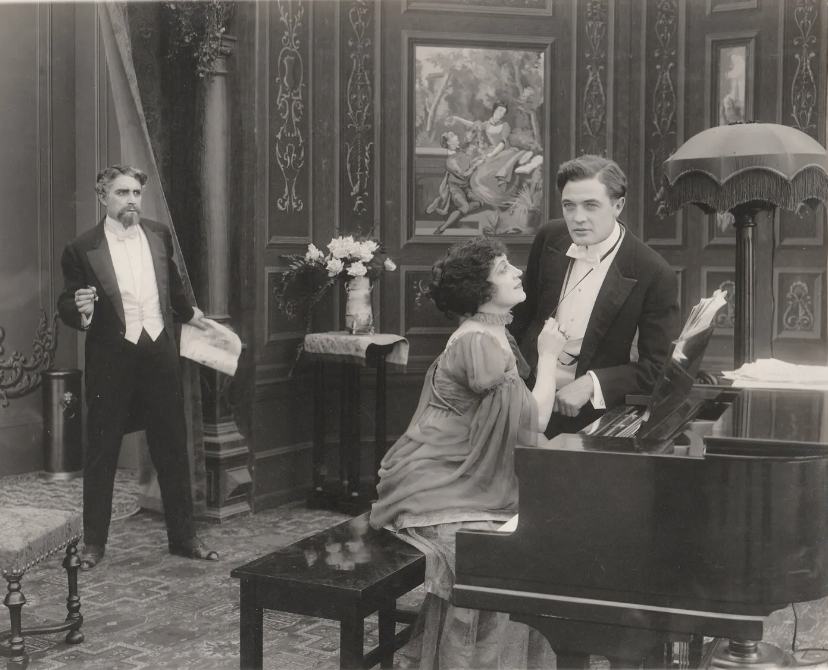
The centerpiece of the film is undoubtedly the vision sequence where Thomas Eric confronts his medieval forebear. This is a technical triumph for the period, utilizing double exposures and ethereal lighting to blend the two timelines into a single, cohesive moment of self-realization. As the life of Sir Errol passes before Eric’s inner eye, the film transcends its melodramatic roots to become something more profound—a study in ancestral memory. He recognizes that the 'white rosette' he must protect is his own integrity, which has been under threat for nine hundred years. This realization is what separates The White Rosette from contemporary works like The Bigger Man, as it grounds its protagonist's growth in a cosmic context rather than mere social advancement.
The fancy dress ball serves as the perfect stage for the final resolution. It is a literal and figurative unmasking. By dressing as the knight of old, Eric is no longer just a railroad engineer; he is the avatar of a thousand years of chivalric longing. The presence of Joan, returning like a ghost from the Southland as Lady Maud, completes the karmic circle. The climax—a physical struggle where Eric saves Carewe from the murderous intent of Van Kerr—is a direct echo of the failure in the Baron's chamber centuries prior. This time, however, the knight arrives in time. The cycle of failure is broken, and the 'dishonored life' is finally redeemed through an act of selfless courage.
The ensemble cast delivers performances that are remarkably restrained for the silent era. Eugenie Forde, as the dual antagonist, is particularly noteworthy. She manages to convey a sense of desperate, almost pathological need that makes her character more than just a simple villainess; she is a woman trapped by her own inability to love without possessing. Her 'bitter rebellion against Fate' in the final scene is a moment of genuine pathos that lingers long after the screen goes dark. Similarly, the work of Harry von Meter and Dick La Reno provides a solid foundation for the film's moral weight, ensuring that the stakes always feel grounded despite the fantastical premise of reincarnation.
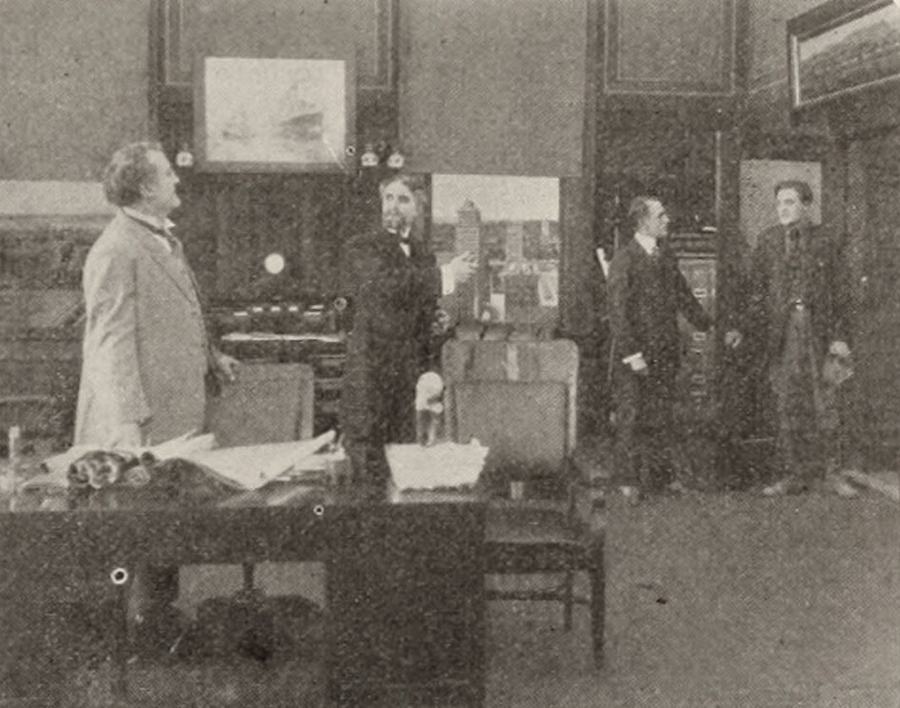
Visually, the film is a feast. The art direction in the medieval sequences is rich with texture, from the cold stone of the castle walls to the delicate embroidery of the titular rosette. The modern sequences, by contrast, are sleek and sharp, emphasizing the rigid structures of the industrial world. The use of shadow throughout the film creates a sense of impending doom that is only dispelled in the final moments of sunlight and reconciliation. It is a work that demands to be viewed with a keen eye for detail, much like the intricate plotting found in The Vanderhoff Affair.
The White Rosette is a monumental achievement in early narrative ambition. It dares to ask if we are merely the sum of our ancestors' choices or if we have the agency to forge a new path. Through its dual-timeline structure and haunting symbolism, it offers a cinematic experience that is as intellectually demanding as it is emotionally resonant. A true hidden gem of the silent era that anticipates the psychological depth of modern auteur cinema.
IMDb —
1934
Community
Log in to comment.