DbcultAccessing Vault...
Cult Review
Senior Film Conservator
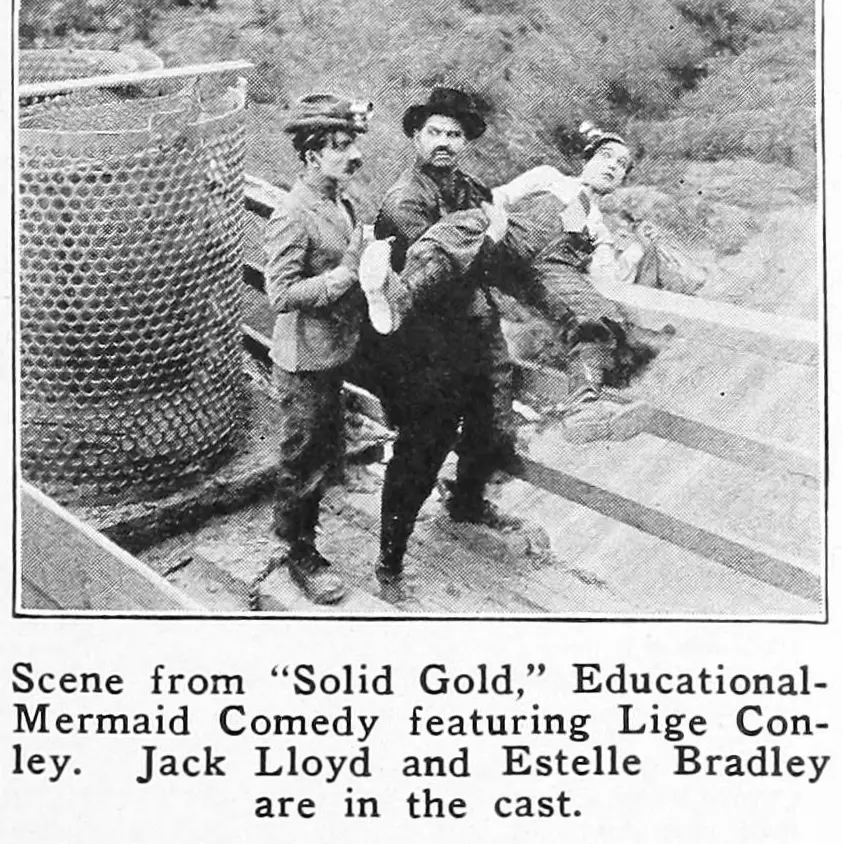
Is 'Solid Gold' worth watching today? This is the core question for any silent film from nearly a century ago. The short answer: yes, but with significant caveats that demand a particular kind of viewer. This isn't a film for those seeking narrative depth or nuanced character arcs; it's a pure, unadulterated dose of early cinematic slapstick.
It's a film best suited for aficionados of silent-era comedies, students of film history, or anyone curious about the foundational elements of physical humor. Conversely, if your cinematic palate leans towards modern storytelling conventions, intricate plots, or dialogue-driven wit, 'Solid Gold' will likely feel like an anachronism too far.
From the outset, 'Solid Gold' announces its intentions with a blunt force akin to its notorious donkey's kick. This is a film built on the simplest of premises: perpetual motion, escalating chaos, and the inherent humor of relentless pursuit. It doesn't aim for sophisticated wit; it aims for belly laughs born from physical absurdity.
Its charm, for those willing to embrace it, lies in this unwavering commitment to its farcical nature. There's an honesty in its simplicity, a raw energy that predates the more polished comedic stylings that would later emerge from Hollywood's golden age. It’s unrefined. It’s chaotic. It’s effective, in its own way.
This film works because of its relentless energy and the sheer commitment of its lead, Lige Conley, to the physical demands of the farce. The comedic timing, while broad, is often surprisingly effective, particularly in sequences involving the infamous donkey.
This film fails because its plot, intentionally thin, struggles to sustain interest beyond the initial novelty of its central gags. The repetitive nature of the chase sequences can become exhaustive, and the humor, while foundational, doesn't always translate perfectly to a contemporary sensibility.
You should watch it if you appreciate the raw, unrefined energy of early cinema, find joy in pure physical comedy, or are a keen observer of the evolution of the Western genre's comedic subversions.
Lige Conley, as the central figure, is less a character and more a human kinetic sculpture. His performance in 'Solid Gold' is a masterclass in silent-era physical comedy, reminiscent of lesser-known contemporaries rather than the nuanced artistry of a Keaton or Chaplin. Conley's energy is boundless, a whirlwind of flailing limbs and frantic expressions.
The plot, such as it is, hinges entirely on Lige being perpetually on the run. He is chased, he chases, but predominantly, he is the quarry. This relentless cycle of pursuit defines his existence within the film's narrative. One memorable sequence sees him scrambling over a precarious pile of mining equipment, narrowly avoiding both the foreman's wrath and the donkey's hooves, only to stumble into another predicament.
What makes Conley’s performance work, despite the repetitive nature of the gags, is his sheer earnestness. He never winks at the camera; his fear, his desperation, and his clumsy attempts at evasion feel genuinely committed. This commitment elevates what could have been tedious into something genuinely engaging, if not always laugh-out-loud funny.
The film leans heavily into the idea that Lige is a magnet for trouble. He’s the unfortunate soul caught in the crossfire of a tough foreman and an even tougher donkey. His struggles are universal, if exaggerated, tapping into a primal fear of being perpetually out of control. It works. But it’s flawed.
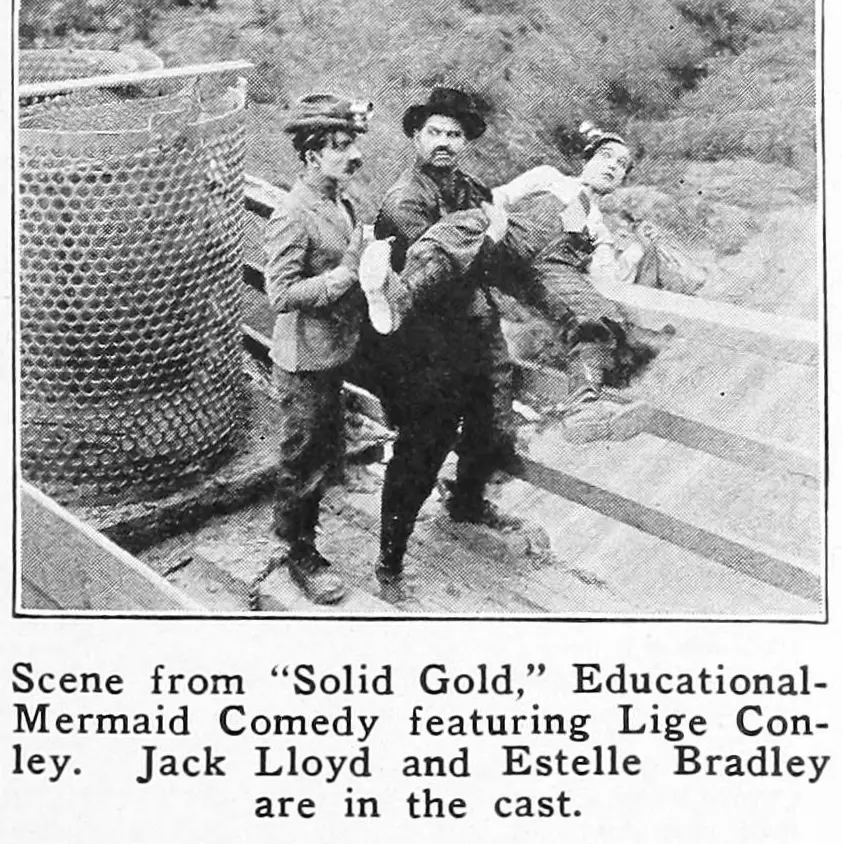
Perhaps the most compelling, and certainly the most memorable, character in 'Solid Gold' is not human at all. It is the donkey, a creature whose malevolent temperament and potent hind legs become a comedic force of nature. This animal is not merely a prop; it is a vital, active participant in the film's farcical machinery.
The donkey's role is simple: to kick everything and everybody within its impressive kicking range. This singular trait is exploited for maximum comedic effect throughout the film. Whether it's connecting with the foreman's posterior, sending a hapless miner flying, or narrowly missing Lige, the donkey is an agent of pure, unpredictable chaos.
Its presence offers a delightful counterpoint to the human-driven slapstick. While Lige's antics are often reactive, the donkey's actions are proactive, almost villainous in their comedic intent. It’s a bold choice to give so much agency to an animal, and it pays off, making the donkey arguably the film's most distinctive and enduring element. Its kicks are perfectly timed, a testament to the animal wrangling and direction.
I would even argue that the donkey steals the show from Conley, which is an unconventional observation for a film centered on a human lead. Its single-minded dedication to causing mayhem is far more consistent and often funnier than some of the more elaborate human gags. It represents pure, unadulterated instinct, a primal force of comedy.
Stephen Roberts, a writer and director who would later work on films like The Splendid Sinner, demonstrates a clear understanding of the mechanics of farce in 'Solid Gold.' His direction is less about intricate camera work and more about staging physical gags effectively within the confines of the gold mine setting. The pacing is relentlessly fast, a necessary choice for a film so reliant on continuous action.
Roberts keeps the camera largely static, allowing the actors and the environment to generate the visual comedy. This approach, common in early silent films, places the emphasis squarely on the performers' physical prowess and the timing of the gags. There are no fancy cuts or complex angles to distract from the core comedic beats.
A particular strength of Roberts' direction is how he integrates the setting into the comedy. The mine itself, with its tunnels, equipment, and piles of rock, becomes an active participant, providing obstacles and opportunities for Lige's escapades. The foreman's constant attempts to control both the mine and its unruly inhabitants are a recurring source of humor, often undermined by the very environment he seeks to command.
However, this relentless pace, while integral to farce, occasionally verges on exhausting. While films like The Speed Spook also relied on high energy, 'Solid Gold' sometimes feels like a marathon without a clear finish line. The lack of variation in the chase dynamics can make certain stretches feel less inventive than others, a common pitfall for films of this era.
The gold mine setting in 'Solid Gold' is more than just a backdrop; it's a character in itself. The cinematography, while rudimentary by today's standards, effectively captures the rugged, dusty, and inherently dangerous environment. The stark black and white imagery emphasizes the griminess of the work, providing a stark contrast to the lighthearted comedic tone.
The visual language of the film is typical of its time, relying on clear, wide shots to capture the full scope of the physical comedy. There are no close-ups for emotional nuance; instead, the camera maintains a distance, allowing the audience to observe the full body movements and reactions of the characters. This allows the audience to fully appreciate the choreography of the slapstick.
The use of practical effects and real locations, rather than elaborate sets, lends an authenticity to the proceedings. The viewer gets a sense of the harsh realities of mining life, even as those realities are exaggerated for comedic effect. This grounding in a somewhat realistic environment makes the ensuing chaos feel more impactful, less like a purely staged event.
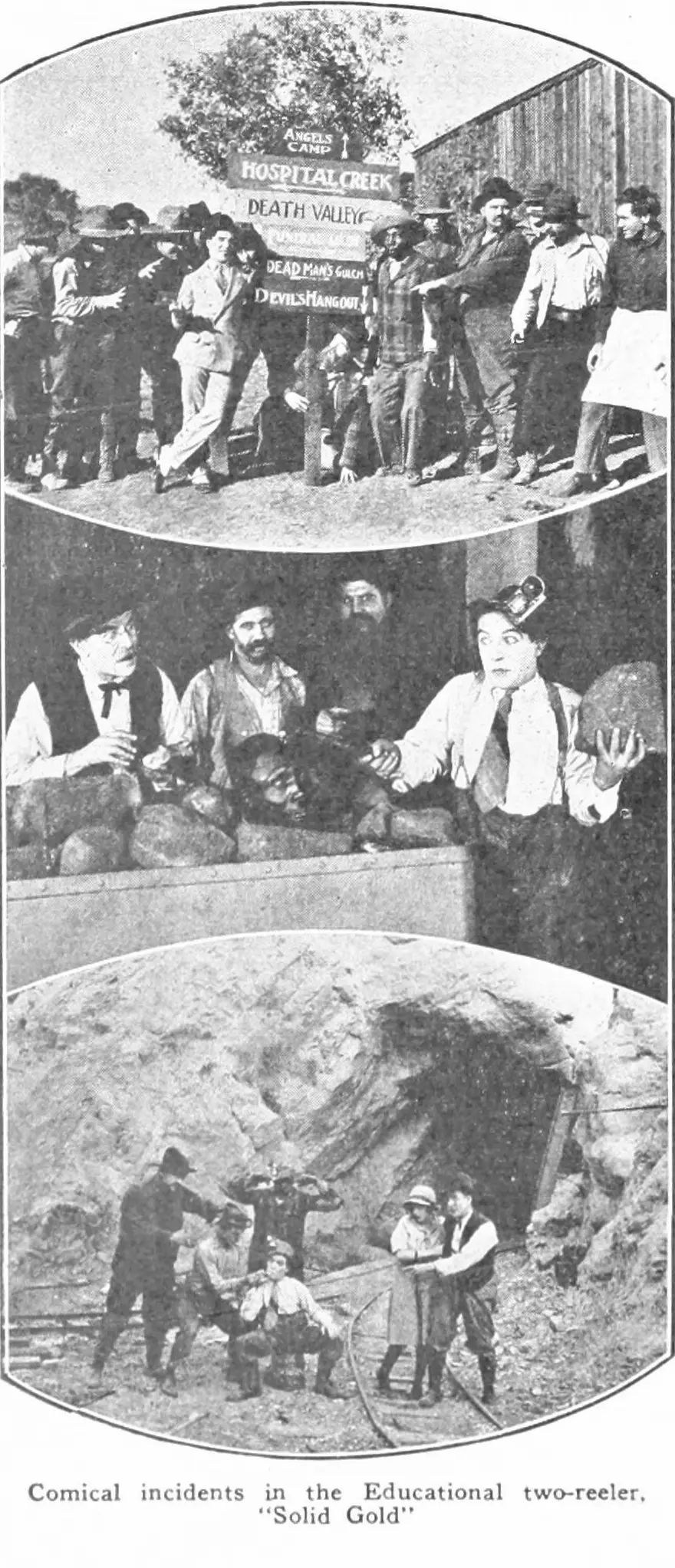
One could argue that the visual starkness actually enhances the comedy. Without the distraction of color or complex mise-en-scène, the viewer's attention is drawn directly to the physical actions and reactions. It strips away pretense, leaving only the raw humor of bodies in motion and objects in collision. This simplicity is both a strength and, for some modern viewers, a potential barrier.
'Solid Gold' exemplifies a particular brand of humor prevalent in the 1920s: broad, physical, and often reliant on escalating absurdity. It's a comedy of errors and collisions, where the punchline is almost always a physical pratfall or a well-placed kick. This is not the subtle character-driven comedy of Are Parents People?, but rather the boisterous energy of a live vaudeville act translated to the screen.
The tone is consistently light-hearted, despite the harshness of the setting and the perpetual peril Lige finds himself in. There's an underlying sense that no real harm will come to anyone, despite the constant kicks and chases. This allows the audience to laugh freely at the characters' predicaments without genuine concern for their well-being.
However, this reliance on purely physical gags can be a double-edged sword. While some sequences are genuinely inventive and laugh-inducing, others feel repetitive, especially to a modern audience accustomed to more varied comedic styles. The humor is foundational, but it doesn't always evolve beyond its initial premise. It's a snapshot of a particular comedic era, warts and all.
A strong, debatable opinion here is whether this relentless, almost brutal, slapstick truly holds up. While historically significant, its lack of variation might test the patience of even dedicated silent film fans. Sometimes, a little less chaos and a little more character nuance could have elevated it beyond a mere curiosity. But then, it wouldn't be 'Solid Gold'.
Yes, 'Solid Gold' holds value for specific audiences today. It's a fascinating artifact for film historians.
It showcases the raw energy of early physical comedy. Lige Conley's commitment is undeniable.
The kicking donkey is a standout, providing consistent, surprising humor. It's genuinely memorable.
However, its repetitive plot and simple gags might deter mainstream viewers. It lacks modern narrative complexity.
If you appreciate silent films and the origins of slapstick, give it a watch. Otherwise, temper your expectations.
Solid Gold is a fascinating, if imperfect, relic of silent-era comedy. Its unwavering commitment to physical farce, spearheaded by Lige Conley's tireless performance and that unforgettable kicking donkey, makes it a valuable watch for those with a keen interest in film history and the raw mechanics of slapstick. It’s not a film that will convert skeptics of silent cinema, nor will it offer profound insights into the human condition. Instead, it delivers exactly what it promises: a chaotic, relentless, and occasionally brilliant barrage of gags set against a dusty Western backdrop. It's a film that demands patience and a specific appreciation for its era, but for the right audience, it still manages to strike a vein of comedic gold. It’s worth a look, if only to witness the anarchic charm of a donkey who truly owns the screen.
IMDb —
1927
Community
Log in to comment.