DbcultAccessing Vault...
Cult Review
Senior Film Conservator
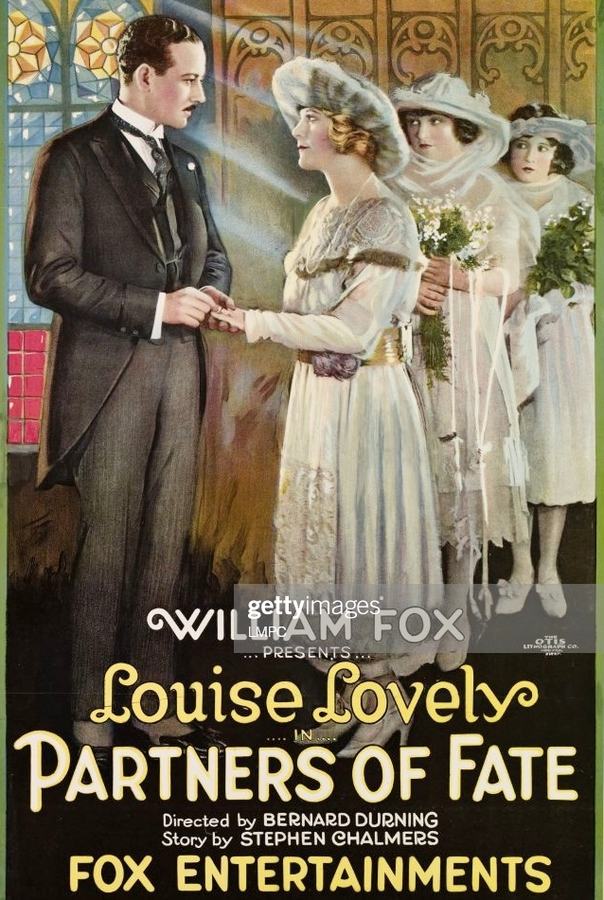
The year 1921 was a watershed moment for the silent film industry, a period where the primitive techniques of the previous decade were rapidly evolving into a sophisticated visual language. Within this milieu, Partners of Fate stands as a testament to the era's preoccupation with moral binaries and the inherent fragility of social constructs when faced with the raw power of nature. Directed with a keen eye for dramatic tension, the film transcends its simple 'shipwreck' premise to become a grueling interrogation of the human spirit.
At the heart of the film lies a fascinating juxtaposition of female archetypes. Rosemary Theby delivers a performance of remarkable restraint as Helen Meriless. Unlike the frenetic energy often found in silent-era acting, Theby utilizes subtle micro-expressions to convey a sense of gravitas and burgeoning dread. Her character is the moral anchor of the piece, a woman whose seriousness is not a lack of joy, but a depth of conviction. This stands in stark contrast to Louise Lovely’s portrayal of Frances Lloyd. Frances is the quintessential 'butterfly'—a creature of the moment, flitting from one sensation to another with little regard for the tectonic shifts occurring beneath her feet.
The film brilliantly mirrors these internal landscapes through their choice of partners. Helen’s marriage to a shallow man serves as a tragic irony; her depth is constantly met with the vacuity of a spouse who views the world through a keyhole. Meanwhile, Frances’s union with a level-headed engineer suggests a mismatch of a different kind—a collision between the whimsical and the structural. This setup is reminiscent of the thematic weight found in Master of His Home, where domestic power dynamics are scrutinized under a similarly unforgiving lens.
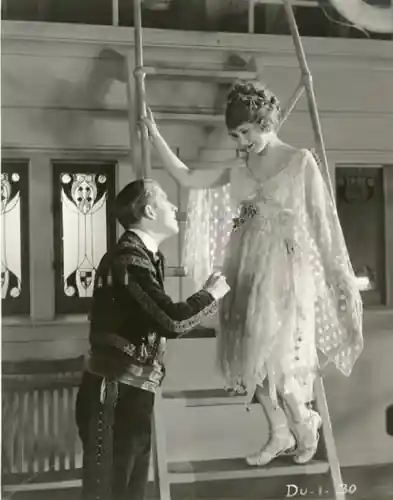
When the honeymoon ship sets sail, the cinematography adopts a rhythmic, almost hypnotic quality. The vastness of the ocean serves as a canvas for the impending disaster. The shipwreck sequence itself is a masterclass in early 20th-century practical effects. Without the crutch of digital manipulation, the filmmakers had to rely on scale models, clever editing, and the sheer physical endurance of the cast. The sense of claustrophobia and panic is palpable, rivaling the atmospheric tension in Yachts and Hearts, or The Opium Smugglers.
The shipwreck is more than a plot device; it is a narrative purgatory where the social masks of the characters are stripped away. In the water, titles, wealth, and reputations dissolve, leaving only the raw essence of the individual. It is here that the film’s central conflict—the 'mix-up' of the married persons—takes on a sinister, almost surreal quality. The physical displacement of the bodies serves as a metaphor for the displacement of their souls.
As the survivors struggle against the elements, the film takes a daring turn into the exploration of moral turpitude. Helen and her husband, despite the shallowness of the latter, remain tethered to one another by a sense of duty that borders on the sacred. Their fidelity is not merely a social obligation but a form of existential resistance against the chaos of the sea. In contrast, the 'butterfly' Frances and the 'level-headed' engineer find themselves drifting into the murky waters of adultery. The irony here is sharp: the man of logic and the woman of whimsy find common ground in their betrayal of the absent.

This betrayal is not depicted with the melodrama one might expect from 1921. Instead, it is shown as a slow erosion of character, a surrender to the immediate and the primal. It echoes the psychological complexities seen in The Moment Before, where the precipice of a decision defines the entirety of a life. The film poses a haunting question: is morality a fixed trait, or is it merely a luxury afforded by stability?
One of the most provocative sequences in Partners of Fate is the arrival of the rescue ship. In a move that must have shocked contemporary audiences, the rescue vessel carries away the faithless couple—Frances and the engineer—leaving Helen and her husband to languish in the wreckage. This subversion of the 'poetic justice' trope is a sophisticated narrative choice. It reflects a cynical reality where the opportunistic often thrive while the virtuous suffer. It brings to mind the harsh social commentaries found in The Melting Pot or the gritty realism of Cohen's Luck.
However, the film does not end in despair. The survival of Helen and her husband is not a result of luck, but of a quiet, persistent strength. Their eventual triumph is not just a physical rescue, but a moral vindication. They emerge from the ordeal not as victims, but as titans of character who have stared into the void and refused to blink. The contrast between their hard-won survival and the hollow 'rescue' of the adulterous couple provides a satisfying, if complex, resolution.
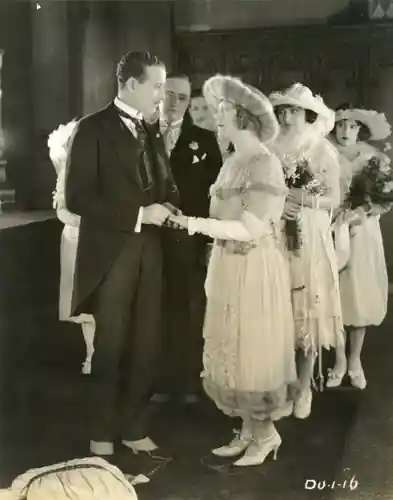
When placing Partners of Fate alongside its peers, its unique flavor becomes even more apparent. While Flirting with Fate approaches destiny with a lighter, more comedic touch, this film treats it with the solemnity of a Greek tragedy. The directorial hand of Robert Dillon ensures that the pacing never falters, even during the more contemplative moments on the life rafts. The writing by Stephen Chalmers provides a robust skeleton for the actors to flesh out, moving beyond the simplistic dialogue cards of the era to suggest deeper, unspoken subtexts.
Furthermore, the film’s exploration of 'the other woman' and 'the weak man' can be compared to the thematic arcs in Kvinden med de smukke Øjne, though 'Partners of Fate' leans more heavily into the environmental pressures as a catalyst for change. The use of the shipwreck as a transformative event is a trope that has been used since the dawn of storytelling, but here it feels fresh because the focus remains squarely on the psychological fallout rather than the spectacle itself.
George Siegmann, often remembered for his more antagonistic roles, brings a nuanced presence to the screen. His ability to command the frame adds a layer of tension to every scene he inhabits. William Scott, as the engineer, manages to make his character’s descent into infidelity feel tragically human rather than cartoonishly villainous. We see the cracks in his 'level-headed' exterior as the pressure of the situation mounts, a performance that resonates with the internal conflicts seen in Rule G.
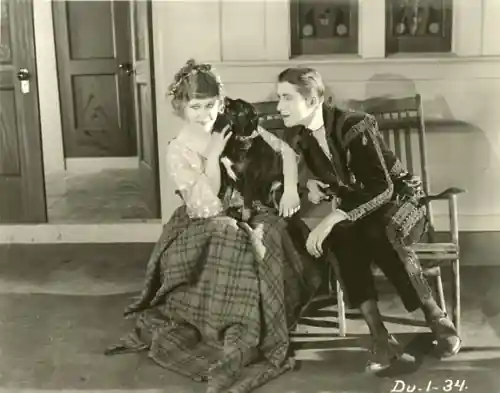
Eileen O'Malley and Richard Cummings provide solid supporting work, grounding the film in a recognizable reality that makes the extraordinary circumstances of the plot feel all the more impactful. The chemistry—or lack thereof—between the couples is the engine that drives the film forward. It is a masterclass in ensemble acting where every glance and gesture carries the weight of a thousand words.
The visual motifs in Partners of Fate are rich with symbolism. The butterfly imagery associated with Frances is not merely a character trait but a recurring visual theme that underscores her fragility and lack of direction. In contrast, the sea is portrayed as an ancient, indifferent force—a 'rattlesnake' of an ocean that strikes without warning, much like the unpredictable nature of life in The Rattlesnake. The use of shadow and light during the nighttime sequences on the water creates an expressionistic atmosphere that predates the heights of German Expressionism, showing that American cinema was also experimenting with the psychological power of the image.
One cannot overlook the influence of the 'melodrama' genre, yet the film avoids the pitfalls of the 'nutcracker' style of overacting found in some lesser works like The Nutcrackers. Instead, it maintains a dignified pace, allowing the audience to sit with the characters in their moments of quiet desperation. This stillness is perhaps the film's greatest strength, as it forces the viewer to confront the same moral quandaries as the protagonists.
In the grand tapestry of silent cinema, Partners of Fate remains a compelling, if sometimes overlooked, gem. It is a film that refuses to offer easy answers, choosing instead to dwell in the gray areas of human behavior. It challenges the notion that virtue is always rewarded and that vice is always punished, at least in the short term. Like the enduring themes of Pinocchio, it deals with the fundamental struggle of becoming 'real'—of finding one's true self through trial and tribulation.
For the modern viewer, the film offers a window into a world where the stakes of marriage and fidelity were inextricably linked to one's social and spiritual survival. It is a reminder of the power of cinema to reflect our deepest fears and highest aspirations. Whether viewed as a historical artifact or a timeless drama, Partners of Fate commands respect for its technical ambition and its unwavering commitment to exploring the darker corners of the human heart. It is a voyage worth taking, a maritime odyssey that leaves an indelible mark on the soul.
A cinematic relic that continues to resonate, proving that while fates may be partnered, character is forged in the isolation of the storm.

IMDb —
1935
Community
Log in to comment.