DbcultAccessing Vault...
Cult Review
Senior Film Conservator
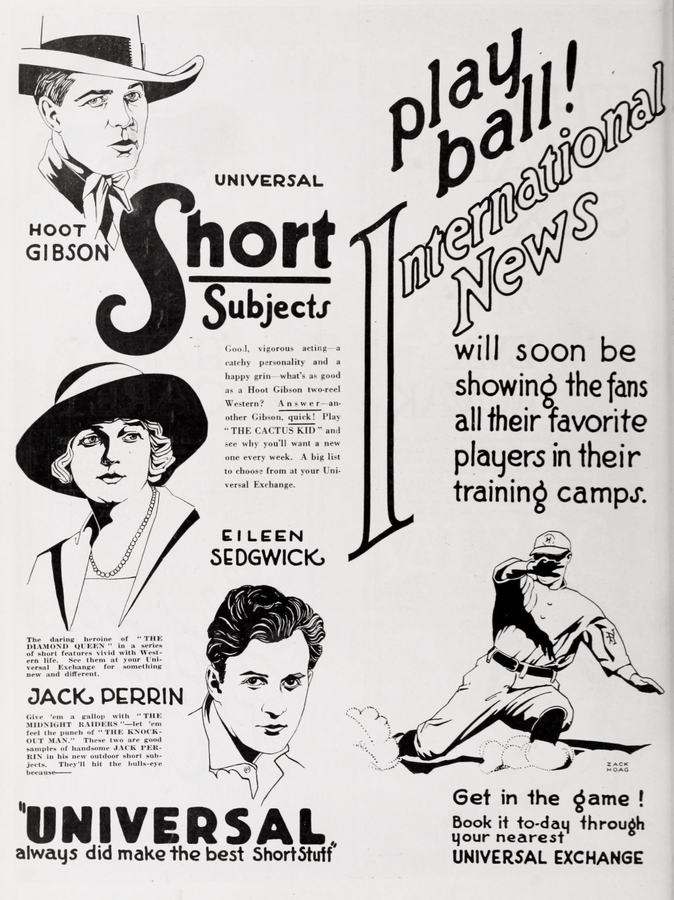
Picture a 1923 auditorium thick with coal-dust and hymnals: the projector rattles like an offering plate, and on-screen drifts the face of Abel Harding—eyes lowered in saintly forbearance yet burning with unspoken arithmetic. Jack Perrin, too often dismissed as a second-tier pretty-boy, here weaponizes that façade; every deferential nod registers as a ledger-mark against society’s overdraft of cruelty. The minister’s advice—"when smitten, offer the other cheek"—isn’t pastoral comfort but a social death sentence once whispered into a boomtown where masculinity is measured by the tonnage of crushed ore and broken noses.
Jim Corey’s villain, never dignified with a proper name beyond "the magnate’s nephew," swaggers through frame after frame in immaculate whip-cord suits, his grin a nickel-plated trophy. Corey played variations of this lout in Toonerville Tactics and Caught in the Act, yet here the type gains venom because the screenplay refuses to grant him psychological depth; he’s appetite incarnate, a walking ledger of IOUs collected in flesh. When he strikes Abel across the cheek in the company store, the camera lingers on the slap’s aftermath rather than the blow itself—an aesthetic choice that implicates our gaze, making voyeurs of us all.
The film’s stylistic DNA splices Scandinavian austerity with barn-storming melodrama. Cinematographer Charles Herzinger, who later lensed the snow-blinded fatalism of The Bells, shoots the mining village in high-contrast orthochromatic stock: picket fences shimmer like rows of teeth, while the chapel’s white clapboard radiates an almost radioactive glow. Yet once the narrative relocates to the dance pavilion—a cavern of mirrors and brass rails—he floods the set with top-lighting borrowed from German Expressionism, elongating shadows until every dancer becomes a fractured doppelgänger. The result is a moral fun-house: the longer Abel refuses to fight, the more grotesquely distorted his reflection becomes, as if the universe itself demands reciprocity in bruises.
"To turn the other cheek is not to refuse violence, but to defer it until the ledger of shame demands compound interest."
George H. Plympton’s intertitles, often a blunt instrument in silents, here achieve haiku-like economy. When Mary is dragged toward the pavilion, a single card flashes: "The hall swallowed her like a lion its daily lamb—yet lambs have been known to break teeth." The aphoristic tease foreshadows carnage while preserving the Hays-offending sensuality lurking beneath euphemism. Compare this with the moral absolutism of Straight Is the Way or the sentimental martyrdom in The Children Pay; Plympton allows violence a moral ambiguity that feels startlingly modern.
Though technically voiceless, the movie obsessively codes sound: the crunch of Abel’s boots on cinder paths, the pneumatic hiss of the telegraph office where Mary deciphers commodity prices, the phantom saxophones wailing from the pavilion. Contemporary exhibitors were encouraged to hire bar-band ragtime ensembles, but surviving cue sheets reveal Herzinger’s preferred playlist—muffled funeral marches segueing into off-key quadrilles. One can almost hear the absence of a proper score, a negative space that amplifies tension more acutely than any orchestral sting. In this negative-audio lies the film’s most subversive idea: that restraint itself is a form of deafening noise.
Louise Lorraine’s Mary initially appears a textbook captive: bound wrists, glistening eyes, ivory gown ripe for ruin. Yet her occupation telegraphs agency—literally. She mans the town’s nervous system of dots and dashes, deciding which grain prices, strike alerts, or marriage proposals travel faster than horseback. Thus her abduction is less sexual than infrastructural; the villain severs the community’s information artery. When Abel finally storms the pavilion, he’s not merely rescuing a damsel but restoring the telegraph’s pulse, a civic reboot disguised as heroics. Lorraine, sporting a Louise Brooks bob three years ahead of trend, weaponizes flapper modernity against patriarchal expectation; her final smile at Abel carries the weary knowledge that tomorrow she’ll still earn half his wage for twice the responsibility.
At a trim 58 minutes, the film devotes nearly ten to the sustained melee—an eternity in nickelodeon pacing. Chairs splinter into tindery fireworks, a chandelier crashes in stop-motion increments, and a mirror wall implodes, each shard catching a micro-image of fists. Herzinger alternates wide shots that map geography with insert cuts of Corey’s sneer dissolving into terror, achieving Eisensteinian montage long before Soviet theorists codified the dialectic. Yet the sequence’s true genius lies in its refusal to score a triumphant major chord; when Abel finally stands victorious, chest heaving, the camera retreats to a high angle that miniaturizes him amid rubble. Triumph looks indistinguishable from desolation.
Compare this with the climactic shootout in The Little Rowdy, where justice arrives via deus-ex-posse, or the operatic self-immolation that closes Die Insel der Seligen; The Knockout Man offers no moral evacuation route. Abel’s community hails him, yet the empty hall behind whispers that violence, once loosed, circles like a debt collector.
Early press kits claimed the story was "preached in prairie chapels every Sunday," but the film’s hermeneutics skew heterodox. Abel’s cheek-turning mirrors the 16th-century Anabaptist refusal of civic oaths, yet his final eruption inverts the Mennonite martyrdom narrative—he becomes the wrathful Yahweh rather than the crucified Nazarene. One senses Plympton wrestling with post-WWI disillusionment: if global slaughter rendered pacifism quaint, what theological grammar remains except the primal lexicon of fists? The question lingers, unanswered, in the fade-out tableau of Abel and Mary exiting the ruined pavilion while the distant church bell tolls—an ambiguous chime that could summon worshipers or workers to the next shift.
Contemporary trade papers praised the film’s "clean moral wallop" yet derided its "pugilistic piety" as box-office poison outside the Bible Belt. Regional exhibitors paired it with sermons, boxing lessons, even coyly promoted "mirror-ball dances"—a shameless bait-and-switch that kept receipts healthy. Yet by 1925, rights lapsed, prints vanished, and the title survived only as a ghost entry in distributor ledgers. A 2014 nitrate rescue in a defunct Montana mining warehouse yielded a 35mm element, incomplete but restorable; the 4K scan premiered at Pordenone, revealing Herzinger’s chiaroscuro in sulphuric detail. Now streaming via several boutique platforms, The Knockout Man enters the digital commons just as modern discourse wrestles with toxic masculinity, pacifist ethics, and the spectacle of violence—all themes baked into its very emulsion.
Perrin’s eyelid flutter, Corey’s millisecond sneer, Lorraine’s finger hovering above the telegraph key—each micro-gesture is tuned like a watch spring. Silent-film acting often invites modern scorn for semaphore histrionics, yet here restraint rules. Watch Perrin’s shoulders during the first cheek-slap: they don’t flinch backward but forward, a subtle pugilistic reflex barely suppressed. It’s a masterclass in pre-Method physical coding, worthy of comparison to Conrad Veidt’s restrained hysteria in The Bells or Henri Krauss’s haunted patriarch in Le Dieu du hasard.
Herzinger’s mirror-shard baptism prefigures the climax of The Lady from Shanghai, while the working-class fatalism anticipates Italian neorealism by two decades. One can splice DNA strands from this film into Voices’ moral ambiguity, the child-as-currency dilemma of Orphans of the Storm, even the floral fatalism in Die weißen Rosen. Yet its true progeny lie in post-war westerns—Shane’s reluctant gunslinger, High Noon’s civic abandonment, Unforgiven’s cost-accounting of violence. The genealogy is unmistakable once you squint past the title cards.
The Knockout Man is both barn-stormer and philosophical treatise, a film that delivers pulp catharsis while gnawing at the ethical scaffolding beneath. Restoration reveals scratches, chemical stains, even the splice-marks of projectionists who trimmed "objectionable" pacifist stretches for rowdier houses—scars that render the print itself a palimpsest of American ambivalence. Watch it once for the thrill of seeing a chapel-going pacifist detonate into a one-man wrecking crew; watch it again to notice how the camera lingers on the villain’s broken pocket-watch—its hands frozen at the moment Abel turned the other cheek, reminding us that time, like morality, can shatter under sufficient pressure.
Stream it late at night when the world outside feels similarly fractured; let its yellow-lit faces, sea-blue shadows, and bursts of burnt-orange violence seep into your conscience. Then ask yourself: if struck today, which cheek would you offer—and what interest would the universe charge on that deferred vengeance?
Rating: 9/10
IMDb 4.6
1931
Community
Log in to comment.