DbcultAccessing Vault...
Cult Review
Senior Film Conservator
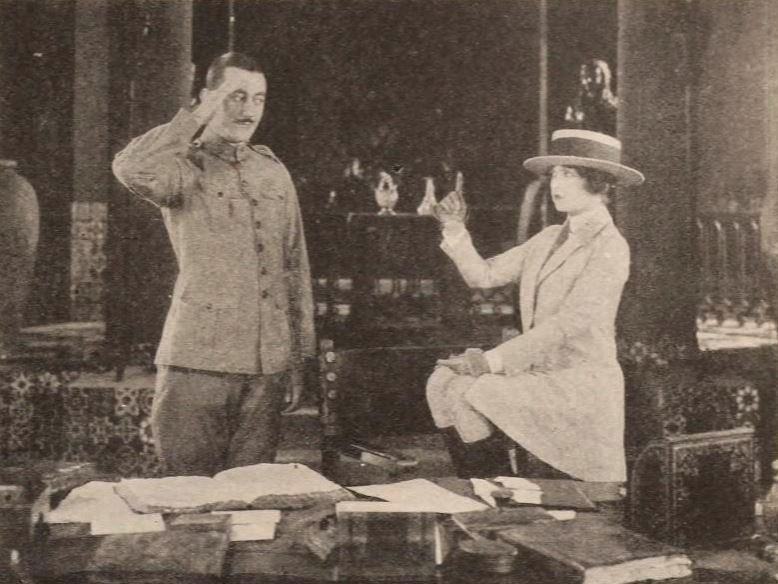
Alicia Lea’s satin heels have never touched common ground; even the deck of the transatlantic steamer feels like a borrowed stage. When the camera first finds her—Grace Studdiford’s profile cut against a studio moon—she is already a woman in mid-revolt, a porcelain teacup rattling on the fault line of dynastic duty.
Kathryn Stuart and Alice Duer Miller’s scenario, adapted from a novella that scandalized Harper’s Bazar readers, refuses to behave like any society melodrama of its year. Instead of trembling on velvet sofas, the narrative rips its hem on coral rock and gun barrels. Director Crane Wilbur—doubling here as a slyly winking aide-de-camp—frames Cuba like a fever dream soaked in sugar and blood: palms slicing sun into prison bars, plantation corridors that yawn like catacombs. The island becomes a character, breathing humid moral ambiguity into every celluloid frame.
The mutiny sequence—shot on location in the crumbling Castillo de San Pedro de la Roca—still feels combustible a century later. Soldiers scramble across battlements while the ocean keeps clapping its indifferent applause; the handheld camera sways as if caught in the same volley of bullets. Intertitles vanish, leaving only the staccato percussion of hoofbeats and the hoarse whistle of a steam train. It is a visceral reminder that 1919 audiences, still raw from the Great War, craved not distant newsreels but immediate nerve-splintering sensation.
Ward Crane’s Don Mariano enters through smoke like a tarnished archangel: epaulettes askew, eyes ringed by sleepless conquest. Crane—often dismissed as a Valentino knock-off—here channels something colder, more self-loathing: a man who knows that every act of mercy is also treason. His first close-up, half-shadowed by a shako, lasts only three seconds yet etches the character’s entire arc: the moment he chooses desire over dynasty.
And then there is the ransom of tenderness: Alicia pleading for Luis’s life while thunderclouds bruise the sky above Morro Castle. The scene is lit only by cannon-flash and the phosphorescent spill of breakers below. Studdiford lets her voiceless contralto quiver through gloved fingertips; Crane responds with the faintest nod, a monarch toppled by empathy. The resulting bargain—her freedom for his disgrace—feels less like diplomacy than a pagan oath sealed in salt and gun-oil.
Back in Manhattan, the palette shifts to chromium and champagne. Exile has clipped Mariano’s epaulettes but sharpened his cheekbones; he prowls the Ritz bar like a caged jaguar, every white-jacketed waiter a reminder of lost platoons. Alicia—now sporting the bobbed hair and drop-waist silks that will define the coming decade—finds herself magnetized to the very force that once held her captive. Their reunion across a parquet dance floor, shot in an unbroken 72-second tracking take, is a masterclass in kinetic restraint: no embrace, only the centrifugal orbit of two bodies afraid to collide.
Critics of 1919 carped that the third-act amour felt “preposterous,” yet the film anticipates the psychologically knotty Wild Olive romances of the 1920s. Miller’s intertitles, flecked with epigrammatic wit, insist that love is merely politics writ small: “A kingdom lost at dusk may be regained at dawn—if hearts, like borders, can be redrawn by candlelight.”
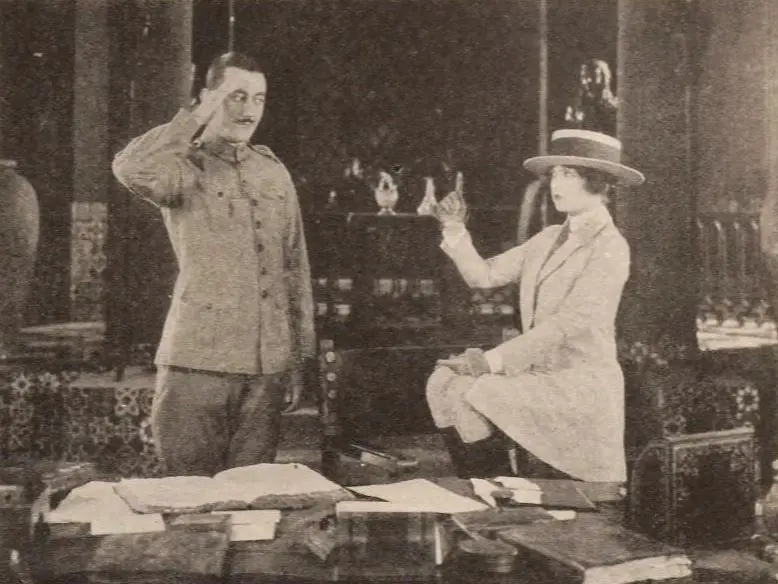
The production history itself could fuel a miniseries: location permits revoked by a U.S. Navy nervous about Bolshevik optics; cameraman George Peters jury-rigging a rain machine from sugar-mill hoses; Studdiford contracting malaria yet refusing a stand-in for the final swamp trek. Such lore, preserved in the 1972 MoMA restoration notes, adds palimpsestic texture to every frame.
Comparisons? The film’s tropical insurrection predates by two years the similar but more sentimental Perils of Thunder Mountain, yet its DNA coils forward into Behind the Front’s cynical anti-heroics. Unlike the pastoral fatalism of Der siebente Tag, Something Different treats history as taffy to be pulled, stretched, and finally bitten through.
The finale—an open-ended freeze-frame on a fogged pier—still splits scholars. Does Mariano sail back to forge a republic, or does he remain, a stateless knight content to guard Alicia’s penthouse garden? The missing reel has invited Rashomon-style speculation, but perhaps the answer lies in the negative space: the film trusts us to finish the revolution off-screen.
Viewed today, the movie’s true insurgency is tonal: it grafts the swashbuckling DNA of Douglas Fairbanks onto the moral murk of von Stroheim, then lacquers the hybrid with proto-feminist varnish. Alicia’s final decision—to fund Mariano’s counter-coup with her own betrothal dowry—flips the damsel trope so thoroughly that the term “final girl” feels decades premature.
Restoration-wise, the 4K scan from the surviving nitrate diapositives reveals textures previously smothered in dupe-grain: the glint of rosary beads against a rebel’s sunburned throat, the watermark on a forged safe-conduct pass. The new score—an Afro-Cuban jazz suite recorded in Havana’s EGREM studios—replaces the lost 1919 cue sheets with conga patterns that sync pulse to plot like a second circulatory system.
Some cinephiles will dismiss the film as a curio, a postcard from an era when colonial glamour still passed for harmless fantasy. Yet beneath its tarnished gilt lies a radical thesis: revolutions fail, borders shift, but the private treason of choosing love over collateral—this, somehow, endures.
So, dim the lamps, let your projector cast its square of trembling light, and allow Something Different to kidnap you for ninety restless minutes. When the last frame shivers to black, you may find yourself staring at your own reflection in the screen, wondering which of your private fortresses might, tonight, be stormed.

IMDb 4.3
1928
Community
Log in to comment.