DbcultAccessing Vault...
5.7/10
Senior Film Conservator
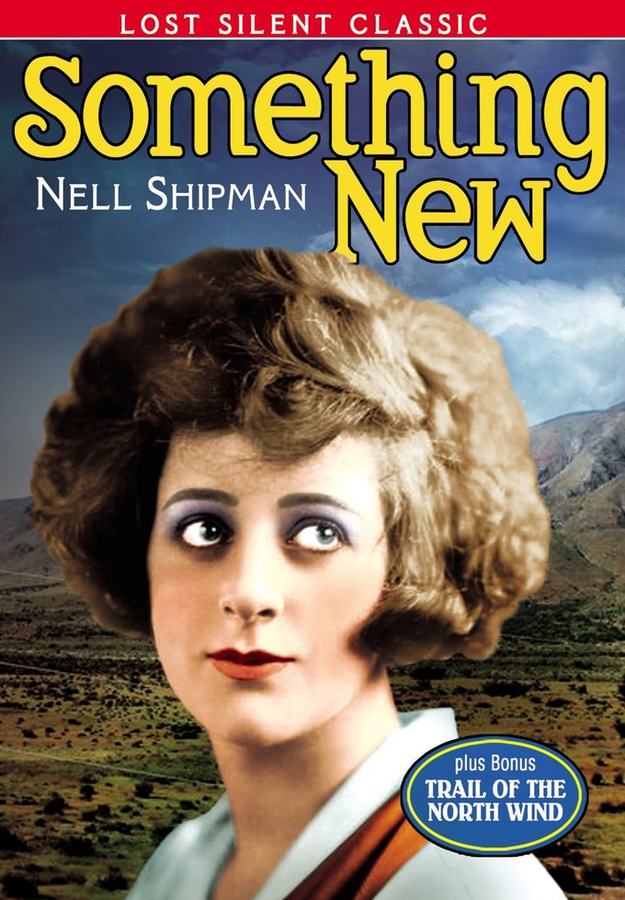
A definitive 5.7/10 rating for a film that redefined the boundaries of cult cinema. Something New remains a cornerstone of transgressive art.
In an era when cinema was still finding its voice, often relying on the familiar tropes of the Western frontier, Something New emerges not merely as a film, but as a fascinating artifact of burgeoning cinematic ingenuity. Released at a pivotal moment in the industry’s evolution, this particular feature, co-written by and starring the indomitable Nell Shipman, dares to inject a startlingly modern sensibility into a classic narrative framework. Forget the galloping steeds and dusty posses; here, the metallic clang and chugging engine of an automobile become the unlikely hero, a mechanical steed tearing across the desolate Mexican landscape. This choice alone elevates the film beyond a simple kidnapping drama, transforming it into a compelling study of technology's disruptive power against the backdrop of an untamed world.
The premise itself, while straightforward, gains considerable potency from its execution: a woman, navigating the perilous borderlands, falls prey to a band of ruthless bandits. Her subsequent abduction to a remote, sun-scorched hideaway sets the stage for her friend Bill's desperate, unconventional rescue attempt. What makes Something New truly distinct is this very 'newness' embedded in its title – the audacious decision to cast an automobile, rather than the ubiquitous horse, as the primary vehicle for pursuit and salvation. This wasn't merely a narrative flourish; it was a bold statement on the changing times, a cinematic embrace of the machine age that was rapidly reshaping global society. The juxtaposition of a sleek, albeit rudimentary, motorcar against the ancient, rugged terrain of the Mexican desert creates a visual and thematic tension that resonates even today.
Nell Shipman, a figure often overlooked in mainstream film history, was a force of nature—an actress, writer, and producer who consistently pushed boundaries. Her involvement in Something New is palpable, infusing the kidnapped woman with a spirit of resilience that transcends mere victimhood. Shipman's characters often embodied a fierce independence, a connection to nature, and an inherent strength that defied the demure archetypes prevalent in early cinema. One might draw parallels to the adventurous spirit found in films like Pettigrew's Girl, where female agency, even within romantic or dramatic confines, was beginning to assert itself. Here, Shipman's character, despite her predicament, is not a passive damsel. Her very survival, her quiet defiance, speaks volumes in the silent medium. This active portrayal of women, even in distress, was a hallmark of Shipman's work and a significant contribution to the evolving cinematic landscape.
The collaborative writing credit shared with Bert Van Tuyle likely contributed to the film's nuanced characterizations and dynamic pacing. Shipman’s personal experiences and her deep appreciation for the wilderness often found their way into her narratives, lending an authenticity to the harsh environments depicted. The desert in Something New isn't just a backdrop; it's an antagonist, a character in itself, testing the limits of both the human spirit and mechanical endurance. This environmental realism sets it apart from more stylized studio productions of the time, grounding the fantastical elements of a car chase in a gritty, tangible reality.
The decision to feature an automobile so prominently in a rescue mission was nothing short of revolutionary for its time. While other films might have hinted at modernity, Something New plunges headfirst into it. The spectacle of a car navigating treacherous, unpaved Mexican terrain offered a thrilling novelty that would have captivated audiences. Imagine the visual impact: the dust clouds kicked up by tires, the precarious ascents and descents, the sheer audacity of attempting such a feat without the benefit of paved roads. This wasn't just a prop; the car was an extension of Bill's resolve, a symbol of human ingenuity against overwhelming odds. It transforms the rescue from a conventional Western pursuit, as seen in countless horse-centric dramas like Western Blood, into something altogether more modern and exhilarating.
The logistical challenges of filming such sequences in remote, rugged locations without the sophisticated equipment of today would have been immense. The crew, under the direction, must have faced incredible hurdles, from transporting the vehicle to ensuring its operational integrity in such harsh conditions. This commitment to realism, to actually taking the car into the wild, speaks volumes about the ambition behind the project. It prefigures the burgeoning genre of automotive action, laying groundwork for future car chases that would become staples of cinematic thrillers. The film implicitly asks: how far can human will and mechanical innovation push the boundaries of what's possible, especially when a life hangs in the balance?
In the absence of spoken dialogue, silent films relied heavily on visual storytelling, expressive acting, and masterful editing to convey emotion and drive narrative. Something New, with its high-stakes premise, undoubtedly leveraged these techniques to build palpable tension. The desperation of the kidnapped woman, the grim determination of Bill, and the menacing presence of the bandits would have been communicated through exaggerated gestures, facial expressions, and strategic close-ups. The pacing of the film, particularly during the chase sequences, would have been crucial, employing quick cuts and dynamic camera angles (within the limitations of the era) to create a sense of speed and urgency.
The use of intertitles would have been sparse but impactful, providing critical plot points or emotional insights, allowing the visuals to carry the bulk of the narrative weight. The vast, empty vistas of the Mexican landscape, captured with what would have been cutting-edge cinematography, would have emphasized the isolation and danger of the situation. This visual grandeur, combined with the personal stakes, elevates the film beyond a mere action flick into a more resonant exploration of human endurance. It showcases how effectively silent cinema could evoke powerful emotions and tell complex stories without uttering a single word, relying instead on the universal language of sight and movement.
The performances by Nell Shipman herself, alongside L.M. Wells, Tom Hawley, Bert Van Tuyle, J. Wesley Warner, and Merrill McCormick, are integral to the film's success. Shipman, as the central figure of distress and resilience, anchors the emotional core. Her ability to convey fear, hope, and determination through her physicality alone would have been critical. L.M. Wells, as Bill, embodies the stoic, resourceful hero, his character's ingenuity in employing the automobile a testament to his practical resolve. The bandits, portrayed by actors like Tom Hawley and Merrill McCormick, needed to project a palpable sense of threat without resorting to caricature, a delicate balance in silent film where villainy could easily become cartoonish. Their collective efforts contribute to a sense of genuine peril, making the rescue feel earned and impactful.
The film doesn't just present a binary of good versus evil; it implies a struggle against the very elements and the harsh realities of a lawless frontier. The actors, through their embodied performances, transform what could be one-dimensional roles into compelling figures caught in a desperate situation. The silent era demanded a unique kind of theatricality, a larger-than-life yet believable portrayal of human experience, and the cast of Something New appears to have risen to that challenge, creating memorable, albeit wordless, dramatic turns.
Something New, despite its age and relative obscurity compared to some of the era's grander productions, holds a significant place in the tapestry of film history. It stands as a testament to the experimental spirit of early filmmakers, their willingness to challenge conventions and incorporate contemporary innovations into their narratives. The film's unique approach to the action genre, particularly its embrace of automotive technology, foreshadows countless thrillers and adventure films that would follow. It's a precursor to the exhilarating car chases that would become a staple of cinema, from the dusty roads of Westerns to the asphalt jungles of modern blockbusters.
Its exploration of human resilience against both natural and man-made threats, coupled with its innovative use of setting and technology, makes it a valuable piece for anyone interested in the evolution of cinematic storytelling. While films like The Life and Passion of Jesus Christ offered grand spectacles of religious narrative, and others like Merely Mary Ann delved into romantic drama, Something New carved out its own niche by blending adventure with a distinctly modern twist. It reminds us that innovation isn't solely the domain of special effects; sometimes, it's in the simple, audacious choice to replace a horse with a car, and in doing so, redefine an entire genre.
The very title, Something New, encapsulates its essence. It was an attempt to break from the expected, to inject vitality into familiar cinematic patterns. It’s a film that speaks to the enduring human fascination with speed, escape, and the triumph of ingenuity. For scholars and enthusiasts of early cinema, it offers a rich ground for exploration into themes of modernity, gender roles, and the sheer audacity of filmmaking in its nascent stages. It's a thrilling, albeit silent, journey that continues to resonate with its bold vision and its pioneering spirit.
Understanding Something New also requires an appreciation for the technological and artistic constraints of its era. Filming on location in remote areas presented challenges far greater than those faced by today's crews. The cameras were bulky, lighting was often reliant on natural sunlight, and the sheer logistics of transporting equipment and personnel across rugged terrain were formidable. Yet, it is within these very limitations that the film’s raw energy and authenticity shine through. The dust, the sun, the struggle – these elements feel genuinely earned, not manufactured.
Moreover, the cultural context of the early 20th century, with its rapid industrialization and the growing ubiquity of the automobile, provides a vital backdrop. The car wasn't just a mode of transport; it was a symbol of progress, freedom, and modernity. To integrate it so centrally into a narrative of peril and rescue was to tap into the zeitgeist of the time, making the film incredibly relevant to contemporary audiences. This integration of technological marvels into narrative was a common thread in forward-thinking films, much like the scientific curiosity that might have been explored in a different vein in something like Genie tegen geweld, though with vastly different thematic outcomes.
The film's daring spirit, both in its narrative choices and its production challenges, aligns it with other ventures that pushed boundaries, whether it was the dramatic intensity of War and the Woman or the moral complexities explored in The Root of Evil. Each, in its own way, sought to capture a facet of human experience, but Something New did so with an undeniable, gasoline-fueled zest for adventure. It's a reminder that true innovation often lies in the willingness to take a familiar story and infuse it with an unexpected, electrifying twist, transforming the mundane into the magnificent, and forever altering the cinematic lexicon of action and suspense.
Ultimately, Something New offers more than just a historical curiosity; it's a vibrant, compelling piece of early cinema that continues to captivate with its audacious premise and its earnest execution. It showcases the raw power of visual storytelling, the enduring appeal of a desperate rescue mission, and the exciting potential of technology to reshape narrative. Nell Shipman's vision, combined with the groundbreaking use of the automobile, secures its place as a fascinating, forward-thinking film that dared to be different. It’s a testament to the fact that even in the silent era, filmmakers were not afraid to make some noise, to push the boundaries of what was possible on screen, and to deliver an experience that was, quite literally, 'something new'. The film's legacy is not just in its plot, but in its bold statement about progress and the relentless human spirit, making it a valuable subject for rediscovery and appreciation in today's cinematic landscape.

IMDb —
1922
Community
Log in to comment.