DbcultAccessing Vault...
Cult Review
Senior Film Conservator
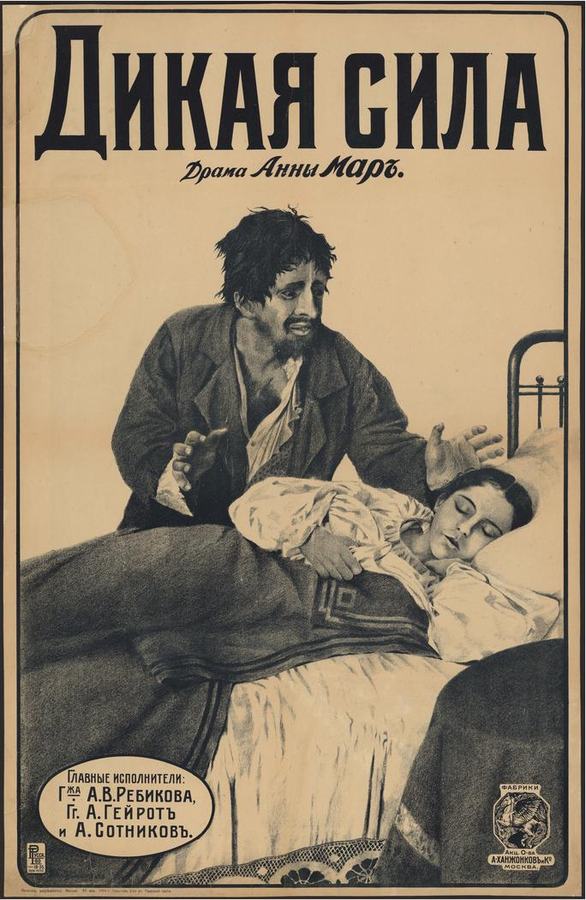
'Dikaya sila', a title that resonates with both lyrical beauty and stark brutality, unfurls a narrative tapestry woven with the threads of ardent desire, societal condemnation, and the indomitable yet ultimately tragic spirit of its protagonist. Penned by the insightful Anna Mar, this cinematic endeavor transcends mere melodrama, ascending to a profound meditation on the human condition, particularly as it intersects with the rigid dictates of early 20th-century Russian society. It is a film that does not merely tell a story; it immerses the viewer in a maelstrom of emotional upheaval, making a visceral case for the destructive potential of passion untethered from prudence, and the crushing weight of a world unforgiving of transgression.
At the heart of 'Dikaya sila' lies Anna, a character whose essence is captured with a nuanced vulnerability and fierce independence. Her journey begins in a pastoral idyll, a provincial landscape that mirrors her own uncorrupted spirit. The camera lingers on her, often framed against vast, untamed backdrops, visually reinforcing the 'wild power' that resides within her. This initial portrayal establishes a baseline of innocence that is crucial for understanding the profound corruption and eventual desolation she endures. Her purity is not naive; it is a strength, a refusal to conform to the artifice that defines the world she is soon to encounter. This makes her subsequent fall all the more poignant, akin to the wilting of a rare, exotic flower plucked from its natural habitat and forced into an alien environment. The film's masterful direction ensures that Anna is never merely a victim; she is an active participant in her own destiny, even when those choices lead to ruin. Her agency, however constrained by circumstance, remains a vital, throbbing pulse throughout the narrative.
The catalyst for her transformation is Pavel, brought to life by Aleksandr Geirot with a mesmerizing blend of aristocratic ennui and dangerous charm. Geirot's performance is a study in calculated allure, his Pavel a predator who mistakes infatuation for genuine affection, his actions driven by a fleeting desire for novelty rather than profound connection. He is the archetypal 'man of the world', jaded and cynical, yet possessing an undeniable magnetism that proves irresistible to Anna's untutored heart. The initial scenes between them crackle with an almost palpable tension, a dance between innocence and experience that is both captivating and foreboding. Geirot artfully conveys Pavel's internal vacillation, the moments of genuine tenderness interspersed with glimpses of his inherent selfishness, creating a character who is neither wholly villainous nor entirely sympathetic. This complexity is vital, preventing the narrative from devolving into a simplistic tale of seduction and betrayal. Instead, it becomes a more profound exploration of the fatal attraction between disparate worlds and moral codes.
In stark contrast to Pavel's volatile passion stands Ivan, portrayed with quiet dignity and profound sincerity by Andrey Sotnikov. Ivan is the embodiment of steadfast love, a moral anchor in Anna's turbulent life. His unrequited devotion is a silent, aching presence throughout the film, a beacon of pure affection that Anna, blinded by her tempestuous affair, tragically overlooks. Sotnikov's performance is a masterclass in understated emotion, conveying a world of sorrow and loyalty through subtle gestures and expressive eyes. He represents the path not taken, the stable, honorable future that Anna forsakes for the intoxicating but ultimately destructive embrace of Pavel. The contrast between Ivan and Pavel is not merely a narrative device; it is a thematic cornerstone, highlighting the dichotomy between fleeting infatuation and enduring love, between societal glamour and genuine human connection. His eventual offer of marriage, a selfless act of profound grace, serves as the ultimate testament to his character, a moment of profound emotional resonance that underscores the tragedy of Anna's inability to accept such a pure form of salvation. One might draw parallels to the steadfast, often suffering, male figures in films like La dame aux camélias, where true devotion often goes unrecognised until it is too late.
The societal forces that conspire against Anna are personified with chilling efficacy by Mariya Khalatova as the Baroness Elena and Aleksandra Rebikova as Ksenia. Khalatova's Baroness is a formidable presence, a matriarchal figure whose every glance and utterance drips with aristocratic disdain and a rigid adherence to social convention. She represents the unyielding, unforgiving nature of the upper echelons, a force of tradition that crushes any deviation from its established norms. Her performance is a nuanced portrayal of power and prejudice, conveying the destructive impact of societal judgment without resorting to caricature. Rebikova's Ksenia, Pavel's fiancée, is equally compelling in her portrayal of calculated ambition and simmering resentment. She is not merely a jealous rival; she is a product of her environment, driven by the need to secure her position within a society where status is paramount. Her interactions with Anna are laced with a subtle cruelty, a quiet assertion of her superior social standing that underscores Anna's growing isolation. These characters are not simply antagonists; they are the living embodiment of the 'iron cage' of societal expectations, a theme echoed in the tragic societal pressures seen in films like Syndens datter, where a woman's fate is often sealed by the judgment of her peers.
Anna Mar's screenplay for 'Dikaya sila' is a masterclass in dramatic construction, eschewing simplistic morality tales for a complex exploration of human frailty and societal hypocrisy. The narrative unfolds with a relentless, almost classical inevitability, each choice leading inexorably to the next, building towards a climax that is both devastating and profoundly logical within the film's established universe. Mar's writing imbues each character with a believable interiority, ensuring that even the most seemingly minor figures contribute to the overarching thematic concerns. The dialogue, though sparse in some moments, is potent and economical, conveying volumes through carefully chosen words. The pacing, too, is meticulously crafted, allowing moments of quiet introspection to breathe amidst the escalating drama. This considered approach elevates 'Dikaya sila' beyond the confines of its genre, transforming it into a timeless commentary on the perils of unchecked passion and the unforgiving nature of a world that often punishes innocence more severely than vice. The emotional arc of Anna is drawn with such precision that her ultimate fate feels less like a narrative contrivance and more like a tragic, yet unavoidable, consequence of the forces that have converged upon her.
The film's thematic depth extends beyond individual suffering to critique the very fabric of the society it portrays. It lays bare the double standards, the class divisions, and the suffocating expectations placed upon women. Anna's plight is not merely a personal tragedy; it is a microcosm of a larger societal malaise, a critique of a system that offers little solace or recourse to those who dare to stray from its prescribed path. In this regard, 'Dikaya sila' aligns with other cinematic narratives of social critique, such as Frou Frou, which similarly explores the limitations and entrapments faced by women within restrictive social frameworks. The film refuses to offer easy answers or convenient resolutions, instead opting for a stark realism that leaves a lingering impression long after the credits roll.
The visual grammar of 'Dikaya sila' is as compelling as its narrative. The cinematography masterfully utilizes the stark beauty of the Russian landscape, contrasting the wild, expansive natural world with the opulent yet suffocating interiors of aristocratic estates. This visual juxtaposition reinforces the central conflict between Anna's untamed spirit and the restrictive confines of societal expectations. The use of light and shadow is particularly noteworthy, often mirroring Anna's internal state. Bright, open shots characterize her early life, gradually giving way to darker, more claustrophobic compositions as her circumstances become increasingly dire. The costumes and set designs are meticulous, transporting the audience to the era with an authenticity that enhances the film's immersive quality. Every detail, from the intricate lacework on a gown to the rustic simplicity of a peasant's dwelling, contributes to the rich tapestry of the film's world. The overall atmosphere is one of brooding intensity, punctuated by moments of fleeting joy and profound sorrow, creating an emotional landscape that is both beautiful and haunting. The director’s keen eye for composition and ability to evoke mood through visual means is reminiscent of the atmospheric storytelling in films like Dust, where the environment itself becomes a character, shaping the destinies of those who inhabit it.
'Dikaya sila' is more than just a period drama; it is a timeless exploration of themes that continue to resonate. The destructive nature of forbidden love, the unyielding grip of social stratification, the resilience of the human spirit in the face of insurmountable odds – these are universal concerns that transcend cultural and temporal boundaries. The film's enduring power lies in its ability to evoke genuine empathy for its characters, even as it critiques their choices and the society that shaped them. It forces the audience to confront uncomfortable truths about human nature and the often-cruel realities of the world. The performances, particularly those of Geirot, Sotnikov, Khalatova, and Rebikova, are uniformly excellent, each actor contributing to the rich, complex tapestry of the narrative. Their collaborative efforts bring Anna Mar's vision to vivid, heartbreaking life, ensuring that each character leaves an indelible mark. The final act, in particular, is a masterstroke of emotional storytelling, culminating in a resolution that is both devastating and deeply profound, leaving the viewer to ponder the true cost of passion and the definition of freedom. Much like the intense psychological drama of Beatrice Cenci, 'Dikaya sila' delves into the depths of human suffering and the societal pressures that often lead to tragic outcomes, cementing its place as a significant work in cinematic history.
The very title, 'Dikaya sila', encapsulates the essence of the film: the untamed, often destructive, force of human emotion and the relentless power of circumstance. It is a force that can elevate one to ecstatic heights or plunge them into the deepest despair. Anna embodies this wild power, her spirit refusing to be entirely broken even as her world crumbles around her. Her final, devastating decision, while tragic, can also be interpreted as a defiant act of reclaiming her agency, a final assertion of her 'wild power' in a world that sought to tame and destroy her. This complexity ensures the film's longevity, prompting ongoing discussion and interpretation. It serves as a powerful reminder that even in seemingly conventional narratives, there exists a profound capacity for exploring the intricate nuances of human experience. The film's ability to provoke such deep reflection is a testament to its artistic integrity and the enduring power of its storytelling. It does not merely entertain; it challenges, it questions, and it ultimately leaves an indelible imprint on the viewer's consciousness, much like the unforgettable moral dilemmas presented in Should a Wife Forgive? or the intricate character studies found in The Social Secretary, demanding a deeper engagement with its core themes and characters. The enduring relevance of 'Dikaya sila' lies precisely in this capacity to transcend its historical setting and speak to universal truths about love, loss, and the eternal struggle between individual desire and societal constraint.

IMDb 5.8
1919
Community
Log in to comment.