DbcultAccessing Vault...
Cult Review
Senior Film Conservator
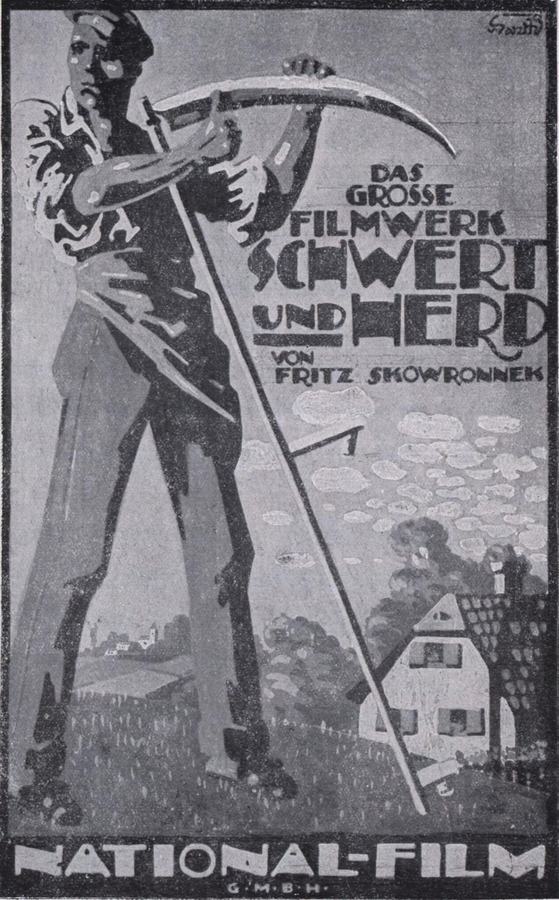
There’s a certain melancholic beauty to a silent film, isn't there? A world communicated through gesture, expression, and the stark poetry of intertitles. It demands a different kind of engagement, a willingness to fill in the sonic tapestry with one's own imagination. And among the myriad cinematic treasures of that bygone era, a film like Schwert und Herd (Sword and Hearth) stands as a testament to the enduring power of elemental storytelling. While the specifics of its original exhibition might be lost to the mists of time, its thematic resonance is as sharp and vital as any contemporary drama.
Directed and brought to life through the collective vision of its creators, Schwert und Herd, penned by the evocative minds of Fritz Skowronneck and Ludwig Fulda, plunges us into a narrative that dissects the profound conflict between martial duty and domestic devotion. This isn't just a historical romance; it's a deep dive into the soul of a man, Baron Ulrich von Falkenstein, portrayed with a compelling gravitas by Carl de Vogt, who finds himself at a crucial crossroads. His return from the brutal crucible of war is not a triumphant procession, but a weary pilgrimage back to a home that, while physically standing, is spiritually and economically beleaguered.
Carl de Vogt, a veteran of the screen, imbues Ulrich with a nuanced weariness that speaks volumes without a single uttered word. His eyes, in particular, must have conveyed the horrors he witnessed, the weight of command, and the gnawing desire for peace. One can almost feel the heavy clank of his armor as he dismounts, not with the fanfare of victory, but with the quiet solemnity of a man who has seen too much. This initial portrayal sets the stage for a character arc that is less about physical prowess and more about moral fortitude. His longing for Lady Isolde, portrayed by the luminous Elfriede Heisler, is palpable, a beacon of warmth against the cold steel of his past. Heisler, with her delicate yet resilient screen presence, would have perfectly embodied the 'hearth' aspect of the film's title, representing the very essence of home, comfort, and unwavering loyalty.
But peace, as is often the case in dramatic narratives, proves elusive. The war, while distant, has left its indelible mark on Falkenstein's domain. The lands are fallow, the coffers empty, and the people, once proud, now struggle under the burden of scarcity. This portrayal of post-conflict desolation would have been a powerful visual motif, perhaps reminiscent of the stark realism found in contemporary European cinema exploring the aftermath of devastating conflicts. It sets a socio-economic backdrop against which the personal drama unfolds, giving the romantic struggle a grounded, tangible weight. The writers, Skowronneck and Fulda, demonstrate a keen understanding of how external pressures magnify internal conflicts, weaving a tapestry where the fate of a man's heart is inextricably linked to the destiny of his people.
No epic is complete without a formidable antagonist, and Schwert und Herd delivers with Count Kuno von Wermuth, brought to life with what one can only imagine was a deliciously villainous turn by Wermuth Jun. His character is not merely a foil but a catalyst, a personification of the opportunistic forces that prey on weakness and vulnerability. Kuno’s ambition is not just for land; it’s for power and, crucially, for Isolde. This triangulation of desire – land, power, and the woman – creates a potent brew of conflict. Kuno’s schemes would likely have been depicted with a chilling subtlety, perhaps through lingering close-ups of his calculating gaze or the manipulative gestures that defined silent film villainy. His presence elevates the stakes, transforming Ulrich's internal struggle into an external battle for survival, honor, and love.
The supporting cast, including Leopold von Ledebur, Hannes Hoff, Oskar Linke, Vilma von Mayburg, and Kurt Vespermann, would have added crucial texture to this narrative. Each would have played a vital role in shaping the world of Falkenstein, from loyal retainers who embody the spirit of the 'herd' to perhaps treacherous allies or desperate villagers whose plight underscores Ulrich's responsibilities. The depth of characterization, even for secondary figures, is paramount in silent cinema, where every gesture, every expression, every costume detail contributes to the overarching narrative. Consider how a similar ensemble cast adds layers of intrigue and emotional weight in a film like The Mystery of Edwin Drood, where each character's hidden motive or unspoken loyalty profoundly impacts the central enigma.
The core thematic tension of Schwert und Herd lies in its very title. The 'sword' represents duty, war, the past, external conflict, and the harsh realities of a feudal world. The 'hearth' symbolizes peace, love, the future, internal longing, and the sanctuary of home and family. Ulrich is not merely fighting an external enemy; he is battling his own ingrained identity as a warrior. The film asks profound questions: Can a man truly lay down his sword, even when peace is all he desires? Is the strength required to protect one's home different from the strength required to conquer? This internal struggle, rendered visually through de Vogt's performance, would have been the film's beating heart, resonating with anyone who has ever felt torn between conflicting obligations or desires.
The screenplay by Skowronneck and Fulda would have had to navigate these complexities with a delicate touch, using the limited tools of silent film to convey deep psychological states. One imagines carefully crafted intertitles that serve not just as dialogue but as windows into Ulrich’s tormented soul, perhaps poetic in their phrasing, much like the introspective narrative found in Prestuplenie i nakazanie (Crime and Punishment), where inner turmoil drives the entire plot. The pacing, too, would have been critical – moments of quiet reflection interspersed with bursts of dramatic action, building towards the inevitable climax.
Considering the era, Schwert und Herd would likely have utilized the burgeoning cinematic techniques of its time to maximum effect. German silent cinema, in particular, was known for its innovative use of lighting and set design, often employing expressionistic elements to heighten mood and symbolism. Imagine the stark contrast between the bright, hopeful scenes within the castle's hearth, perhaps bathed in warm, golden light, and the cold, shadowy exteriors where Kuno's dark machinations unfold. The visual storytelling would have been paramount: the way a hand trembles, a gaze lingers, or a shadow falls could convey entire paragraphs of meaning. The visual metaphor of a broken sword, perhaps, or a flickering flame, would have amplified the narrative's emotional core.
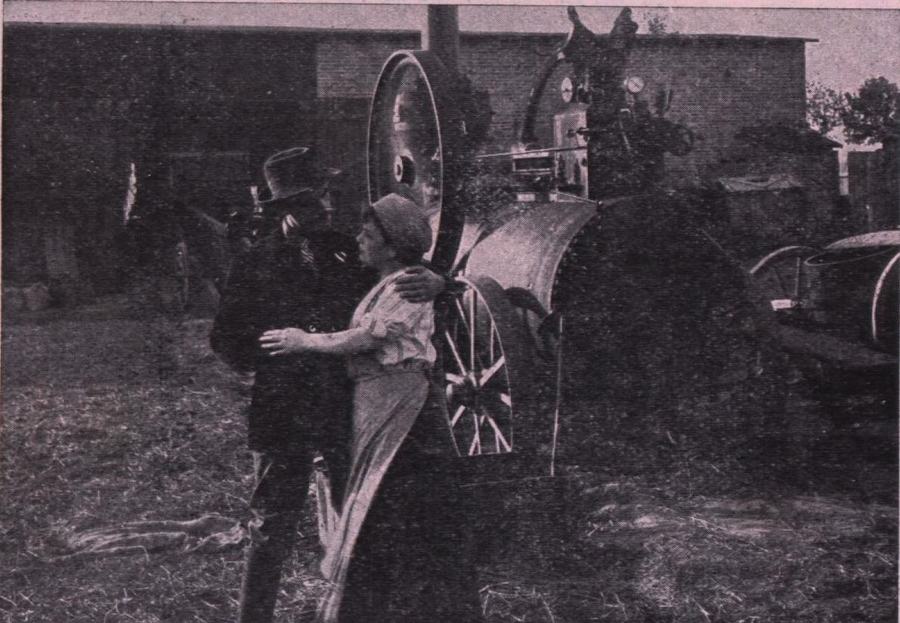
The narrative builds towards a climactic confrontation, which, in the tradition of such tales, would likely involve a strategic duel or a desperate defense of the castle. This isn't just a physical skirmish; it's a symbolic battle for Ulrich's very soul. Does he succumb to the brutal instincts of his past, or does he fight with a newfound purpose, fueled by love and a desire for peace? Isolde's role here would be pivotal, not as a damsel in distress, but as an active source of inspiration. Her unwavering presence, her steadfast belief in Ulrich's better nature, transforms his fighting spirit. He fights not with vengeful fury, but with the quiet, formidable strength of one defending what truly matters: his home, his love, his future.
While the specific historical context for Schwert und Herd might be fictionalized or drawn from broader medieval tropes, its core themes are timeless. The struggle between duty and desire, the cost of conflict, the yearning for peace, and the transformative power of love are universal human experiences. Such a film, even if only preserved in fragments or through critical recollection, speaks to the perennial human condition. It reminds us that even in an era of technological limitations, cinema possessed the profound ability to articulate complex emotions and grand narratives with striking clarity and impact.
The contributions of writers Fritz Skowronneck and Ludwig Fulda are crucial here. Their ability to craft a compelling plot, rich characters, and resonant themes within the constraints of silent cinema is a testament to their storytelling prowess. Fulda, known for his dramatic works, and Skowronneck, likely experienced in crafting narratives for the screen, would have meticulously structured the narrative flow, ensuring that each scene, each intertitle, propelled the story forward and deepened the audience's understanding of the characters' inner worlds. Their work here would stand alongside the intricate plotting seen in a film like The Green Cloak, where every narrative thread is carefully woven.
The enduring power of silent cinema lies not in its lack of sound, but in its forced reliance on visual poetry and the profound eloquence of human expression. Schwert und Herd, with its stark dichotomy of the 'sword' and the 'hearth', exemplifies this beautifully. It’s a film that speaks to the very soul, echoing the timeless conflicts that define our existence, and reminding us that true strength often lies in the courage to choose peace over perpetual conflict, love over ambition.
In a world that often celebrates aggression and conquest, Schwert und Herd offers a powerful counter-narrative: the profound courage required to protect, to nurture, and to build. It's a reminder that the greatest victories are often won not on the battlefield, but within the quiet confines of one's own heart and home. The performances of Elfriede Heisler and Carl de Vogt, supported by the compelling presence of Wermuth Jun, would have solidified this message, making Schwert und Herd a deeply moving and thought-provoking cinematic experience, a testament to the fact that some stories, like the clash between duty and devotion, echo across generations, regardless of how they are told. It finds common ground with other silent era masterpieces that explore human resilience and the complexities of morality, perhaps even drawing parallels to the stark choices faced by characters in Bella Donna or the intricate loyalties depicted in The Traitress.
The cinematic tapestry of the silent era is rich and varied, offering glimpses into the societal values and artistic expressions of a bygone age. Schwert und Herd, through its compelling narrative and powerful performances, undoubtedly carved its own niche, contributing to the rich legacy of storytelling that transcends the spoken word. It’s a film that, even in its un-seen glory, evokes the very essence of human drama, a timeless battle for identity, love, and the sanctity of home. Much like the profound human insights offered by films such as The Man Who Beat Dan Dolan or the exploration of personal growth in The Return of Helen Redmond, Schwert und Herd would have left audiences pondering the true meaning of heroism and the enduring power of the human spirit. Its themes of struggle against overwhelming odds and the fight for what is right resonate with the spirit found in historical dramas like Defense of Sevastopol, albeit on a more personal, domestic scale.
Ultimately, Schwert und Herd stands as a poignant reminder of cinema's earliest and most potent forms of expression. It’s a film that, through its imagined visuals and the evocative power of its premise, speaks volumes about the human heart’s eternal quest for peace amidst conflict, and the unwavering strength found in defending one’s truest home. The echoes of its narrative would continue to resonate, much like the lingering questions posed by The Ships That Meet, or the profound search for truth in The Concealed Truth, demonstrating that some stories, especially those deeply rooted in human experience, never truly fade. The film's allegorical depth and dramatic intensity also invite comparisons to narratives that expose societal injustices, such as Barbarous Mexico, by highlighting the personal cost of broader conflicts, or the introspective journey of characters in Memoria dell'altro, where past experiences shape present decisions and future hopes.
IMDb —
1920
Community
Log in to comment.