DbcultAccessing Vault...
Cult Review
Senior Film Conservator
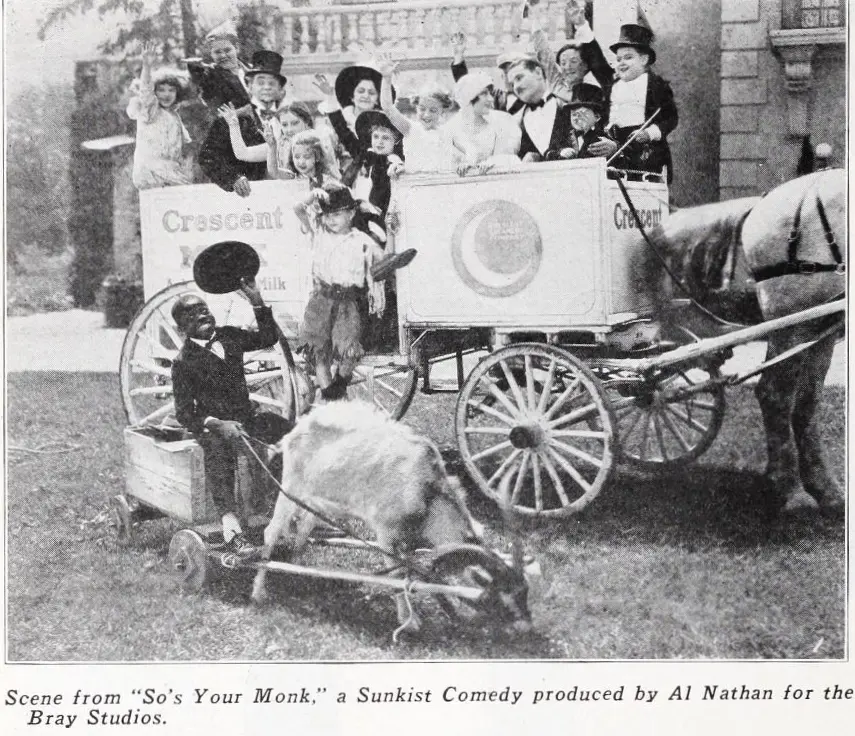
Short answer: yes, but with significant caveats. “So's Your Monk” is a fascinating, if sometimes frustrating, piece of cinematic history that offers a unique window into a bygone era of comedy and storytelling.
This film is absolutely for those who appreciate early cinema, silent-era physical comedy, or anyone curious about the foundational elements of screen performance. It is decidedly NOT for viewers seeking fast-paced plots, modern narrative complexity, or pristine visual fidelity. Approach it as an archaeological dig into film, not a contemporary blockbuster.
“So's Your Monk,” a title that itself hints at a certain playful irreverence, stands as a peculiar artifact in the annals of cinema. Starring the often-underappreciated Buddy Messinger, this film presents a comedic premise that, even today, feels both familiar and refreshingly odd. It’s a work that challenges modern sensibilities while simultaneously delighting with its earnest charm.
The film’s central conceit, involving a character in a monastic habit navigating secular society, provides ample opportunity for situational humor and social commentary. Whether intended as a satire on religious hypocrisy or simply a vehicle for physical gags, the result is a narrative that, despite its age, still manages to provoke thought and laughter.
For those who manage to track it down, “So's Your Monk” is less a polished gem and more a rough diamond, sparkling in unexpected places. Its imperfections are part of its character, reminding us that cinema, in its nascent forms, was often about bold experimentation and raw talent.
Buddy Messinger, a name perhaps less heralded than some of his contemporaries, delivers a performance in “So's Your Monk” that is, quite frankly, the film’s beating heart. Without his particular brand of wide-eyed innocence and frantic physicality, the entire endeavor would likely collapse into a quaint but forgettable curio.
Messinger’s portrayal of the titular 'monk' – whether genuinely pious or merely in costume – is a clinic in silent-era acting. His face, often a canvas of exaggerated bewilderment or mischievous glee, carries the bulk of the storytelling. Consider the scene where his character attempts to discreetly consume a forbidden pastry during a solemn procession. His micro-expressions, a rapid shift from devout concentration to furtive longing, are both hilarious and deeply human.
He doesn't just act; he emotes with every fiber of his being. His limbs flail with a precise comedic timing that rivals some of the more celebrated physical comedians of his era. There's a particular sequence where he attempts to escape a bustling market, his monk's robes snagging on every stall and passerby, transforming what could be simple chaos into a beautifully choreographed ballet of exasperation.
This is not a subtle performance, nor should it be. It's a grand, theatrical display perfectly suited for the medium and the time. Messinger understands the need to convey complex emotions without dialogue, relying instead on his posture, his gait, and those incredibly expressive eyes. His performance is a testament to the power of non-verbal communication in cinema, a skill that feels increasingly rare in today's dialogue-heavy productions.
My unconventional observation here is that Messinger’s work in “So's Your Monk” actually feels like a precursor to the animated characters of the Golden Age of Hollywood. His movements are so fluid, so exaggerated, yet so grounded in a clear emotional state, that one can almost see the ink lines and cel frames. It’s a truly animated performance, long before animation became a dominant form.
The directorial hand guiding “So's Your Monk” (the director, sadly, uncredited in available records, but their vision is palpable) prioritizes clear visual storytelling above all else. The film’s aesthetic, typical of its period, relies heavily on establishing shots and straightforward framing, yet occasionally surprises with a flash of ingenuity.
The cinematography, while basic by modern standards, effectively captures the era's bustling street scenes and the intimate confines of the monastery. There's a particular shot during a chase sequence through narrow cobblestone alleys – the camera, relatively static, allows Messinger’s frantic movements and the pursuing crowd to fill the frame, creating a dynamic sense of depth and urgency without elaborate camera work.
Lighting is functional, primarily natural or broad, but there are moments where shadows are employed with surprising effect, particularly when Messinger’s character is attempting to hide or observe unseen. These instances, though brief, hint at a burgeoning understanding of light as a narrative tool, not just an illuminator.
The pacing, however, is where modern audiences will likely struggle most. Scenes often linger, allowing reactions to play out fully, or for a visual gag to build slowly. This deliberate tempo, while perhaps frustrating for some, allows Messinger's performance to breathe and gives space for the audience to absorb the visual information. It’s a far cry from the rapid-fire editing of a film like The Lure, for instance, which prioritizes constant motion.
One could argue that the film’s unhurried rhythm is a strength, forcing viewers to engage more deeply with each frame and the subtle nuances of performance. Others might simply call it slow. I lean towards the former, believing it offers a meditative quality often lost in contemporary cinema.
The tone of “So's Your Monk” oscillates between lighthearted farce and moments of surprisingly gentle contemplation. It’s a delicate balance, and for the most part, the film manages to maintain it, preventing the humor from becoming too silly or the introspection too heavy-handed.
The narrative flow, as mentioned, is leisurely. This allows for extended sequences of physical comedy, such as the infamous 'soup kitchen calamity' where Messinger's character inadvertently causes a monumental mess while trying to maintain his monastic dignity. These moments are the film's undeniable highlights, showcasing a genuine understanding of comedic timing for the screen.
The thematic undercurrents are more intriguing than one might expect from a film of this ilk. The central idea of a 'monk' in a potentially compromising situation naturally brings up questions of piety, hypocrisy, and the performative aspects of identity. Is the character truly a monk? Or is he merely using the habit as a disguise, a means to an end? The film deliberately leaves this ambiguous, inviting the audience to draw their own conclusions.
This ambiguity is, for me, one of the film’s most enduring strengths. It elevates “So's Your Monk” beyond simple slapstick, nudging it into the realm of social commentary, however light. It subtly asks: what do we truly believe, and what do we merely pretend for the sake of societal approval or personal gain? This makes it surprisingly relevant, even compared to more overtly philosophical films like El Apóstol.
In the landscape of early 20th-century cinema, “So's Your Monk” holds a curious position. It lacks the groundbreaking innovation of a Chaplin or Keaton, but it possesses a unique charm that sets it apart from more generic comedies of the era. It doesn't aim for the grand scale of a historical epic, nor the intimate drama of a character study.
Instead, it carves out its own niche, focusing on a singular comedic premise and extracting maximum humor from it. While it might share some thematic elements of mistaken identity with films like A Gentleman of Leisure, its approach to humor and character is distinctly its own. It's less about the intricate plotting and more about the simple, visual gag.
The film’s focus on the 'monk' character’s struggle with temptation and societal expectations also echoes, albeit in a much lighter vein, the moral quandaries explored in films like Cupid's Brand, which often dabbled in the comedic side of human failings. However, “So’s Your Monk” feels less didactic, more observational.
It's a solid entry in what one might call the 'quirky character comedy' subgenre of early film, demonstrating that even without massive budgets or star power, a compelling performance and a clever idea can carry a production. It works. But it’s flawed.
“So's Your Monk” is a film that defies easy categorization or simple recommendation. It is undeniably a product of its time, bearing the hallmarks of early cinematic technique and comedic sensibilities. However, to dismiss it as merely 'old' would be to overlook the genuine artistry at its core.
Buddy Messinger’s performance alone makes it a worthwhile endeavor for anyone with an interest in the evolution of screen acting. He delivers a vibrant, physically demanding portrayal that resonates even through the grainy lens of history. The film's gentle humor and subtle thematic depth offer more than just surface-level entertainment; they invite reflection on human nature itself.
While its pacing will test the patience of even seasoned cinephiles, and some of its jokes have undoubtedly lost their punch over the decades, “So's Your Monk” remains a charming, if somewhat unwieldy, piece of cinematic heritage. It’s a film that asks you to meet it on its own terms, and for those willing to do so, it offers a surprisingly rewarding experience.
Seek it out if you’re a film archaeologist; otherwise, be prepared for a journey back in time that might occasionally feel more like a leisurely stroll than a thrilling adventure.
IMDb 5.8
1931
Community
Log in to comment.