DbcultAccessing Vault...
Cult Review
Senior Film Conservator
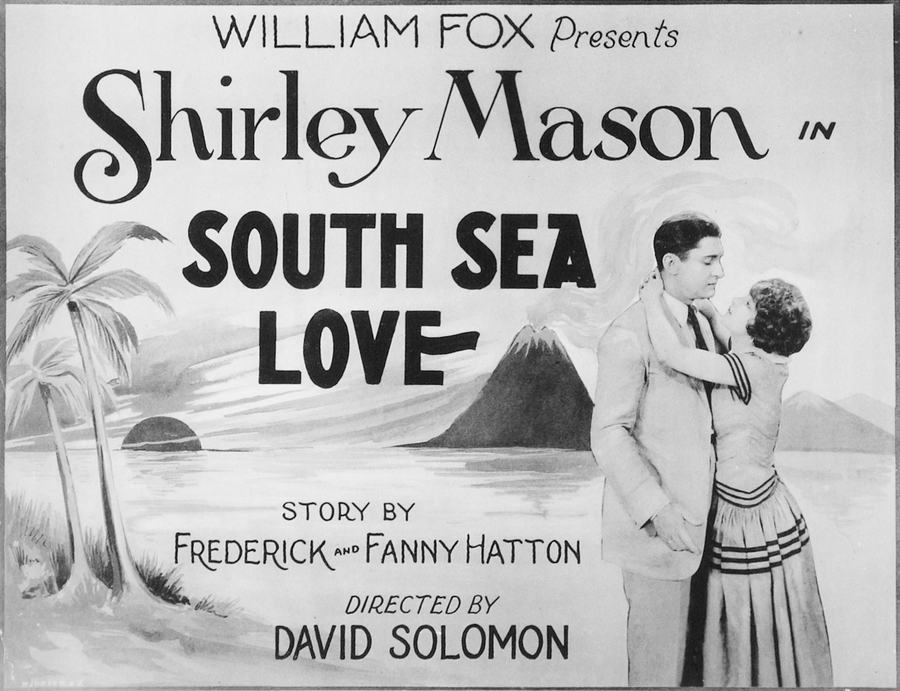
When the silent era unfurled its first reels, few films dared to navigate the treacherous waters of unrequited love set against a tropical backdrop. South Sea Love does precisely that, marrying the stark realism of a maritime tragedy with the lyrical melancholy of a doomed romance. The film opens with the mournful procession of Captain Medina’s funeral, a tableau that establishes both the physical and emotional vacuum left for his daughter, Dolores (Lillian Nicholson). The cinematographer employs low‑key lighting to cast long shadows across the dock, a visual metaphor for the looming uncertainties that will soon engulf the heroine.
The screenplay, penned by the duo Harrison Josephs and the Hattons, follows a three‑act structure that feels almost operatic in its scope. Act one establishes the paternal loss and the uneasy guardianship of Gerald Wilton (Robert Conville), an English trader whose polished exterior belies a self‑serving opportunism. Their burgeoning affection is rendered with a delicate restraint; lingering glances across a bustling market square convey more than any intertitle could articulate.
Act two pivots sharply when Dolores discovers Gerald’s marital status. The revelation is not delivered through a melodramatic confrontation but through a quietly observed moment: a folded wedding band found in Gerald’s coat pocket. This subtlety elevates the narrative beyond the melodramas of its contemporaries, echoing the restrained emotional economy of The Wild Wild West. Dolores’ subsequent employment as a dancer in a tropical café is more than a plot device; it becomes a visual allegory for her agency, her body a canvas upon which societal expectations and personal rebellion clash.
The third act erupts when Gerald, now a widower, returns to reclaim Dolores. His approach, however, is met with an ironclad refusal, a decision that signals her evolution from naïve lover to self‑determined survivor. The climactic sea‑battle sequence, wherein a gang of hostile sailors ambushes Gerald, is staged with a kinetic vigor that rivals the most ambitious silent epics. Dolores’ daring rescue—leaping from the café’s balcony into the tumultuous surf—transforms her from passive object to active savior, thereby subverting gender expectations of the era.
Lillian Nicholson’s portrayal of Dolores is a masterclass in expressive subtlety. Without the crutch of dialogue, she relies on nuanced facial gestures—a fleeting furrow of the brow, a lingering sigh captured in a close‑up—to convey inner turmoil. Her dance sequences are choreographed with an almost balletic precision, each movement echoing the rhythm of the sea and the pulse of her heart.
Robert Conville’s Gerald oscillates between charismatic trader and tormented lover. Conville’s eyes, often half‑closed, suggest a man wrestling with the weight of his promises. The chemistry between Nicholson and Conville is palpable, their silent exchanges charged with a tension that feels both intimate and volatile.
Supporting actors, such as Fred Lancaster (the antagonistic sailor captain) and Shirley Mason (the café’s proprietress), add layers of texture. Lancaster’s gruff demeanor provides a stark contrast to Wilton’s polished veneer, while Mason’s warm smile offers a fleeting respite from the film’s prevailing melancholy.
Director J. Frank Glendon orchestrates a visual palette that juxtaposes the darkness of the night‑shrouded docks with the luminous vibrancy of the tropical café. The use of chiaroscuro lighting accentuates the moral ambiguities of the characters, while the occasional splash of die‑getic color—most notably the deep orange of lanterns (#C2410C) and the electric yellow of sunrise over the sea (#EAB308)—injects moments of visual optimism.
The sea itself is treated as a character; sweeping long shots of the horizon, captured with a steady hand, imbue the narrative with an expansive sense of longing. The cinematographer’s decision to film the climactic rescue in a single, unbroken take showcases a daring technical prowess reminiscent of later auteurs.
At its core, South Sea Love interrogates the interplay between duty and desire. Dolores’ journey from grieving daughter to autonomous individual mirrors the broader societal shifts occurring in the 1920s, where women were renegotiating their roles beyond domestic confines. The film’s recurring motif of water—whether the tranquil lagoon where Dolores dances or the violent surf that threatens Gerald—serves as a metaphor for emotional depth and unpredictability.
The narrative also touches upon colonial dynamics. Gerald, an English trader, embodies the imperial gaze, while Dolores, a native-born daughter of a sea captain, represents the colonized subject navigating the power structures imposed upon her. This tension subtly echoes the thematic concerns of The Isle of the Dead, where cultural dislocation fuels personal tragedy.
When positioned alongside other silent romances such as Wives and Other Wives and the melodramatic The Devil's Bowl, South Sea Love distinguishes itself through its commitment to visual storytelling over theatrical melodrama. Its pacing, while deliberate, avoids the sluggishness that plagues many period pieces, maintaining a rhythmic momentum akin to the kinetic energy found in The Sport of the Gods.
Although the film is silent, the original score—reconstructed from period cue sheets—features a blend of maritime shanties and exotic percussion. The music underscores Dolores’ dance numbers with a syncopated rhythm that mirrors her inner conflict, while the stormy rescue sequence is accompanied by a low, throbbing drum that heightens tension.
Nearly a century after its debut, South Sea Love remains a compelling study of gender agency within the constraints of early cinema. Its nuanced portrayal of a woman who refuses to be a mere love interest anticipates the feminist narratives that would later dominate Hollywood. Moreover, the film’s visual daring—particularly the daring rescue shot—has been cited by modern auteurs as an early influence on kinetic action sequences.
For scholars interested in the evolution of romantic tropes, the film offers a rare glimpse into the transitional period between melodramatic silent storytelling and the more psychologically complex narratives of the sound era. Its inclusion in retrospectives alongside titles such as Cinders and Den mystiske tjener highlights its enduring relevance.
South Sea Love is a silent masterpiece that marries evocative imagery with a layered emotional core. Its performances are understated yet potent, its direction bold, and its thematic concerns surprisingly modern. While the pacing may challenge viewers accustomed to rapid editing, the film rewards patience with a richly textured tableau of love, loss, and redemption.
In the annals of cinematic history, it stands as a testament to the power of visual narrative, proving that even without spoken word, love can echo across the tides of time.

IMDb 6.9
1924
Community
Log in to comment.