DbcultAccessing Vault...
Cult Review
Senior Film Conservator
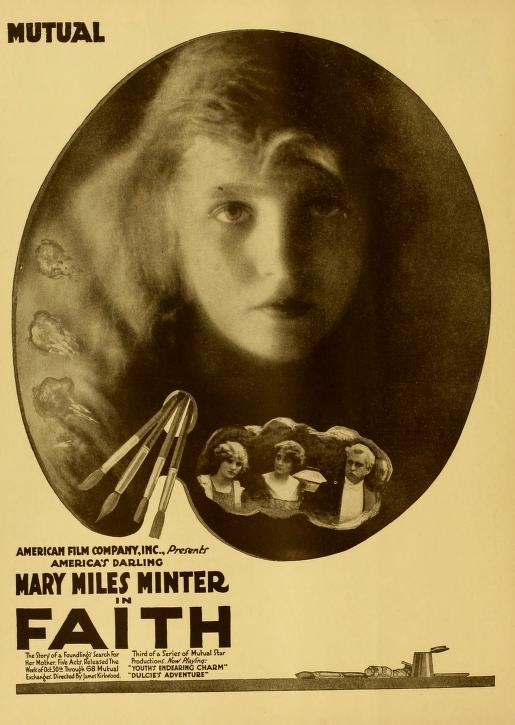
Stepping into the world of 'Faith,' a silent film from 1919, is akin to unearthing a forgotten treasure, a cinematic artifact that, despite its age, pulses with raw human emotion and a narrative complexity that belies its era. Directed by King Vidor and penned by James Kirkwood, this picture isn't merely a historical curiosity; it's a masterclass in melodramatic storytelling, a testament to the power of visual narrative before the advent of spoken dialogue. The film's central conceit, a web of familial deceit and separation, is spun with such intricate threads that it ensnares the viewer from its opening frames, pulling them into a vortex of injustice, longing, and eventual, hard-won revelation. It's a journey through the moral labyrinth of a bygone era, reflecting societal mores and the profound consequences of individual choices.
At its heart lies a tragedy born of patriarchal control and a rigid sense of propriety. The story commences with Helen, a woman whose life is irrevocably shattered by the death of her husband. Her father, John Thorpe, portrayed with an almost chilling sternness, harbors an deep-seated disapproval of her marriage, a sentiment that blossoms into a truly cruel act. He seizes the opportunity, or rather, creates it, to erase the very existence of Helen's young daughter, placing the innocent child in an orphanage and cruelly informing Helen that her beloved offspring has perished. This initial act of deception sets the stage for a dramatic odyssey spanning fifteen years, a period during which the mother grieves a phantom loss and the daughter grows up in ignorance of her true heritage. Such a profound betrayal, orchestrated by a figure who should have been a source of comfort, resonates with a chilling authenticity, underscoring the severe societal pressures and family dynamics of the time.
The narrative truly takes flight with the reintroduction of the daughter, now a young woman named Faith, exquisitely embodied by the luminous Mary Miles Minter. Fate, with its penchant for dramatic irony, guides Faith to the very doorstep of her grandfather, John Thorpe, where she unknowingly takes up the role of a servant. The tension here is palpable, a silent hum beneath the surface of everyday interactions. Neither Faith nor Thorpe, the architect of her childhood tragedy, are aware of their blood relation. This dramatic irony is a powerful engine of the plot, creating a constant undercurrent of suspense and anticipation. Every fleeting glance, every shared space, is imbued with a significance that only the audience can fully grasp, making for a truly immersive viewing experience. Minter, with her expressive eyes and delicate demeanor, perfectly conveys the quiet dignity and underlying vulnerability of a young woman navigating a world without the anchor of familial connection.
The household, however, is not without its own internal strife. John Thorpe's young stepdaughter, Laura, finds herself in a precarious situation, pregnant and abandoned by her callous boyfriend. Desperate and cornered, Laura makes a morally dubious choice that ultimately ensnares Faith. In an attempt to procure funds for an abortion, Laura steals money from John and, with a chilling lack of conscience, manipulates Faith into taking the blame. This plot twist elevates the film from a simple melodrama of lost identity into a gripping tale of injustice and the exploitation of innocence. It highlights the vulnerability of women in that era, particularly those without social standing or familial protection. Faith, already a victim of circumstance, becomes a pawn in another's desperate game, her inherent goodness and trusting nature exploited in a truly heartbreaking fashion. The film's commentary on the moral failings of certain characters, contrasted with the unwavering rectitude of others, is a nuanced exploration of human nature.
The climax of 'Faith' unfolds within the austere confines of a courtroom, a setting that provides the perfect crucible for the dramatic unraveling of the truth. Here, the film introduces Mark Strong, a lawyer whose name itself foreshadows his role in bringing about justice. Portrayed with an understated strength, Strong meticulously dissects the evidence, his keen intellect cutting through the layers of deceit to expose Laura's machinations and, more significantly, to uncover the long-buried secret of Faith's true parentage. This is where the film truly shines, transforming a tale of wrongful accusation into a profound exploration of identity and redemption. The reveal, when it comes, is not merely a plot device; it's an emotional crescendo, a cathartic release for both the characters and the audience. The reunion of Faith and her mother, Helen, after years of tragic separation, is handled with a delicate touch, conveying the depth of their long-suppressed emotions without resorting to overt histrionics, a hallmark of effective silent film acting.
The performances in 'Faith' are uniformly strong, a testament to the caliber of acting in the silent era. Mary Miles Minter, as Faith, is particularly captivating. Her ability to convey a vast spectrum of emotions through subtle gestures and facial expressions is remarkable. Her portrayal embodies an innocence that is both fragile and resilient, making her character's plight all the more compelling. King Vidor, not just the director but also appearing as an actor, brings a certain gravitas to his role, though the film truly belongs to Minter's nuanced performance. The supporting cast, including Perry Banks, Lizette Thorne, and Josephine Taylor, each contribute to the rich tapestry of characters, etching memorable impressions through their silent yet powerful portrayals. John Gough as John Thorpe is particularly effective in evoking the cold, unyielding nature of a man blinded by his own rigid principles, a character who embodies the patriarchal authority that often dictated women's lives in that period.
'Faith' delves into several profound themes that resonate even today. The most prominent is, of course, the theme of identity and the search for one's true origins. Faith's journey from an unknown orphan to the rightful daughter of Helen is a powerful exploration of belonging. Another critical theme is that of injustice and redemption. The film meticulously builds a case for Faith's innocence, highlighting the ease with which those in power can manipulate the vulnerable. The ultimate triumph of truth, facilitated by Mark Strong, offers a satisfying sense of moral order restored. Furthermore, the film subtly critiques the societal pressures faced by women, from Helen's initial predicament under her father's thumb to Laura's desperate measures born of an unwanted pregnancy and social ostracization. These are not just plot points; they are reflections of the era's social fabric.
From a technical perspective, 'Faith' showcases the sophisticated visual language of silent cinema. Director King Vidor, even in these early stages of his illustrious career, demonstrates a keen understanding of how to use mise-en-scène, lighting, and editing to convey emotion and advance the narrative. The cinematography, though perhaps rudimentary by modern standards, effectively captures the mood and atmosphere, from the somber tones of Helen's grief to the dramatic tension of the courtroom. The use of intertitles is judicious, providing necessary dialogue and exposition without interrupting the flow of the visual storytelling. The film's pacing is deliberate, allowing the emotional beats to land with maximum impact, a quality often lost in the faster cuts of contemporary cinema. It’s a reminder that compelling storytelling doesn't require constant motion but rather a careful construction of moments.
When considering 'Faith' within the broader landscape of early cinema, one might draw parallels with other melodramas of the era that explored themes of hidden identity, social injustice, or the plight of women. For instance, films like The Miner's Daughter often delved into similar narratives of hardship and familial secrets, albeit from a different social stratum. The emotional intensity and focus on moral dilemmas in 'Faith' also find echoes in pictures such as The Cub, which might explore the innocence of youth facing a harsh world. While 'Faith' stands on its own merits, its thematic resonance with other films of its time underscores a common thread in storytelling that captivated audiences: the struggle of good against evil, the revelation of truth, and the enduring power of human connection. The way that characters navigate impossible situations, often at the mercy of others' cruel intentions, is a recurring motif in these early cinematic works, speaking to universal anxieties and hopes.
The film's exploration of deception and its long-lasting consequences can also be seen in a different light by considering films that play with identity in more overtly criminal ways, such as Fantomas: The Mysterious Finger Print. While 'Faith' centers on familial betrayal, the underlying tension created by hidden truths and mistaken identities remains a powerful narrative device. The contrast between these two approaches — one focusing on personal tragedy, the other on grand criminal schemes — highlights the versatility of such themes in captivating audiences. Both, in their own ways, are masterclasses in building suspense and delivering satisfying resolutions, even if the nature of the 'crime' differs vastly. Furthermore, the portrayal of social class and its impact on individual destinies, as seen in the treatment of Faith as a servant, also connects to the broader social commentaries often found in films like Dockan eller Glödande kärlek, where societal expectations and limitations significantly shape characters' lives and choices.
Ultimately, 'Faith' is far more than a simple period piece; it is a compelling human drama that speaks to timeless themes. Its narrative, while rooted in the societal norms of the early 20th century, explores universal concepts of betrayal, resilience, and the relentless pursuit of truth. The film's ability to evoke such powerful emotions without the aid of spoken dialogue is a testament to the artistry of silent cinema and the exceptional talent of its cast and crew, particularly Mary Miles Minter. It reminds us that storytelling, at its core, transcends technological limitations, relying instead on the strength of its characters, the originality of its plot, and the emotional resonance it achieves with its audience. Watching 'Faith' today is not just an exercise in historical appreciation; it's an opportunity to connect with a powerful narrative that continues to move and provoke thought, proving that some stories, like true faith, are eternal.
The final moments of the film, culminating in the mother-daughter reunion, are imbued with a profound sense of closure and healing. It’s a powerful reminder that even after years of suffering and deception, the truth often finds a way to surface, bringing with it the possibility of reconciliation and peace. The journey of Faith, from a wronged infant to a young woman who reclaims her identity, is a testament to the human spirit's capacity for endurance and hope. This silent masterpiece, though often overshadowed by more widely known films, deserves its place in the pantheon of compelling early cinema. It offers a rich, layered viewing experience that continues to captivate those who appreciate the artistry and emotional depth of the silent era. Its legacy lies in its ability to tell a complex human story with clarity, grace, and an enduring emotional punch that resonates long after the final frame.

IMDb 6.2
1935
Community
Log in to comment.