DbcultAccessing Vault...
Cult Review
Senior Film Conservator
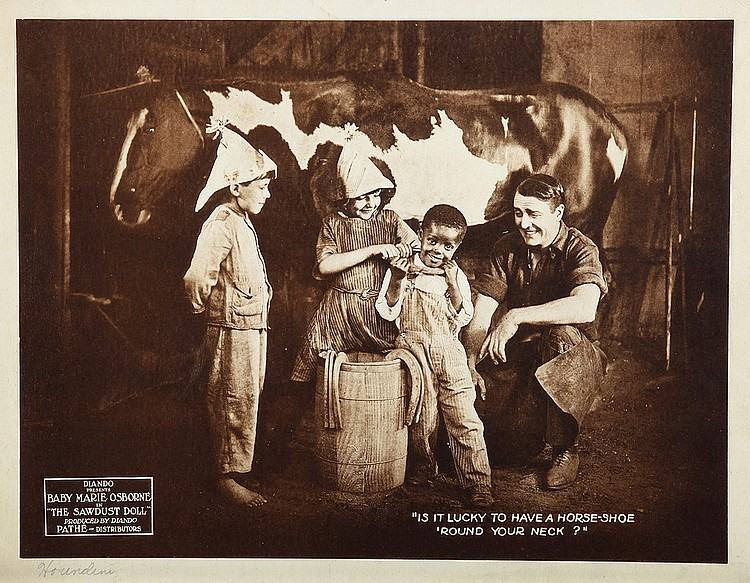
Stepping back into the cinematic landscape of 1918, we encounter a gem that, despite its age, resonates with an emotional depth and narrative urgency that few contemporary films manage to capture. "The Sawdust Doll," a creation of the prolific Agnes Christine Johnston, masterfully navigates the turbulent waters of familial bonds, wartime anxieties, and the profound awakening of maternal love. It’s a silent film that speaks volumes, not through grand pronouncements, but through the nuanced expressions of its cast and the potent symbolism embedded within its seemingly simple plot. This isn't just a historical artifact; it's a vibrant tapestry woven with threads of sacrifice, redemption, and the unbreakable spirit of childhood innocence.
At its core, "The Sawdust Doll" introduces us to Sally Lou, portrayed with astonishing precocity by Marie Osborne. Sally Lou is a child adrift in a world devoid of a mother's embrace, finding solace and projecting her deepest yearnings onto a humble sawdust doll. This inanimate confidante becomes more than a toy; it's a silent surrogate, a repository of unspoken dreams and the tangible representation of her longing for maternal affection. Her father, Jim Davis, the quintessential village blacksmith, embodies the stoic, hardworking patriarch, his gruff exterior belying a deep love for his daughter. His decision to propose to Rose Budd, a beauty expert serendipitously stranded in their small town, appears initially as a pragmatic solution to Sally Lou's motherless state and his own need for companionship. However, Rose’s acceptance is born not of love, but of convenience, a stark reality that casts a chilling shadow over their nascent family unit. Her emotional distance from Sally Lou is palpable, creating a poignant contrast with the child's yearning for connection.
The narrative pivots dramatically with Jim’s enlistment in the army, a patriotic call to duty amidst the throes of the Great War. This departure, intended to secure his family's future, inadvertently leaves Sally Lou vulnerable to Rose’s callous indifference. Agnes Christine Johnston's script subtly yet powerfully explores the precariousness of a child's world when adult allegiances are fractured. Rose, free from Jim’s watchful eye, quickly succumbs to the allure of Raynor, the local druggist, a man whose charm masks a sinister agenda. Their clandestine romance blossoms into a plan for elopement, threatening to shatter Sally Lou’s already fragile sense of security. The film, in this segment, delves into the moral complexities of ambition and self-interest, painting Rose not as an outright villain, but as a woman blinded by her own desires and a profound lack of empathy, a character arc not dissimilar to the conflicted protagonists we might observe in films like Infidelity, where personal desires clash with moral obligations.
The backdrop of World War I isn’t merely a historical detail; it’s an active, menacing force driving the plot forward. The film brilliantly weaves the personal drama of Sally Lou with the larger geopolitical conflict. When Sally Lou uncovers Raynor's true identity—a German spy intent on sabotaging the troop train carrying her own father—the stakes are raised to an almost unbearable pitch. This revelation transforms the domestic melodrama into a thrilling espionage narrative. The impending destruction of the train symbolizes not just the loss of Jim, but the betrayal of an entire nation, and the shattering of innocent lives. The urgency of Sally Lou's discovery and her subsequent race against time injects a pulse-pounding tension into the film, a palpable sense of dread that mirrors the national anxiety of the era. Much like the real-life newsreels such as Allies' Official War Review, No. 3, which brought the grim realities of war to the home front, "The Sawdust Doll" personalizes this conflict, making the abstract threat of enemy action terrifyingly immediate.
The transformation of Rose Budd is perhaps the film’s most compelling character arc. Initially portrayed as cold and calculating, her gradual awakening to the enormity of Raynor's treachery and the imminent danger to Jim and countless soldiers is a masterclass in silent film performance. Claire Du Brey, as Rose, conveys this internal struggle with remarkable subtlety, her expressions shifting from self-absorption to horrified realization. Her decision to join Sally Lou in the desperate dash to warn the train is not just an act of heroism, but a profound act of redemption. It is in this moment of shared peril that the artificial barriers between stepmother and stepdaughter begin to crumble, paving the way for genuine connection. This journey from indifference to fierce protection echoes the transformative power seen in other silent era dramas where characters confront their moral failings, perhaps even more starkly than in films like Thou Shalt Not, which explores the consequences of moral transgressions.
The film’s climax is nothing short of breathtaking. With the troop train rapidly approaching the sabotaged tracks, Sally Lou, in a moment of pure, desperate genius, ignites her beloved sawdust doll. This isn't merely a plot device; it's a powerful symbolic act. The doll, once a substitute for a mother's love, becomes a literal torch, a beacon of warning that pierces the night. It represents the ultimate sacrifice of childhood innocence for the sake of love and country. The flames consuming the doll are not merely destructive; they are purifying, illuminating not only the tracks but also Rose’s dormant maternal instincts. This visual metaphor is incredibly potent, evoking a visceral response from the audience. The doll, through its fiery demise, fulfills its purpose in a way no living mother had previously, becoming the catalyst for Rose's transformation. This poignant act of self-sacrifice for the greater good finds its dramatic parallel in the epic struggles depicted in films like Titanenkampf, though on a vastly different scale, highlighting the bravery of an individual against immense odds.
The saving of the train is not just a victory against espionage; it’s a triumph of love and burgeoning family. In the aftermath, Rose’s resolution to become a good mother to Sally Lou feels earned, not merely tacked on. It's a genuine emotional shift, forged in the crucible of shared danger and profound realization. The final moments of the film suggest a new beginning, a promise of a true family unit built on understanding, respect, and genuine affection. This powerful resolution speaks to the enduring themes of redemption and the capacity for human change, making the narrative profoundly satisfying. The film’s ability to evoke such strong emotional responses without spoken dialogue is a testament to the artistry of silent cinema, relying heavily on visual storytelling and the expressive power of its actors.
Marie Osborne, often hailed as "Baby Marie," delivers a performance that belies her tender age. Her portrayal of Sally Lou is not merely cute; it's deeply felt, conveying a range of emotions from quiet longing to fierce determination. Her expressive eyes and natural gestures communicate volumes, allowing the audience to fully empathize with her plight. It's a performance that stands shoulder to shoulder with other iconic child actors of the era, perhaps even surpassing some in its raw authenticity, reminiscent of the profound impact child stars had in films like The Foundling. William Quinn, as Jim Davis, provides a grounding presence, his paternal love a steady anchor amidst the domestic and national turmoil. Claire Du Brey’s arc as Rose Budd is particularly noteworthy; she navigates the transition from a self-serving opportunist to a genuinely caring figure with an understated elegance, making her redemption feel authentic and earned rather than forced. Ernest Morrison and Jack Connolly, while perhaps having less screen time, contribute effectively to the ensemble, particularly in establishing the community and the nefarious threat posed by Raynor.
The direction of "The Sawdust Doll," while uncredited in some records, demonstrates a keen understanding of visual storytelling. The use of close-ups to capture the nuances of emotion, the skillful pacing that builds tension towards the climax, and the effective staging of the train sequence all contribute to a compelling cinematic experience. The film doesn't rely on overly theatrical gestures, a common pitfall in early silent cinema, but instead opts for a more naturalistic approach that enhances its emotional impact. The cinematography, though basic by today's standards, effectively captures the rural charm of the village and the dramatic urgency of the nighttime rescue. The interplay of light and shadow during the climax is particularly effective, heightening the drama and emphasizing the symbolic power of Sally Lou's fiery torch. This nuanced approach to filmmaking sets it apart from more overtly melodramatic offerings of the period, demonstrating a growing sophistication in the art form.
Beyond the immediate plot, "The Sawdust Doll" delves into several enduring themes. The concept of found family and the idea that love can be chosen and cultivated, rather than merely inherited, is powerfully explored through Rose’s transformation. It challenges the traditional notions of motherhood, suggesting that true maternal instinct can emerge even in the most unlikely circumstances. The film also serves as a poignant commentary on the impact of war on the home front, illustrating how global conflicts ripple through individual lives, forcing ordinary people into extraordinary acts of bravery. The portrayal of espionage, while perhaps simplistic by modern standards, taps into the very real anxieties of a nation at war, reminding audiences of the unseen dangers lurking within their own communities. This thematic depth elevates the film beyond a mere melodrama, cementing its place as a significant work of early 20th-century cinema.
The symbolism of the sawdust doll itself is a rich vein for interpretation. It represents childhood innocence, the yearning for connection, and ultimately, the capacity for self-sacrifice. Its destruction is a cathartic moment, signaling the end of one phase of Sally Lou's life and the beginning of another, one where her need for a mother is finally met. This powerful visual storytelling is a hallmark of silent film, where objects often carry profound metaphorical weight, much like the significant props or motifs in films such as My Lady Nicotine, where seemingly mundane items take on greater meaning.
In an era dominated by serials like The Lure of the Circus or fantastical journeys such as The First Men in the Moon, "The Sawdust Doll" grounds itself in human emotion and contemporary anxieties. It’s a testament to the power of a well-crafted story and compelling performances that it continues to captivate audiences today. For silent film enthusiasts, it offers a fascinating glimpse into the moral and social fabric of America during WWI. For newcomers, it serves as an accessible and emotionally resonant entry point into the world of early cinema, demonstrating that powerful storytelling transcends the need for spoken dialogue or elaborate special effects. Its enduring appeal lies in its exploration of universal themes: love, loss, courage, and the transformative power of empathy. It's a reminder that even in the darkest of times, hope and connection can ignite, much like a sawdust doll transformed into a guiding light.
The film, penned by Agnes Christine Johnston, a prolific writer of the era, showcases her ability to craft narratives that are both emotionally impactful and dramatically engaging. Her contributions to silent cinema, often overlooked in favor of directors and stars, were crucial in shaping the stories that defined the era. "The Sawdust Doll" stands as a shining example of her narrative prowess, delivering a story that is both timely for its period and timeless in its emotional resonance. It’s a compelling argument for revisiting these cinematic treasures, not just for their historical value, but for their intrinsic artistic merit and their capacity to still move and inspire. Much like the complex human relationships explored in Gloria's Romance or the intense character studies found in St. Elmo, "The Sawdust Doll" provides a rich tableau of human experience, proving that the silent screen was anything but silent in its communication of profound truths.
Ultimately, "The Sawdust Doll" is more than just a period piece; it's a profound exploration of human nature under duress, a testament to the resilience of the human spirit, and a heartwarming depiction of how love, in its purest form, can emerge from the most unexpected circumstances. It’s a film that deserves to be seen, studied, and cherished for its powerful storytelling and its enduring message of hope and redemption. The silent era, often dismissed as primitive, continually reveals its depth and sophistication through works like this, proving that the absence of sound only amplifies the visual and emotional eloquence of the medium. It's a powerful reminder that the best stories are often the simplest, yet carry the most profound weight.
IMDb 6.9
1927
Community
Log in to comment.