DbcultAccessing Vault...
Cult Review
Senior Film Conservator
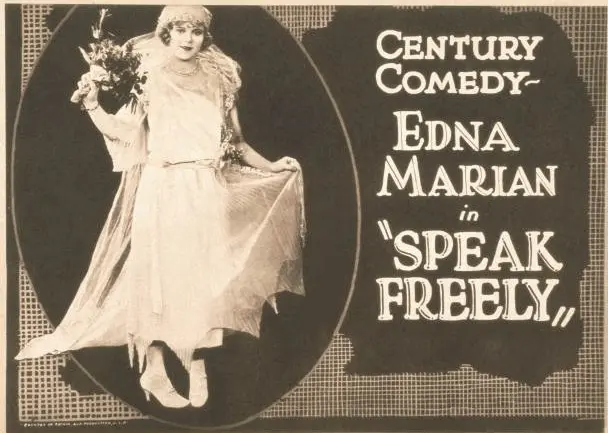
Is Speak Freely a hidden gem of the silent era or a relic of forgotten slapstick? Short answer: yes, it remains a vibrant, if exhausting, example of how physical comedy can transcend the limitations of a thin plot. This film is for viewers who appreciate the high-octane energy of the 1920s short-form comedy and scholars of the 'fake identity' trope; it is decidedly not for those who require narrative nuance or a protagonist they can actually respect.
Speak Freely is worth a look if only to witness the sheer athletic commitment of its cast. While the premise is a well-worn staple of the era—the bumbling husband needing to produce a wife for judgmental relatives—the execution is surprisingly mean-spirited in a way that feels modern. It works because it doesn't try to make you like the characters; it only asks that you laugh at their escalating misery. If you enjoy the frantic pacing of early comedy, this delivers. If you prefer the more contemplative pace of something like Still Waters, you might find this experience a bit like being trapped in a spinning dryer.
1) This film works because the chemistry between Edna Marion and Hilliard Karr creates a genuine sense of comedic peril that overshadows the thin script.
2) This film fails because the husband, Al Alt, is so fundamentally unlikable that his eventual suffering feels more like justice than comedy.
3) You should watch it if you want to see how silent-era directors used domestic spaces to create a sense of claustrophobic chaos.
The 'fake wife' scenario is a cornerstone of early 20th-century farce. We see variations of this in films like The Poor Boob, where the protagonist's social standing is tied directly to his marital status. In Speak Freely, director William Watson doesn't waste time on the 'why'—he jumps straight into the 'how.' The husband is a tool. He is a man of low character who views his maid not as a human, but as a utility to be repurposed for his social survival.
What sets this apart is the introduction of the iceman. In 1920s cinema, the iceman was a recurring symbol of working-class virility and disruption. Hilliard Karr plays this to the hilt. When he sees his sweetheart being embraced by the employer, the film shifts from a domestic comedy into a proto-action movie. The physical stakes are high. The iceman isn't just annoyed; he's a physical threat. This adds a layer of genuine tension to the gag—if the husband is caught, he isn't just embarrassed; he's likely going to be punched into the next reel.
Edna Marion is the engine that keeps Speak Freely from stalling. While Al Alt does a fine job of looking perpetually panicked, Marion has to play multiple layers: the maid, the fake wife, and the woman trying to manage a jealous boyfriend. Her facial expressions are a masterclass in silent reaction. There is a specific moment when she has to accept a kiss from the iceman to 'keep up appearances' while the husband watches in terror. Marion’s ability to telegraph both 'I am doing this to save my job' and 'I actually enjoy making my boss squirm' is brilliant.
Her performance reminds me of the versatility seen in The Masquerader, where identity is a fluid tool used to navigate social traps. Marion isn't just a victim of the plot; she becomes a co-conspirator who eventually realizes she holds all the cards. When the real wife returns, the film could have easily turned into a catfight. Instead, it becomes a tactical alliance of women against the husband's incompetence. It’s a subtle subversion of the 'jealous wife' trope that I didn't expect.
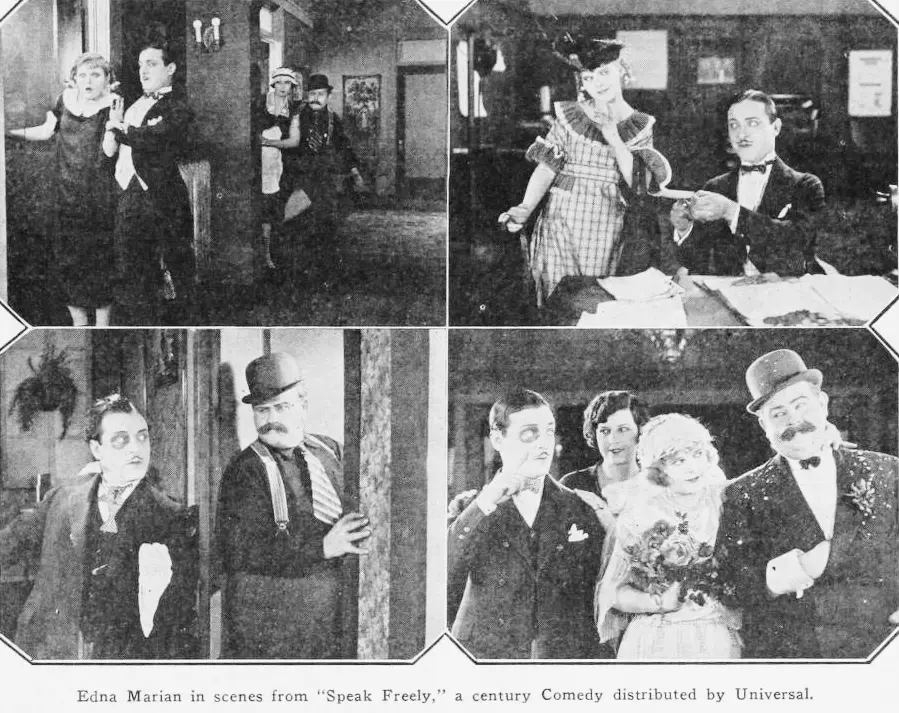
The climax of the film involves the wife pouring ice cream down the maid's back. This isn't just a lighthearted prank; it's a messy, cold, and physically uncomfortable gag that highlights the film's aggressive tone. Silent comedy often relied on this kind of 'havoc' to resolve plot points that the script couldn't figure out how to end. The ice cream scene is the turning point where the logic of the farce breaks down and pure entropy takes over.
Consider the pacing here. Watson cuts between the relatives' oblivious dinner and the kitchen chaos with increasing speed. It mirrors the frantic energy of Looney Lens: Pas de deux, where the visual distortion is the point. Here, the distortion is social. The 'proper' dinner party is being literally melted by the cold reality of the husband's lies. It’s a visceral metaphor, even if it was intended as a simple laugh.
When we look at other films from the period, such as A Circus Romance, we see a more traditional approach to romantic obstacles. Speak Freely is uglier. It’s more cynical. The characters aren't motivated by love; they are motivated by fear, jealousy, and spite. This cynicism makes it feel more grounded than the melodramatic The Fatal Sign. In Speak Freely, the stakes are small—a dinner party and a marriage—but the emotional reactions are outsized.
The iceman’s jealousy is particularly interesting when compared to the romantic tensions in Anita Jo. While Anita Jo deals with the complexities of heart and social standing, Hilliard Karr’s iceman is a blunt instrument of pure emotion. He doesn't want to talk; he wants to reclaim what is his. This simplicity is the film’s greatest strength. It doesn't overthink the drama. It just lets the characters collide like billiard balls.
William Watson’s direction is functional but effective. He understands that in a farce, the geography of the house is the most important character. The audience needs to know where the wife is, where the maid is, and where the iceman is at all times for the 'near misses' to work. The cinematography doesn't strive for the artistic heights of Dämon und Mensch, but it frames the action with a clarity that allows the physical comedy to land. There are no wasted shots. Every frame is dedicated to the gag.
The editing is where the film really lives. The timing of the 'real' wife's entrance is perfect. She doesn't just walk in; she looms. Her decision to disguise herself as the maid is a classic theatrical device, but Watson films it with a sense of impending doom. The husband’s slow realization that he is now being haunted by two versions of his own lie is the film's high point. It works. But it’s flawed. The ending feels rushed, a common problem in shorts of this era, where the resolution is often just a final, massive collision followed by a fade to black.
Speak Freely is a loud, messy, and ultimately successful piece of silent comedy. It doesn't have the soul of a Chaplin film or the structural genius of a Keaton short, but it has a raw, frantic energy that is infectious. It’s a film about the terror of being found out, and it uses every tool in the slapstick shed to amplify that terror. While it lacks the artistic ambition of Marga, Lebensbild aus Künstlerkreisen, it succeeds entirely in its goal: making the audience laugh at the spectacular collapse of a man’s ego. It’s a fun, chaotic ride that proves some things, like the comedy of a cold liquid down a shirt, are truly timeless.
IMDb —
1928
Community
Log in to comment.