DbcultAccessing Vault...
7.5/10
Senior Film Conservator
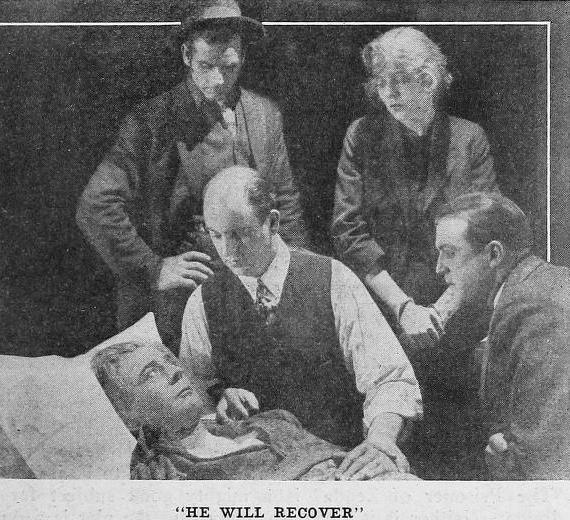
A definitive 7.5/10 rating for a film that redefined the boundaries of cult cinema. The Blacklist remains a cornerstone of transgressive art.
Stepping back into the cinematic annals of 1915, one encounters a film that, despite its century-plus vintage, resonates with an unsettling contemporary relevance: William C. de Mille's The Blacklist. This isn't merely a silent film; it's a stark, unvarnished socio-political drama, a visceral snapshot of America's industrial crucible, and a testament to the nascent power of cinema to confront societal inequities head-on. At its heart lies the harrowing narrative of the 1915 Colorado miners' strike, a chapter of American labor history etched in blood and struggle, brought to the screen with a gravitas that few films of its era dared to attempt.
The film opens upon a landscape of profound discord. The coal mines, arteries of industrial might, are choked by a bitter strike, emblematic of the broader conflict between the burgeoning power of capital and the desperate plight of labor. This is not a nuanced debate; it is a battle for survival, where the very lives and livelihoods of the miners hang precariously in the balance. The arrival of Warren Harcourt, portrayed with a chilling blend of authority and detachment by Horace B. Carpenter, is the narrative's fulcrum. Harcourt, the newly appointed coal company manager, is not just a character; he is the embodiment of corporate might, dispatched to quell the rebellion and restore the 'natural order' – an order where profit invariably trumps human dignity. His presence is a deliberate provocation, an escalation of the already fraught tensions, and a clear signal that the company intends to break the strike, whatever the human cost.
What follows is a meticulously crafted chain of events, each link forging a tighter grip around the community. De Mille, with the sharp script penned by Marion Fairfax and William C. de Mille himself, eschews simplistic villainy for a more complex, albeit still stark, portrayal of power dynamics. Harcourt's actions, while ruthless, are framed within the logic of his corporate mandate, making his character all the more chilling. He is not a mustache-twirling caricature but a man driven by an unyielding belief in his right to control. This managerial decree sets off a cascade of reactions from the beleaguered miners and their families, pushing them to the brink of despair, yet also igniting sparks of defiance.
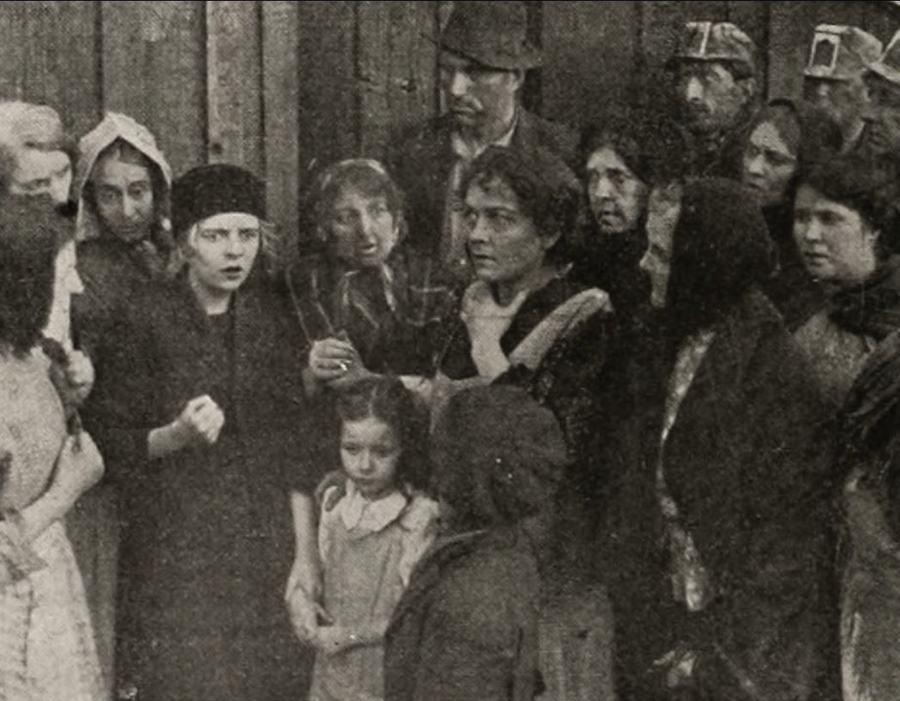
Central to the emotional core of The Blacklist is the formidable Blanche Sweet, a luminary of the silent screen, whose performance here is nothing short of captivating. Sweet, known for her expressive range and dramatic intensity, injects the film with a much-needed human pulse. Her character, though not explicitly detailed in the synopsis, undoubtedly serves as a moral compass or a focal point for the miners' suffering and resilience. In an era where female protagonists often grappled with societal constraints, Sweet frequently played women of agency and inner strength, and one can infer that her role in The Blacklist would be no different, likely embodying the spirit of resistance or the profound personal cost of the struggle. Her ability to convey deep emotion through gesture and gaze would have been crucial in communicating the film's powerful message without the aid of spoken dialogue.
Beyond Sweet's undeniable star power, the film benefits from a robust supporting cast. William Elmer, Charles Clary, Jane Wolfe, Lucien Littlefield, and Ernest Joy each contribute to the tapestry of the mining community, portraying the varied faces of hardship, fear, and quiet resolve. Their collective performances, though often understated in silent cinema, would have been instrumental in grounding the narrative in a believable reality. Littlefield, in particular, was a character actor of considerable repute, often bringing a nuanced vulnerability to his roles, which would have been invaluable in portraying the human cost of the industrial conflict. The strength of this ensemble ensures that the struggle feels personal, affecting real people with real stakes, rather than remaining an abstract socio-economic issue.
William C. de Mille, brother to the more famous Cecil B. DeMille, carved out his own significant niche in early Hollywood, often distinguished by his more restrained and realistic approach to storytelling. His directorial hand in The Blacklist is evident in the film's unflinching portrayal of the strike's grim realities. He avoids the melodramatic excesses that sometimes plagued films of the era, opting instead for a gritty realism that lends the narrative immense power. This commitment to authenticity, coupled with the potent screenplay by Marion Fairfax and de Mille, elevates the film beyond mere entertainment, positioning it as a significant piece of social commentary.
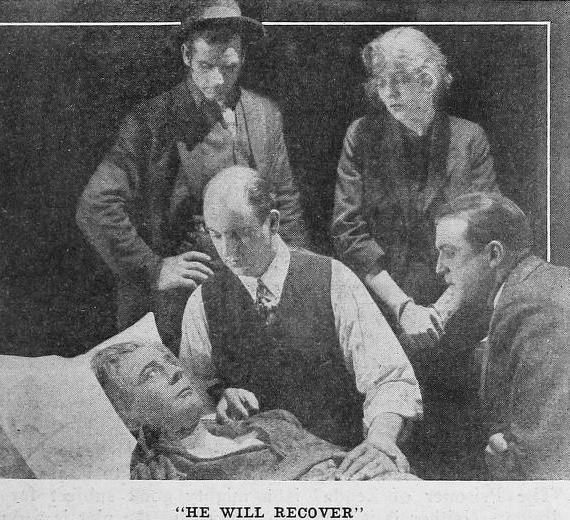
Marion Fairfax, a prolific screenwriter and pioneering female producer, was a formidable talent whose contributions to early cinema are often overlooked. Her ability to craft compelling narratives with strong character arcs, particularly for women, shone through in her work. Here, with The Blacklist, she and de Mille likely collaborated to ensure the story was not just a historical recounting but a deeply human drama, exploring themes of exploitation, resilience, and the relentless pursuit of justice. The narrative structure, focusing on the ripple effect of Harcourt's arrival, is a testament to their skill in building tension and demonstrating cause-and-effect in a visually driven medium.
The historical backdrop of the Colorado miners' strike is crucial to understanding The Blacklist's impact. This was an era marked by intense labor disputes, often violent, as workers fought for basic rights, safer conditions, and fair wages against powerful, often ruthless, corporations. The film doesn't shy away from depicting the oppressive atmosphere, the constant threat of violence, and the economic desperation that fueled such strikes. It serves as a cinematic record, albeit fictionalized, of a pivotal moment in American industrial history, offering insights into the struggles that shaped the modern labor movement.
Comparing The Blacklist to other films of the period illuminates its unique position. While a film like Il fuoco (la favilla - la vampa - la cenere) might have explored the passionate, often destructive, forces of human emotion through a more symbolic lens, The Blacklist grounds its drama in the tangible, socio-economic realities of its setting. It's less about internal conflagrations and more about external pressures, the relentless grind of poverty, and the fight for collective liberation. Similarly, while films like The Intrigue might have focused on espionage and suspense, The Blacklist finds its suspense in the very real, life-or-death struggle between employer and employee. It's a different kind of 'intrigue,' one born of desperation and the pursuit of human dignity.
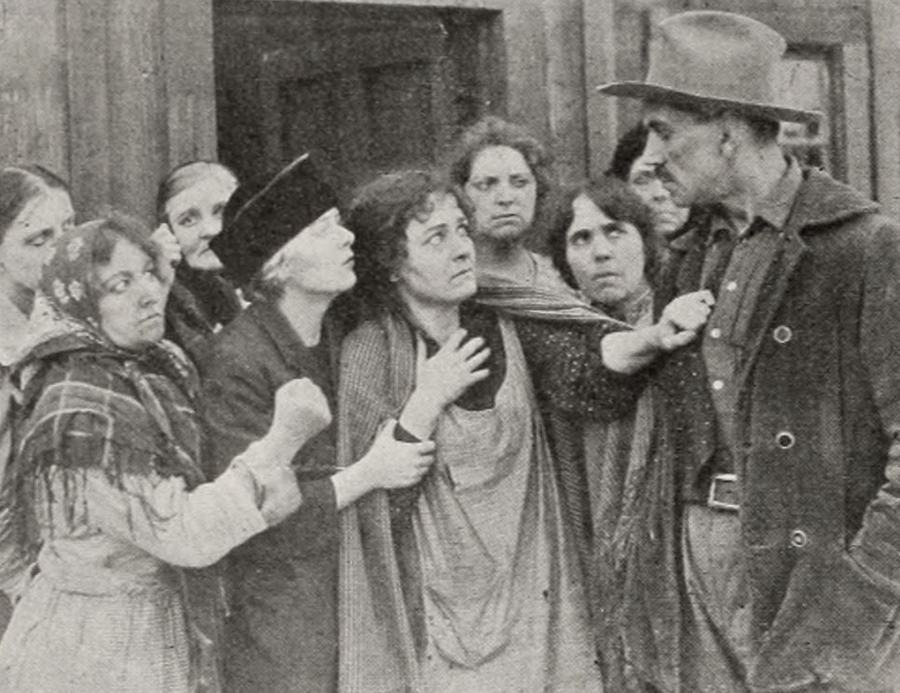
The film's title itself is loaded with meaning. 'The Blacklist' immediately conjures images of exclusion, of individuals marked and condemned, stripped of their livelihoods for daring to challenge the established order. This practice, prevalent in labor disputes, was a potent weapon wielded by companies to crush dissent and ensure compliance. The film, by its very title, promises to expose this insidious mechanism of control, and it delivers. It's a stark reminder that the fight for workers' rights was not just about wages and hours, but about the fundamental right to organize and to speak truth to power without fear of reprisal.
From a purely cinematic perspective, The Blacklist showcases the evolving language of film in the mid-1910s. De Mille's direction would have utilized close-ups for emotional impact, wide shots to establish the bleakness of the mining landscape, and cross-cutting to build tension during confrontational scenes. The absence of synchronized sound compelled filmmakers to rely heavily on visual storytelling, exaggerated gestures (though de Mille was known for more naturalism), and intertitles to convey dialogue and narrative exposition. The skill with which these elements are woven together determines a silent film's lasting power, and The Blacklist, by all accounts, was a masterclass in this regard.
The film's exploration of corporate greed versus human welfare remains disturbingly relevant. In an age where economic disparities continue to widen, and the power of large corporations often seems unchecked, the themes presented in The Blacklist resonate with a haunting familiarity. It serves as a potent reminder of the historical struggles that laid the groundwork for many of the labor protections we now take for granted, and a cautionary tale about the fragility of those protections when challenged by relentless economic pressures. The film implicitly asks: at what point does the pursuit of profit become an ethical transgression? And what is the true cost of 'maintaining the status quo' when that status quo is built on exploitation?
In conclusion, The Blacklist stands as a powerful and enduring piece of early American cinema. It's a film that not only documents a specific historical event but also delves into universal themes of power, justice, and human resilience. For cinephiles and historians alike, it offers a window into an era of profound social change, rendered with a dramatic intensity that transcends its silent origins. Its legacy is not just in its historical accuracy or its cinematic craftsmanship, but in its unwavering commitment to giving voice to the voiceless, to shedding light on the dark corners of industrial exploitation, and to reminding us that the fight for dignity is a timeless one. It is a film that deserves to be rediscovered, studied, and appreciated for its bold vision and its searing, unforgettable message.
IMDb 6.5
1929
Community
Log in to comment.