DbcultAccessing Vault...
Cult Review
Senior Film Conservator
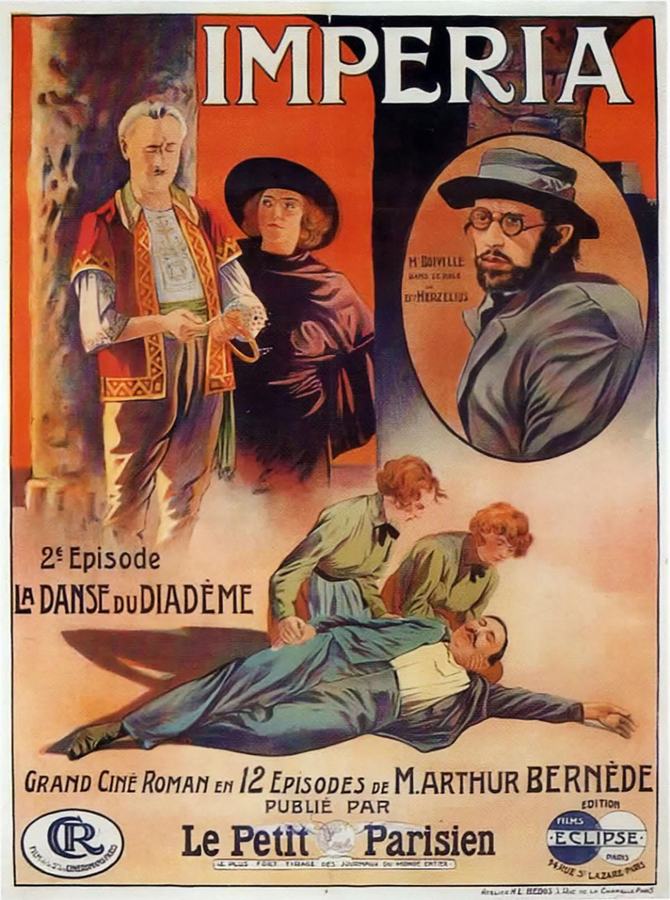
There are films that merely flicker; then there is Impéria, a nitrate seance that seems to combust while you watch it, leaving scorch-marks on the retina and a scent of lilies soaked in kerosene.
Arthur Bernède—better known for pulsing cliff-hanger serials—here conducts a fever-dream steeped in fin-de-siècle decadence, grafting the moral vertigo of The Crimson Stain Mystery onto the spectral melancholy of a Bohemian folktale. The result is a film that feels like a missing link between Méliès’ celestial confections and the later erotic fatalism of Die Faust des Schicksals.
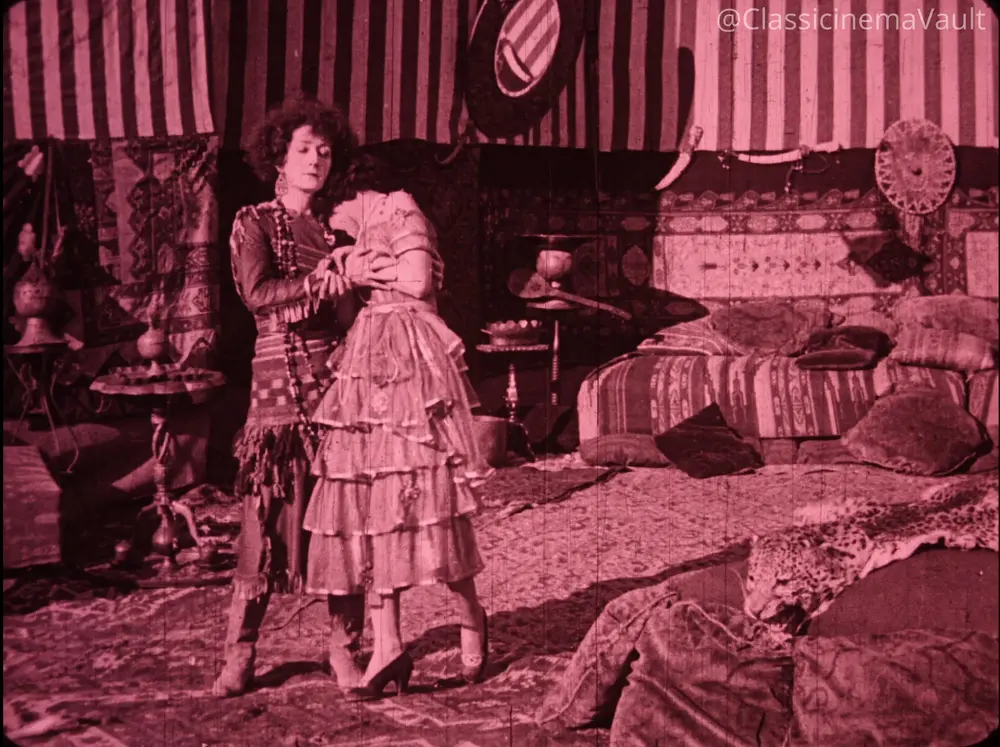
Shot in the cratered back-lot of Victorine Studios, cinematographer Léon Donnot turns plywood forests into cathedrals of darkness by bathing leaves in magnesium back-light so that every frond becomes a stained-glass shard. Smoke pots—probably pinched from the army-surplus depot—curl around Liliane May’s Miarka like contraband incense; her veil catches the beam and suddenly she is a Byzantine icon stepping out of its frame. Meanwhile Impéria’s lair, rumored to have cost less than a mid-range Parisian dinner, glitters with tinfoil mosaics and baroque candelabra fashioned from recycled chandeliers. The illusion works because Bernède understood texture over scale: a handful of crystals tossed into torch-beam can suggest a cosmos if the eye is starved long enough.
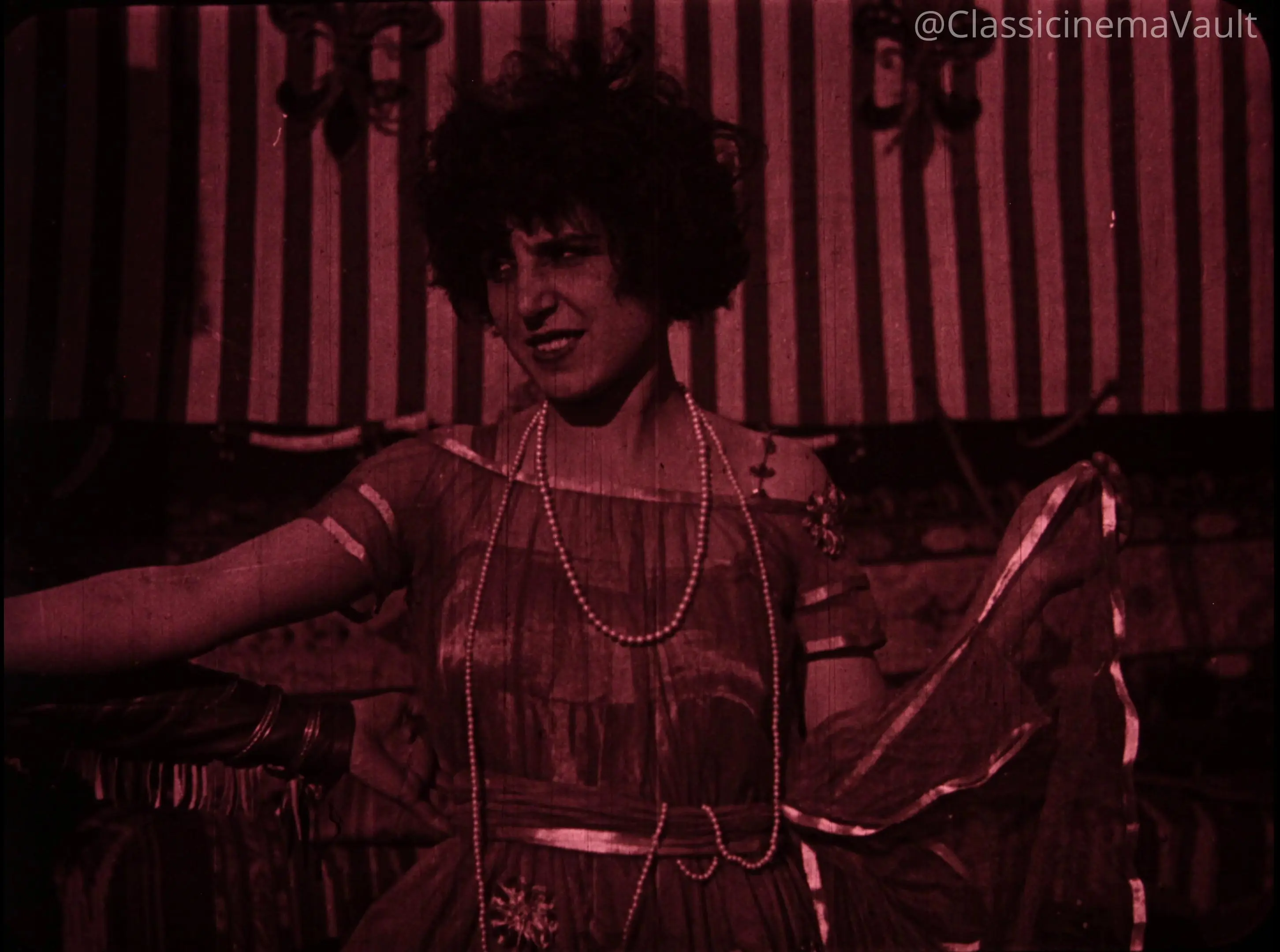
Liliane May, often dismissed as merely decorative, delivers a masterclass in micro-gesture: watch the way her pupils dilate the instant Militza utters Impéria’s name—an eclipse of trust occurring in real time. Opposite her, Max Dhartigny’s Duke is a study in masculine fragility; his shoulders appear to deflate scene by scene, as though the ribcage itself were being vacuum-sealed by obsession. Jacqueline Forzane’s Impéria slinks into frame with the languid precision of a cat calculating gravity, but note the tremor in her left hand—barely perceptible—betraying that even enchantresses suffer vertigo when standing on the lip of their own abyss.
The surviving 35 mm print—missing two reels mournfully referred to by archivists as the “screaming minutes”—survives without its original score. Contemporary festivals often pair it with doom-laden drones or Shostakovich, yet I fantasize about a trio of viols and a single bass flute tracing Miarka’s descent. The film’s intertitles alone sing: Bernède, ever the litterateur, sculpts lines like “Her heart, once a cathedral, now echoes like a subway.” Try reading that without hearing an imaginary orchestra tuning in the pit of your stomach.
Where contemporaries such as Go West, Young Woman posit the frontier as a spatial escape, Impéria weaponizes femininity itself into uncharted territory. Impéria is not a coquette; she is cartography made flesh, redrawing borders around the Duke’s psyche until his duchy becomes a footnote. Miarka’s retaliation, however, refuses the easy revenge arc; instead she embarks on a shamanic divestiture, shedding jewels, name, even memory, until she confronts her rival in a glade where moonlight pools like mercury. The duel is staged not with blades but with reflections: two women holding mirrors, daring the other to swallow her own image whole.
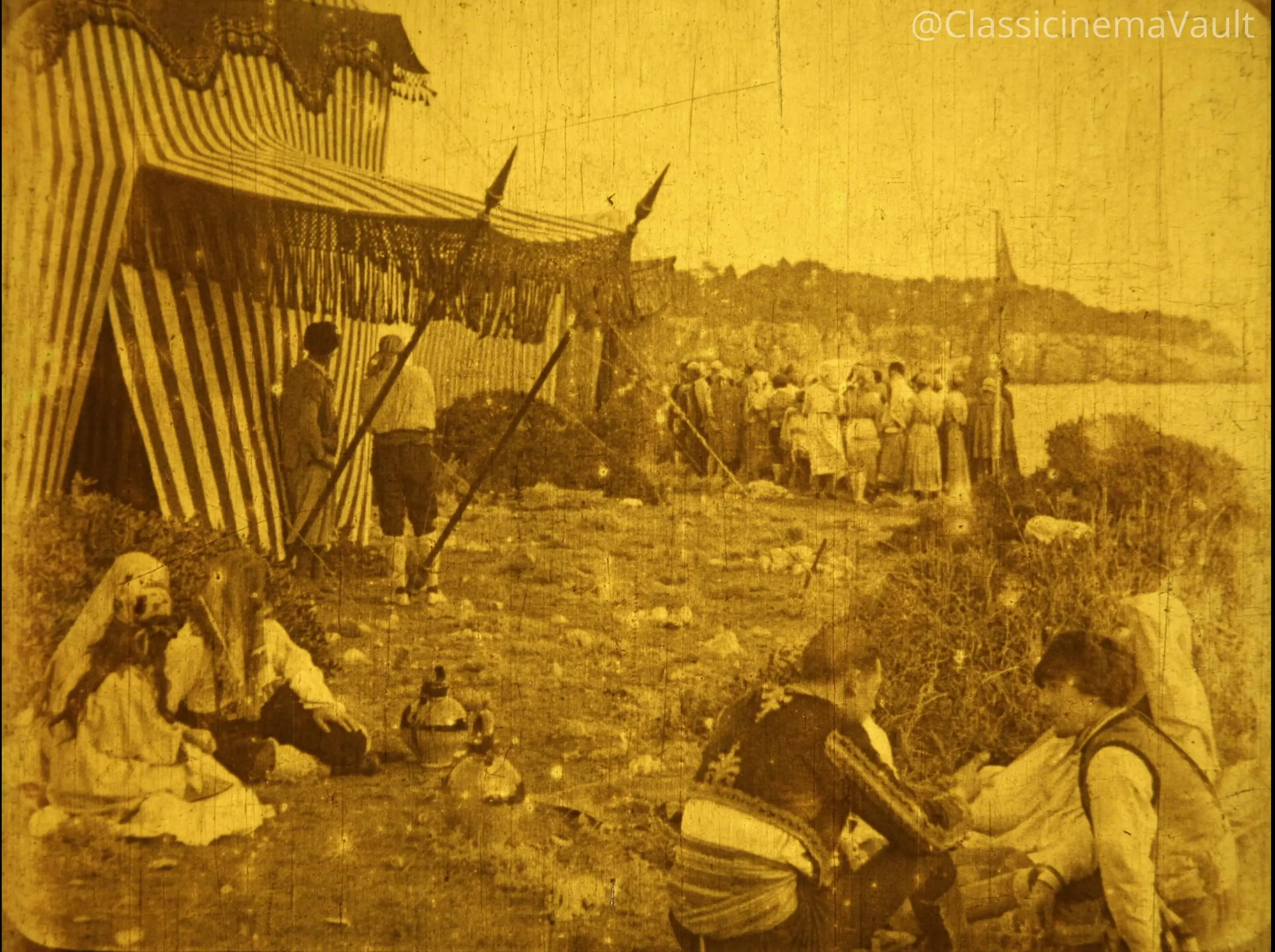
Modern viewers will squirm at the exoticized depiction of Militza’s retinue—ostensibly Roma, yet draped in every orientalist bauble the prop department could loot. Still, Bernède complicates the cliché: these “outsiders” possess knowledge that unpicks the so-called civilized world at its seams. In one hallucinatory insert, a child uproots a withered rosebush and roses pour out as live doves; the edit is so abrupt you question whether the film itself is leaking reality. The moment reads like a riposte to the imperial swagger of Captain Alvarez, suggesting that empires are merely temporary weather patterns soon scattered by nomadic winds.
Flashbacks arrive unannounced, spliced into the present with a single match-cut: Miarka’s bridal gown dissolves into Impéria’s black cloak, both garments billowing on the same balcony, years collapsed into a heartbeat. Unlike the tidy subjective spirals of A Child of Mystery, these temporal ruptures refuse psychological cushioning; the viewer must piece chronology together like a detective picking shattered watch-glass off a railway track.
Some cinephiles swear the lacuna heightens the myth: we are denied the Duke’s moment of contrition, so his remorse metastasizes in our imagination. Others claim to have seen production stills depicting a banquet where guests wear animal masks carved from turnips, a surreal flourish that would tilt the film toward Napoleon und die kleine Wäscherin territory. Whether these images are phantoms matters less than the hunger they ignite—proof that absence can direct plot more tyrannically than presence.
Parisian censors excised nearly 300 meters for “over-stimulating the female spectator,” a euphemism for Miarka’s dream in which she tears her wedding ring out of her own throat and hurls it into a river that flows backward into her mouth. The cut footage survives only in a Belgian collector’s diary, described in purple prose that ends with the line “the screen itself appeared to breathe.” One hopes a nitrate fairy will someday deposit those coils on a doorstep, but history suggests they have dissolved into the same chemical night as the Duke’s conscience.
Without Impéria there is no The Eternal City’s baroque psychosis; without Bernède’s mirrored duel, Hitchcock would have lacked a template for Vertigo’s spirals. Even the beastly eroticism of Lombardi, Ltd. owes a debt to Impéria’s feral grace. Yet influence travels underground, like root networks, and most cinephiles stroll unaware above these buried arteries.
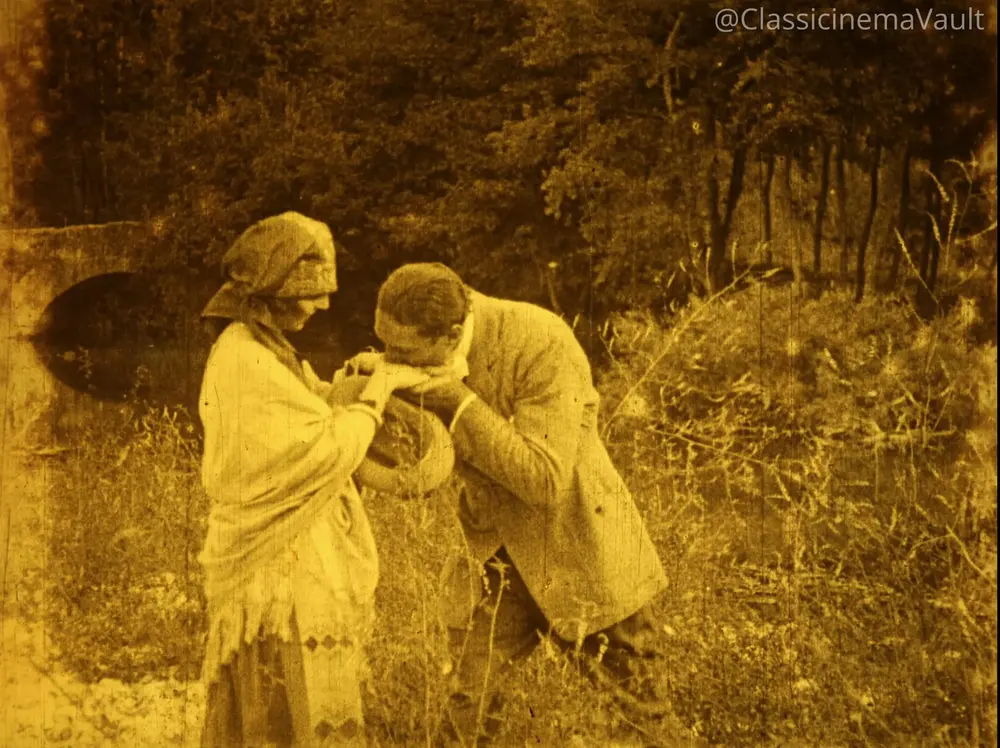
The lone extant print, rescued from a flooded church basement in Nice, underwent vinegar syndrome so advanced it resembled a topographical map of mold continents. The CNC’s restoration team froze the reels, shaved off the bacterial frosting, and digitally stitched warped perforations. Color tinting references discovered in an export contract reveal the night scenes were originally drenched in sea-blue, Impéria’s salons in dark orange, and Miarka’s flashbacks in yellow—a triadic chord that the digital restoration reinstates, letting the film throb like a bruise under neon.
In an era when algorithms flatten desire into swipeable units, Impéria dares to portray passion as an ontological earthquake. It asks: if someone reflects back a version of you that feels more alive than your own pulse, do you cling to the mirror or smash it and risk bleeding out with the shards? The film refuses catharsis; the ending freezes mid-breath, a door left ajar so that every viewer must decide whether to step through and confront their own Impéria—be it lover, ambition, or the siren song of self-annihilation. That unresolved chord still reverberates, fainter each decade, waiting for fresh ears to press against the wall of history and listen for the roar beneath the silence.

IMDb —
1926
Community
Log in to comment.