DbcultAccessing Vault...
Cult Review
Senior Film Conservator
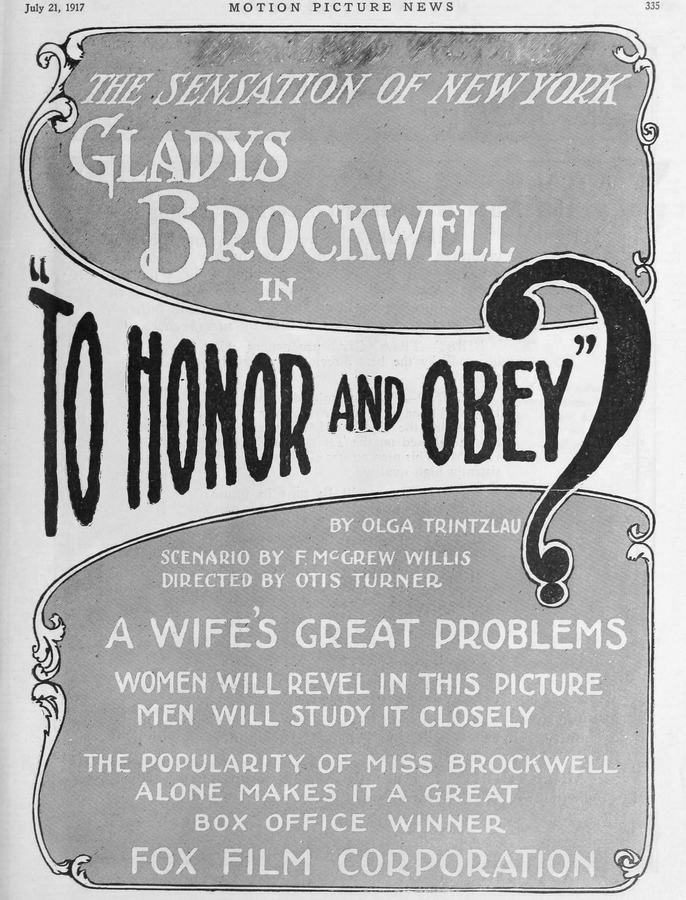
Step back into the nascent days of cinematic storytelling, to an era where melodrama reigned supreme and the silent screen conveyed emotions with an intensity that often surpassed spoken dialogue. Released in 1917, 'To Honor and Obey' is more than just a relic of its time; it's a poignant exploration of fidelity, betrayal, and the corrosive power of greed, wrapped in a narrative that resonates with surprising contemporary relevance. This film, penned by the insightful Olga Printzlau and F. McGrew Willis, delves into the moral quagmire faced by its protagonist, Lorrie Hollis, whose journey is a harrowing testament to the sacrifices one might make under the guise of marital duty.
At its core, 'To Honor and Obey' presents a stark tableau of human frailty and resilience. Lorrie Hollis, portrayed with compelling earnestness by Gladys Brockwell, begins her marital life with the flamboyant Richard Hallam, played by Bertram Grassby. Hallam is the quintessential early 20th-century speculator, a man enamored with the thrill of the market and the allure of quick riches. His initial charm is undeniable, yet beneath the veneer of charisma lies a profound recklessness, a character flaw that swiftly propels their domestic bliss towards an precipitous financial cliff. The film masterfully sets up this initial contrast: Lorrie, grounded in virtue and quiet strength, against Richard, drawn to superficiality and the fleeting glory of material success.
Hallam's inevitable downfall is swift and brutal. His audacious stock market gambles, initially promising, quickly devolve into catastrophic losses, stripping him of his considerable fortune. Here, the film introduces its central ethical dilemma. Desperate and utterly devoid of self-respect, Richard turns to Lorrie, not for solace, but to exploit her past connections. He implores her to seek assistance from Marc Patton, a wealthy broker and, significantly, Lorrie's former suitor, portrayed by Charles Clary. This moment is pivotal, laying bare Hallam's profound moral bankruptcy. He asks his wife to leverage a past affection, a relationship he effectively supplanted, for his own selfish gain. It's a shocking display of male entitlement and a stark reminder of the limited agency women often possessed in that era.
Lorrie's subsequent decision to approach Patton is painted with the brushstrokes of profound internal conflict. Her love for Richard, however misguided, compels her. The film suggests, with a delicate yet impactful hand, the immense personal cost of this plea. Her 'sacrifice of virtue' for her husband's wealth is a devastating moment, hinting at a profound personal compromise that would haunt her. The narrative, without explicit visual detail, conveys the gravity of her choice, allowing the audience to infer the depth of her despair and the immense pressure she endured. This thematic thread of sacrifice for a loved one, even a deeply flawed one, echoes in other cinematic works of the period, such as The Quality of Faith, where characters often face impossible moral choices for the sake of family or principle. However, 'To Honor and Obey' amplifies the tragic element by presenting a sacrifice that is ultimately unappreciated and exploited.
With his fortune miraculously regained through Lorrie's agonizing intervention, Richard Hallam's true character fully emerges from the shadows. Instead of gratitude or renewed devotion, he descends into an even deeper abyss of self-absorption and cruelty. He utterly forgets, or perhaps willfully ignores, the monumental sacrifice his wife made. His attention drifts to Rose Delvane, a character embodying the superficial allure of the 'other woman,' played by Jewel Carmen. Rose represents the shallow pleasures and fleeting companionship that Hallam prioritizes over the profound, painful loyalty demonstrated by Lorrie. This shift is a devastating blow, not just to Lorrie, but to the audience's expectation of a just outcome. It highlights the film's unflinching portrayal of human fallibility and the bitter irony that sometimes, the restoration of wealth only corrupts further.
The film then escalates Hallam's abuse, both emotional and, implicitly, physical, driving Lorrie from their once-opulent home. Her departure is not an act of weakness, but a desperate assertion of self-preservation, a breaking point after enduring unbearable neglect and cruelty. This sequence, handled with the dramatic flair typical of silent cinema, would have relied heavily on Gladys Brockwell's expressive acting and the emotional weight of the intertitles to convey Lorrie's profound suffering and eventual resolve. Her plight resonates with the struggles of women depicted in other melodramas of the era, though 'To Honor and Obey' pushes the boundaries of marital betrayal to a particularly callous degree.
Enter Marc Patton, the jilted suitor whose quiet dignity and enduring affection for Lorrie stand in stark contrast to Hallam's volatile nature. Witnessing Lorrie's unjust treatment, a simmering rage ignites within Patton. His vengeance is not impulsive or crude; it is a calculated, strategic assault on Hallam's most vulnerable point: his financial empire. Patton, a seasoned broker, methodically crushes his rival in a brutal stock battle, mirroring Hallam's earlier reckless gambles but with precision and intent. This financial duel is a fascinating narrative device, transforming the abstract world of stocks into a gladiatorial arena where personal grievances are settled with economic might.
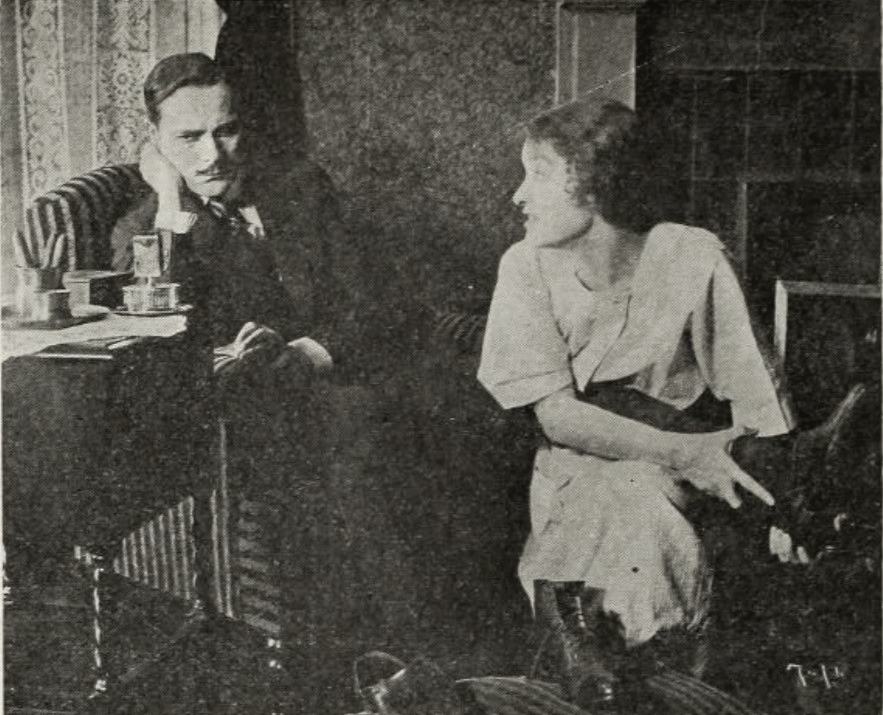
Hallam's second, and final, financial ruin is presented as a direct consequence of his moral failings. Stripped of his wealth, he is immediately deserted by Rose Delvane, whose loyalty, as expected, proved as fleeting as his fortune. This swift abandonment underscores the film's critique of superficial relationships built on material gain. The contrast between Rose's desertion and Lorrie's earlier, selfless sacrifice could not be more stark. Hallam, now bereft of money, respect, and love, finds himself in an inescapable psychological trap. His subsequent suicide is a tragic, yet perhaps inevitable, conclusion to a life defined by self-interest and a profound inability to appreciate genuine affection. Josef Swickard, though in a supporting role, likely contributed to the gravitas of the societal backdrop against which these personal dramas unfold.
'To Honor and Obey' is a rich tapestry of thematic concerns. It boldly tackles the societal expectations placed upon women, particularly within marriage, where fidelity and sacrifice were often demanded without reciprocal respect or protection. Lorrie's journey is a powerful commentary on the limited choices available to women and the immense personal cost of upholding a flawed patriarchal ideal. The film also delves into the corrupting influence of wealth and the seductive danger of unchecked ambition. Hallam's character arc serves as a cautionary tale, illustrating how material pursuits, when divorced from ethical considerations, can lead to utter moral and personal desolation. The contrast between his initial flamboyance and his ultimate despair is a testament to the narrative's strength.
The casting is crucial to the film's impact. Gladys Brockwell, as Lorrie, carries the emotional weight of the narrative. Her ability to convey deep anguish, unwavering resolve, and eventual hope without uttering a single word is a hallmark of silent film acting at its finest. Bertram Grassby's portrayal of Richard Hallam must have been equally compelling, capturing the character's initial charm, his descent into callousness, and his final, desperate moments. Charles Clary, as Marc Patton, provides the steady, moral counterpoint, representing a different kind of strength and enduring love. The supporting performances, including Jewel Carmen as the opportunistic Rose Delvane and Willard Louis, would have rounded out this compelling ensemble, each contributing to the film's intricate web of relationships and conflicts.
From a directorial standpoint, the film, though details of its specific techniques are scarce, would have relied on the prevalent cinematic language of its time. This includes expressive intertitles to convey dialogue and internal thoughts, dramatic close-ups to emphasize emotional states, and careful use of mise-en-scène to establish atmosphere and character. The pacing would have been crucial, building tension through Hallam's escalating recklessness and Lorrie's mounting despair, culminating in the cathartic resolution. The visual storytelling, characteristic of the era, would have used symbolism and heightened gestures to communicate the complex moral landscape of the plot. For instance, the stark contrast between the lavishness of Hallam's early life and the desolate setting of his final moments would have been visually impactful.
Hallam's suicide, while a dark resolution, ultimately serves as a catalyst for Lorrie's liberation. It frees her from the shackles of a destructive marriage and the lingering shadow of her sacrifice. The film concludes with the promise of a new life for Lorrie with Marc Patton, whose steadfast love has endured through all her trials. This ending, while perhaps a conventional 'happy ever after' for the era, feels earned. It's not merely a convenient plot device, but the culmination of Patton's unwavering devotion and Lorrie's hard-won resilience. Her journey from naive bride to a woman who has faced profound moral compromises and emerged with her spirit intact is a powerful arc.
In an age saturated with complex narratives and anti-heroes, 'To Honor and Obey' offers a refreshingly direct, yet profoundly impactful, exploration of virtue, vice, and the enduring human capacity for both cruelty and compassion. It reminds us that some stories, particularly those concerning moral choices and personal integrity, are timeless. While silent films might seem distant to modern audiences, the emotional core of this narrative transcends the limitations of its medium. It's a powerful testament to the skill of its writers, Olga Printzlau and F. McGrew Willis, and its cast, in crafting a story that continues to resonate. Much like the moral complexities explored in a film such as Bella Donna, which also delves into women's difficult choices in marriage, 'To Honor and Obey' stands as a significant piece of cinematic history, inviting viewers to reflect on the true meaning of honor, obedience, and the ultimate price of love.
The film's exploration of financial ruin and its devastating personal consequences can also be seen in parallel with other narratives of the time, where the volatile nature of wealth often served as a dramatic engine. While not directly a comparison, one might consider how the themes of class and personal struggle in films like The Millionaire Vagrant, though different in specific plot points, share a common ground in examining the profound impact of economic status on individual lives and relationships. 'To Honor and Obey' offers a particularly stark warning against the perils of unbridled financial ambition and the neglect of genuine human connection. It's a film that, despite its age, continues to speak to the enduring questions of what we truly value and the sacrifices we are willing to make, for better or for worse.
IMDb 6.6
1927
Community
Log in to comment.