DbcultAccessing Vault...
Cult Review
Senior Film Conservator
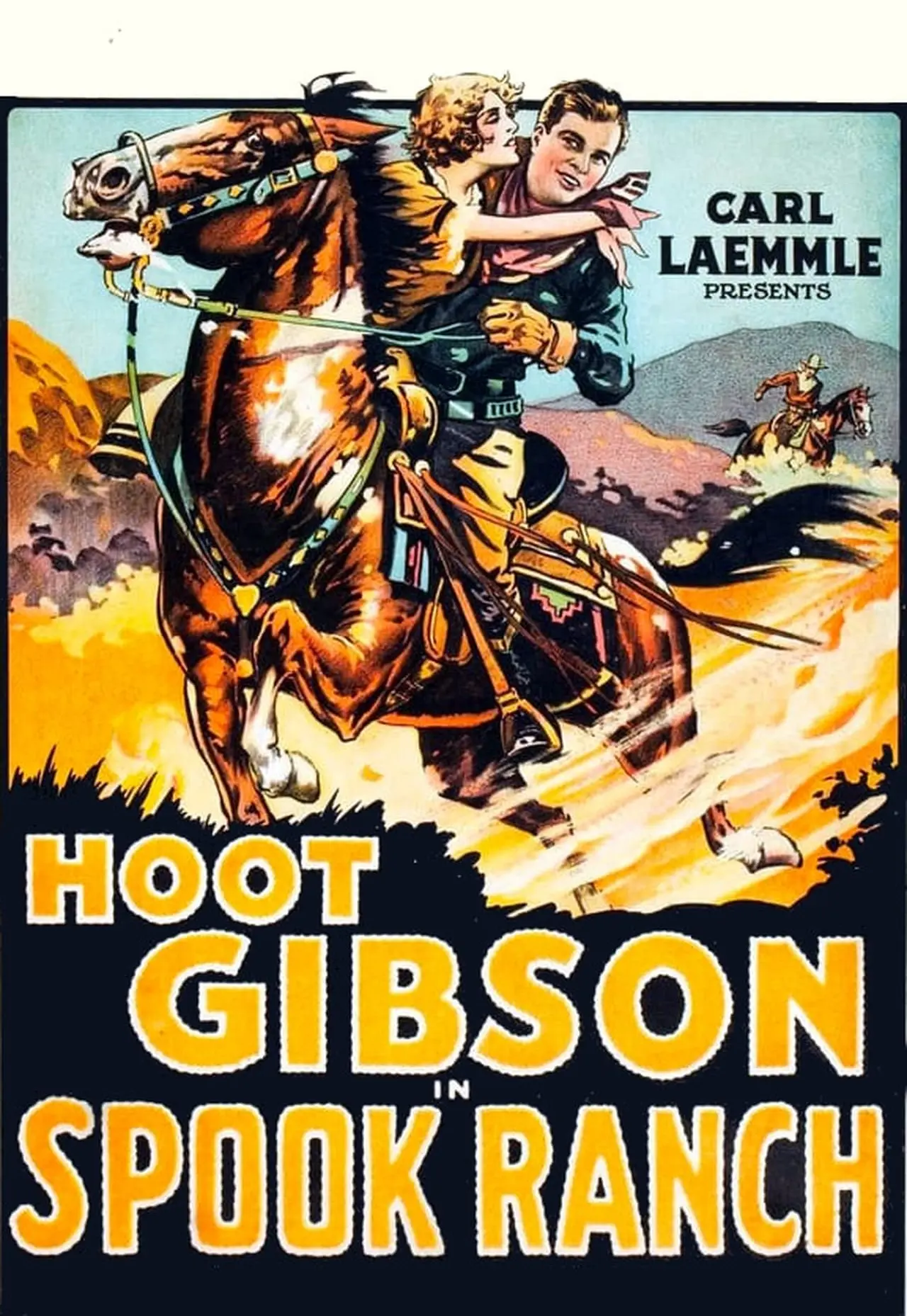
So, is Spook Ranch, a silent Western from an era long past, worth unearthing and watching today? Short answer: yes, but with significant caveats that demand a critical eye and an understanding of historical context. This film is a fascinating, if problematic, time capsule that offers a window into the nascent stages of the Western genre and the early stardom of Hoot Gibson.
It is unequivocally for cinephiles, historians, and those with a genuine interest in silent film or the evolution of American popular culture. It is decidedly NOT for viewers seeking modern pacing, nuanced character development, or content free from the uncomfortable racial stereotypes prevalent in early 20th-century cinema. Approach it as an artifact, not as a contemporary piece of entertainment.
This film works because: It provides an invaluable look at the foundational elements of the Western, showcasing Hoot Gibson's charismatic stunt work and the rudimentary but effective storytelling of the silent era.
This film fails because: Its reliance on a deeply problematic and stereotypical portrayal of its Black comedic relief character, George Washington Black, overshadows much of its charm for a modern audience.
You should watch it if: You are a student of film history, particularly interested in silent Westerns, or if you wish to observe the evolution of cinematic narrative and performance, understanding that you'll encounter outdated social perspectives.
At its core, Spook Ranch presents a straightforward narrative: the hero arrives, faces an obstacle disguised as the supernatural, unmasks the true villains, and wins the girl. Bill Bangs, portrayed by the legendary Hoot Gibson, isn't introduced as a paragon of virtue, but rather as a scrounging drifter, caught in a moment of desperation alongside his Black valet, George Washington Black.
Their arrest for a meager attempt at stealing food immediately grounds them in a less-than-heroic light, setting up a redemption arc. The sheriff's offer of freedom in exchange for solving the 'haunted house' mystery is a classic narrative device, propelling our protagonists into the central conflict.
The 'haunted' house itself is a thinly veiled ruse, a clever, if transparent, cover for Don Ramies' gang. Their true objective – the rancher's gold mine – provides the tangible stakes. It’s a classic Western trope: the hidden treasure, the ruthless gang, and the lone hero who stumbles into the fray. The film doesn't waste time on intricate subplots, preferring a direct path to confrontation and resolution, culminating in Bill's triumph and romantic success with the rancher's daughter, Helen Ferguson's character.
Directed by Edward Sedgwick, Spook Ranch is a product of its time, showcasing the developing grammar of cinematic storytelling. Sedgwick, a prolific director of the era, understood the demands of the Western: action, clear heroes and villains, and a sense of rugged adventure. The direction here is functional, serving the plot rather than innovating with stylistic flourishes.
Cinematography, while rudimentary by today's standards, effectively captures the vastness of the Western landscape, even in its limited scope. Shots often prioritize clarity of action, ensuring that audiences, accustomed to stage plays, could follow the narrative visually. The 'haunted' house sequences, for instance, rely on simple but effective visual cues – shadows, quick cuts, and the characters' exaggerated reactions – to convey suspense before the reveal.
There's a raw energy to the action sequences, particularly those involving Hoot Gibson's signature stunts. Sedgwick knew how to frame Gibson to highlight his athleticism and daring, making the most of the physical comedy and genuine peril. Consider the moments where Bill confronts the outlaws; the camera holds, allowing Gibson's physical performance to drive the scene. It’s not about artful angles, but about clear, impactful storytelling.
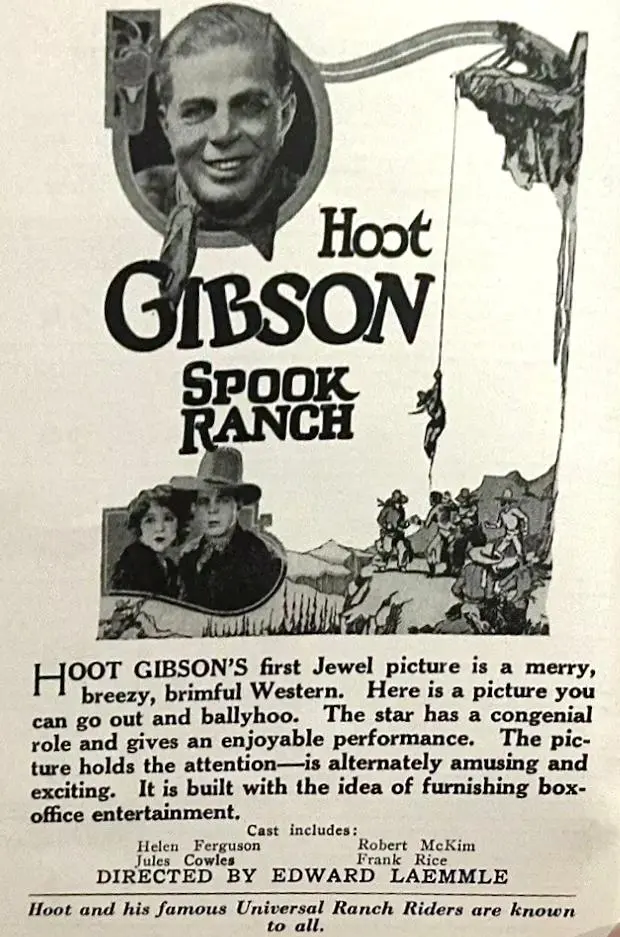
One could argue that the film's greatest strength in this regard lies in its unpretentious approach. There's no attempt at grandeur beyond what the story demands. The pacing, while slower than modern audiences might expect, is typical for silent films, allowing time for intertitles to convey dialogue and internal thoughts. This deliberate rhythm gives scenes a chance to breathe, inviting the audience to absorb the visual information before the next narrative beat.
The outdoor locations are utilized to their full potential, establishing a clear sense of place that is essential to the Western genre. While not as visually sweeping as later epics, the film successfully conveys a world where lawlessness lurks just beyond the town limits, and danger hides in plain sight, or in this case, a 'haunted' house. The practical effects, though simple, achieve their desired impact, whether it's a tumble from a horse or a staged fistfight.
Hoot Gibson, a true star of the silent Western, anchors Spook Ranch with his signature blend of rugged charm, daring stunts, and comedic timing. Gibson's appeal lay not just in his ability to perform his own impressive horsemanship and action sequences, but also in his approachable, everyman persona. He wasn't the stoic, brooding hero; he was often a bit of a scamp, endearing himself to audiences through his good-natured mischief and eventual heroism.
His physical performance is key, as is typical for silent cinema. Every gesture, every facial expression, is amplified to convey emotion and intent without spoken dialogue. When Bill Bangs is caught stealing, Gibson's sheepish grin and exaggerated shrugs instantly communicate his predicament and character. His interactions with Helen Ferguson, as the rancher's daughter, are charmingly conventional, following the established romantic tropes of the era.
However, no discussion of the performances in Spook Ranch can ignore the character of George Washington Black, played by Jules Cowles. This character represents one of the film's most glaring and uncomfortable aspects for a modern viewer. George is depicted as Bill's 'Negro valet,' a figure primarily for comedic relief, often at his own expense. His character is a crude, exaggerated stereotype, embodying the deeply problematic and racist caricatures prevalent in early American cinema.
His fear of the 'haunted' house is played for laughs, positioning him as a subservient, easily frightened foil to Gibson's brave hero. While one might argue this was 'a product of its time,' it's crucial to acknowledge that such portrayals were not universally accepted even then, and they remain a significant stain on the film's legacy. This isn't just a dated trope; it's a dehumanizing depiction that actively diminishes the film's ability to be enjoyed uncritically today.
The rest of the ensemble, including Robert McKim as the villainous Don Ramies, fulfill their roles adequately. McKim, with his menacing scowl and authoritative presence, provides a credible antagonist. The performances are broad, designed for clarity in a medium without sound, and while effective for their period, they lack the subtlety and depth we associate with modern acting.
The pacing of Spook Ranch is deliberate, a characteristic trait of silent films that relied on intertitles and visual storytelling to convey narrative. This isn't a film that rushes. Scenes are allowed to play out, giving audiences time to absorb the visual information and read the expository text. This can feel slow to a contemporary viewer accustomed to rapid-fire editing, but it also allows for a certain contemplative quality, enabling a deeper appreciation for the physical performances and the simple charm of the narrative.
The tone is a fascinating blend of adventure, light comedy, and mild suspense. The 'haunted house' premise, while quickly debunked, injects an initial element of mystery that shifts into straightforward outlaw confrontation. The comedic elements primarily stem from George Washington Black's exaggerated fear and Bill Bangs' playful antics, though as noted, the former comes with significant moral baggage.
An unconventional observation about Spook Ranch is how it inadvertently highlights the shifting nature of 'fear' in cinema. The film's initial attempt at a 'spook' story feels almost quaint, relying on simple visual tricks. Yet, the true unsettling aspect, for a modern audience, isn't the ghosts or the outlaws, but the normalized, casual racism embedded within its comedic relief. It's a chilling reminder of the societal norms reflected in early filmmaking, a 'ghost' of a different kind that haunts its frames more profoundly than any spectral cowboy.
The film manages to maintain a generally lighthearted atmosphere, even amidst the outlaw conflict. The stakes, while present, never feel overwhelmingly dire, reinforcing its identity as an entertaining, escapist Western rather than a gritty drama. This tonal consistency, despite the problematic elements, is a testament to the era's filmmaking sensibilities, prioritizing clear, accessible narratives for a broad audience.
Yes, Spook Ranch is worth watching, but primarily for its historical and academic value. It's a key example of an early silent Western.
It showcases the star power of Hoot Gibson and the foundational elements of the genre.
However, it demands a viewing informed by critical awareness of its cultural context.
It is an essential watch for film historians and silent film enthusiasts.
Casual viewers looking for pure entertainment might find its pace and content challenging.
Spook Ranch, like many films of its vintage, exists in a delicate space between historical artifact and entertainment. Its legacy is intertwined with the rise of the Western as a dominant genre and the early development of screen personalities like Hoot Gibson. It demonstrates how early narratives often blended elements of comedy, adventure, and mild suspense to create compelling, if simplistic, stories.
The film contributes to our understanding of how the Western mythos was being constructed on screen: the rugged hero, the damsel in distress, the clear-cut villains, and the untamed frontier. It's a blueprint for countless Westerns that would follow, refining these tropes into the iconic imagery we recognize today.
However, the most significant lingering question revolves around the portrayal of George Washington Black. Can a film with such an overtly racist caricature truly be celebrated, or even appreciated, in the modern era? My stance is that it can be studied, but not uncritically celebrated. To ignore or downplay this aspect is to sanitize history and to dismiss the real harm such portrayals inflicted and continue to represent.
It forces us to confront uncomfortable truths about early Hollywood and American society. While Gibson's stunts and the simple adventure hold a certain nostalgic charm, the film serves as a potent reminder that cinema has always been a reflection, sometimes a distorted one, of its societal backdrop. It's a film that demands conversation, not just passive consumption.
The film, therefore, is not merely a piece of cinematic history; it's a document of cultural history. It shows us where we've come from, both in terms of filmmaking technique and social attitudes. Its flaws are as instructive as its strengths, offering a unique lens through which to examine the evolution of both art and society.
Spook Ranch is more than just a dusty relic; it’s a compelling, albeit complicated, piece of film history. It works. But it’s profoundly flawed. While Hoot Gibson’s energetic performance and the film’s pioneering Western spirit offer genuine moments of interest, the pervasive and uncomfortable racial stereotypes prevent it from being a simple recommendation for casual viewing. It demands engagement, not just entertainment, serving as a powerful reminder of how far cinema, and society, have come, and how much further we still have to go. Approach it with an open mind, a critical eye, and a strong stomach for historical discomfort.
IMDb —
1934
Community
Log in to comment.