DbcultAccessing Vault...
Cult Review
Senior Film Conservator
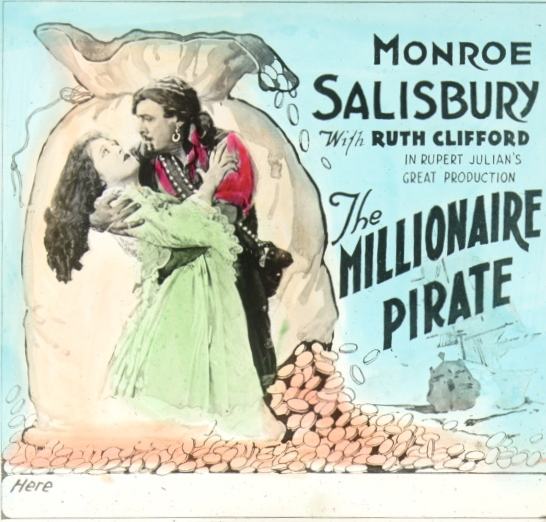
In the annals of silent cinema, where grand narratives often danced on the tightrope between melodrama and myth, emerges The Millionaire Pirate, a film that, even a century later, still whispers tales of destiny, reincarnation, and the enduring allure of a past that refuses to stay buried. This isn't merely a film about swashbuckling adventure or a simple love triangle; it's a profound exploration of how history's echoes can reverberate through modern lives, shaping desires and dictating fates. It’s a testament to the era’s fascination with the mystical undercurrents of human connection, a theme that, when handled with the right touch, transcends its period trappings.
The narrative unfurls with an almost poetic serendipity. We are introduced to Paul Winthrop, a painter whose artistic sensibilities lead him to an idyllic island, a canvas waiting to be brought to life. His muse arrives in the form of Joe, a pearl diver, a man of the sea and sun, whose raw, untamed spirit begs for immortalization. The scene where Paul, with a stroke of genius, envisions and then dresses Joe in the iconic regalia of a pirate, is more than a simple artistic endeavor; it’s a ceremonial unveiling of a deeper truth. The moment Joe gazes upon his painted likeness, a striking figure in buccaneer garb, he is not merely admiring art. He is, in a profound, almost mystical sense, recognizing himself. This isn't vanity; it's the dawning of an ancient memory, a spark of recognition that ignites a dormant lineage. He sees Jean Lafitte, the infamous privateer, staring back, and in Paul, an instinctive recognition of an old antagonist, a rival from a past life. This initial encounter sets a captivating stage, hinting at a karmic entanglement stretching across centuries.
Such a premise, relying heavily on the audience's willingness to suspend disbelief and embrace the fantastical, was a hallmark of many films of the period. While some might draw parallels to the grand, often spiritual narratives seen in films like Ingmarssönerna, which delves into generational sagas and moral quandaries, The Millionaire Pirate grounds its mystical elements in a more personal, romantic conflict. It avoids the overt supernatural for a more psychological resonance, suggesting that certain souls are simply destined to cross paths, to relive ancient dramas, even if unconsciously. The genius of the screenplay, crafted by Emil Nyitray, Herbert Hall Winslow, and Waldemar Young, lies in its ability to weave this intricate tapestry of past and present without resorting to heavy-handed exposition. The unspoken recognition between Joe and Paul is palpable, a testament to the power of visual storytelling inherent in silent cinema.
Joe’s transformation is accelerated by a stroke of pure, narrative-driven luck: his discovery of a case of pirate treasure, buried along the shore. The name Jean Lafitte emblazoned on the box isn't just a label; it's a confirmation, a tangible link to the past life that now seems to be asserting its dominance. This newfound wealth is not merely a means to an end; it is a catalyst for Joe to embrace his inherited persona, to step into the shoes of his legendary ancestor. It enables his journey to the bustling heart of America, to New York, where fate, with its usual theatrical flair, orchestrates his reunion with Paul Winthrop. The contrast between the tranquil island and the urban jungle of New York further accentuates Joe's journey, a man out of time, yet perfectly poised to fulfill a destiny that spans centuries.
In New York, the plot thickens with the introduction of Lily Demorest, portrayed with poignant vulnerability by Ruth Clifford. Lily is the object of Paul's affections, but their path to happiness is obstructed by the formidable obstacle of societal expectation. Her parents, blinded by the glitter of material wealth and social standing, have earmarked her for Robert Spurr, a millionaire, a man who represents everything conventional and secure. This setup, where true love is pitted against mercenary matrimony, is a classic trope of the era, seen in various forms in films exploring social commentary, though perhaps not with the mystical undertones of this particular narrative. The casting of Clyde Fillmore as Paul Winthrop underscores his character's inherent timidity, a stark contrast to the burgeoning audacity of Joe.
Monroe Salisbury, in the role of Joe, delivers a performance that must have been captivating for audiences of the time. His portrayal likely navigates the complex emotional landscape of a man grappling with a past life, a newfound fortune, and an irresistible attraction. His transformation from a simple, picturesque diver to a man of means, yet still driven by primal urges, is central to the film's success. When Joe sets his sights on Lily, his initial motive appears almost chivalrous, a desire to unite her with the hesitant Paul. This act, a kind of benevolent piracy, speaks to a nascent morality within him, perhaps a struggle against the darker impulses of his ancestor. However, the allure of Lily proves too potent, and Joe’s intentions shift. He decides to keep her for himself, a move that harks back to the covetous nature often associated with legendary buccaneers like Lafitte. This internal struggle, the push and pull between generosity and self-interest, adds considerable depth to Joe's character, preventing him from becoming a one-dimensional villain.
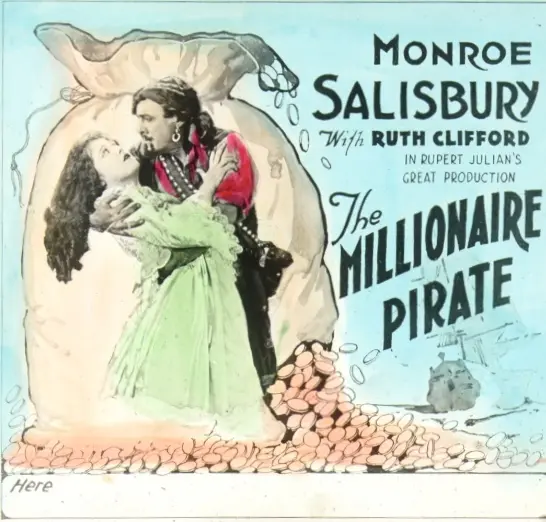
The climax of this romantic entanglement is both dramatic and profoundly symbolic. Lily’s heartfelt cry for Paul is not just a plea for rescue; it's a shattering revelation for Joe. In that moment, the true meaning of the curse, the indelible mark left on his ancestor by the woman he coveted but could not truly possess, dawns upon him. It’s a moment of profound recognition, a breaking of the ancestral spell. This isn’t about physical chains; it’s about the spiritual shackles of unrequited, possessive desire. The film deftly uses this pivotal scene to pivot Joe from a figure of potential menace to one of tragic nobility. He understands that true love cannot be coerced or stolen, a lesson that perhaps eluded Jean Lafitte himself. This echoes the emotional complexities often explored in silent dramas, where grand gestures and internal turmoil were conveyed through nuanced acting and evocative cinematography.
The decision to return Lily to Paul is not an easy one for Joe. It is a sacrifice, a difficult act of renunciation that elevates his character beyond mere historical echo. The film concludes not with a triumphant fanfare for Joe, but with the quiet, bittersweet satisfaction of seeing Paul and Lily reunited. Joe finds a measure of happiness, a difficult, earned contentment, in the thought of their joyous reunion. This ending, while not conventionally heroic for Joe, offers a more profound resolution, suggesting that breaking free from the patterns of the past, even a glorious one, can lead to a different, more enlightened form of peace. It's a nuanced conclusion that distinguishes The Millionaire Pirate from simpler adventure tales. The film doesn’t merely resolve a conflict; it offers a philosophical insight into the nature of desire and destiny.
The supporting cast, including Lillian Langdon, Jack Mower, and Harry Holden, would have contributed to the rich tapestry of this silent epic, fleshing out the societal pressures and personal stakes. The strength of the performances, particularly from Salisbury and Clifford, would have been paramount in conveying the deep emotional currents without the aid of spoken dialogue. Silent films relied heavily on exaggerated expressions, body language, and the emotional resonance of the musical score (though not part of the film itself, it would have been present during screenings). The visual language of the film, from the sun-drenched island to the opulent New York settings, would have been crucial in establishing mood and atmosphere.
Comparisons to other films of the era are inevitable when dissecting its thematic depth. While Don't Change Your Husband might explore the nuances of marital dissatisfaction and societal expectations in a more contemporary vein, The Millionaire Pirate dips into a more fantastical, historical romanticism. Similarly, though The Light of Western Stars offers its own brand of adventurous romance, it lacks the explicit reincarnation motif that makes this film unique. The blend of adventure, romance, and the mystical makes it a fascinating outlier, a film that dares to ask profound questions about identity and fate within a popular genre framework. The narrative’s careful construction ensures that these elements coalesce into a coherent, compelling whole, rather than dissolving into disparate parts.
The writers, Emil Nyitray, Herbert Hall Winslow, and Waldemar Young, deserve commendation for crafting a story that is both intricate and emotionally resonant. They navigate the complexities of past lives and present desires with a deft hand, ensuring that the audience remains invested in the fates of these characters. The narrative progression, from the initial, almost accidental discovery of a past life to the climactic emotional reckoning, is paced effectively, building tension and anticipation. The film avoids the pitfalls of overly simplistic characterizations, instead presenting individuals grappling with internal and external conflicts that feel surprisingly modern in their psychological depth. The journey of Joe, in particular, is a masterclass in silent film character development, his arc moving from instinctual recognition to conscious self-sacrifice.
Beyond its immediate plot, The Millionaire Pirate stands as a vibrant example of early 20th-century cinema's capacity for imaginative storytelling. It’s a film that, through its silent artistry, invites viewers to ponder the unseen threads that connect us to our ancestors, the power of a single image, and the difficult choices that define our humanity. It’s a grand romantic adventure, yes, but it’s also a thoughtful meditation on the burdens and blessings of legacy, and the ultimate triumph of selfless love over ancestral pride. This cinematic artifact, a century removed from its original release, continues to speak to the timeless human experience of yearning, belonging, and the relentless pursuit of a happiness that often demands the greatest sacrifices. It remains a compelling watch for those interested in the rich tapestry of early filmmaking and the enduring power of a story well told.
IMDb 5.8
1923
Community
Log in to comment.