DbcultAccessing Vault...
Cult Review
Senior Film Conservator
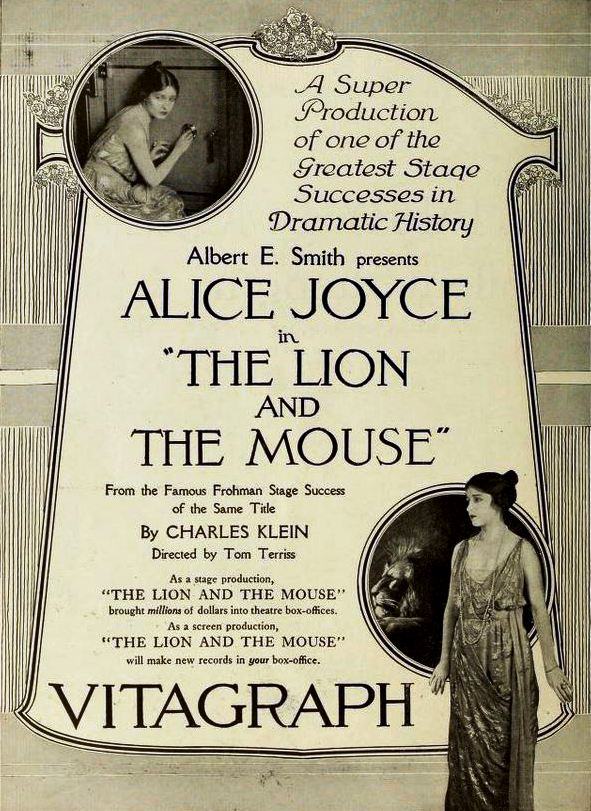
The flickering shadows and grand gestures of silent cinema often hold a mirror to the societal anxieties and moral quandaries of their time, and Edward J. Montagne’s 1919 rendition of The Lion and the Mouse is a sterling example. Adapted from the popular stage play by Charles Klein, this film plunges into the murky waters where immense wealth clashes with unyielding integrity, where familial bonds are tested by ethical imperatives, and where love blossoms amidst the thorns of deception. It’s a narrative rich with dramatic irony, a potent commentary on the corrupting influence of unchecked power, and a testament to the enduring human spirit’s capacity for both cunning and compassion.
At the heart of this intricate melodrama lies John Burkett Ryder, portrayed with a formidable, almost monolithic presence by Templar Saxe. He is not merely a rich man; he is “the richest man in the world,” a designation that immediately imbues his character with an almost mythical, omnipotent aura. Ryder’s wealth is his shield, his weapon, and, ultimately, his Achilles' heel. When a judicial decision, rendered by the principled Judge Rossmore, threatens his vast financial interests, Ryder’s immediate, almost instinctual response is not negotiation, but annihilation. He sets in motion a Machiavellian plot to discredit the judge, initiating impeachment charges in Congress, a move that speaks volumes about the era’s perception of corporate power’s ability to manipulate legal and political systems.
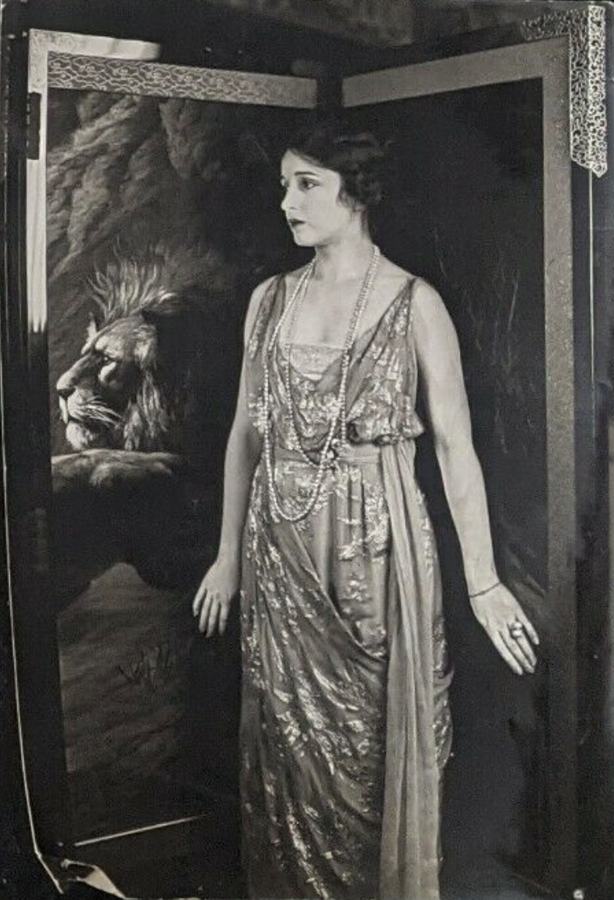
The narrative gains its emotional traction with the introduction of Shirley Rossmore, the judge’s daughter, brought to vibrant life by the luminous Alice Joyce. Joyce, a prolific star of the silent screen, imbues Shirley with a blend of Parisian sophistication and fierce filial loyalty. Having achieved literary success abroad, her return home upon learning of her father’s plight is not merely a homecoming but a declaration of war. Her character is a refreshing departure from the damsel-in-distress archetype, embodying instead a proactive, intellectually formidable protagonist. This strength of character, reminiscent of the determined heroines found in contemporary films like Souls Triumphant, where female protagonists often navigate complex moral landscapes, elevates The Lion and the Mouse beyond a mere potboiler.
The plot thickens with the romantic entanglement between Shirley and Jefferson Ryder, the magnate’s son, played with earnest charm by Conrad Nagel. Nagel, even in this early role, demonstrates the nuanced emotional range that would make him a matinee idol. His character is a moral counterpoint to his father’s ruthlessness, a man grappling with the ethical implications of his family’s power. This romantic thread is not merely a convenient subplot; it is the crucible in which the film’s central conflicts are forged. Shirley’s love for Jefferson complicates her mission, adding layers of emotional complexity to her calculated deception. The audience is invited to ponder the agonizing choice: justice for her father or the man she loves, who also happens to be the son of her adversary. This intricate dance of duty and desire is a cornerstone of effective melodrama, a technique seen in other dramatic works of the era, such as the intense romantic conflicts in To Have and to Hold.
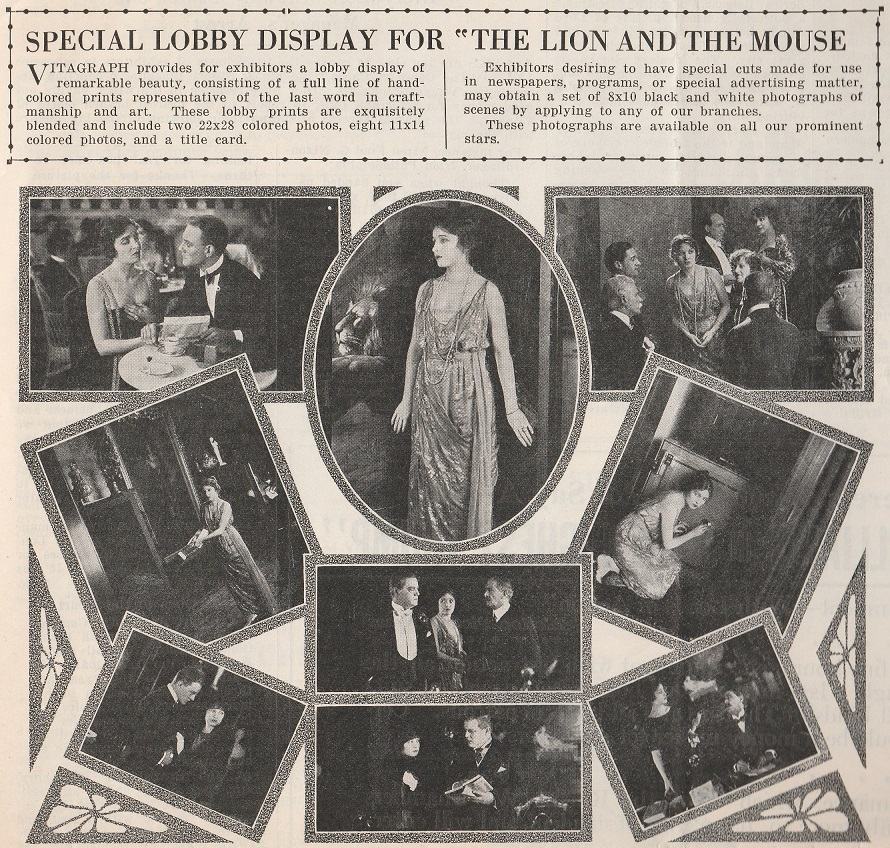
Shirley’s strategy to expose Ryder is ingenious. Under the pseudonym “Sarah Green,” she pens “The American Octopus,” a scathing indictment of Burkett’s character. The irony is palpable: the very target of her literary venom becomes enamored with the book, inviting its enigmatic author to ghostwrite his biography. This narrative device allows Shirley to infiltrate the inner sanctum of her enemy, transforming her from a distant antagonist into a Trojan horse within his own home. Alice Joyce’s portrayal of Shirley as “Sarah Green” is a masterclass in controlled performance, maintaining a delicate balance between outward deference and internal resolve. She walks a tightrope of deceit, her every interaction a calculated step towards her ultimate goal: retrieving the two letters that will clear her father’s name.
The tension escalates as Jefferson, caught between his father’s oppressive legacy and his burgeoning affection for Shirley, aids her in securing the crucial documents. This act of disloyalty, however noble in its intent, is discovered by his father. The scene where John Burkett Ryder denounces his own son as a thief is a powerful dramatic moment, rendered all the more poignant by Templar Saxe’s portrayal of a man whose moral compass has been utterly warped by power. He is a man who values his reputation and control above all else, even his own flesh and blood. This familial rupture, though silent, resonates deeply, highlighting the tragic consequences of unchecked ambition.
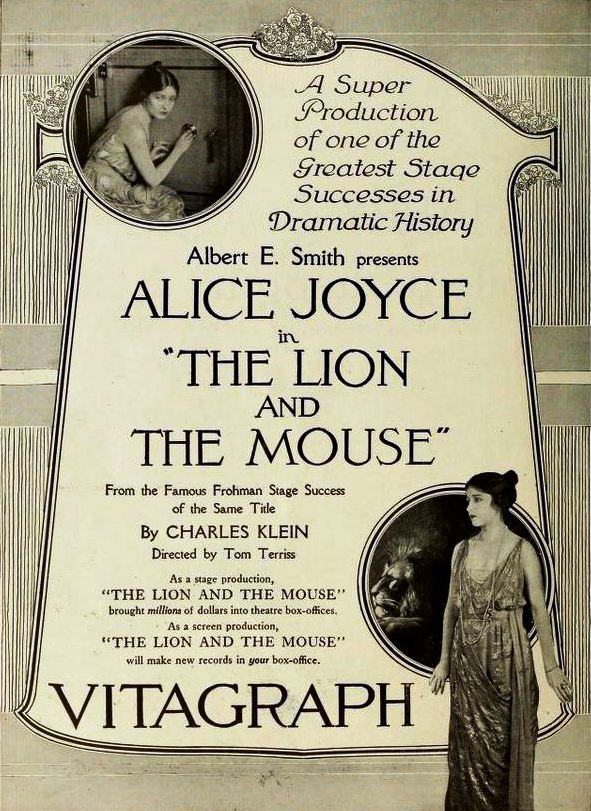
It is in this moment of raw familial pain that Shirley’s carefully constructed identity finally shatters. Unable to bear the sight of Jefferson being branded a criminal for an act undertaken on her behalf, she confesses her true identity and her motivations. This pivotal confession is not merely a plot device; it is a profound act of love and self-sacrifice, demonstrating the depth of her feelings for Jefferson. Alice Joyce conveys this moment with a blend of anguish and resolute honesty, allowing the audience to witness the full weight of her moral dilemma and its resolution.
The film’s title, The Lion and the Mouse, is an obvious allegorical nod to Aesop’s fable, but Montagne and the writers Edward J. Montagne and Charles Klein (from the original play) infuse it with a sophisticated twist. Here, the ‘Lion’ is not merely a creature of brute strength but a man of immense, albeit corrupt, power. The ‘Mouse’ is not a physically insignificant creature, but a woman whose intellectual prowess, moral conviction, and quiet determination prove to be the undoing of the seemingly invincible titan. The resolution, where the ‘Lion’ is “won by the charm of the ‘Mouse’,” suggests a redemptive arc for John Burkett Ryder, a softening of his hardened heart through the sheer force of Shirley’s character and the loyalty of his son. This kind of moral transformation, even if somewhat expedited for dramatic closure, was a common trope in early cinema, offering audiences a satisfying sense of justice and hope, much like the clear-cut good vs. evil narratives often found in films such as Guarding Old Glory, albeit with more psychological depth here.
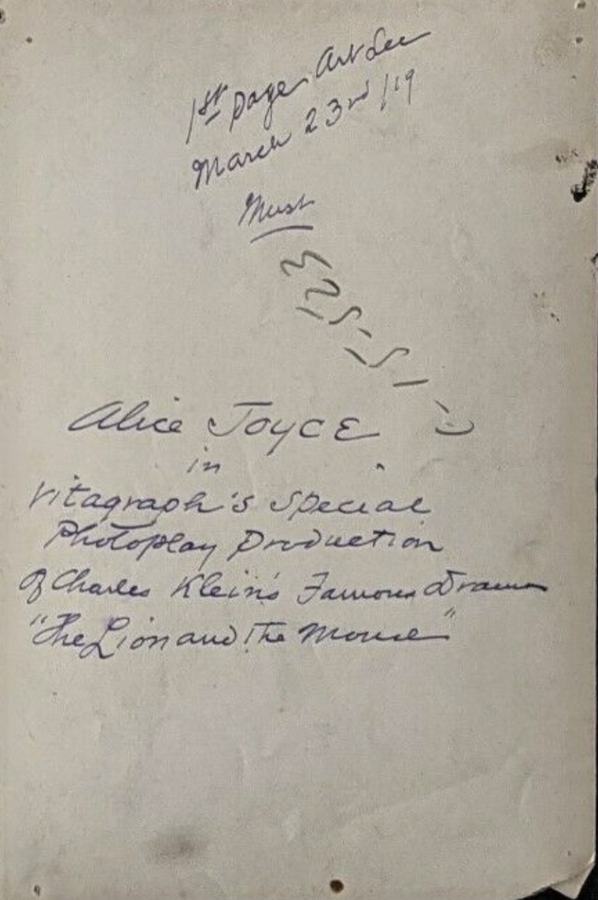
The cinematic language of 1919, while lacking the intricate editing and camera movement of later decades, is utilized effectively to convey the narrative’s tension and emotional beats. Intertitles are crucial, not just for dialogue but for exposition, guiding the audience through the complex plot. Montagne’s direction, while perhaps constrained by the technological limitations and narrative conventions of the era, manages to highlight the compelling performances. The static camera often frames characters in ways that emphasize their power dynamics or emotional states, relying on the actors’ expressions and physical movements to carry the weight of the story. The blocking of scenes, particularly those involving confrontation between Ryder and Shirley, or Ryder and Jefferson, is carefully choreographed to underscore the power imbalances and shifts in control.
Alice Joyce is undoubtedly the film’s anchor. Her portrayal of Shirley Rossmore is nuanced, conveying intelligence, vulnerability, and an unwavering moral compass. Her ability to project complex emotions without spoken dialogue is a testament to her skill as a silent film actress. She commands the screen, whether she is subtly manipulating Ryder or expressing profound love for Jefferson. Conrad Nagel, as Jefferson, provides a sympathetic counterpart, his internal struggle between loyalty and love palpable. His youthful earnestness contrasts sharply with Saxe’s hardened demeanor, creating a compelling dynamic. Templar Saxe, as the formidable John Burkett Ryder, embodies the ruthless capitalist with conviction. His transformation, however brief, from an unyielding force to a man touched by grace, is handled with surprising subtlety for the period. The supporting cast, including Mary Carr, William T. Carleton, and Jane Jennings, provide solid contributions, grounding the narrative in believable human interactions.
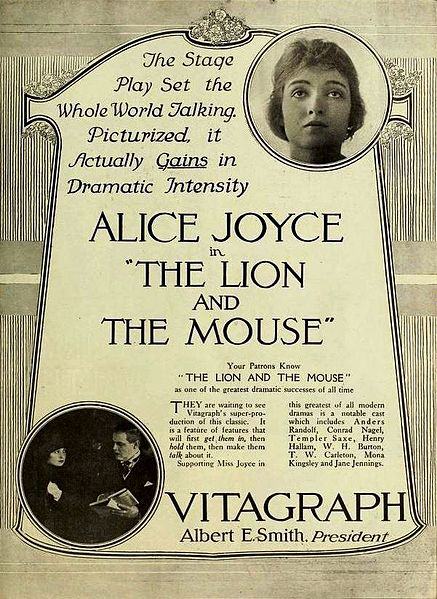
Considering the broader cinematic landscape of 1919, The Lion and the Mouse stands out for its thematic ambition. While many films of the era, such as The Love Girl, focused on lighter romantic fare or adventure, this film delves into serious issues of corporate malfeasance and judicial corruption. It reflects a growing public awareness and concern over the power wielded by industrial magnates, a theme that would continue to resonate in American cinema for decades. The film’s exploration of a woman using her intellect and wit to challenge a powerful patriarchal figure also places it in a progressive light, foreshadowing the rise of stronger female roles in cinema.
While not as widely remembered as some of D.W. Griffith’s epics or later silent masterpieces, The Lion and the Mouse offers a fascinating glimpse into early filmmaking techniques and narrative storytelling. Its enduring appeal lies in its timeless themes: the struggle for justice against overwhelming odds, the redemptive power of love, and the moral complexities of power. The film serves as a valuable artifact, demonstrating how early cinema tackled weighty subjects, using the nascent art form to engage with contemporary societal issues. The careful construction of its plot, the compelling performances, and its ultimately hopeful resolution make it a compelling watch for enthusiasts of silent film and anyone interested in the evolution of cinematic storytelling.
The film’s ability to weave together corporate intrigue, a passionate romance, and a quest for familial honor into a cohesive and engaging narrative is a testament to the strength of its source material and the skill of its cinematic adaptation. It reminds us that even in an era without spoken dialogue, filmmakers could craft stories of profound emotional depth and social commentary. The subtle interplay of facial expressions, body language, and carefully placed intertitles creates a rich tapestry of human experience, proving that the silent screen was anything but silent in its impact. The enduring resonance of its central metaphor, the small but clever mouse outwitting the mighty lion, continues to speak to universal desires for justice and the triumph of integrity over tyranny. It’s a compelling piece of cinematic history that deserves a re-evaluation for its narrative sophistication and the powerful performances that bring its characters to vivid, silent life.
In an age where cinematic spectacle often overshadows character-driven drama, revisiting films like The Lion and the Mouse offers a valuable perspective on the foundational elements of storytelling. It highlights the power of a well-crafted plot, compelling characters, and universal themes to captivate an audience, regardless of the technological advancements of the medium. The silent era, often dismissed as primitive, consistently produced works of remarkable artistry and thematic depth, and Montagne’s film is a prime example. It’s a powerful reminder that the heart of cinema lies not in its sound or color, but in its ability to tell a human story with conviction and artistry.

IMDb 6.8
1931
Community
Log in to comment.