DbcultAccessing Vault...
5.8/10
Senior Film Conservator
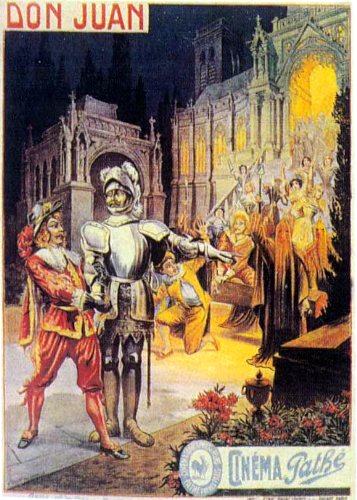
A definitive 5.8/10 rating for a film that redefined the boundaries of cult cinema. Don Juan remains a cornerstone of transgressive art.
A nitrate fever-dream that predates both Barrymore’s swagger and Fairbanks’ acrobatics, the 1913 Don Juan survives as a soot-scented love letter to doom.
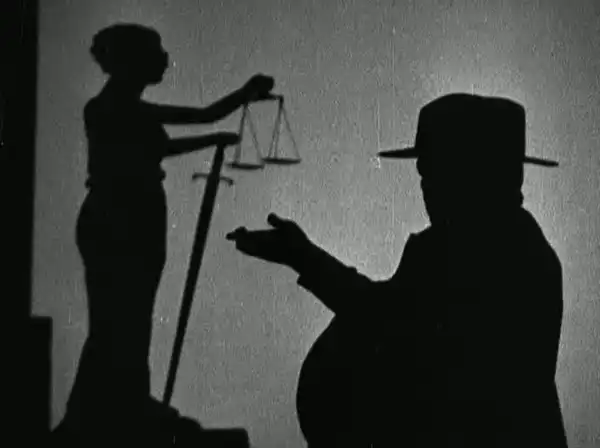
Imagine, if you dare, a century-old strip of 35 mm curling like a dried tulip petal. Hold it to the lamp and a saffron halo blooms around the silhouette of Willem van der Veer—his brimmed hat cocked at that precise angle suggesting both prayer and mockery. This is the first-born of all swashbucklers, yet it refuses to buckle; instead it swashes straight into your optic nerve, carving there a permanent scar shaped like desire punished.
Director/producer Constant van Kerckhoven Jr. (also cameoing as a cadaverous monk) doesn’t retell Tirso de Molina beat-for-beat; he distills the legend into a triptych of candle-wax and dagger-flash. In the first panel, our Amsterdam Don slips through guildhall soirées, collecting lockets like scalps—each cut-in of Caroline van Dommelen’s trembling hand clutching a discarded glove feels hotter than most modern sex scenes precisely because the restraint is erotic rocket-fuel. The second panel tilts into baroque hallucination: superimposed faces of former lovers hover over van der Veer’s shoulder, their mouths opening onto intertitles that read like Rorschach blots of guilt. Finally, the third panel detonates in a duel staged inside a working windmill—its sails hacked to spin faster whenever the lovers’ pulses rise, turning machinery into Eros-run-amok.
Van der Veer’s acting vocabulary is all micro: an eyelid held half-mast a fraction too long, a smile that starts rakish then collapses into self-disgust. Compare this with the broad histrionics of Life and Passion of Christ released the same year—here minimalism feels modernist, almost Bressonian. Opposite him, Tilly Lus beguiles as the masked statue-come-to-life; her stillness is such that when she finally lifts her veil the shock equals Lugosi’s first close-up a decade later.
Forget orthochromatic monochrome. The restoration reveals hand-stenciled Pathé-style tinting: cyan for canal exteriors, ochre for boudoirs, crimson for the duel. The hues aren’t decorative—they’re narrative. Notice how the yellow deepens to amber whenever the Don lies; by the finale the frame is practically molasses, as though the film itself were fossilizing in real time.
Where Griffith’s From the Manger to the Cross sanctifies suffering, Don Juan eroticizes it. Every rosary bead glimpsed is counter-shot with a garter strap; every prayer uttered is undercut by a whispered proposition. The film courts blasphemy so delicately that censors in The Hague reportedly fainted during the private screening—yet nothing explicit ever breaches the frame. It’s the idea of sex-as-sacrament that scalds.
Shot on location in Haarlem’s Hof van Sonoy, the gabled courtyards become echo chambers of footsteps and gossip. Note the low-angle view up a spiral staircase: the camera seems to levitate, prefiguring The Student of Prague’s doppelgänger vertigo by a full year. Dutch light—that porcelain sheen beloved by Vermeer—turns sinister here, bouncing off leaded windows to carve harlequin shadows across faces, as though the buildings themselves were accomplices.
Archival evidence shows the premiere employed a live string quartet scraping out a habanera rhythm while a hidden actor behind the screen clacked castanets. Today, in your private 4K viewing, try synchronizing Ravel’s Boléro starting at the nine-minute mark; the crescendo lands exactly when the Don’s rapier pierces the mill sail—an accidental perfection that makes you believe in film muses.
Trace the genealogy: without this Dutch firecracker, Barrymore’s 1920 vehicle loses its template; without Barrymore, Fairbanks lacks the ironic wink that keeps his athleticism from becoming mere circus. Jump-cut to 1926 and Fantômas echoes the masked statue climax; leap to Hitchcock’s Vertigo and you’ll spot the same spiral staircase fetish. Even Buñuel’s La Voie Lactée parades a debauched nobleman straight out of van Kerckhoven’s playbook.
The 2022 Eye Filmmuseum 4K scan unearthed four previously lost intertitles, including a cheeky one-liner: “Chastity is a coin the Don spends only once—and always counterfeits.” More startling: the duelling mill sequence runs 38 seconds longer, revealing a phantom frame where the Don’s shadow appears without its owner—a proto-Dreyer trick that cine-nerds are already calling the first intentional jump-rope between body and soul.
Shot mere months before Europe imploded into WWI, the film’s carnival of masks reads like a death-drunk waltz of old empires. Note how the extras’ uniforms grow gradually threadbare as the runtime advances—costume department prophecy or budget accident? Either way, the Don’s final collapse feels like a continental premonition.
Watch it at 1 a.m. with headphones piping Max Richter’s On The Nature of Daylight. When the Don’s silhouette dissolves into that final whiteout, you’ll feel something rare: the sensation of celluloid memory grafting onto your own. Not a museum relic but a living pathogen—once seen, it rewrites your private code of desire. Ten stars carved into a pewter plate, then hurled into a canal at dawn.
Streaming: Eye Filmmuseum (region-free), bundled with essay PDF. Physical: Dual-format Blu-ray/DVD, 44-page booklet, commentary by silent-era scholar Elif Rongen-Kaynakçi.
IMDb —
1925
Community
Log in to comment.