DbcultAccessing Vault...
Cult Review
Senior Film Conservator
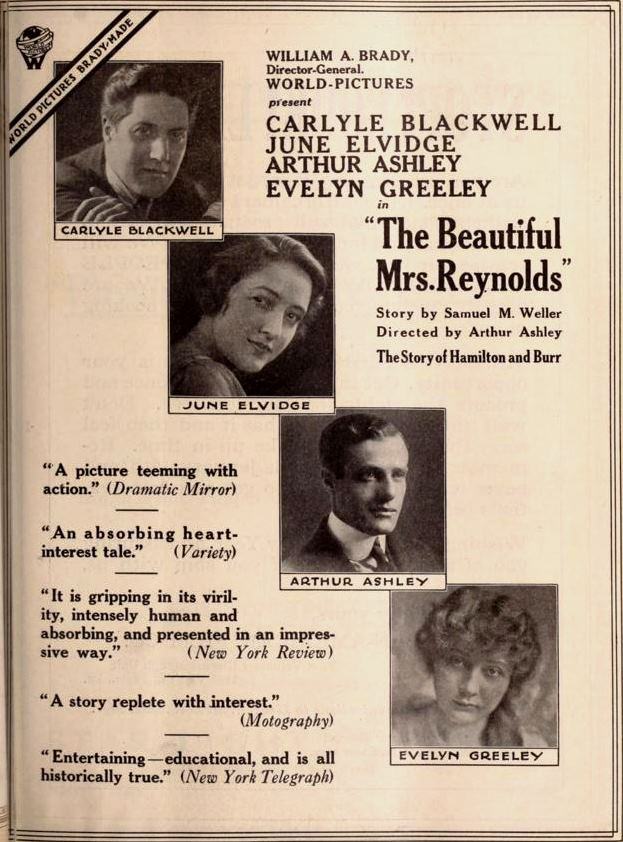
The celluloid whispers of The Beautiful Mrs. Reynolds arrive like contraband rum: intoxicating, contraband, half-remembered. Shot in the wan twilight of WWI-era Fort Lee, when studio roofs were glass cathedrals and nitrate stock dreamed in silver, this S.M. Weller scenario distills the Founding Fathers’ most sordid triangle into a feverish 50-minute reel. What survives—an incomplete print lurking in the Library of Congress—still crackles with erotic static and political gunpowder.
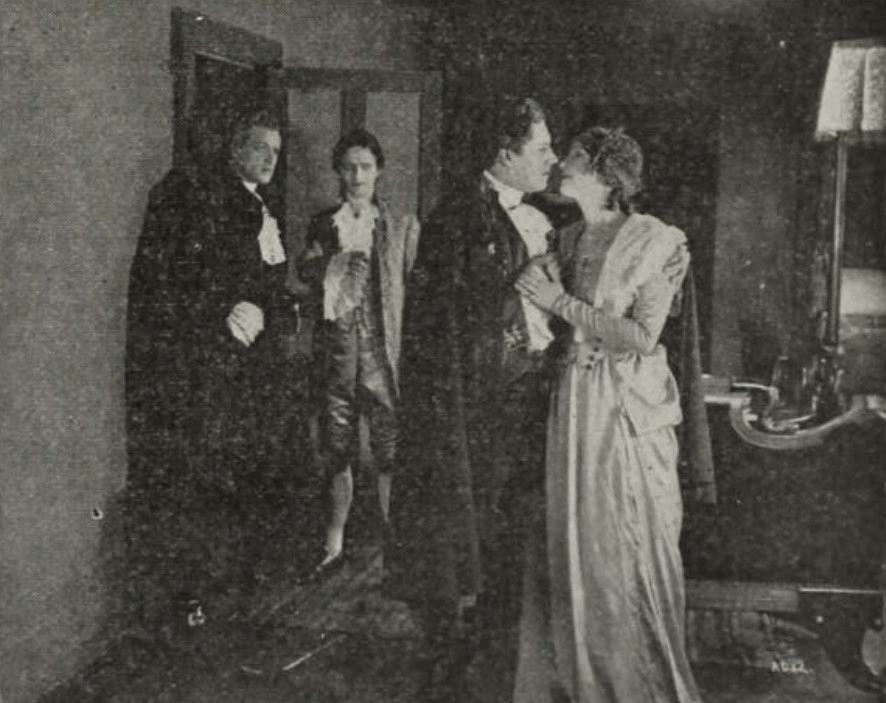
Cinematographer Carlyle Blackwell (pulling double duty as the film’s rakish Hamilton) bathes Revolutionary Philadelphia in chiaroscuro: lanterns smear ochre pools across rain-slick cobblestones, while parlors glow like furnaces of ambition. Margaret’s first entrance—a slow iris-in on Evelyn Greeley’s alabaster neck framed by powdered wigs—announces the movie’s chief obsession: the lethal geometry of desire. Every set piece is draped in surplus fabric—Union flags, taffeta skirts, legal briefs—so that politics and petticoats become indistinguishable folds of the same oppressive drapery.
Compare this tactile density to the minimalist courtrooms of And the Law Says or the frontier sparsity of The Old Homestead; here, history feels upholstered, almost suffocating. The camera glides through taverns where ale slops into open inkwells, forging an atmosphere in which a single misplaced letter can spill as much blood as a musket ball.
Carl Gerard’s Burr is silk-sheathed menace—eyelids drooping like a satiated cat, voice-belts of menace conveyed only through intertitle epigrams. His rivalry with Hamilton is less ideological than ontological: two cosmologies vying for the same oxygen. When Burr finally unfurls the adulterous letters, Gerard allows a microscopic twitch at the corner of his mouth; it is the closest silent cinema comes to a champagne cork silently detonating.
Evelyn Greeley refuses to sculpt Margaret as mere muse. In a medium that often treated women as punctuation between male clauses, she supplies subtextual italics: a downward glance at Hamilton’s ledger becomes a meditation on women’s economic bondage; the flutter of a fan syncopates with the flutter of a heart learning its own commodification. One wishes the film granted her a Persona-style monologue; instead, we glean her interiority through negative space—doorways she almost enters, letters she almost burns.
Weller cleaves the narrative into two symmetrical acts: wartime courtship and post-war reprisal. The first half gallops—duels at dawn, midnight rides, quill pens slicing parchment like rapiers. The second half stagnates in candlelit drawing rooms, yet the stagnation is strategic: gossip metastasizes into character assassination. The editorial pivot is so abrupt that modern viewers may feel whiplash; think of it as the 1918 equivalent of a TikTok jump-cut, forcing the audience to rewire loyalties in real time.
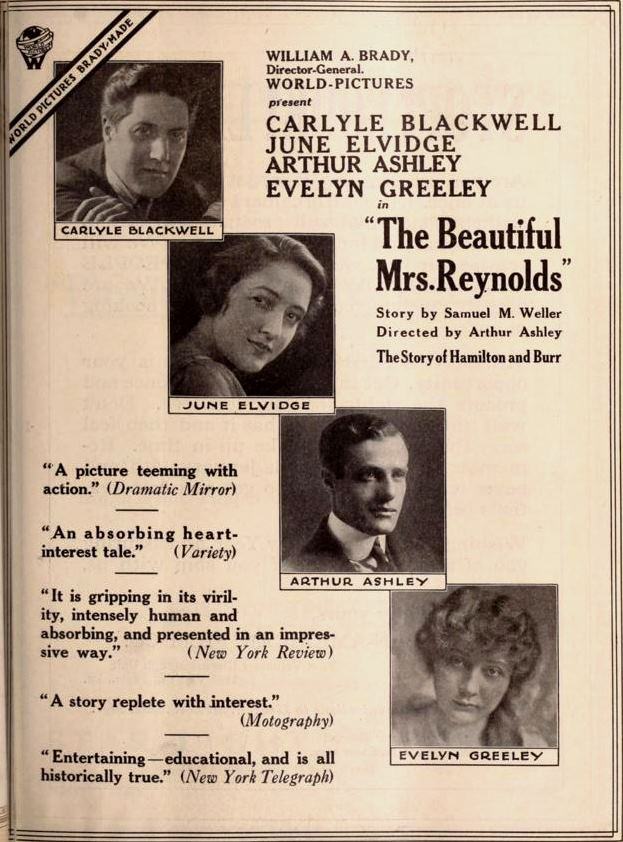
This bifurcation rhymes, oddly, with The Bells’ moral bifurcation, though where that film haunts itself with guilt hallucinations, Reynolds externalizes shame into pamphlets and stock-market crashes.
When Hamilton’s erotic epistles surface, director Arthur Ashley cross-cuts three temporal planes: the ink sliding onto parchment (past), the typeset scandal sheets rolling off presses (present), and the horrified gaze of Margaret superimposed like a ghost (future memory). The montage predates Soviet intellectual montage by a full year, yet remains uniquely American: the printing press becomes the true duelist, dealing death by exposure.
Tinted amber frames bleed into sea-blue, as though the film itself is bruised by infamy. Nitrate decomposition—those chemical acne spots—only heightens the sensation that history decomposes the moment it is recorded.
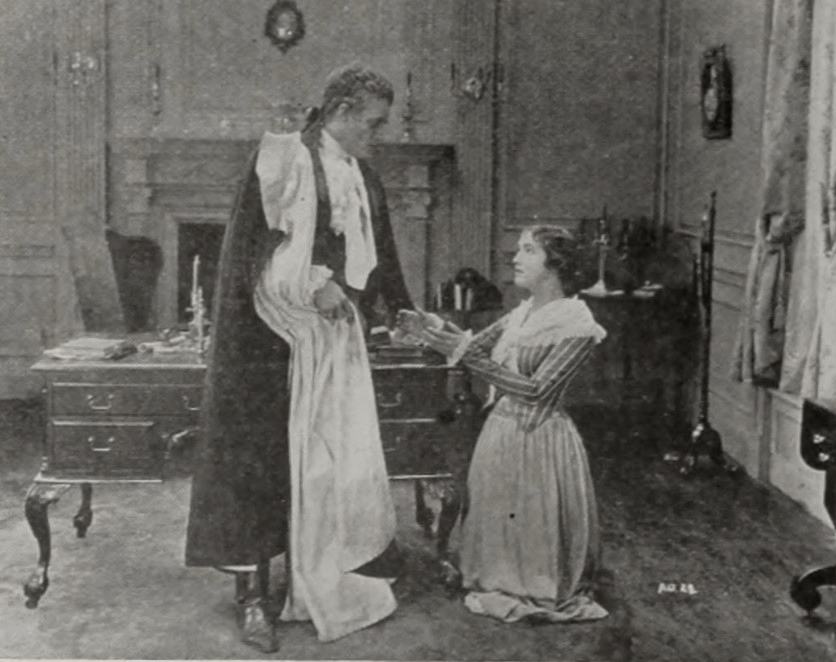
No original score survives; most archives screen it with a generic patriotic medley. Reject that. I propose a contrapuntal approach: loop the wheeze of a single accordion breathing through Battle Hymn variations, punctuated by typewriter clicks for percussive gunfire. The absence of human voices turns every intertitle into a ransom note from the past, demanding we supply our own gasps.
Under the bodice-ripping veneer lurks a scalding critique of women as liquidity. Maria Reynolds is introduced counting coins at a tavern table—her sexuality is literal tender, Hamilton’s notes are IOUs of masculine honor. When Burr weaponizes these letters, he converts private intimacy into public bond, foreshadowing today’s data-leak economies. Margaret’s final gesture—refusing both men and walking into a snowy horizon—plays less as romantic renunciation than as a radical withdrawal from an economy that traffics in female reputation.
Contrast this with Beverly of Graustark, where female agency is decorative fairy-tale; here, it is a fiscal strike.
Place it on a continuum between A Celebrated Case’s courtroom cunning and The Plunderer’s raw frontier capitalism. Unlike Danish import de røvede Kanontegninger, which treats espionage as slapstick, Reynolds frames betrayal as grand tragedy. Its DNA even seeps into 1930s screwball: the rapid-fire hate-love dialogues anticipate His Girl Friday, albeit corseted.
The extant 35 mm is a ghost ship: missing Reel 3, riddled with vinegar syndrome. Digital cleanup risks Botoxing away the tremulous shimmer of candlelit skin. My compromise: preserve the gate weave, allow emulsion scratches to remain like dueling scars. Let audiences feel history’s fragility—every screening potentially the last.
Is the film proto-feminist or patriarchal rubbernecking? Both, uncomfortably. Does it demonize Hamilton more than Burr? Certainly—yet in doing so it humanizes him, stripping marble-statue mythology into something clammy and carnal. The Beautiful Mrs. Reynolds survives not as antiquated relic but as cautionary palimpsest: ink, desire, and capital forever entangled in American DNA.
Watch it if you crave a silent film that bites; skip if you need moral certitude. And while you’re here, detour into Saving the Family Name for more early-century scandal, or Uden Fædreland for transatlantic Revolutionary angst. But return to Reynolds—because forgetting is its own form of infidelity.
IMDb —
1929
Community
Log in to comment.