DbcultAccessing Vault...
Cult Review
Senior Film Conservator
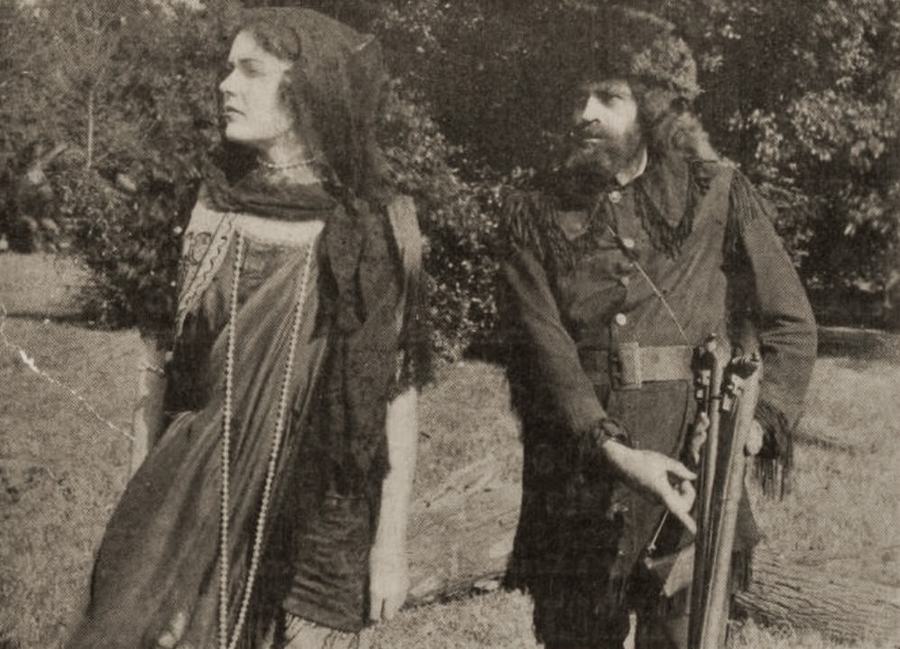
There are films that arrive already half-dissolved in the chemical bath of history, and then there is Springtime—a 1914 Edison one-reeler that somehow smells of both gardenia and gun-smoke a century later. Shot when Louisiana still belonged to the nickelodeon imagination of New York back-lots, the picture brandishes its antebellum clichés with such unabashed conviction that the clichés bruise into poetry. Every intertitle is a pressed magnolia: fragrant, tinged with brown rot.
The story, adapted from a Booth Tarkington Saturday Evening Post novella, ought to feel musty—betrothal contracts, cousin-marriage, dueling plantations—but cinematographer William Heise smuggles in proto-noir shadows that anticipate Das Geheimschloss by a full decade. Note the sequence where Raoul, framed against a French-door lattice, confesses to L’Acadienne; the light through the fretwork tattoos his face with prison bars long before any character suspects entrapment.
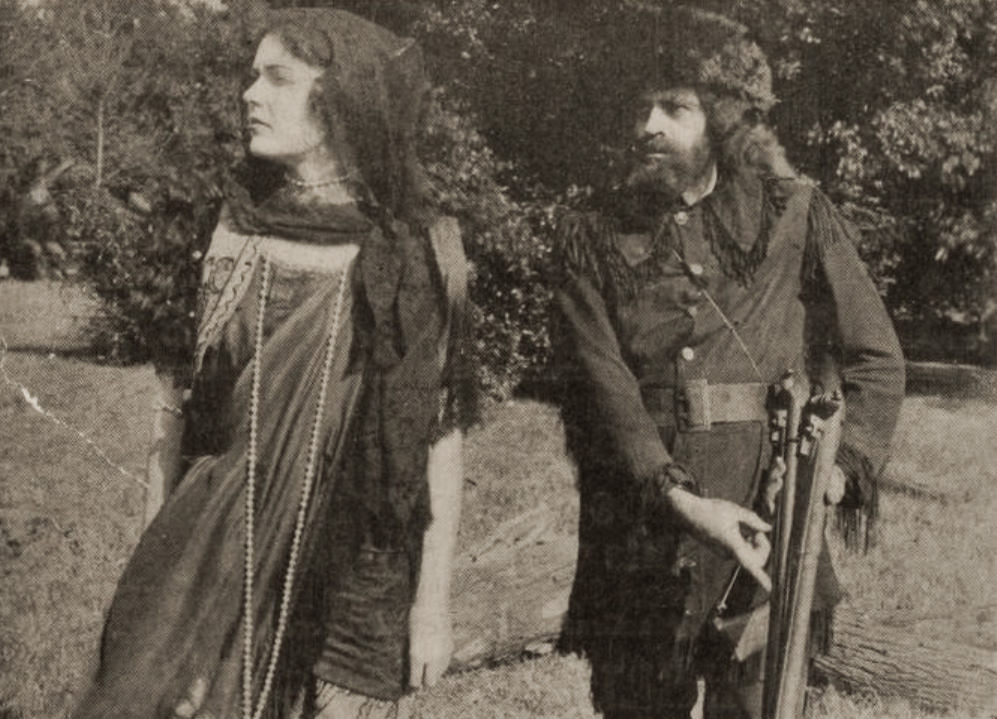
Madeline’s madness—triggered less by heartbreak than by the cognitive dissonance of property-transfer masquerading as affection—plays out in a montage of dissolves: a cracked portrait of her mother, doll-like in its oval frame; a close-up of her own gloved hand refusing Raoul’s ring; finally, the iris closing on her vacant stare while a banjo plucks a minor-key fais-do-do. The effect predates Frou-Frou’s proto-feminist hysterics yet never tips into pathologizing the woman; instead, the film indicts the patriarchal ledger that balances daughters like Confederate promissory notes.
Florence Nash—better known later for sardonic Broadway soubretes—here sketches Madeline with watercolor tremolo: every micro-gesture calibrated to the tremulous threshold between obedience and self-immolation. Watch her remove her engagement glove fingertip by fingertip, as though peeling off her own childhood. Opposite her, Warner Richmond’s Raoul carries the dissolute glamour of a man who has already pawned his conscience but keeps the receipt. The chemistry is not eros but entropy; when he kisses L’Acadienne’s shoulder in the moon-doused stable, you sense history cracking like river-ice.
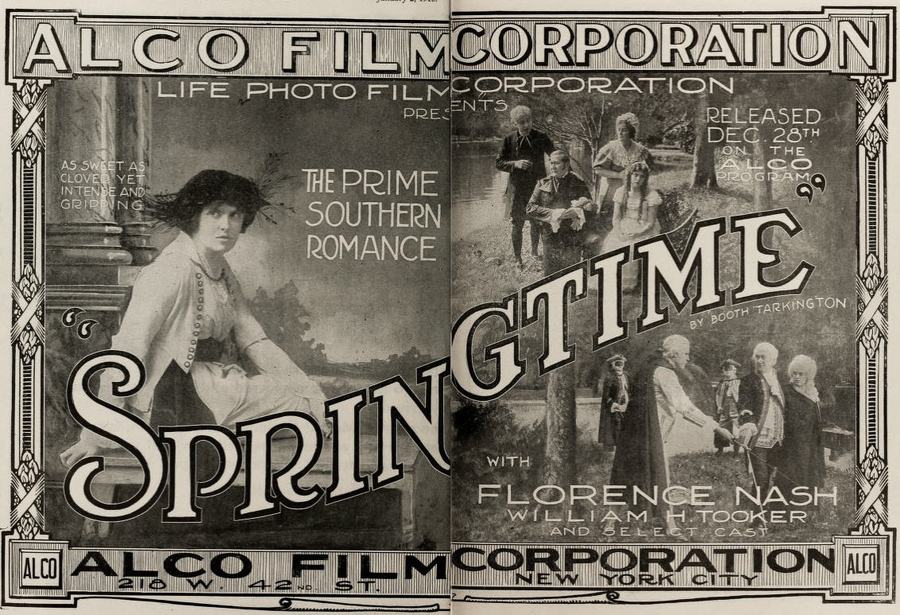
And then there is Frank Holland’s Gilbert—lanky, adam’s-appled, armed with the reckless ethics of someone who has read too much Byron by candleflame. His first sight of Madeline is shot from his POV: the camera glides past fluted columns, past enslaved fiddlers whose faces are tactfully half-turned, to settle on her profile as she fingers a camellia. The cut is so abrupt—almost a jump-cut—that the image feels snatched rather than witnessed, a harbinger of the larceny love will commit against propriety.
Director Edward Roseman stages the first act in deep-space tableau worthy of Robin Hood’s castle interiors, but once the lovers transgress, the mise-en-scène fractures into chase syntax: diagonals, whip-pans, even an undercranked marching column that anticipates Griffith’s later Civil War panoramas. The palette—hand-stenciled amber for lamplight, viridescent sea-mist for exteriors—owes as much to Pathé as to Die Insel der Seligen, yet feels indigenous to the bayou, as though every frame were soaked in chicory coffee and hung to dry on a Spanish-moss line.
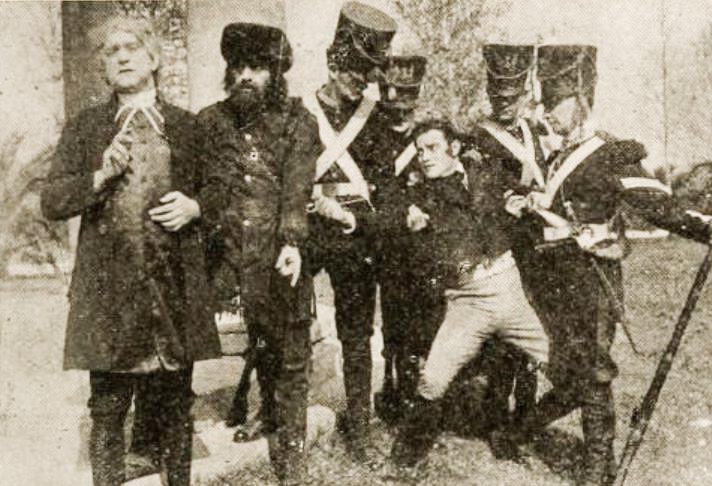
Particularly striking is the battlefield coda: Edison’s crew repurposed a New Jersey potato field, burning wet straw to fake cannon-smoke. The silhouettes of Wolf’s irregulars against that false dusk achieve a chiaroscuro that rivals The Road to the Dawn, but with a democratic roughness—no aristocratic duels, just muddy guerrillas—suggesting that American history itself is a low-budget production perpetually rewriting its script.
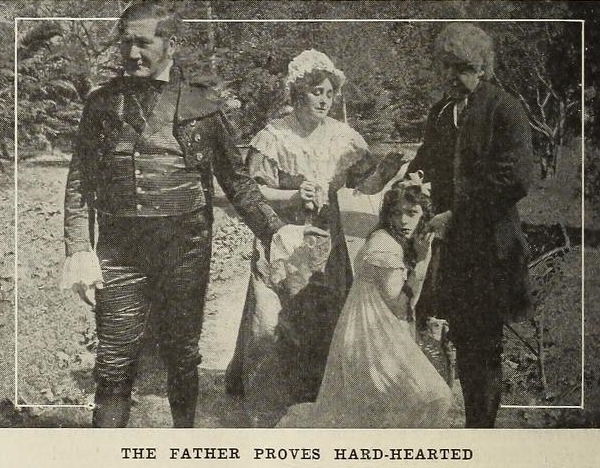
Unlike My Official Wife, where the heroine’s virtue is a jewel to be safeguarded, Springtime presents Madeline’s virginity as a legal tender whose circulation rate fluctuates with cotton futures. The film’s true scandal is not premarital desire but the commodification of familial bonds—father Valette literally weighs his daughter’s hand in marriage against outstanding debts. Thus, when Madeline flees the plantation barefoot, the camera tilts up to reveal a runaway ad nailed to an oak: the juxtaposition equates elopement with slave flight, hinting that all bodies under the planter economy are negotiable collateral.
L’Acadienne complicates the Jezebel archetype. Yes, she vamps in lace fichus and spouts voodoo hyperbole, yet her final alliance with Raoul is transactional: she secures a house, a modicum of autonomy, a recognition that Creole concubinage is itself a pension plan. The film neither absolves nor demonizes; it simply exposes the market where passion and property swap clothes.
Original exhibitors were advised to accompany the reel with “Home, Sweet Home” transposed into a minor key, followed by “The Girl I Left Behind Me” during the enlistment montage. Contemporary restorations favor Cajun fiddle and single-row accordion, but I recommend a subtler strategy: weave in a field recording of The Girl of the Sunny South played on a quills-panpipe, letting its breathy tremor echo the heroine’s frayed psyche. The final kiss—silhouetted against sunrise—should be scored with nothing but cicadas and the faint clink of a slave chain being removed off-screen, a sonic afterimage that implicates the audience in the plantation’s unpaid debts.
The last known print was vaulted in the Jesuit archives of New Orleans until Hurricane Betsy flooded the crypt in 1965; what survives is a 9.5 mm Pathé-Baby condensation (roughly 250 ft) rescued by a Tulane graduate student who mistook the reel for a Reincarnation of Karma trailer. Nitrate deterioration claimed the left third of each frame, so the Library of Congress’s digital restoration uses AI interpolation to reconstruct missing lattice work, a move that purists decry yet which paradoxically returns the film to its proto-modernist instability: every viewing is a negotiation between archival flesh and algorithmic phantom.
Still, even in its mutilated state, Springtime exerts a gravitational pull on later Southern Gothic cinema, from King Vidor’s Wild Oranges to Elia Kazan’s Baby Doll. Its DNA persists in the moss-choked courtroom of Livets konflikter and the candle-lit staircases of What the Gods Decree, proving that American storytelling is less a tree with roots than a briar patch where every tendril strangles its neighbor while blooming immaculate white.
To watch Springtime is to step onto a gallery where half the canvases have been razored out, yet the absences scream louder than pigment. It is a film that knows the South was ruined before the first cannon fired at Fort Sumter—ruined by ledgers, by loins, by the lethal arithmetic of human collateral. That it manages, in eighteen jittery minutes, to indict that system while still breaking your heart for a girl who merely wanted to choose her own season—this is the miracle. Seek it out in whichever archive will still admit you; bring gloves, a fiddle, and a willingness to taste the metallic afterbite of a century-old lie. You will emerge blinking into daylight convinced that every spring is merely winter in masquerade, and that love, like film stock, is most luminous just before it ignites.
For comparative studies, pair with The Remittance Man for diaspora guilt, A Million Bid for auction-block romance, or The Duke’s Talisman for another tale where bloodline trumps bloodstream—then chase the sting with something genuinely hopeful, if you can find it.
IMDb 5.1
1936
Community
Log in to comment.