Summary
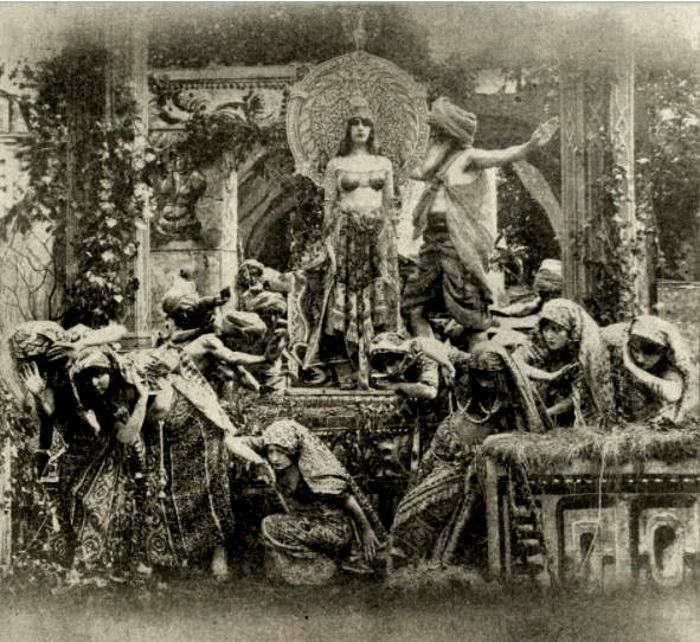
Henriette D’Arsac, sybaritic spouse of a colonial fortune-hunter whose coffers bulge with Congolese ivory and Ashanti gold, devours a newspaper report of an archaeological sensation: Kali’s effigy exhumed from a Madras trench, her marble throat ringed by a collar of pigeon-blood rubies and molten-gold beads that seem to pulse like captive suns. One glance at the grainy photo and covetous lightning strikes; she wheedles her complaisant husband Charles into crossing half the planet to wrench the talisman from its divine proprietor. Under a monsoon-thrashed midnight the retired merchant, revolver shaking like a tuning fork, prises off the necklace; in the sulphuric flare of his lantern the goddess’s bronze eyes appear to swivel, her four arms uncoil in a soundless malediction. By dawn the sacrilege is traced to a dockside grog-shop where Charles drowns his guilt in arrack nightmares. Meanwhile Kali’s living avatar—a priestess who can slip into male disguise as easily as silk—and her lemur-eyed fakir acolyte Doura stoke coal in the yacht’s bowels, their soot-blackened bodies vibrating with vengeance. A bungled cabin raid, a hull-boring augur, a moonlit plunge into the black Arabian Sea: the necklace changes wrists more often than a card-sharper’s ace. Back in their Breton cliff-top villa the D’Arsacs install the jewel inside an electrified glass sarcophagus, yet every midnight the air curdles with incense and carnivorous drumming. Kali and Doura scale the garden wall, vault over snarling mastiffs, and descend the chimney like reversed saints. Trip-wires yaw open; the would-be thieves tumble into a tiled cistern whose slow-turning cage is meant to drown them like rats, but the goddess writes miracles in drain-water: they slither through a sea-cave, commandeer a fishing smack, only to be overtaken by Charles who claps them in irons below deck. Off Marseilles the priestess snaps her manacles, dives into the foam, and crawls onto the sand half-dead—yet even exhaustion is a weapon; she hypnotises the daughter of the house into a cataleptic trance, a living corpse laid out like a Victorian memento mori. Henriette’s mind frays; chandeliers sway without wind; the necklace burns cold against the skin. In a final paroxysm of terror Charles begs absolution, presses the cursed gold into Kali’s palm, and collapses while the priestess rekindles the child’s pulse with a whisper. Dawn finds the family embraced, the jewel restored to its rightful neck, the goddess vanished into the crimson mouth of the horizon.
Synopsis
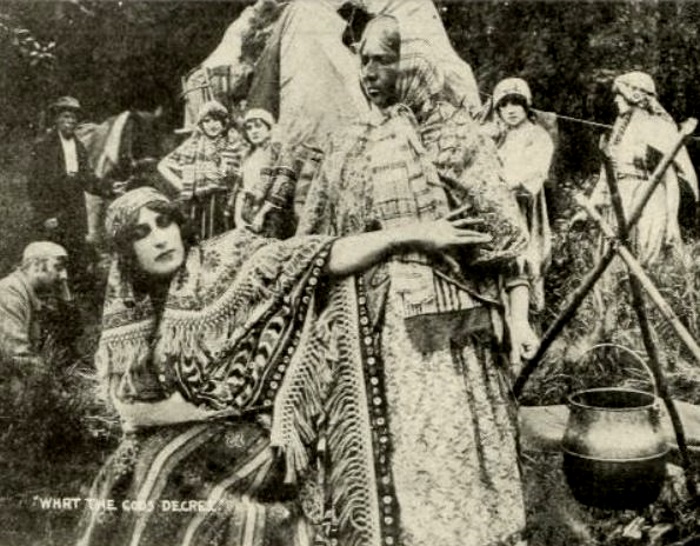
Henriette D'Arsac, the wife of an adventurer, Charles D'Arsac, who has made his fortune in the African trade and now retired, one day reads of the excavation of the famous statue of the Goddess Kali, around whose neck is hung a necklace of precious stones and gold beads of inestimable value. This his wife ardently desires to possess and begs her husband to secure it. Unable to resist her pleadings, he sails for India and on reaching Bombay enlists the services of a guide to take him to the Sanctuary. They reach the sacred spot late in the night, but the guide, seized by a sudden fright, runs away. D'Arsac, revolver in hand, advances toward the statue, unclasps the necklace with trembling hands and starts to make his escape when, turning around, he fancies he sees the Goddess raising her hands as if in the act of cursing him. The sacrilege is discovered the next day and D'Arsac is easily traced to a tavern, where he is trying to dissipate the hideous nightmare with drink. Kali, the priestess, disguised as a man and Doura, a fakir of the secret cult, succeed in shipping as stokers on board D'Arsac's yacht, which at once starts on a return journey. They endeavor to secure the necklace while on board the yacht, but only succeed in arousing suspicion. Sitting a large hole above the waterline they jump overboard and swim to shore before their absence is discovered. D'Arsac arrives and presents the necklace to his wife. But a constant shadow seems to hang over them. Kali and Doura, though unseen, cast their spell on the desecrator and his wife. The Hindoos succeed in gaining an entrance to the villa, but not until they have been forced to climb a tree, from whence they see wild beasts roaming the park. They enter the drawing-room, overpower the guard, seize the necklace and disappear. An electric appliance warns D'Arsac of their presence. He pulls a lever. A trap opens and the two Hindoos drop into a rage which slowly upsets in a cistern. By an act of Providence they are saved and escape by a subterranean passage leading to the sea. They engage a boat, but are followed by D'Arsac, who overtakes them, seizes the Hindoos and places them on board his yacht. When nearing Marseilles, Kali succeeds in breaking her bonds and jumps into the sea before D'Arsac and his men can prevent her. She manages to get to shore, exhausted, only to again fall into the bands of D'Arsac, who recovers possession of the necklace and leaves her on the shore half dead, where she is found several hours later by the gypsies. Misfortune after misfortune follows the household of D'Arsac, culminating in the supposed death of their daughter, who has been put into a hypnotic sleep under the powerful magnetic influence of Kali. Henrietta is taken violently ill at sight of her daughter in this condition and is threatened with a loss of reason. D'Arsac now has but one desire: to return the cursed necklace. He rushes toward the glass case, seizes the necklace and brandishes it madly. A hand touches his shoulder. Kali, silent, immovable, is behind him. The adventurer pulls out a revolver, which he soon drops under the steady, imperious gaze of the Priestess, He crawls at Kali's feet and pleads forgiveness. She takes the necklace and slowly retreats backward, D'Arsac dropping to the floor in a faint. Kali, overcome with pity, relents, and wakens the child. When D'Arsac regains consciousness, his wife and daughter are bending over him. The Priestess and the necklace have disappeared. Peace and quiet once more reign in the villa. The priestess returns to India and the necklace once more graces the neck of the venerated idol.
Review Excerpt
"
Robert Boudrioz’s What the Gods Decree—released in the same annus mirabilis that gave us Les Misérables and Cleopatra—is less a ripping colonial yarn than a fever dream etched in nitrate, a tale in which every bauble of empire carries the metallic taste of blood. Shot on location in Bombay, Marseilles, and the granite coves of Brittany, the film drips with humid exoticism yet never flinches from the psychic cost of plunder; its true protagonist is not Charles D’Arsac but the necklace itself, a ..."