DbcultAccessing Vault...
Cult Review
Senior Film Conservator

Short answer: Yes, but only if you have the stomach for the uncompromising bleakness of 1920s melodrama. This film is a mandatory watch for those who appreciate character studies of unraveling minds, but it will likely alienate anyone seeking a lighthearted evening or a logical resolution.
1) This film works because Virginia Valli delivers a performance that bypasses typical silent-era pantomime, offering a raw look at the aging ego.
2) This film fails because the central coincidence—the daughter returning as a rival—is so statistically improbable it threatens to break the viewer's immersion.
3) You should watch it if you want to see a darker, more cynical take on the 'stage mother' trope, far removed from the glitz of Orchids and Ermine.
Stage Madness doesn't just depict a career; it depicts an addiction. Madame Lamphier isn't portrayed as a woman who simply likes to dance. She is a woman who needs the validation of a crowd to feel human.
When she looks at her infant daughter, she doesn't see a future; she sees a weight. This is a bold stance for a 1927 production. Most films of the era, like Blind Love, tended to sentimentalize the maternal bond.
Here, the bond is an obstacle. The scene where she prepares for her return to the stage while her husband Andrew watches in silent judgment is chilling. There is no warmth in their home, only the cold heat of her ambition.
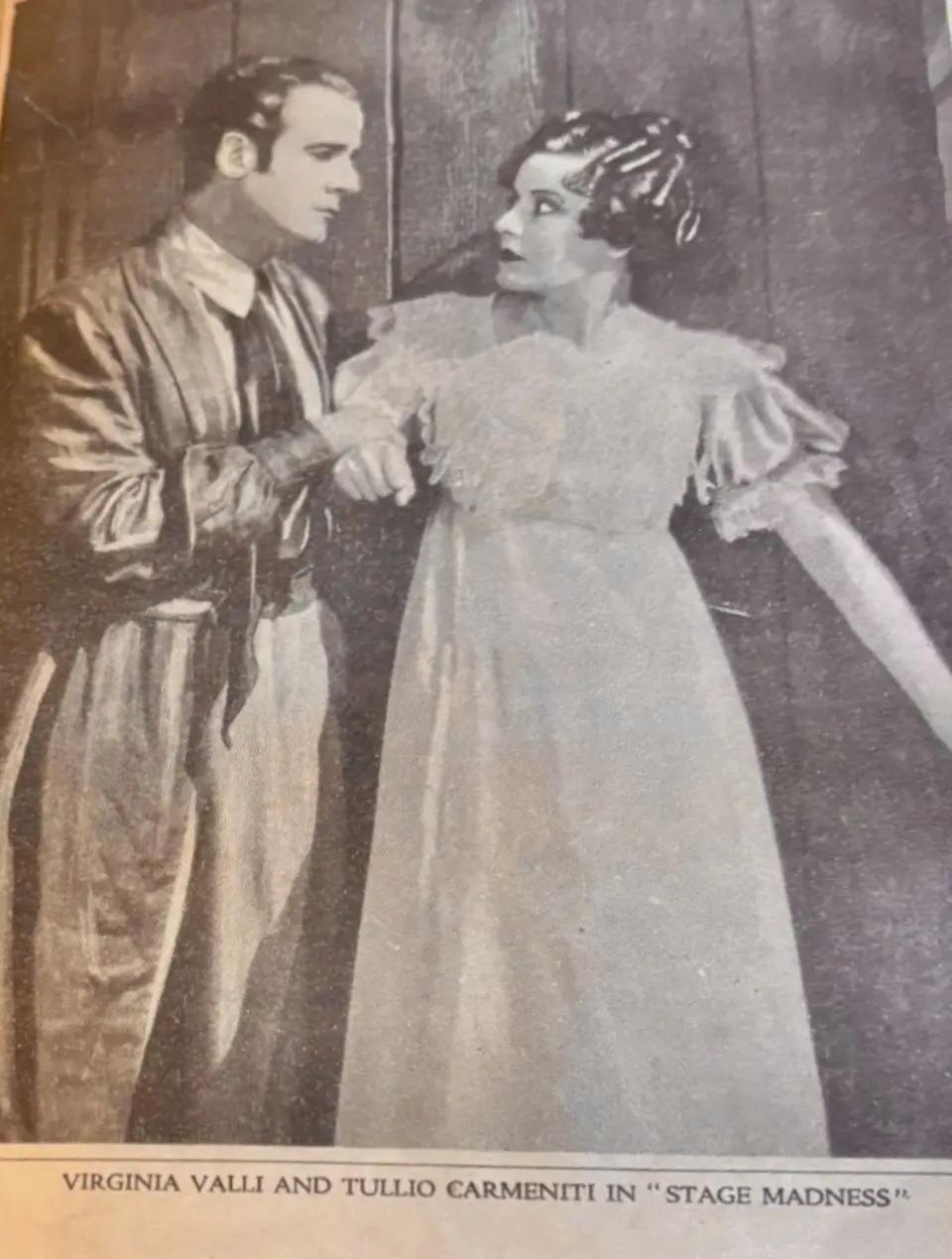
The film makes it clear: the stage is a jealous mistress. It demands everything. And Lamphier is more than willing to pay the price, even if it means losing her family to the shadows of the past.
Virginia Valli’s performance is the engine that keeps this tragedy from falling into pure camp. She possesses a specific intensity in her eyes that suggests a woman constantly on the verge of a break.
Consider the sequence following her injury. The way she clings to the velvet curtains of the wings is visceral. You can feel the physical pain of her fall, but the psychological pain of being replaced is what truly registers.
Valli portrays the transition from celebrated icon to forgotten relic with brutal efficiency. She doesn't ask for the audience's sympathy. Instead, she demands their attention, much like the character she plays.
Her chemistry with Lou Tellegen is strained, which actually benefits the film's tone. Their interactions feel like two ghosts passing in a hallway, emphasizing the isolation that fame has wrought upon her life.
The second half of the film shifts from a domestic drama into a proto-noir thriller. The arrival of the younger dancer creates a friction that the film handles with surprising visual flair.
The shooting of the manager, Pierre, is a masterclass in shadow and timing. The director uses the backstage environment—ropes, pulleys, and costumes—to create a sense of entrapment. It’s a messy, desperate act.
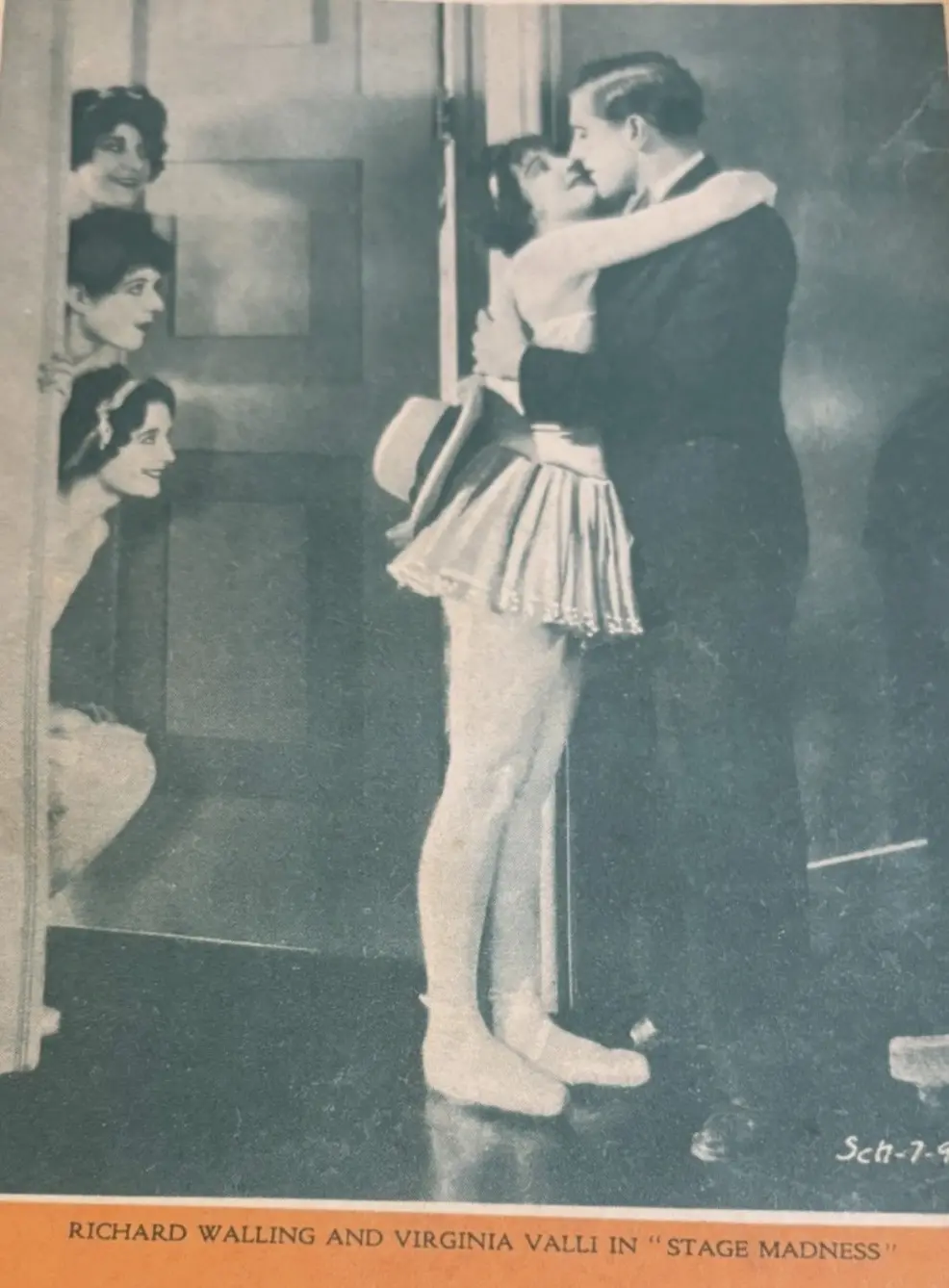
The framing of the younger girl is where the film takes its darkest turn. It’s not enough for Lamphier to reclaim her spot; she must destroy the person who took it. This isn't just professional rivalry; it's an attempt to murder her own lost youth.
This thematic depth elevates the film above standard fare like The Square Deal. It’s interested in the rot that occurs when one refuses to age gracefully or accept the passage of time.
Stage Madness is worth watching for its historical value and its unflinching look at female ambition. While the plot relies on heavy-handed coincidences, the emotional core remains relevant in our modern era of celebrity obsession and the 'cancel culture' of replacing the old with the new.
The cinematography in Stage Madness deserves more credit than it usually receives in silent film retrospectives. The use of high-contrast lighting during the climax adds a layer of dread that dialogue never could.
The pacing, however, is uneven. The middle portion of the film, which covers the years between the daughter's disappearance and her return, feels rushed. We lose the sense of the long, grinding years Lamphier spent in isolation.
Compared to the tight narrative of Scratch My Back, this film feels like it’s bursting at the seams. It wants to be an epic tragedy, but it only has the runtime of a standard feature.
Despite this, the set design of the theater is impressive. It feels lived-in and slightly decaying, reflecting the state of Lamphier’s own career and soul.

One of the most debatable aspects of the film is its ending. Does Lamphier’s death offer redemption? I would argue it does not. It is a final act of cowardice, an escape from the consequences of her actions.
She doesn't die because she feels guilt for the girl; she dies because the reality of her failure is finally inescapable. It’s a bleak conclusion that offers no easy answers for the audience.
In many ways, this makes it a more honest film than its contemporaries. It doesn't try to fix the broken pieces. It simply shows you the shards and lets them cut.
The film’s refusal to provide a happy reunion is its strongest asset. It acknowledges that some choices, once made, cannot be undone. You cannot leave a child for the stage and expect the stage to love you back.
Cons:
Stage Madness is a jagged, uncomfortable piece of cinema. It is not 'masterful' in the traditional sense, but it is deeply effective in its portrayal of a woman consumed by her own reflection. It works. But it’s flawed.
If you can look past the creaky plot mechanics of the 1920s, you will find a story that still has teeth. It serves as a cautionary tale for anyone who believes that professional success can fill a personal void.
Ultimately, the film stands as a testament to Virginia Valli's talent and the era's ability to produce truly dark content. It is a tragedy in the truest sense—unavoidable, self-inflicted, and utterly final.

IMDb —
1917
Community
Log in to comment.