DbcultAccessing Vault...
Cult Review
Senior Film Conservator
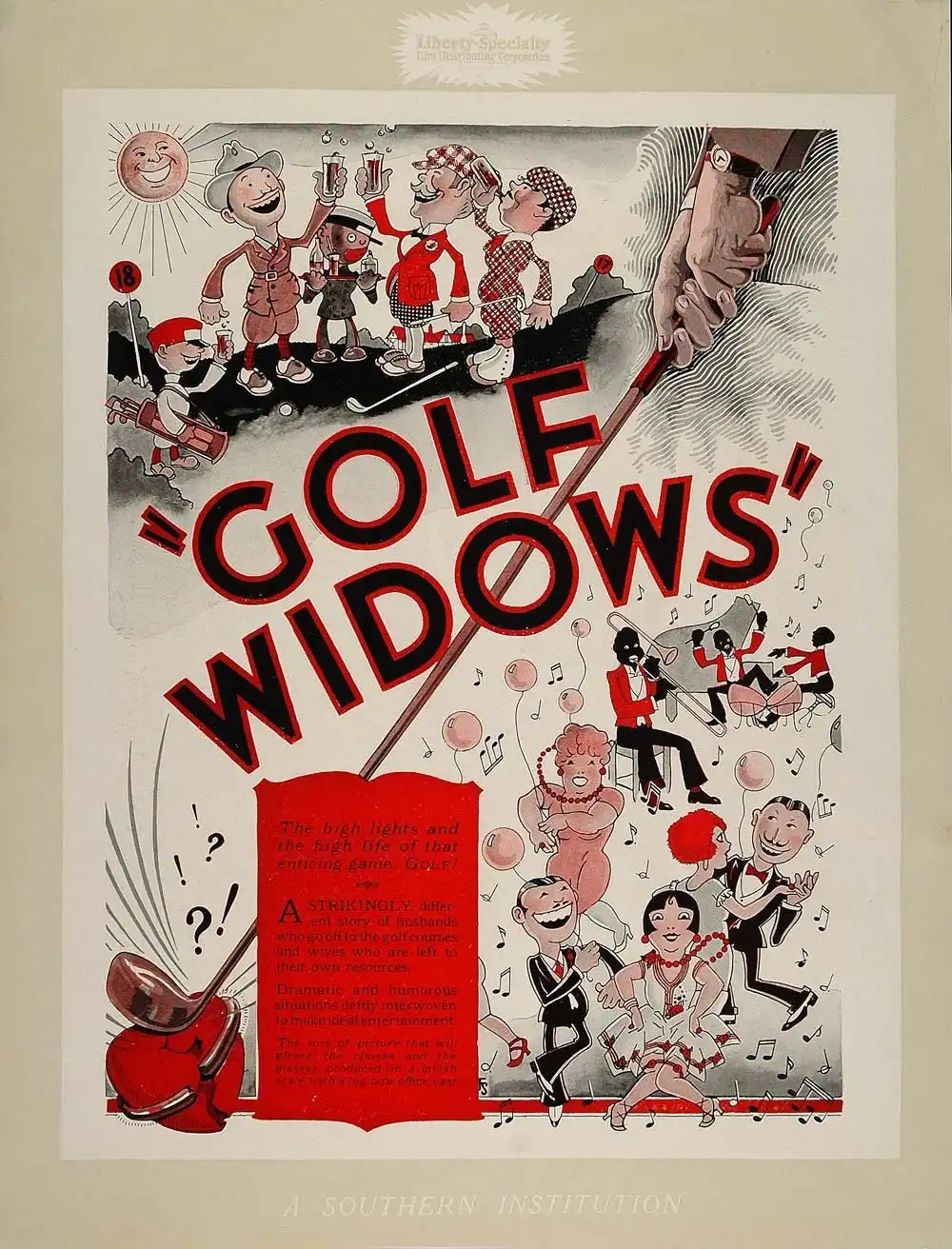
If you have an hour to kill and a high tolerance for the kind of frantic, slightly repetitive humor that defined late-20s silent comedies, Golf Widows is worth a look. It’s not a masterpiece, and it’s certainly not going to change your life, but it’s a fascinating little time capsule of 1928 frustrations. If you hate slapstick or get annoyed by characters making the worst possible decisions for the sake of a plot, you should probably skip this one. But for anyone who enjoys seeing the 'other' Harrison Ford—the silent film star who looks perpetually startled—it’s a bit of a treat.
The movie starts in a living room that feels way too small for the amount of golfing equipment in it. Will Stanton and Vernon Dent play the husbands, John and Ernest, and they are doing that very specific 1920s 'obsessed man' acting where they swing clubs in the house and ignore their wives entirely. It goes on a bit too long. There’s a moment where Stanton almost hits a vase, and you can see him glance at the camera for a split second, checking for a reaction that isn't there. It’s awkward, but it feels human.
The 'widows,' Ethel and Mary, are played by Kathleen Key and Sally Rand. Key has this incredible hat in the opening act—it looks like a giant, velvet mushroom that’s slowly consuming her head. You spend half the scene wondering how she’s keeping her balance. Sally Rand is interesting here because she hadn't become the famous fan dancer yet. She’s just a working actress, but she has this sharp, knowing way of looking at the other characters that makes her feel like the only adult in the room.
The transition to Tijuana happens fast. One minute they’re complaining about golf, and the next they’re at the horse races with Billy Gladstone and Charles Bateman (Harrison Ford). The film really leans into the idea of Tijuana as this lawless playground where anything can happen, which was a common trope back then—much like the vibe in Prohibition. The race track scenes are where the movie gets messy in an interesting way. The background extras look genuinely confused. There’s a shot of a woman in the crowd who is staring directly into the lens with a look of pure boredom while the main characters are screaming about a horse. It’s one of those tiny details that reminds you these were real people on a hot set, not just 'atmosphere.'
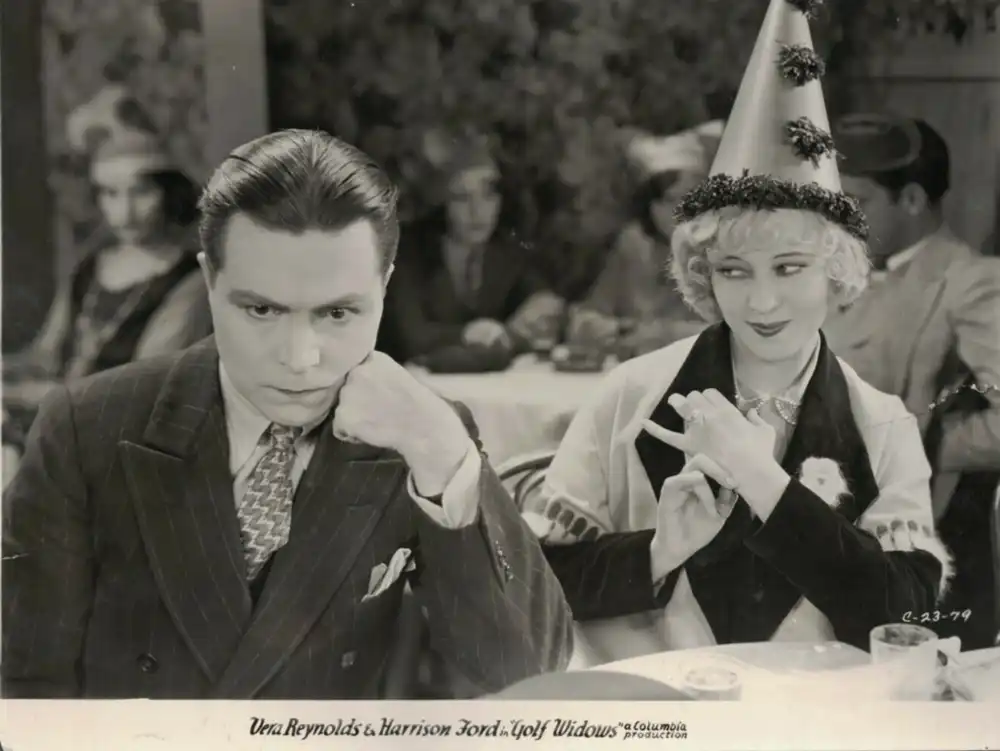
Harrison Ford—no, not the guy from Star Wars—is the standout for me. He has this very stiff, upright posture that makes him look like he’s constantly trying to remember if he left the stove on. When his fiancée, Alice, shows up unexpectedly, his reaction shot lingers for about five seconds too long. It moves past 'shocked' and into 'uncanny valley.' It’s actually pretty funny, though I’m not sure it was meant to be. He’s much better here than in some of his more dramatic roles, like in A Soul for Sale, where the seriousness didn't quite suit his face.
There is a sequence involving a pair of binoculars that is edited so poorly it’s hard to tell who is looking at what. We see a close-up of the binoculars, then a shot of a horse, then a shot of Vera Reynolds looking angry, but the angles don't match up. It’s jarring. It feels like they lost a few feet of film and just decided to stitch together whatever was left on the floor.
The dialogue cards are surprisingly modern in their sarcasm. One card describes the husbands’ golf obsession as a 'permanent mental vacation,' which still feels accurate today. But then the movie falls back into these long stretches of physical comedy that don't quite land. There’s a bit with a dropped ticket that drags on for three minutes. You can feel the movie trying to convince you this is a high-stakes moment, but the pacing is just too sluggish.
I liked the costume weirdness more than the plot. Vera Reynolds shows up in this traveling outfit that looks incredibly uncomfortable for a day at the races. She’s covered in layers of heavy fabric and fur, and you can see the sweat on the actors' faces in the outdoor shots. It adds this layer of physical reality to the artifice of the comedy.
The ending is abrupt. It’s one of those silent film finales where everyone just sort of realizes they’re in a movie and decides to forgive each other so the credits can roll. It’s not satisfying, but it fits the frantic energy of the rest of the film. It’s a movie about people being annoyed with each other, and by the end, you’re a little annoyed with them too, but in a way that feels like you’ve been on a weird, short trip with them. It’s not a classic, but it’s a loud, busy, slightly broken piece of history that’s fun to pick apart.
IMDb —
1923
Community
Log in to comment.