DbcultAccessing Vault...
Cult Review
Senior Film Conservator
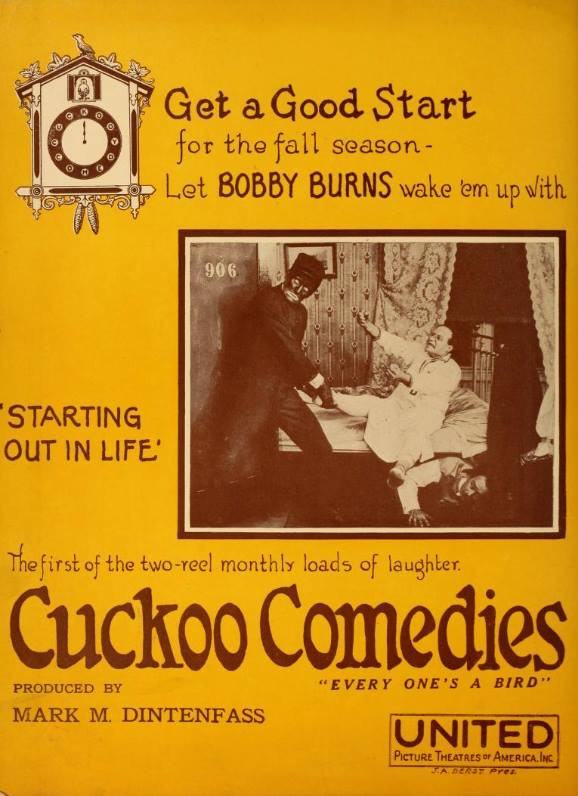
Stepping into the world of early cinema, particularly a piece as unassuming yet quietly profound as 'Starting Out in Life', is akin to unearthing a forgotten artifact that still holds a surprising amount of luster. This isn't a grand epic like The Destruction of Carthage, nor a tense drama of moral quandaries such as A Question of Right. Instead, it offers a distilled, almost allegorical glimpse into the human condition, specifically the capricious hand of fate in the life of the working class. At its core, the film presents a narrative that, while simple on the surface, unravels into a surprisingly complex commentary on labor, fortune, and the sheer unpredictability of existence. It’s a testament to the power of silent storytelling, where exaggerated gestures and stark visual contrasts convey volumes that might otherwise require pages of dialogue.
The central figure, a hotel porter portrayed with admirable commitment by Will Louis, embodies the archetype of the perpetually put-upon employee. His days are a relentless, almost farcical ballet of physical exertion and thankless service. We observe him scrambling, lifting, fetching, and carrying, a veritable human pack mule navigating the opulent yet demanding corridors of a bustling hotel. The film, in its brevity, manages to paint a vivid picture of this ceaseless toil, highlighting the sheer exhaustion and the often-unseen struggles of those who facilitate the comfort of others. Louis’s performance is a masterclass in silent physical comedy and pathos; his weary sighs, his hurried movements, and the visible strain etched upon his face communicate the relentless 'busy time of it' far more eloquently than any spoken lament could. It’s a portrayal that resonates, touching upon the universal experience of feeling overwhelmed by one's duties, a sentiment that transcends the specific period or profession depicted.
The narrative cleverly builds on this foundation of arduous labor, setting the stage for the inevitable breaking point. The porter's 'discharging his duties' is not merely a job description; it's a constant, physically demanding performance under the watchful, often critical, eyes of guests and management alike. The film hints at the emotional toll of such a role, where personal identity is subsumed by the uniform and the expectation of subservience. It’s a stark contrast to the independent spirit often celebrated in films like The Beloved Impostor, where characters actively sculpt their destinies. Here, our protagonist is seemingly a slave to his circumstance, a cog in a machine that cares little for his individual welfare. The cinematography, though rudimentary by modern standards, effectively uses framing and movement to emphasize his smallness against the grandeur of the hotel, accentuating his subordinate position.
The turning point, the moment he is 'discharged himself in the end', arrives with a sense of both inevitability and profound injustice. It’s the classic narrative beat where the hero hits rock bottom, a familiar trope in countless stories, from the dramatic struggles in The Fugitive to the more nuanced character arcs in early dramas. However, 'Starting Out in Life' subverts this expectation with a delightful, almost fantastical twist. The dismissal, rather than being the end of his world, becomes the unexpected gateway to a new beginning. This sudden reversal is handled with a charming simplicity characteristic of the era, relying on visual cues and the audience's willingness to suspend disbelief. It posits a world where fortune can turn on a dime, where the bitter taste of unemployment can swiftly be replaced by the sweet savor of prosperity.
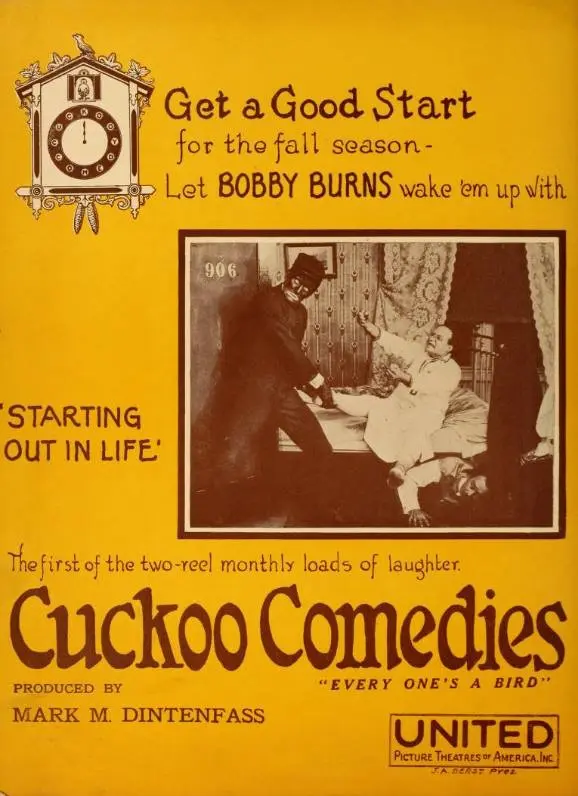
The film's ultimate revelation, that he 'finds himself a rich man', is the narrative's crowning glory, transforming a tale of mundane struggle into an almost fairy-tale-like conclusion. This rags-to-riches arc, while compressed, speaks to an enduring human fantasy: the sudden, unearned windfall that liberates one from the chains of labor. It’s a theme that resonates deeply, offering a glimmer of hope in a world often defined by relentless effort and incremental gains. The lack of detailed explanation for his newfound wealth only adds to its mythic quality, allowing the audience to fill in the blanks with their own hopeful interpretations. This ambiguity, far from being a weakness, strengthens the film's allegorical power, suggesting that sometimes, luck simply strikes, unbidden and undeserved. It's a stark contrast to stories where wealth is earned through cunning or arduous journey, like the intricate schemes perhaps found in By Power of Attorney.
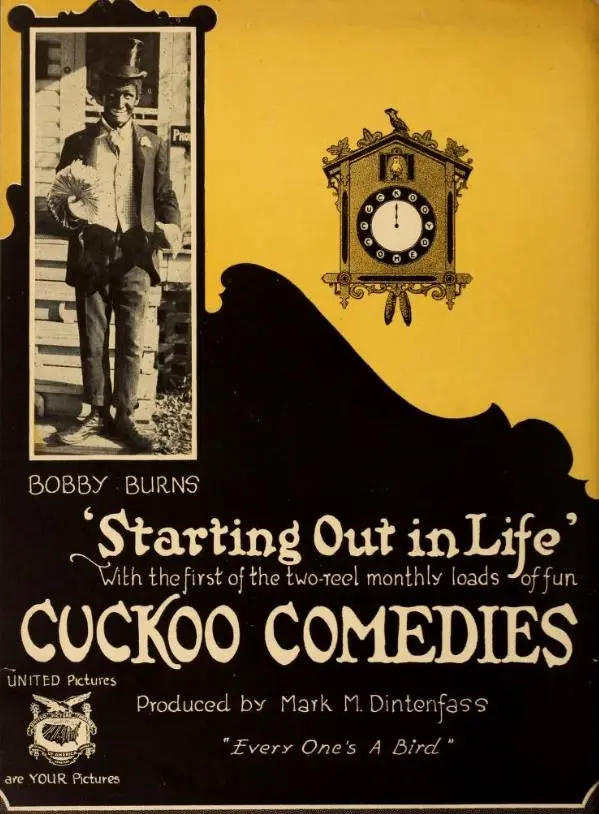
Will Louis, as the beleaguered porter, carries the film with an engaging blend of physical comedy and understated emotional depth. His ability to convey exhaustion, frustration, and eventually, bewildered joy, without uttering a single word, is a testament to the expressive power of silent film acting. He isn't merely performing actions; he's embodying a state of being. The supporting cast, including the effervescent Jobyna Ralston, the ever-reliable Bobby Burns, and Hilliard Karr, contribute to the hotel's bustling atmosphere, each playing their part in the tapestry of the porter's daily trials. Ralston, even in what might be a minor role, often brings a vivacious energy to the screen, a quality that would later make her a notable figure in silent comedies. Their interactions, though brief, effectively underscore the hierarchical structure of the hotel and the porter's position within it. The film's pacing is brisk, typical of short silent features, moving efficiently from the introduction of the porter's plight to his eventual, surprising liberation. There's no wasted motion, no lingering shots that don't serve the narrative, making it a remarkably tight and engaging watch even by today's standards.
'Starting Out in Life' offers a surprisingly rich ground for thematic exploration. It implicitly critiques the endless cycle of labor, where individuals are often reduced to their functional roles, their humanity overlooked in the pursuit of efficiency and profit. The porter's journey from a state of perpetual service to one of unexpected affluence is a powerful fantasy of liberation, a dream that resonates across socio-economic divides. It speaks to the universal desire for a reprieve from the daily grind, a chance to escape the 'rat race' and redefine one's existence on one's own terms. This film, in its quiet way, explores the profound impact of chance, suggesting that while hard work is often lauded, sheer luck can sometimes be the most potent force in shaping a destiny. It's a stark reminder that life's trajectory isn't always linear, and unexpected turns can lead to unimaginable destinations. This theme of abrupt change and new beginnings can be seen, albeit in different contexts, in films exploring identity shifts, like The Two Brides, or even the dramatic reversals of fortune found in The Redemption of White Hawk.
The absence of credited writers for 'Starting Out in Life' is a common characteristic of many early films, where narratives were often developed collaboratively on set or derived from popular stage routines and anecdotes. This collaborative spirit, however, doesn't diminish the impact of the story. If anything, it highlights the intuitive understanding of human nature and narrative drive that early filmmakers possessed. They understood the power of a simple, compelling premise and the universal appeal of a protagonist who, against all odds, triumphs over adversity. The film, therefore, stands as a testament to the foundational storytelling principles that continue to inform cinema to this day.
Despite the technological limitations of its era, 'Starting Out in Life' showcases an effective use of visual storytelling. The sets, though perhaps not elaborate, convincingly portray the functional elegance of a hotel, creating a believable backdrop for the porter's struggles. The lighting, crucial in silent films, is employed to highlight key actions and expressions, drawing the viewer's eye to the emotional core of each scene. The use of intertitles is sparse and to the point, allowing the visual narrative to take precedence, a hallmark of well-executed silent cinema. This reliance on visual cues necessitates a heightened sense of observation from the audience, drawing them deeper into the story through active interpretation rather than passive reception. It's a different kind of engagement than the dialogue-heavy narratives of later eras, but no less potent, often fostering a more intimate connection with the characters' unspoken thoughts and feelings. Imagine the nuanced visual communication required compared to, say, the more direct confrontation implied in The Barricade.
The film's exploration of social mobility, or rather, the sudden, almost divine intervention that grants it, is particularly intriguing. It sidesteps the gritty realism of struggle often depicted in more socially conscious dramas, opting instead for a more optimistic, almost wish-fulfillment scenario. This approach offers a powerful counter-narrative to the often-harsh realities of industrial society, providing a momentary escape into a world where good fortune can indeed strike unexpectedly. It’s a comforting thought, a cinematic balm for the weary, reminding us that even in the most arduous circumstances, there’s always a chance for a brighter tomorrow. While not as overtly political as some narratives, the very premise of a sudden ascent from the working class holds significant social undertones, contrasting with the often-fixed social strata seen in more rigid period pieces or dramas like Mistress Nell.
'Starting Out in Life' might not be a household name, but its enduring charm lies in its universal message. It’s a story about the mundane becoming extraordinary, about the unexpected turns that life can take, and the perennial human hope for a better tomorrow. The porter’s journey, from the relentless monotony of his duties to the startling discovery of wealth, is a miniature odyssey that speaks volumes about resilience, patience, and the sheer luck that sometimes defines our paths. It reminds us that even when we are 'discharged' from one chapter of our lives, it might just be the prelude to an entirely new, and unexpectedly prosperous, beginning. It’s a delightful piece of early cinema that, despite its age, continues to offer a poignant and ultimately uplifting commentary on the human spirit and the unpredictable nature of fortune. The film, in its succinctness, manages to deliver a full emotional arc, something many longer, more ambitious productions sometimes struggle to achieve. It proves that a powerful narrative doesn't always require elaborate special effects or complex dialogue, but rather a compelling character, a clear conflict, and a resolution that resonates with the audience's deepest aspirations. This simplicity and directness can be a refreshing experience, especially when compared to the multifaceted narratives sometimes found in complex serials like Perils of Our Girl Reporters or the philosophical depth of Panopta I. It's a film that, in its quiet way, leaves a lasting impression, a small gem in the vast treasury of silent cinema.
The casting of Will Louis was particularly astute for this role. His physical presence and comedic timing were perfectly suited to embody the harried, yet ultimately endearing, porter. One can imagine the director guiding him through the precise movements and expressions necessary to convey so much without a single spoken word. The subtle nuances in his performance – a quick glance of exasperation, a slump of the shoulders after a particularly demanding task, the widening of his eyes at the moment of revelation – are what elevate the film beyond a mere plot outline. He injects a humanity into the character that makes his eventual good fortune feel earned, not through explicit effort, but through the sheer endurance he displays in the face of his daily grind. This kind of authentic, non-verbal communication is a hallmark of truly great silent acting, allowing the audience to project their own understanding and empathy onto the character. It's a powerful lesson in how much can be conveyed through the art of silent performance, a craft that, when mastered, can transcend language barriers and time itself, much like the timeless human struggles depicted in Her Mistake or the challenging journeys in The Chalice of Courage.
Ultimately, 'Starting Out in Life' serves as a charming and effective reminder of the storytelling prowess of early cinema. It takes a simple premise – a porter's busy life, his dismissal, and his subsequent transformation into a rich man – and crafts a compelling, resonant narrative. It's a film that, while perhaps not as widely known as some of its contemporaries, deserves recognition for its deft handling of character, its clear narrative arc, and its enduring message of hope. It's a little slice of cinematic history that continues to entertain and provoke thought, proving that the foundations of great storytelling were laid long before the advent of sound and elaborate special effects. This film, in its quiet brilliance, is a delightful journey into the unexpected, a testament to the fact that sometimes, the greatest adventures begin when we least expect them, often on the heels of what seems like an ending. It's a reflection on life's unpredictable currents, a theme also explored in different cultural contexts, such as the intricate social dynamics hinted at in The Way of a Man with a Maid or the dramatic turns in The Devil's Daughter. A truly rewarding discovery for any cinephile interested in the genesis of cinematic narrative.
For those who appreciate the nuanced artistry of silent film, 'Starting Out in Life' is an absolute must-see. It's a concise, impactful story that, despite its age, feels remarkably fresh and relevant. It speaks to the universal desire for a break, for a chance at something more, and the often-unpredictable ways in which life delivers it. Will Louis’s performance is a particular highlight, anchoring the narrative with his expressive physicality and making the porter’s transformation genuinely moving. This film serves as a fantastic example of how compelling a story can be when stripped down to its essential elements, relying on visual cues and the power of suggestion to engage the audience. It’s a testament to the enduring appeal of the underdog story, and a reminder that even in the most modest of productions, profound truths about the human experience can be found. It offers a charming window into a bygone era of filmmaking, yet its core message is timeless, making it a compelling watch for contemporary audiences willing to delve into the rich history of cinema. This film, in its unassuming brilliance, is a true hidden gem, waiting to be rediscovered and appreciated for its simple yet powerful narrative. It truly embodies the spirit of early filmmaking, where ingenuity and heartfelt storytelling often triumphed over lavish budgets and complex productions.
IMDb —
1919
Community
Log in to comment.