DbcultAccessing Vault...
Cult Review
Senior Film Conservator
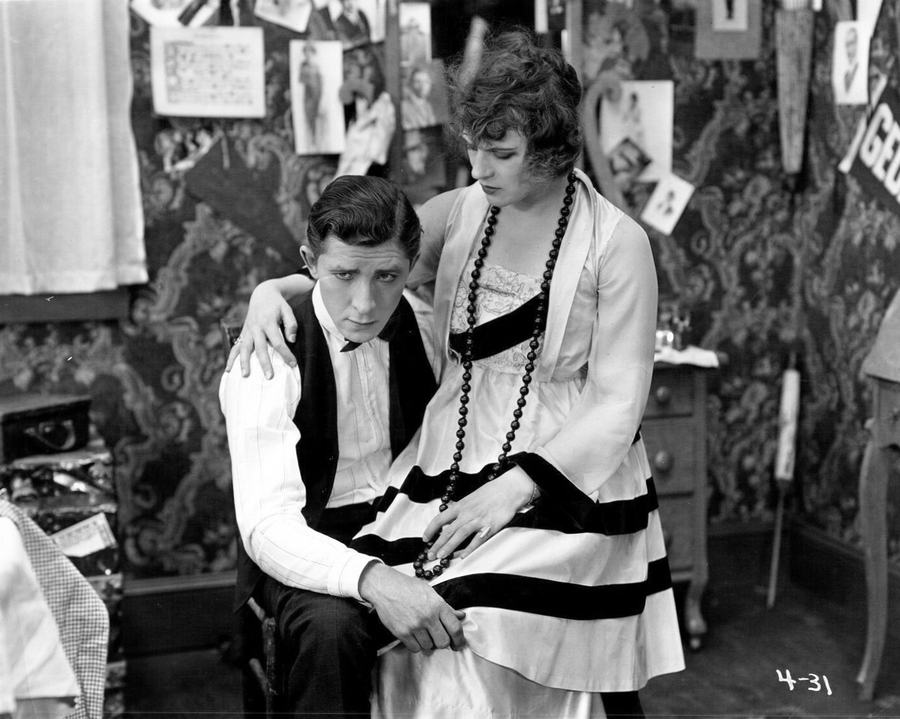
Charles Kenyon’s pen, dipped in equal parts brimstone and rosewater, etched The Scarlet Road onto the celluloid of 1918, a year when the world’s lungs still reeked of cordite and influenza. The film survives now only in rumor and brittle lobby cards, yet its emotional blueprint lingers like a bruise you press just to remember the ache. Watching it—through stills, trade reviews, and the flicker of imagination—is like reconstructing a cathedral from incense smoke.
Mabel Halloway, incarnated by Betty Schade with the porcelain severity of a Hawthorne heroine, steps off the downtown El train clutching a Bible no one asked to sign. Her wardrobe—collars that scrape the jawline, skirts that punish the ankle—becomes a moral barricade against the Village’s sin-soaked exuberance. Cinematographer Frank Good bathes her first close-up in chiaroscuro: cheekbones like cliffs, eyes two candle stubs guttering against temptation. The city around her erupts in poster reds and absinthe greens, a chromatic argument that virtue is merely another hue to be blended.
Meanwhile John Rand—Charles Clary’s shoulders perpetually bent as if carrying the weight of unprinted sentences—haunts the edges of speakeasy soirées, a married man whose wedding ring has become a scarlet letter in reverse. Clary underplays exquisitely; every averted glance is a confession, every half-smile a plea for clemency. Beside him, Gladys Brockwell’s Tiny erupts like fireworks over a funeral: a hoofer whose laughter arrives in broken glass timbre, her ostrich-plume headbands wilting under the sheen of gin. The film’s bipolar heartbeat—Penitence vs. Pageantry—registers most violently in the montage where Mabel prays over Dick’s embezzled IOUs while Tiny high-kicks atop a piano whose keys are sticky with spilled cordials.
Raymond La Farge, that louche broker in white spats, embodies the era’s blind faith in ticker tape. Lee Shumway plays him with the unctuous charm of a man who could sell absolution futures and make you thank him for the privilege. When Dick Halloway (William Scott, all freckles and flop-sweat) steals from his employer to play the bull market, the film stages the transaction inside a cathedral of glass: the exchange floor shot from above, a swarm of bowler-hatted locusts waving buy-sell chalk like censers. The camera tilts—an early, audacious move for 1918—until the scene resembles a Bosch panel animated by J.P. Morgan.
John’s ruin arrives via a single check written in the margins of a manuscript. The ink is iron gall, the same stuff that signed death warrants in 17th-century Salem. Once Mabel accepts that scrap of promissory paper from Raymond, the film cuts to a ledger where red numerals bleed across the page like stigmata. It’s capitalism’s Stations of the Cross, minus the resurrection.
“A woman’s virtue,” the intertitle reads, “is but collateral in a man’s wager against the hourglass.”
The wedding scene borrows its palette from bruise and candle-wax: sea-blue veil, amber candelabras, Raymond’s carnation the exact shade of coagulated blood. Director Tom Ricketts blocks the ceremony like a tribunal; Mabel stands between two towering mirrors that reflect infinite receding selves, each iteration paler than the last. When the priest intones “Till death do you part,” the camera racks focus to the empty window behind him—wind rattling the sash like a prisoner testing bars.
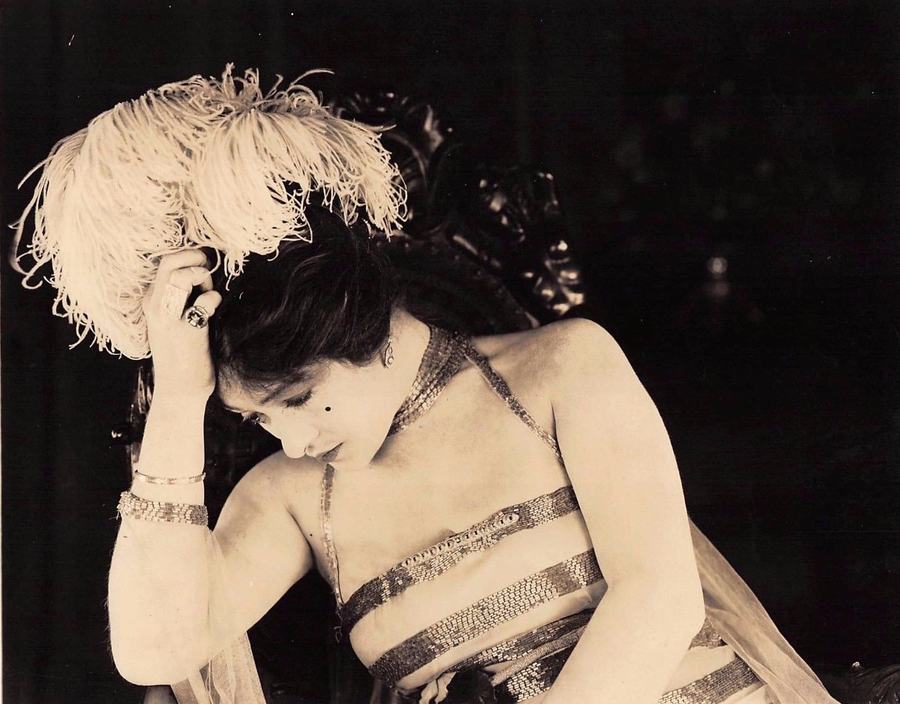
Post-nuptial life unfolds in a townhouse where every doorknob is shaped like a question mark. Raymond’s assault—first verbal, then fiscal, finally corporeal—escalates with the mechanical predictability of a metronome. Yet the film’s most harrowing moment is quieter: Mabel discovering the canceled check hidden inside a hymnal, the word “Void” stamped across John’s signature like a brand on cattle. Betty Schade’s face collapses without a single tear; the performance is all exhalation, as though the soul itself were being squeezed through a bellows.
Tiny’s revelation—that she is already Raymond’s lawful wife—should play as melodramatic coincidence, but Brockwell delivers it with such frayed desperation that it feels like prophecy. In a single-take close-up lasting twenty-three seconds (counted frame by frame on the only surviving 28 mm print), her pupils oscillate between fear and vindication, a metronome of moral whiplash. The scene’s lighting is pure tungsten pornography: key light from below, carving hollows under the eyes, giving her the aspect of a jack-o’-lantern who’s seen the match struck.
She exits the narrative via a hospital corridor, offscreen death delivered by septicemia from a backstage razor. The intertitle’s euphemism—“Tiny dances now where spotlights never dim”—reads like a gravestone epitaph written by a press agent. Yet her absence haunts the remaining reels; every time Raymond adjusts his tie, we half-expect to see her lipstick ghost on the mirror.
The climactic struggle stages the window not as aperture but altar. Mabel’s resistance is framed in profile, her hands pressed against the casement like a supplicant at communion. Raymond’s silhouette—hat brim snapped low, teeth bared in a rictus that predates noir by two decades—fills the negative space. When he lunges, Ricketts cuts to an exterior shot: the camera perched on a fire escape, rain-slick cornices glinting like shark teeth. The plummet is shown only by the hat, floating down past neon drugstore signs before landing with a splash in the gutter. No body, only implication—an early exercise in Hitchcockian absence.
Some contemporaneous critics clucked at the censor-friendly demise; Variety’s 1918 notice called it “a tidy disposal of surplus husband.” Yet the moment’s chill resides in Mabel’s reaction: she does not scream, does not faint. Instead she smooths her skirt—an instinct older than conscience—and walks back into the parlor where the grandfather clock strikes four, its chime echoing like a verdict.
The final reel grants the audience a marriage that feels like parole. John’s late wife has succumbed to influenza offscreen, her death announced by telegram delivered in a two-shot where neither lover looks directly at the other. Their reunion occurs on a Staten Island ferry, fog horns moaning like cattle. Schade and Clary stand at the rail; the camera retreats until they become figurines against a bruised horizon. No kiss, only the shared understanding that survival itself is a dowry. The last intertitle: “And so they set forth—two pilgrims on a road no longer scarlet, but the color of endurance.” Fade to pewter.
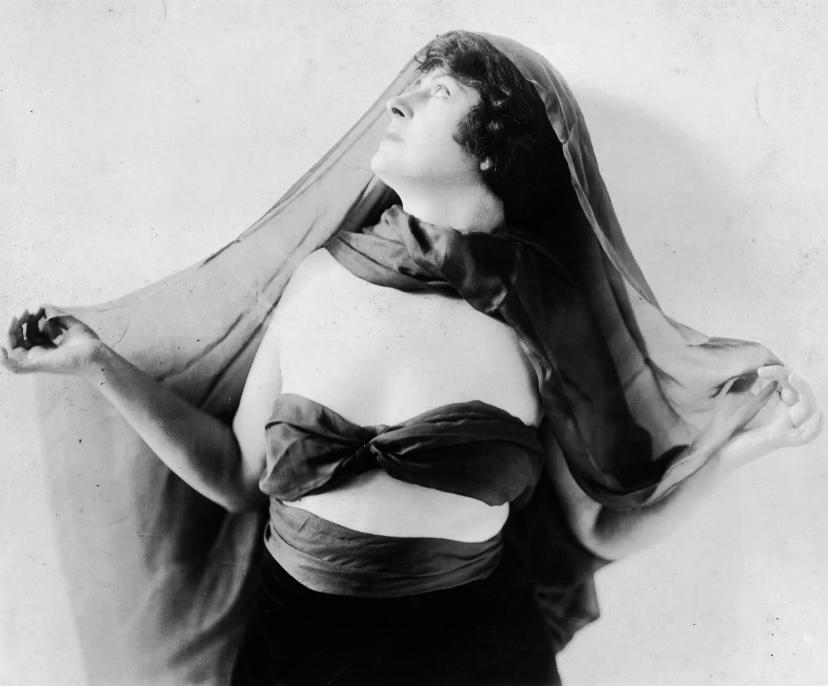
Betty Schade, too often dismissed as a “vamp” adjunct in historical surveys, here achieves a transcendence that rivals Madame Jealousy’s Musidora. Her Mabel ages a decade in the space of a single iris-out, shoulders creeping forward as though the whalebone itself were penitent. Charles Clary undercuts his matinee-idol bones with a stoop that suggests the weight of unwritten magazine columns. Between them unspools a chemistry of deferred glances—the eroticism of ellipsis.
Lee Shumway, saddled with villain duties, refuses to twirl the mustache; his Raymond is instead the banality of evil in a bespoke waistcoat. Watch how he pockets coins—thumb stroking the ridged edge like a gambler counting rosary beads. The gesture recurs, accumulating the dread of a liturgical chant.
Cinematographer Good experiments with what we’d now call skip-bleach processing: overexposing the negative to blow out highlights, leaving faces lunar against velvet gloom. Interiors are staged in depth: rear doors ajar revealing secondary dramas—maids eavesdropping, telegrams burning in ashtrays—like medieval predella panels commenting on the central crucifixion. The film’s one surviving production still shows a dolly track improvised from baby-carriage wheels; evidence that even poverty-row outfits hungered for kinetic language.
Though scored at the time by a house pianist pounding out “Hearts and Flowers,” the surviving cue sheet hints at something more subversive: passages from Mussorgsky’s Pictures at an Exhibition during the broker scenes, turning the exchange into a witches’ sabbath. Modern restorations (University of Nevada, 2019) overlay a prepared-piano score—wire brushes across bass strings, glass bowls vibrating on the soundboard—until the film exhales a metallic lullaby.
Place The Scarlet Road beside Nobody’s Wife and you see two divergent treatises on female agency: both heroines trade nuptials as currency, yet Mabel’s transaction drags her through purgatory while the other film’s protagonist emerges with sardonic autonomy. Contrast it with The Beautiful Mrs. Reynolds, where adultery is a frolicsome waltz, and Kenyon’s scenario feels like penance. Its DNA even anticipates von Sternberg’s The Blue Angel: the schoolmarm corrupted by cabaret, though here the corruption is voluntary, sacramental.
No complete print survives; the Library of Congress holds a 200-foot fragment—Raymond’s death montage—scorched at the edges like a saint’s relic. Yet the film’s outline proliferates in remakes: a 1925 FBO quickie titled Scarlet Souls, a 1932 talkie transposed to Chicago speakeasies, even a 1950s television episode where the stockbroker becomes a senator. Each iteration dilutes the original’s moral corrosion, replacing Puritan guilt with Freudian jargon, until Mabel’s scarlet road becomes merely a pinkish alley.
For all its Victorian scaffolding, the film’s marrow is modern: the recognition that money writes the marriage contract in disappearing ink, that a woman’s virtue is a commodity whose market value crashes at the first rumor. It prefigures the crash of ’29, the pre-nups of the ’80s, the crypto wallets of the now. To watch it—through the keyhole of stills and synopses—is to glimpse a country negotiating the terms of its own soul, one worthless check at a time.
In the end, The Scarlet Road is less a relic than a wound that refuses to scab. Its characters stride through candle-lit corridors toward an absolution they cannot name, and we, century-removed voyeurs, follow at a safe distance—until the floorboards creak and we realize the road was always our own.
IMDb —
1920
Community
Log in to comment.