DbcultAccessing Vault...
Cult Review
Senior Film Conservator
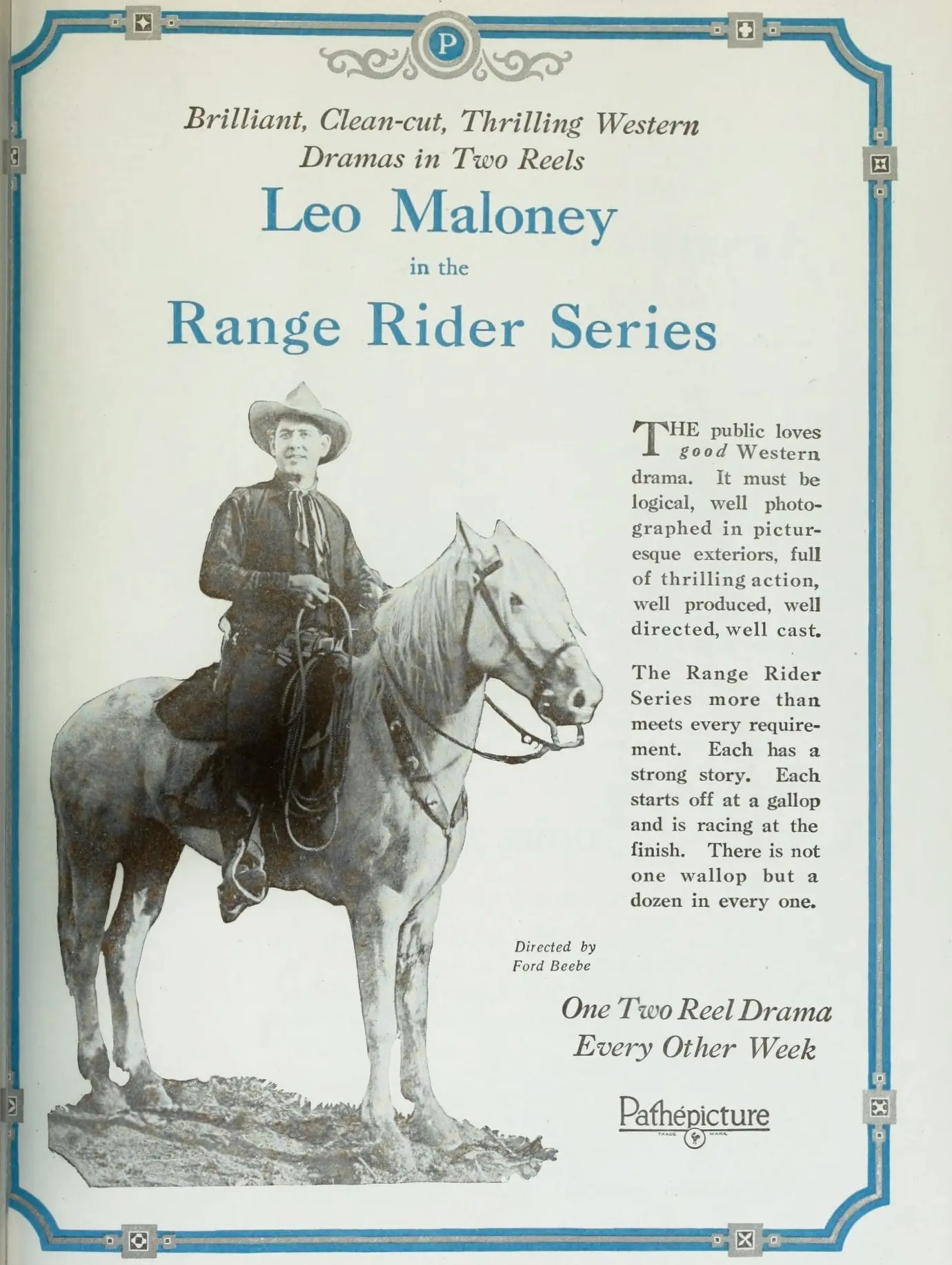
The silent era of the American Western frequently oscillated between the mythic grandiosity of the landscape and the gritty, interpersonal struggles of the lone lawman. In Wings of the Storm (1926), Leo D. Maloney—serving as director, writer, and lead—crafts a narrative that eschews the polished heroics found in contemporary works like The Honorable Algy, opting instead for a textured, atmospheric exploration of vengeance. The film presents a fascinating dichotomy: the protagonist, a ranger, must adopt the visage of a criminal to infiltrate a world that has already discarded its moral compass.
Maloney’s portrayal of Leo is not merely a performance of action, but one of profound internal conflict. By masquerading as an escaped convict, complete with a tell-tale handcuff dangling from his wrist, he embodies a physical manifestation of the law’s duality. This isn't the slapstick masquerade one might find in His Royal Slyness or the lighthearted antics of The Nut. Rather, the deception in Wings of the Storm carries a gravitas that suggests the hero might lose himself in the shadow he inhabits. The cinematography captures this tension through stark contrasts, utilizing the natural light of the rugged terrain to mirror the protagonist’s precarious position between light and dark.
The screenplay, co-written by the prolific Ford Beebe, exhibits a structural tightness that was often lacking in mid-20s B-Westerns. While films like The Sawdust Trail leaned heavily on spectacle, Maloney and Beebe focus on the slow-burn psychological pressure of the undercover operation. Every interaction Leo has with the antagonist forces him to suppress his inherent nobility, a feat of acting that Maloney handles with a stoic, weathered grace. It is a performance that demands more than just the ability to ride a horse; it requires a nuanced control of facial expressions in an era where overacting was the standard.
Josephine Hill provides the film’s emotional anchor, navigating her role with a resilience that transcends the typical 'damsel' archetype. Her presence provides a stark counterpoint to the masculine violence that permeates the plot. Where A Heart in Pawn might have focused on sentimental melodrama, Hill’s performance in Wings of the Storm is grounded in the harsh reality of frontier survival. The chemistry between Hill and Maloney is understated yet palpable, providing the audience with a reason to care about the outcome beyond the simple satisfaction of seeing a villain punished.
The film’s pacing is particularly noteworthy. Unlike the frantic energy of Kids and Skids or the raw documentary-style grit of the Willard-Dempsey Boxing Contest, Wings of the Storm allows its scenes to breathe. The tension is built through silence and the looming threat of discovery. The 'storm' of the title is as much internal as it is environmental, representing the tempest of emotions driving the ranger toward his final confrontation.
At its core, the film asks whether justice can truly be served through extra-legal means. The shooting of the friend is described as 'cowardly,' a term that in the Western genre carries the weight of an unforgivable sin. By seeking vengeance, Leo steps outside the very system he is sworn to protect. This thematic complexity elevates the picture above its contemporaries like The Waifs or Misfits and Matrimony, which often resolved their conflicts through more conventional moralistic conclusions. In Wings of the Storm, the resolution feels hard-won and spiritually taxing.
The use of the handcuff as a recurring motif is a stroke of brilliance. It serves as a constant reminder of the protagonist's self-imposed imprisonment in his lie. It clinks against the rock, it catches the light, and it signifies the burden of his mission. Much like the thematic weight found in Restitution, there is a sense that the protagonist must be 'shackled' to his past before he can find freedom. This level of visual storytelling is what distinguishes Maloney’s work from the assembly-line Westerns of the period.
Technically, the film is a masterclass in utilizing the natural topography to enhance the narrative's stakes. The rugged terrain of the filming locations creates a sense of isolation that mirrors the protagonist's psychological state. While The Call of the North utilized its setting for epic scale, Maloney uses the wilderness to create a claustrophobic sense of dread. The chases are not merely displays of horsemanship but are choreographed to emphasize the danger of the environment itself.
When comparing the film to the urban sophistication of A Night Out, one realizes the sheer breadth of 1920s cinema. Maloney was tapping into a primal American anxiety regarding the transition from the wild frontier to a governed society. His ranger is a bridge between these two worlds—a man who uses the tools of the wild to enforce the peace of the civilized. The film’s focus on 'avenging' rather than 'arresting' speaks to a culture still grappling with the concept of institutionalized justice.
The legacy of Wings of the Storm lies in its refusal to offer easy answers. The villain isn't just a caricature of evil but a representative of the lawlessness that the ranger is trying to extinguish. The final showdown is executed with a precision that avoids the melodrama seen in The Wooing of Princess Pat, focusing instead on the visceral reality of the struggle. Maloney’s direction ensures that the audience feels every punch and every gunshot, grounding the film in a gritty realism that was ahead of its time.
Even when compared to international works like Kärlekens ögon, which explored the intricacies of human perception and emotion, Wings of the Storm holds its own by focusing on the 'vision' required to see through a criminal's disguise to the heart of a hero. The film is a testament to the power of the B-Western to tackle complex themes of identity and morality when placed in the hands of a capable auteur like Maloney.
As we look back at the surviving fragments of this era, the film stands as a poignant reminder of the ingenuity of independent filmmakers. They didn't have the budgets of the major studios, but they had a raw, unadulterated vision of the American West. Wings of the Storm is not just a tale of a ranger and a convict; it is a cinematic exploration of the shadows that haunt the quest for justice. The film remains a vital piece of the silent era's mosaic, offering a glimpse into a world where the only thing more dangerous than a storm is the man who rides within it.
For those who appreciate the intersection of high-stakes action and profound character study, this 1926 classic is an essential chapter in the history of the genre. It proves that even within the constraints of a silent medium, the loudest stories are often told through the quietest moments of a man facing his own reflection in the iron of a handcuff.

IMDb 5.8
1930
Community
Log in to comment.