DbcultAccessing Vault...
Cult Review
Senior Film Conservator
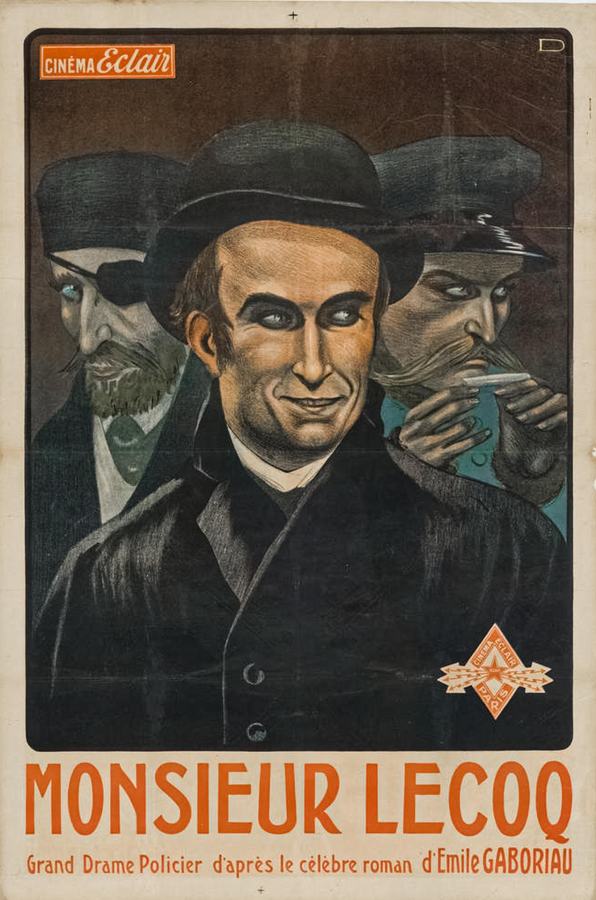
Ah, the annals of early cinema! What a treasure trove of narrative ingenuity and nascent artistry they represent. Among them, Monsieur Lecoq stands as a monumental work, a veritable cornerstone in the edifice of detective fiction on screen. Far more than a mere crime procedural, this film plunges us into a meticulously constructed labyrinth of intrigue, social stratification, and the profound human cost of secrets. It’s a testament to the power of observation, the fragility of reputation, and the enduring allure of a brilliant mind dissecting the seemingly impenetrable. For those of us who revel in the intricate dance between hunter and hunted, between truth and its myriad disguises, Lecoq’s inaugural cinematic outing offers a banquet for the intellect.
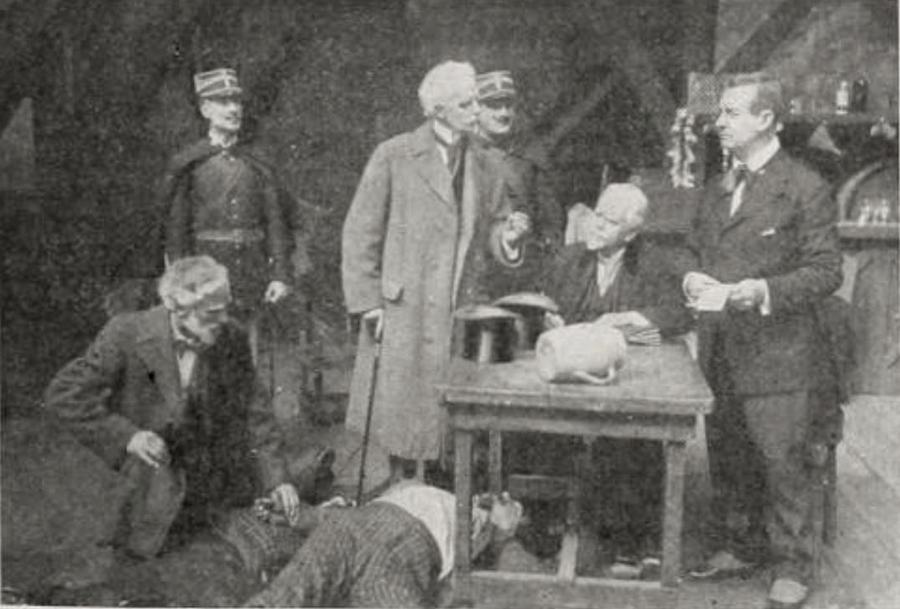
From the moment M. Lecoq, the celebrated detective, chances upon the ominous 'Pepperbox' inn, the narrative unfurls with a compelling urgency that belies its era. It's not the cacophony of gunshots or the grim sight of two notorious criminals lying lifeless that truly captures his attention; rather, it’s the subtle dissonances in the scene, the almost imperceptible anomalies that scream volumes to his trained intellect. The alleged slayer, captured amidst the chaos, offers a plausible tale of self-defense, corroborated by the innkeeper, Mother Chupin. But Lecoq, unlike his more conventional gendarme colleagues, possesses a vision that penetrates beyond the superficial. He sees the diamond earring on the floor, an incongruous spark of luxury in a den of squalor, a silent witness to a story yet untold. This early scene immediately establishes Lecoq not merely as a law enforcer, but as an almost preternaturally perceptive observer, a proto-Sherlock Holmes whose deductive faculties are the true protagonists of the drama. His methods, so revolutionary for the time, hinge on the meticulous examination of physical evidence – the footprints, the discarded object – transforming the mundane into vital clues. This commitment to forensic detail sets Monsieur Lecoq apart, elevating it beyond a simple chase into a sophisticated intellectual puzzle, much like how later, more refined detective stories would operate, even those with supernatural elements like Der Hund von Baskerville where deduction still reigns supreme.
The brilliance of Lecoq’s investigative process is further illuminated as he delves deeper into the aftermath of the inn incident. Once the primary suspects are removed, he returns to the scene, not for what is obvious, but for what has been overlooked. Outside, the delicate indentations of a woman's footprints lead him on a silent trail, eventually merging with those of a man. Here, the narrative truly begins to showcase Lecoq's unparalleled observational skills. The man’s footprints reveal a distinct limp, one imprint far more pronounced than the other. A snippet of brown wool, snagged on a tree, speaks volumes about the texture and color of his overcoat. From the height of the snag, Lecoq deduces the man's stature. These seemingly disparate fragments of information, woven together by Lecoq’s relentless logic, begin to paint a portrait of a mysterious figure, an unseen hand guiding the unfolding drama. This meticulous reconstruction of events from the most ephemeral of traces is nothing short of breathtaking, demonstrating a narrative sophistication that was truly groundbreaking for early cinema. It’s a masterclass in building suspense through intellect, a stark contrast to more action-driven thrillers of the era, such as The Whirl of Life, which often relied on spectacle over cerebral engagement. The film effectively teaches us to observe, to question, and to seek patterns where others see only randomness.
The plot thickens with the introduction of a seemingly inebriated man, conveniently found outside the police station and subsequently locked into the same cell as Lecoq's initial prisoner. This seemingly random event, however, is anything but. Lecoq’s intuition, honed by years of navigating the criminal underworld, immediately recognizes the ruse. The 'drunkard' is none other than an accomplice, strategically placed to communicate with the prisoner, to map out a defense, to orchestrate a narrative. When this supposed drunkard regains his senses and makes a 'pitiful plea' for freedom, Lecoq is not surprised by his release, but rather confirmed in his suspicions. This sequence is a brilliant chess match, a psychological duel where Lecoq understands the opponent’s moves even before they are fully executed. The film showcases the intricate web of deceit that criminals, particularly those with resources, can weave, and the mental agility required to unravel it. It’s a fascinating study in criminal psychology, far more nuanced than simpler morality plays like Little Jack, which often depicted clear-cut heroes and villains without much gray area. The narrative here thrives on the ambiguity, the layers of pretense that Lecoq must systematically peel away.
Lecoq, finding himself repeatedly thwarted by the prisoner's carefully constructed defenses, devises a bold counter-strategy. He arranges for the prisoner to be moved to a solitary cell, where, through a peephole, he uncovers a clandestine communication channel. Intercepting a note, Lecoq learns of the prisoner's plan to escape through the cell window, provided with tools. This is where Lecoq truly distinguishes himself as a detective of extraordinary daring and foresight. Instead of preventing the escape, he actively facilitates it, securing the judge’s reluctant consent with the assurance that he would be 'always at his heels.' This calculated risk elevates the narrative to a thrilling cat-and-mouse chase, transforming the static confines of the prison into the dynamic, sprawling canvas of Paris. The prisoner's dismay upon realizing he has been deliberately set free, his expected accomplice absent, adds a layer of psychological torment to his flight. The ensuing pursuit through narrow lanes and shadowy alleys, culminating in the dramatic revelation that Lecoq’s prey is being spirited over a high wall into the residence of the wealthy Duc De Sairmuse, is a masterful sequence. It’s a testament to the film's ability to combine intellectual deduction with pulse-pounding action, a balancing act that many contemporary films struggled to achieve, often leaning too heavily on one aspect over the other, as seen in the more straightforward drama of The Spendthrift.
The revelation that the 'laborer' arrested at the inn is, in fact, the esteemed Duc De Sairmuse, shatters the conventional notions of crime and justice. This twist elevates Monsieur Lecoq from a simple police procedural to a scathing commentary on class, privilege, and the lengths to which society will go to protect its elite. Lecoq’s focus then shifts from merely identifying the perpetrator to understanding the profound motivations behind such a desperate act. The detective’s astute observation of Maurice d'Escorval, the first judge on the case, who feigned illness to avoid prosecuting a man he clearly knew, provides the final, crucial piece of the puzzle. This element introduces a fascinating layer of judicial complicity, highlighting the systemic biases that Lecoq, a man of humble origins, must navigate. His ultimate gambit, a forged letter from d'Escorval demanding money in exchange for silence, is a stroke of pure genius. The Duke’s penned reply, warmly thanking the judge, is snatched away by a disguised Lecoq, exposing the nobleman’s secret in a dramatic, almost theatrical fashion. This scene is a powerful climax, not just for its revelation, but for its profound implications about the nature of truth and the power dynamics inherent in society. It contrasts sharply with films like Unjustly Accused, where the focus is on the simple injustice, rather than the intricate societal layers that protect the guilty.
The Duke’s confession, delivered with a raw sincerity, transforms him from a cunning criminal into a tragic figure. His silence, he explains, was not borne of guilt for murder, but of a desperate necessity to shield his family name, specifically his Duchess. The revelation that his wife, a woman of humble birth, was being blackmailed by her own scapegrace brother—a convict—adds a heart-wrenching dimension to the narrative. The Duke, feigning absence, disguised himself as a laborer, haunted by the fear of his wife’s infidelity, only to discover her plight at the 'Pepperbox' inn. Witnessing the assault on her, the theft of her diamond earring, and her subsequent distress, he intervened, leading to the fatal self-defense. His whispered instructions to Mother Chupin to ensure his wife's escape, and his subsequent capture, paint a picture of selfless sacrifice. The detailed account of Otto, his faithful valet, orchestrating the 'drunkard' ruse to communicate with his master and ensuring the Duchess's safe return, further humanizes the Duke’s actions. This elaborate backstory, filled with love, loyalty, and the desperate measures taken to protect one’s kin, elevates the film beyond a simple crime story. It delves into the profound emotional landscape of its characters, exploring themes of honor, class, and familial duty with a depth rarely seen in early cinema. The Duke’s narrative carries the ring of truth, affecting even the stoic Lecoq. It reminds us that justice is not always black and white, and that the motivations behind seemingly criminal acts can be profoundly complex. This nuanced portrayal of morality and motivation is a sophisticated touch, far exceeding the often simplistic characterizations found in films like The Child of Paris, which tended to focus on more straightforward emotional appeals.
The climax of Monsieur Lecoq is not a triumphant arrest or a sensational trial, but a quiet, deeply profound act of moral judgment. Lecoq, having fully understood the Duke’s harrowing ordeal and his noble intentions, recognizes that the charge of murder is untenable; it was, unequivocally, a case of self-defense. In a moment that defines his character and sets him apart from rigid legalists, Lecoq burns the two incriminating notes – the forged letter and the Duke’s confession. This act of deliberate destruction of evidence, an ethical tightrope walk for any detective, speaks volumes about Lecoq's personal code. He prioritizes honor, family, and the nuanced truth over the cold, unyielding letter of the law. He departs, leaving behind not a prisoner, but a grateful friend whose family name and reputation he has saved. This ending is remarkably progressive, eschewing simplistic notions of justice for a more complex, humanistic understanding. It suggests that true justice sometimes lies in compassion and discretion, a theme that resonates deeply and elevates the film beyond a mere genre piece. It invites contemplation on the very nature of law and morality, much like the philosophical inquiries found in theatrical adaptations such as The Merchant of Venice, albeit in a different context. Lecoq’s decision secures not just the Duke's freedom, but his lasting admiration, forging a bond of respect that transcends their initial adversarial roles.
The enduring power of Monsieur Lecoq lies not just in its intricate plot or compelling characters, but in its foundational influence on the detective genre. Émile Gaboriau’s creation, brought to life on screen, provided a blueprint for future generations of literary and cinematic sleuths. Lecoq’s methodical approach, his reliance on forensic evidence, his psychological acumen, and his willingness to challenge conventional wisdom laid the groundwork for figures like Sherlock Holmes and countless others. The film’s exploration of class divides, the corrupting influence of secrets, and the moral ambiguities of justice resonate as strongly today as they did upon its release. It’s a work that asks profound questions about what it means to be truly honorable, and whether rigid adherence to law always serves the greater good. The visual storytelling, even in its nascent form, captures the tension and drama with remarkable effectiveness, making the most of the medium's emerging capabilities. While we might compare it to other early cinematic efforts like In Search of the Castaways for its adventurous spirit, Monsieur Lecoq distinguishes itself through its intellectual rigor and its profound humanism. It’s a film that not only entertains but also provokes thought, a rare and precious quality in any era. Its intricate narrative, rich character development, and philosophical undertones secure its place as a classic, a must-watch for anyone interested in the evolution of cinema and the timeless appeal of a well-crafted mystery. The film isn't merely a relic; it's a vibrant, living piece of cinematic history that continues to inspire and intrigue.
IMDb 6.4
1933
Community
Log in to comment.