DbcultAccessing Vault...
4.4/10
Senior Film Conservator
A definitive 4.4/10 rating for a film that redefined the boundaries of cult cinema. God's Man remains a cornerstone of transgressive art.
Ah, the silent era! A time when storytelling relied not on bombastic soundscapes or rapid-fire dialogue, but on the potent alchemy of gesture, expression, and the sheer evocative power of visual narrative. Within this rich tapestry, certain films emerge not just as historical artifacts, but as timeless explorations of the human condition. Among them, ‘God’s Man’ stands as a towering, if often overlooked, testament to the profound moral dramas that captivated audiences of the 1920s. This isn't just a film; it's a meticulously crafted psychological study, a stark examination of faith, hypocrisy, and the relentless pursuit of atonement.
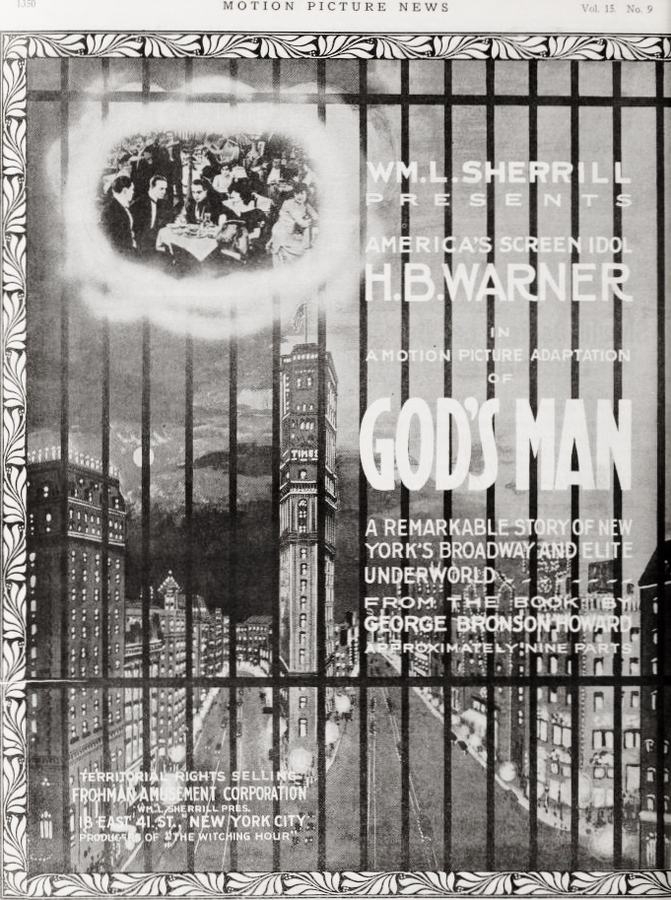
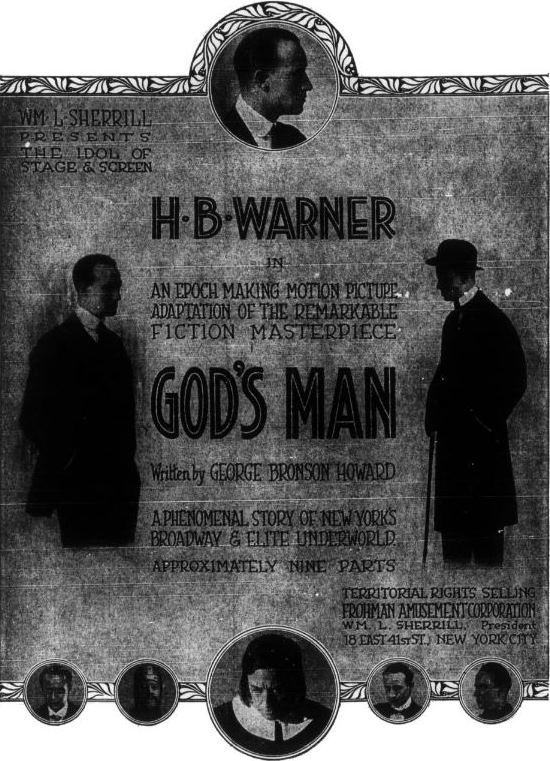
From its opening frames, 'God's Man' plunges us into a world of stark contrasts. The flickering images, imbued with a sepia-toned gravity, introduce us to Reverend Elijah Thorne, portrayed with an almost unbearable intensity by H.B. Warner. Warner, an actor of immense subtlety and command, doesn't just play Thorne; he inhabits him, allowing us to glimpse the profound internal conflict simmering beneath a veneer of unimpeachable piety. Thorne is the archetypal 'man of God'—revered, respected, a pillar of his small, insular community. Yet, the film's brilliance lies in immediately hinting at the cracks in this seemingly flawless facade. We sense, almost subliminally, a deep-seated unease, a shadow that clings to him even in the brightest moments of his public ministry. This is not a straightforward tale of good versus evil, but a nuanced journey into the grey areas of human morality, where virtue is often a performance and sin a silent, relentless companion.
The narrative, penned with remarkable foresight by Anthony Paul Kelly and George Bronson Howard, gradually peels back the layers of Thorne’s past. We learn of a youthful transgression, a moment of desperation or weakness that has festered into a lifelong burden of guilt. It’s a classic dramatic device, certainly, but in 'God's Man,' it’s handled with a psychological realism that feels remarkably modern. The film doesn't sensationalize the past sin; instead, it focuses on its corrosive effects on the present, transforming Thorne’s every interaction, every sermon, into an act of profound, agonizing self-deception. The writers understand that the greatest torment often comes not from external punishment, but from the internal tribunal of one's own conscience.
The arrival of Brother Silas, a fire-and-brimstone evangelist powerfully embodied by Edward Earle, serves as the primary catalyst for the film's escalating tension. Earle’s portrayal is a masterclass in controlled fervor—his Silas is charismatic, magnetic, yet possesses an unsettling zeal that borders on fanaticism. His sermons, delivered with a theatrical flourish that would make any modern televangelist envious, preach absolute purity and uncompromising confession. For Thorne, Silas is both a mirror and a tormentor, his words echoing the very judgment Thorne fears most. The film brilliantly uses Silas not just as an antagonist, but as a symbolic representation of the societal and divine judgment that Thorne believes he is constantly evading. This dynamic creates a suffocating atmosphere, where the very air seems thick with unspoken accusations and impending revelation.
The supporting cast, too, delivers performances that elevate the material. Barbara Gilroy, as the innocent young parishioner whose unwavering faith inadvertently becomes a catalyst for Thorne’s crisis, brings a poignant vulnerability to her role. Her character serves as a stark counterpoint to the moral complexities surrounding Thorne, representing the purity and hope that his own actions threaten to tarnish. Then there's Mario Fouche, whose portrayal of a local opportunist adds a layer of cynical realism to the narrative, reminding us that even in matters of faith, human greed and manipulation are never far from the surface. The ensemble, including vital contributions from Sydney Vorzimer, O.G. Putnam, Walter Hiers, Yona Landowska, Stanhope Wheatcroft, and Bob McMillan, collectively paints a vivid portrait of a community grappling with its own moral compass, each face a microcosm of the broader human struggle.
Director George Bronson Howard (who also contributed to the screenplay) demonstrates an acute understanding of visual storytelling inherent to the silent medium. The cinematography is often breathtaking, employing stark contrasts of light and shadow to externalize Thorne’s internal turmoil. Close-ups are used sparingly but effectively, magnifying the anguish etched on Warner’s face. The use of symbolism is particularly striking: a flickering candle representing Thorne’s dwindling hope, a looming church steeple casting a long, accusatory shadow. These visual metaphors are not merely decorative; they are integral to the narrative, communicating complex emotional states without the need for intertitles. The pacing, though deliberate, builds tension with an inexorable force, pulling the viewer deeper into Thorne’s spiraling desperation. One might draw parallels to the psychological intensity found in films like Fange no. 113, where the internal struggles of the protagonist are laid bare through meticulous visual composition, creating a sense of claustrophobia and impending doom that 'God's Man' also masterfully achieves.
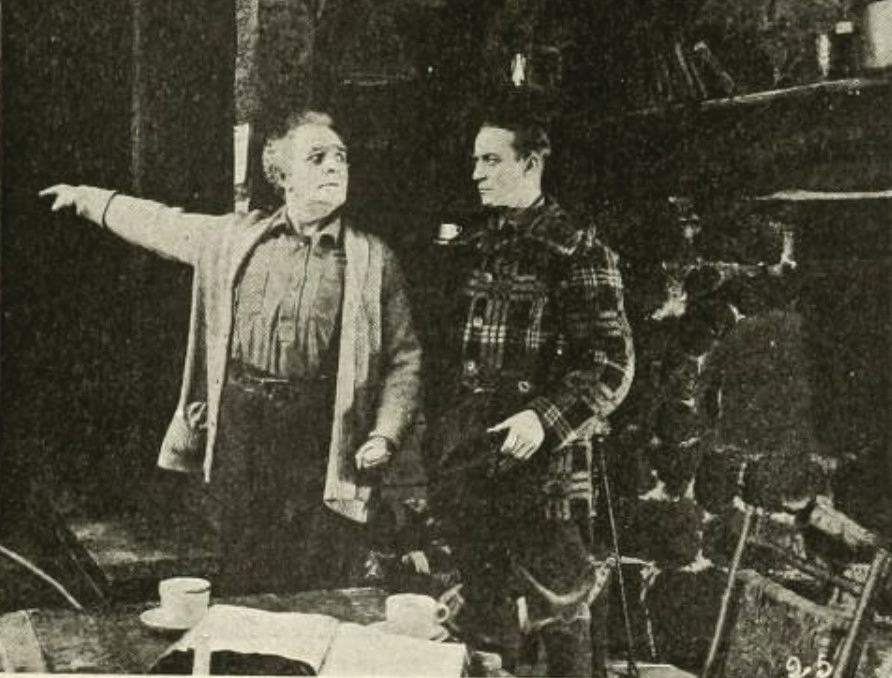
The themes explored in 'God's Man' resonate far beyond its silent-era origins. It’s a powerful meditation on the nature of sin, the burden of hypocrisy, and the arduous, often painful, path to true redemption. The film asks profound questions: Can a man truly be 'God's Man' if his heart harbors a secret sin? Is public atonement necessary for spiritual cleansing, or is the private struggle sufficient? These are not easy questions, and the film offers no simplistic answers. Instead, it invites the audience to grapple with these moral quandaries alongside Thorne, experiencing his agony, his fleeting moments of hope, and his ultimate reckoning. In a way, it shares a thematic DNA with dramas like As Man Made Her, which similarly dissected societal expectations and the internal lives of individuals constrained by moral strictures, though 'God's Man' leans more heavily into spiritual introspection.
The screenplay by Kelly and Howard is a tight, well-structured piece of dramatic writing. It avoids melodrama where subtlety is required, and embraces it when the emotional stakes demand it. The character arcs are clear, yet complex, particularly Thorne's journey from a man clinging to his secret to one who must confront it head-on. The dialogue, though conveyed through intertitles, feels authentic and purposeful, driving the narrative forward without unnecessary exposition. The writers understood the power of implication, allowing the audience to fill in the emotional blanks, a testament to their skill in crafting a compelling story for a medium that demanded visual fluency.
One cannot discuss 'God's Man' without acknowledging the sheer breadth of talent in its cast, even in smaller roles. Figures like Maud de Vere, Kate Lester, Jean Stuart, Marion Cumming, Sidney D'Albrook, Harry B. Eytinge, Jack Macklin, and Albert Tavernier, though perhaps not in the limelight, contribute significantly to the film's rich texture, populating the community with believable, distinct personalities. Their reactions, their silent judgments, and their moments of empathy all serve to amplify Thorne’s isolation and the mounting pressure he faces. The film uses every element, from the grand performances to the minutiae of background characters, to build a cohesive and immersive world. This level of detail in world-building, even in the silent era, is what sets truly great films apart, much like the intricate social dynamics explored in something like Korol Parizha, where the societal backdrop is as much a character as the individuals themselves.
The film's lasting impact lies in its timeless message. While the specific context of a silent-era religious drama might seem distant, the core struggle—the battle between who we present ourselves to be and who we truly are—remains eternally relevant. It's a reminder that true integrity is forged in the crucible of private conviction, not public acclamation. 'God's Man' challenges us to look beyond superficial appearances and confront the uncomfortable truths that lie beneath. Its exploration of faith is not dogmatic but deeply human, recognizing that even the most devout among us are susceptible to temptation and error. It's a testament to the power of early cinema to tackle complex ethical dilemmas with sensitivity and profound insight.
In conclusion, 'God's Man' is more than just a historical curiosity; it’s a compelling, emotionally resonant drama that deserves a place in the pantheon of great silent films. Its masterful direction, the powerful performances, particularly from H.B. Warner and Edward Earle, and a script that delves into the very heart of human morality, combine to create an unforgettable cinematic experience. It reminds us that sometimes, the most thunderous dramas are played out in the profound silence of a conflicted soul. If you ever have the chance to witness this cinematic gem, prepare for a journey into the depths of human spirit, a testament to the enduring power of storytelling through light and shadow. It truly is a compelling piece that stands alongside other character-driven moral explorations of its time, offering a window into the anxieties and aspirations of an era grappling with the shifting sands of faith and societal expectation, much like the poignant introspection found in The More Excellent Way. A truly captivating and thought-provoking work, it solidifies its place as a significant contribution to early cinematic artistry.

IMDb —
1919
Community
Log in to comment.