DbcultAccessing Vault...
Cult Review
Senior Film Conservator
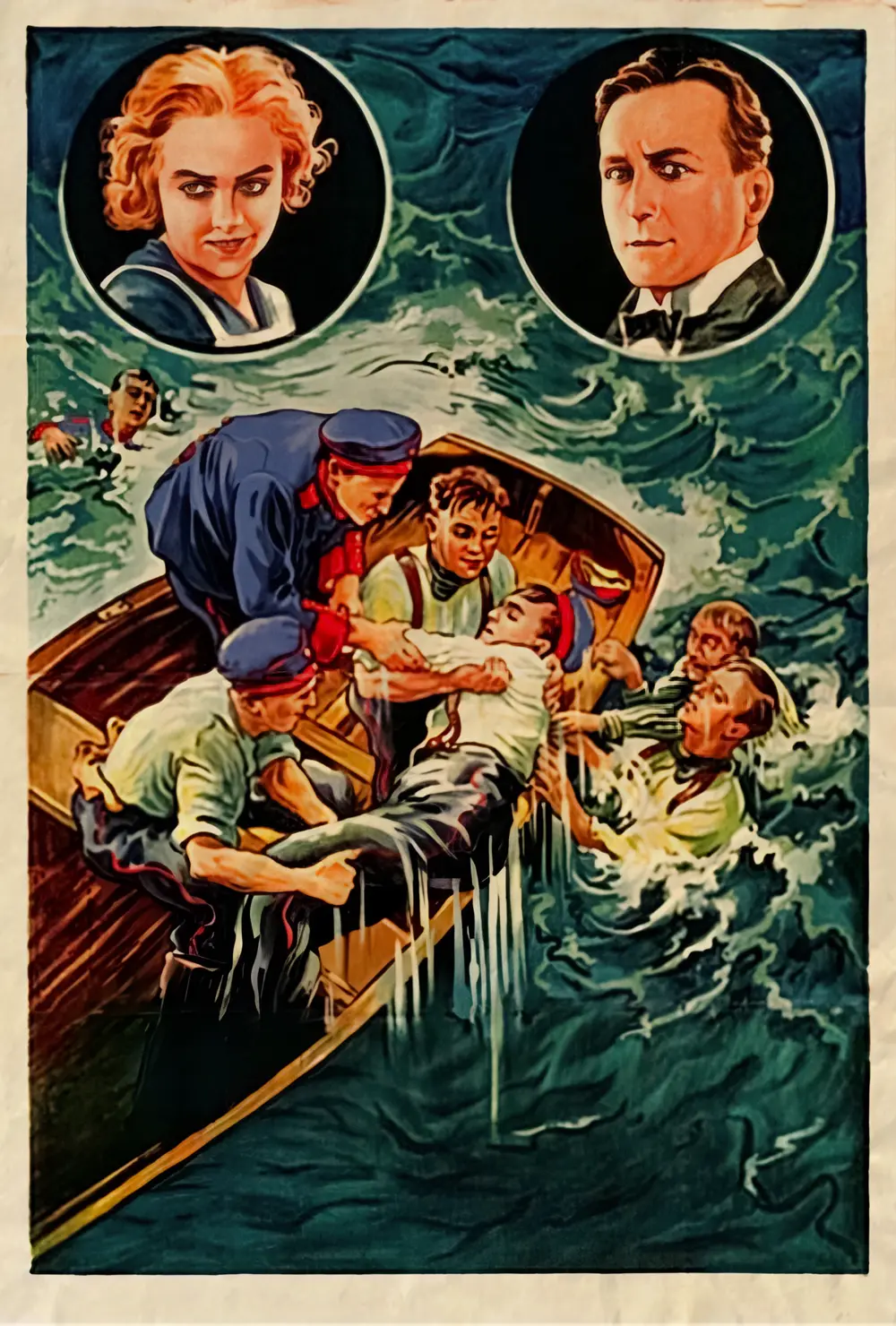
Is Steh' ich in finstrer Mitternacht worth watching today? Short answer: yes, but with significant caveats that demand a certain patience and appreciation for the era. This silent German drama, while undeniably a product of its time, offers a compelling psychological study that transcends the limitations of its medium and period.
This film is for dedicated cinephiles, students of German Expressionism, and those who appreciate character-driven narratives steeped in moral ambiguity. It is not for viewers seeking fast-paced plots, clear-cut heroes, or modern dialogue. Its deliberate pacing and reliance on visual storytelling require an engaged, reflective audience.
The early German silent cinema was a crucible for psychological drama, and Steh' ich in finstrer Mitternacht stands as a testament to its power. Directed by the visionary duo of Charlie Roellinghoff and Marie Luise Droop, the film delves into the tormented psyche of Dr. Robert Wenzel, a man whose respectable facade masks a devastating secret. The narrative, while perhaps melodramatic by today's standards, was revolutionary in its focus on internal conflict rather than external spectacle.
The film works because it masterfully uses the visual language of silent cinema to convey profound emotional states. The stark contrasts of light and shadow, the exaggerated gestures, and the carefully composed frames all contribute to an atmosphere of pervasive dread and moral decay. Ernst Pröckl's performance as Wenzel is a tour de force, embodying a man literally haunted by his past.
This film fails because its pacing can feel glacial to contemporary audiences. The story unfolds with a deliberate slowness that, while effective in building tension, can test the patience of those accustomed to rapid narrative progression. Furthermore, some of the supporting characterizations, particularly that of the villain Richter, verge on caricature, lacking the nuanced depth afforded to Wenzel.
You should watch it if you are fascinated by the origins of cinematic storytelling, appreciate the art of silent acting, and are willing to immerse yourself in a world where moral dilemmas are painted with broad, expressionistic strokes. It’s a foundational piece, offering a window into the anxieties of post-WWI Germany.
"Steh' ich in finstrer Mitternacht is not just a film; it's a mirror reflecting the shadows of the human soul, a silent scream against societal judgment."
The narrative centers on Dr. Robert Wenzel, a respected physician whose life with his fiancée, Helene, seems idyllic. However, beneath this polished exterior lies a dark secret: a desperate act from his youth, born of poverty, which led to an accidental death. This past, a festering wound, is violently ripped open by the arrival of Herr Richter, a cunning blackmailer played with chilling menace by Hugo Fischer-Köppe.
Richter's demands escalate, forcing Wenzel into a moral quagmire. The doctor is torn between confessing his past and facing public ruin, or succumbing to Richter's increasingly unethical propositions, which threaten his professional integrity. The film expertly builds tension as Wenzel's internal struggle manifests in subtle facial tics and haunted gazes, a testament to Pröckl's incredible skill.
As the story hurtles towards a stormy "midnight" – both literal and metaphorical – Wenzel is forced to confront Richter and the specter of his past. Meanwhile, Helene, sensing her beloved's growing torment, begins to piece together the fragments of his despair, unwittingly moving closer to the devastating truth. It's a classic setup that, despite its age, still resonates with themes of guilt, redemption, and the corrosive power of secrets.
In silent cinema, acting is a demanding art, requiring an almost balletic control over the body and face. Ernst Pröckl, as Dr. Robert Wenzel, delivers a performance that is nothing short of captivating. His portrayal of Wenzel's internal anguish is remarkable, conveying a man on the brink of collapse through subtle shifts in posture, the clenching of his jaw, and the profound sadness in his eyes.
Consider the scene where Richter first confronts Wenzel in his study. Pröckl's initial incredulity, followed by a slow, dawning horror that washes over his face, is a masterclass in silent reaction. He doesn't need words; his every gesture screams desperation. This level of emotional transparency is what makes the film so impactful, even a century later.
Gisela Günther, as Helene, provides a much-needed counterpoint to Pröckl's intensity. Her performance is imbued with a quiet grace and growing concern. Helene's developing suspicion is conveyed not through histrionics, but through lingering looks and a palpable sense of unease, particularly in scenes where she observes Wenzel's increasing agitation. Her innocence is a fragile beacon against the film's encroaching darkness.
However, the performance of Hugo Fischer-Köppe as Richter leans heavily into the theatrical villainy common in early cinema. While effective in establishing him as a clear antagonist, his lack of any discernible complexity makes him feel more like a plot device than a fully realized character. This stark contrast in acting styles, while typical, can occasionally pull a modern viewer out of the film's more nuanced moments.
Charlie Roellinghoff and Marie Luise Droop’s direction is characterized by a strong sense of visual storytelling, a hallmark of the German Expressionist movement. They employ chiaroscuro lighting to great effect, bathing scenes in deep shadows and harsh highlights that visually manifest Wenzel’s internal turmoil. The use of low-key lighting in Wenzel’s study, for instance, creates a claustrophobic atmosphere, trapping him in his own secrets.
The camera work, while not overtly flashy, is incredibly deliberate. Close-ups are used sparingly but powerfully, often to highlight Pröckl’s expressive face during moments of extreme stress. One particularly memorable shot frames Wenzel's face in the flickering light of a single candle, the shadows dancing across his features, making his anguish almost tangible. This attention to detail elevates the emotional impact.
The set design, while less overtly expressionistic than films like Das Gefängnis auf dem Meeresgrund, still contributes significantly to the film's tone. Wenzel's grand, yet somewhat austere, home becomes a gilded cage, while Richter's shadowy den feels appropriately squalid and menacing. These environments are not merely backdrops but active participants in the narrative, reflecting the characters' internal and external states.
My one unconventional observation is the surprising use of outdoor sequences. While many silent dramas relied heavily on studio sets, Steh' ich in finstrer Mitternacht incorporates several well-shot exterior scenes, particularly during the climax. The stormy "midnight" sequence, with its rain-slicked streets and dramatic lightning, feels genuinely epic and adds a layer of naturalistic power that was often absent in more stylized contemporary works. It was a bold choice that paid off.
The pacing of Steh' ich in finstrer Mitternacht is a slow, deliberate burn. The film takes its time establishing Wenzel's respectable life before introducing the catalyst of Richter's arrival. This methodical build-up allows the audience to fully grasp the stakes and Wenzel's mounting desperation. While some might find it languid, this measured pace is crucial for developing the psychological tension.
The tone is overwhelmingly melancholic and suspenseful, tinged with a pervasive sense of moral decay. There are few moments of levity, and even the early scenes of Wenzel and Helene's courtship are underscored by an almost imperceptible current of impending doom. This consistent, somber tone is one of the film's greatest strengths, creating an immersive, if heavy, viewing experience.
The film's reliance on intertitles is also noteworthy. They are used effectively to convey dialogue and internal thoughts, but the filmmakers often allow the visuals and performances to speak for themselves, minimizing text where possible. This balance ensures that the film remains a primarily visual medium, honoring the core tenets of silent cinema. The emotional resonance of a scene often comes from Pröckl's silent scream or Günther's tearful gaze, not from a block of text.
Released during the Weimar Republic, Steh' ich in finstrer Mitternacht reflects the societal anxieties of post-WWI Germany. The themes of hidden guilt, the fragility of reputation, and the corrupting influence of power resonated deeply with an audience grappling with national trauma and economic instability. It's a film that speaks to the collective unconscious of a nation in flux.
Compared to other films of the era, such as Der Berg des Schicksals, which explored grander, more mythological themes, Steh' ich in finstrer Mitternacht focuses on the intimate, personal horror of a man's moral collapse. It's less about the external world and more about the internal landscape, a precursor to later psychological thrillers.
Its influence can be seen in later German cinema, particularly in the way it uses visual metaphors for psychological states. While it may not be as widely known as some of its contemporaries, its contribution to the development of cinematic narrative and performance cannot be overstated. It works. But it’s flawed. Yet, its impact on how silent film could convey complex human emotion is undeniable.
Steh' ich in finstrer Mitternacht is a significant, if somewhat challenging, piece of cinematic history. It's a film that demands to be seen not just as an artifact, but as a living, breathing work of art that grapples with timeless themes. While its pacing and some of its more melodramatic elements might deter casual viewers, its core strengths – the raw power of Pröckl's performance, the evocative cinematography, and its profound psychological depth – make it an essential watch for anyone serious about understanding the evolution of film.
It's a reminder that even without spoken words, cinema can plumb the deepest recesses of the human soul. It's not a film you passively consume; it's a film you experience, allowing its shadows and unspoken anxieties to slowly envelop you. Highly recommended for the discerning cinephile.
IMDb —
1916
Community
Log in to comment.