DbcultAccessing Vault...
Cult Review
Senior Film Conservator
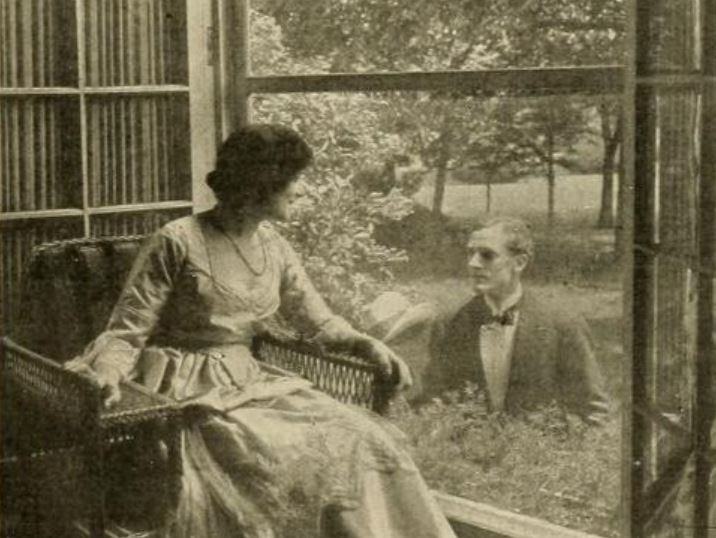
In the grand tapestry of early cinematic narratives, where melodramatic flourishes often served as the bedrock for moral contemplation, the 1915 production of Her Great Match emerges as a particularly poignant example. Penned by the insightful Clyde Fitch, whose theatrical sensibilities undoubtedly informed its dramatic arc, this film plunges us into a world where the rigid strictures of European aristocracy collide with the burgeoning ideals of American independence and individual liberty. It is a tale not merely of romance, but of profound sacrifice, economic desperation, and the lengths to which individuals will go, either for love or for self-preservation.
The narrative unfurls with the seemingly innocuous premise of Prince Adolph of Syravia, portrayed with a certain princely earnestness by Vernon Steele, embarking on a pleasure trip across the vibrant American landscape. It is here, far from the gilded cages of royal protocol, that he encounters Jo Sheldon, brought to life with captivating grace by Gail Kane. Their initial meeting, a chance encounter, blossoms into a deeper connection upon their reunion at a Charity Fete, a setting that, ironically, often underscores the very social stratifications the film seeks to dismantle. Their love story, however, is not permitted the luxury of unhindered development. Instead, it becomes a pawn in a far more venal game, orchestrated by Jo's stepmother, Mrs. Sheldon, a character whose desperation is as palpable as her moral bankruptcy, embodied by Clarissa Selwynne.
Mrs. Sheldon, mired in an insurmountable quagmire of debt, commits an act of audacious forgery, affixing Jo's signature to a promissory note. The recipient of this ill-gotten pledge is Mr. Bote, a family friend of considerable wealth, whose singular, driving ambition is to acquire the prestigious title of a Baron. Lawrence Grattan, as Bote, likely imbued the character with a blend of affable charm and ruthless pragmatism. The condition for Bote's financial assistance is nothing short of extraordinary: Jo must marry Prince Adolph, thereby compelling the royal to bestow the coveted title upon him. This intricate web of deceit immediately elevates the stakes beyond a simple romantic entanglement, positioning Jo as a sacrificial lamb on the altar of her stepmother's fiscal irresponsibility and Bote's social climbing.
The inherent conflict between love and duty, a recurring motif in tales of royalty, is further exacerbated by the intervention of the Duchess Louise, likely portrayed by Julia Hurley. She elucidates the immutable truth to Prince Adolph: his union with Jo can only ever be a morganatic marriage. For those unfamiliar with the arcane customs of European monarchies, a morganatic marriage is one between a person of royal or noble birth and a person of lesser status, where the spouse of lower rank, and any offspring, are denied any claim to the titles, privileges, or property of the higher-ranking partner. This revelation, delivered to Jo by Adolph, is met with indignant refusal. It is not merely a rejection of a diminished status, but a profound statement on her self-worth and the integrity of true partnership. This moment echoes the kind of societal pressures explored in films like The Triumph of an Emperor or even the more documentary-style The Kineto Coronation Series: Royal Progress Through London, which often showcased the grandeur of royalty while subtly hinting at its strictures.
Jo's refusal, while principled, inadvertently tightens the noose. Mr. Bote, seizing the opportunity, threatens to halt payment on the check, thereby exposing Mrs. Sheldon's forgery and condemning both Jo's father and stepmother to imprisonment. This dramatic turn thrusts Jo into an agonizing moral quandary. Unaware of the initial deception, she confronts her stepmother, and upon learning the full, sordid truth, agrees to the marriage. Her decision is not born of love for the Prince, but of a desperate, profound act of filial devotion – a sacrifice to save her family from ruin. This kind of harrowing moral choice, often driven by financial desperation, is a common thread in melodramas of the era, reminiscent of scenarios in films like A Factory Magdalen or Help Wanted, where heroines are pushed to their limits by societal pressures and economic hardship.
Meanwhile, Prince Adolph is ensnared by a cruel deception: a decoy message falsely informing him of his father, the King's, impending death. He departs immediately, leaving Jo with a solemn promise to await his return. Upon reaching Syravia, he discovers his father in robust health, the ruse exposed. In a move that speaks volumes about his character and the depth of his love for Jo, Adolph persuades his younger brother to assume the throne, effectively abdicating his birthright. This act of renunciation, a grand gesture of love over duty, sees him escape to America, determined to become an American citizen and live a life unburdened by royal obligation. It's a powerful statement, portraying a modern prince willing to shed the trappings of power for personal happiness, a stark contrast to the rigid adherence to tradition often depicted in historical epics like Quo Vadis?, where personal desires often clash with grander, imperial destinies.
The reverberations of these decisions are swift and far-reaching. Mrs. Sheldon, having secured her ill-gotten gains, absconds to a foreign port, a fitting end for a character driven by pure self-interest. Jo, seeking solace and perhaps a fresh start, retreats to the country, finding employment at her father's factory. The King, understandably incensed by his son's unprecedented abdication, dispatches one of his trusted men to America. The royal servant's mission: to persuade Adolph to return and, crucially, to prevent his marriage to Jo. This intervention introduces a new layer of conflict, transforming the personal drama into an international incident, albeit on a micro-scale. This kind of external threat, attempting to thwart true love, adds a thrilling dimension, reminiscent of adventure narratives like I tre moschettieri, where protagonists face formidable opposition.
The King's servant, arriving in America ahead of Prince Adolph, ingeniously secures a position within Mr. Sheldon's factory, a perfect vantage point for his machinations. However, his interference takes a sinister turn. In an attempt to further his mission, perhaps by creating a situation that would force Jo or Adolph's hand, he inadvertently causes a serious accident that leaves Jo gravely injured. This dramatic twist, a sudden plunge into peril, injects a palpable sense of urgency and danger into the narrative. The servant's subsequent attempt to escape is thwarted, leading to his capture and severe punishment, thus removing the final external obstacle to the lovers' happiness. This sudden, violent turn of events, where an antagonist's actions lead to physical harm, aligns with the more extreme melodramatic elements found in films like Vampyrdanserinden or even the darker undertones of Leben heisst kämpfen, where life itself is a struggle against adversity.
The story, in true melodramatic fashion, culminates in a joyous resolution. Jo makes a full recovery, her resilience a testament to her spirit. With all obstacles removed – the deceitful stepmother gone, the ambitious Bote neutralized (presumably by the Prince's abandonment of his title, making the 'baron' condition moot), and the royal interference quelled – Jo and Prince Adolph are finally free to unite in a marriage born of genuine affection and mutual respect. The Prince's ultimate sacrifice of his throne for love, and Jo's earlier sacrifice of her happiness for her family, underscore the film's central theme: true love and integrity ultimately triumph over material wealth, social status, and deceptive machinations. This happy ending, while predictable for the era, provides the emotional catharsis audiences craved, affirming the power of individual choice and the pursuit of happiness. It's a narrative arc designed to leave viewers with a sense of justice served and love victorious, a common, comforting trope in early cinema.
The performances, particularly by Gail Kane as Jo and Vernon Steele as Prince Adolph, would have been central to conveying the emotional weight of this complex narrative. Silent film acting, with its reliance on exaggerated gestures, facial expressions, and title cards, demanded a particular kind of artistry. Kane, known for her expressive eyes and delicate portrayal of strong women, would have adeptly navigated Jo's journey from innocent American girl to a woman burdened by impossible choices and ultimately, triumphant love. Steele's portrayal of a prince torn between duty and desire would have resonated with audiences, showcasing the universality of such dilemmas regardless of social standing. The supporting cast, including Lawrence Grattan, Ned Burton, Clarissa Selwynne, and Julia Hurley, would have contributed significantly to the film's emotional landscape, each embodying their respective roles in driving the plot forward and creating compelling conflicts.
Beyond its immediate narrative, Her Great Match offers a fascinating glimpse into the social anxieties and aspirations of the early 20th century. The film subtly critiques the rigid class structures of European royalty, presenting Prince Adolph's abdication as a liberation rather than a loss. It champions American ideals of self-determination and the pursuit of happiness over inherited titles and archaic traditions. Jo's initial refusal of a morganatic marriage, and Adolph's ultimate decision to become an American citizen, are powerful symbolic acts. They speak to a nascent cultural shift, where the allure of Old World aristocracy was beginning to yield to the democratic promise of the New World. This theme, of an outsider challenging established norms, is often seen in other films of the period, albeit in different contexts, such as the social commentary within The Curious Conduct of Judge Legarde, which explores moral boundaries.
Furthermore, the film's exploration of financial desperation leading to moral compromise, as seen in Mrs. Sheldon's actions, was a highly relevant topic for audiences grappling with economic uncertainties. The stark contrast between Bote's desire for a title and Adolph's willingness to abandon one highlights the differing values at play. It's a compelling study of human motivation: some seek to ascend the social ladder through any means necessary, while others prioritize personal integrity and authentic connection above all else. This dichotomy provides a rich subtext that elevates Her Great Match beyond a simple romance into a more nuanced social commentary.
The dramatic climax, involving the King's servant and Jo's accident, serves not only as a plot device to resolve lingering conflicts but also as a final test of the protagonists' resolve. It's a reminder that even when grand decisions are made, external forces can still threaten happiness. The swift justice meted out to the servant reinforces the idea that malevolent interference will not prevail. Ultimately, Her Great Match is a testament to the enduring appeal of a love story that defies convention, triumphs over adversity, and reaffirms the power of individual courage. It’s a classic example of how early cinema, through compelling characters and intricate plots, could explore complex themes of love, duty, sacrifice, and the eternal struggle between personal desires and societal expectations. The film, despite its age, continues to resonate, reminding us that the human heart, when truly invested, can conquer even the most formidable of obstacles, be they royal decrees or the insidious machinations of desperate individuals. It's a narrative that, for its era, was both grand in scope and intimate in its emotional core, leaving a lasting impression on the cinematic landscape.
IMDb 5.9
1931
Community
Log in to comment.