DbcultAccessing Vault...
Cult Review
Senior Film Conservator
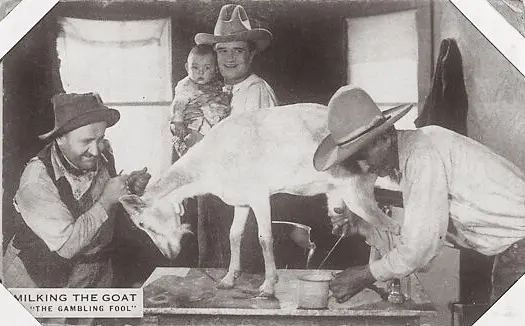
Short answer: yes, but with significant caveats. The Gambling Fool, a silent Western from 1920, offers a fascinating glimpse into early cinematic storytelling, particularly for those with an academic interest in the genre's formative years or a deep appreciation for the unique performance styles of the era. This film works because it distills the essence of a classic Western narrative into its purest form, delivering clear heroes, villains, and a compelling, if somewhat simplistic, moral arc.
It fails because its pacing and melodramatic flourishes, while standard for its time, can feel alienating to viewers accustomed to contemporary narrative rhythms and subtlety. You should watch it if you're a film historian, a silent film enthusiast, or someone curious about the foundational elements of the Western. However, if you're seeking fast-paced action, complex character development, or modern sensibilities, this might be a tougher watch.
In the vast, untamed landscape of early American cinema, the Western emerged as a quintessential genre, defining heroes, villains, and the very concept of frontier justice. J.P. McGowan’s The Gambling Fool stands as a testament to these foundational years, a film that, despite its age and the limitations of its medium, manages to encapsulate many of the tropes that would define the genre for decades to come. It’s a narrative steeped in familiar ground: the lone arrival, the high-stakes game, the disputed land, and the eventual triumph of good over malevolent forces.
The film, starring Otto Meyer as the titular 'gambling fool' Jack Stanford, along with Ruth Dwyer as the earnest Mary Hartford, unfolds with a directness characteristic of its era. This isn't a film that revels in ambiguity or moral gray areas. Instead, it paints its characters in broad strokes, relying on the visual language of silent cinema – exaggerated gestures, emotive facial expressions, and expository intertitles – to convey its story.
What's particularly striking about The Gambling Fool is its unabashed embrace of melodrama. Every plot point, every character reaction, is amplified for maximum emotional impact. While this might strike a modern viewer as overwrought, it's crucial to understand this within the context of 1920s filmmaking. Audiences of the time expected heightened drama, clear-cut morality, and a definitive resolution, all of which this film delivers with unwavering commitment.
The plot, which sees Stanford arrive, win a ranch, inadvertently become entangled in a murder plot, and then take on the care of an orphaned child, is a whirlwind of narrative convenience. Yet, it’s precisely this kind of rapid-fire plotting that kept early audiences engaged, moving from one dramatic incident to the next without lingering too long on logical inconsistencies. It’s a narrative built on momentum, not meticulous realism.
The performances in The Gambling Fool are a masterclass in silent acting, an art form that prioritizes physical expressiveness and clarity of emotion over nuanced dialogue. Otto Meyer, as Jack Stanford, embodies the archetypal Western hero: rugged, stoic, yet possessing an underlying moral compass. His portrayal is less about internal conflict and more about external resolve. When he discovers Morgan's child, his sudden shift from reckless gambler to protective guardian is conveyed through a softening of his posture and a subtle, yet clear, change in his gaze, a testament to the power of non-verbal communication.
Ruth Dwyer, as Mary Hartford, brings a necessary blend of vulnerability and nascent strength to her role. Her initial suspicion of Stanford, conveyed through narrowed eyes and a stiff posture, gradually gives way to trust and affection. This transformation is pivotal, and Dwyer executes it effectively, allowing the audience to witness her character's internal journey primarily through her evolving body language and facial expressions. The moment she realizes Stanford's innocence, after Cass kills Fitzroy, is a particularly strong example, where a series of quick cuts between her shocked face and the unfolding crime convey a dramatic shift in her understanding.
The villains, Cass (Harry Northrup) and Fitzroy (Franklyn Farnum), are painted with equally broad, yet effective, strokes. Northrup's Cass is a menacing presence, his sneering demeanor and aggressive physicality leaving no doubt as to his nefarious intentions. Farnum's Fitzroy, while perhaps less overtly threatening, still conveys a sense of smarmy opportunism. Their on-screen clash, leading to Fitzroy's demise, is a visceral display of silent film villainy, a brutal brawl where every punch and struggle is amplified for dramatic effect.
One might argue that these performances lack the psychological depth we expect today, and that's a fair assessment. However, to judge them by modern standards is to miss their inherent artistry. These actors were tasked with conveying entire emotional landscapes without uttering a single word, relying solely on their bodies and faces. Their work here is a valuable historical document, showcasing the techniques that captivated audiences a century ago.
J.P. McGowan, serving as both writer and director, crafts The Gambling Fool with a clear vision of what a Western should be. His direction is straightforward, focusing on efficient storytelling and clear visual communication. The action sequences, while not as elaborate as later Westerns, are competently staged, particularly the climactic siege on Stanford's ranch. McGowan understands the power of a well-framed shot to convey tension, even if the camera itself remains largely static.
The cinematography, though basic by today's standards, effectively utilizes the stark beauty of the desert landscape. Wide shots establish the isolation and grandeur of the West, placing the characters within a vast, often unforgiving environment. The use of natural light is evident, giving the film an authentic, sun-baked feel. While there are no complex tracking shots or elaborate camera movements, the framing is often purposeful, particularly in close-ups that highlight the actors' expressive faces during moments of high drama.
Consider the scene where Stanford first discovers Morgan's child. The camera lingers on the child's vulnerability and then cuts to a close-up of Meyer's face, allowing the audience to witness the internal shift from detachment to protectiveness. This simple yet effective technique is a hallmark of early cinema's ability to communicate complex emotional states without dialogue.
McGowan's direction also shines in his handling of pacing. The film moves with a briskness that prevents it from feeling bogged down, a crucial element for silent features that relied on visual momentum. The narrative progresses from incident to incident with a sense of urgency, ensuring that audience attention never wanes. This is a film that understands the value of concise storytelling, even if that conciseness sometimes sacrifices deeper character exploration.
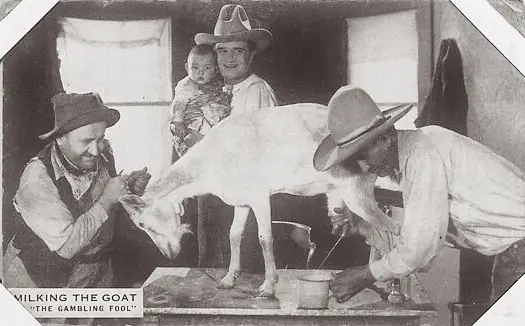
The pacing of The Gambling Fool is remarkably swift, a characteristic often found in early cinema where stories were frequently adapted from popular dime novels or stage plays, demanding a rapid progression of events. There's little time wasted on introspection; the plot barrels forward, driven by external conflicts and dramatic revelations. This makes for an engaging watch, particularly if one adjusts to the rhythm of silent film. The intertitles, while sometimes lengthy, serve to quickly advance the narrative or clarify motivations, acting as a direct conduit between the filmmaker and the audience.
The tone is undeniably melodramatic, which is both a strength and a potential hurdle for modern viewers. Villains are unambiguously evil, heroes are morally upright (despite their initial 'gambling fool' moniker), and emotions are writ large. There’s a stark clarity to the moral universe presented, where justice, though sometimes delayed, is ultimately served. This unwavering commitment to a good-vs-evil dynamic is part of the film’s charm, offering a comforting narrative simplicity that can be refreshing in an age of moral ambiguity.
An unexpected observation I made while watching was how effectively the film uses the trope of the 'innocent child' to catalyze character development. The child isn't just a plot device; its presence humanizes Stanford almost instantly, forcing him to confront a responsibility far greater than any poker game. This subtle shift, communicated entirely through action and reaction, is surprisingly effective and adds a layer of emotional depth that might otherwise be missing from a more straightforward adventure narrative.
Compared to other silent Westerns like Hitchin' Posts or even earlier, more experimental works, The Gambling Fool feels remarkably polished in its narrative delivery. While it doesn't break new ground stylistically, it executes its chosen style with confidence and clarity, proving that McGowan understood his audience and the power of a compelling story, even without spoken words.
At its heart, The Gambling Fool explores classic Western themes: the imposition of law and order in a lawless land, the possibility of redemption, and the forging of new families amidst hardship. Jack Stanford's journey from a solitary gambler to a protector and eventually a family man is the central arc. His initial recklessness is contrasted with his later, almost accidental, heroism. This transformation isn't forced; it's a natural evolution prompted by circumstance and his inherent decency.
The theme of justice is paramount. The villains, Cass and Fitzroy, represent the chaotic, self-serving elements of the frontier, willing to commit murder for personal gain. Their eventual capture by the sheriff's posse, after Stanford and Mary bravely defend their home, reaffirms the idea that even in the wild West, a form of natural justice will prevail, often aided by courageous individuals. This aligns with the moralistic underpinnings of many silent films, where evil rarely went unpunished.
Perhaps the most endearing theme is the formation of an unconventional family. Stanford, the orphaned child, and Mary Hartford, the child's aunt, come together not through traditional means but through shared adversity and mutual respect. This speaks to the frontier spirit of adaptability and the creation of community in harsh environments. It’s a powerful message that transcends the silent film era, resonating with anyone who believes in chosen family and the strength found in unity.
I strongly believe that the film's strength lies not just in its action, but in its subtle championing of these domestic virtues within a rugged setting. It’s a bold statement for a Western to suggest that a man’s true worth isn't just in his quick draw or his poker face, but in his capacity for care and commitment. This nuanced portrayal of masculinity, even in a century-old film, is genuinely thought-provoking.
"The Gambling Fool reminds us that the foundational myths of the West weren't just about gunslingers and gold, but also about the quiet, often accidental, acts of heroism that built communities and forged new destinies."
Absolutely, for the right audience. The Gambling Fool is a valuable artifact of cinematic history, offering insights into the storytelling conventions, acting styles, and thematic concerns of early 20th-century American film. It provides a direct lineage to the Westerns that would follow, showcasing the nascent stages of a genre that would come to define Hollywood.
For film students, historians, and enthusiasts of silent cinema, this film is a must-see. It’s an accessible example of silent film narrative, without the experimental flourishes of some contemporaries, making it a good entry point. Its straightforward plot and clear characterizations make it relatively easy to follow, even for those unaccustomed to the format.
However, for the casual viewer expecting modern pacing, complex dialogue, or CGI spectacle, it will likely feel slow and perhaps even quaint. The lack of spoken dialogue, reliance on intertitles, and the highly theatrical acting style demand a different kind of engagement, one that requires patience and an open mind. It's a film that asks you to meet it on its own terms, not the other way around.
Ultimately, its worth is subjective, but its historical significance is undeniable. It’s a window into a bygone era of filmmaking, a testament to the enduring power of simple, compelling stories told with conviction.
The Gambling Fool is more than just a relic; it's a vibrant, if aged, piece of cinematic history that still holds narrative power. While it won't appeal to every modern sensibility, its commitment to classic storytelling, its earnest performances, and its foundational role in the Western genre make it a valuable watch for those willing to engage with its unique charm. It’s a film that reminds us where many of our beloved cinematic tropes originated, presented with an unpretentious sincerity.
It’s a film that doesn't just tell a story; it shows us how stories used to be told, offering a crucial perspective on the evolution of film. My final verdict is that while it may not be a universal recommendation, for the discerning viewer, The Gambling Fool is a rewarding experience, a small but significant piece of the cinematic puzzle that deserves to be seen and understood.
IMDb —
1922
Community
Log in to comment.