DbcultAccessing Vault...
6.3/10
Senior Film Conservator
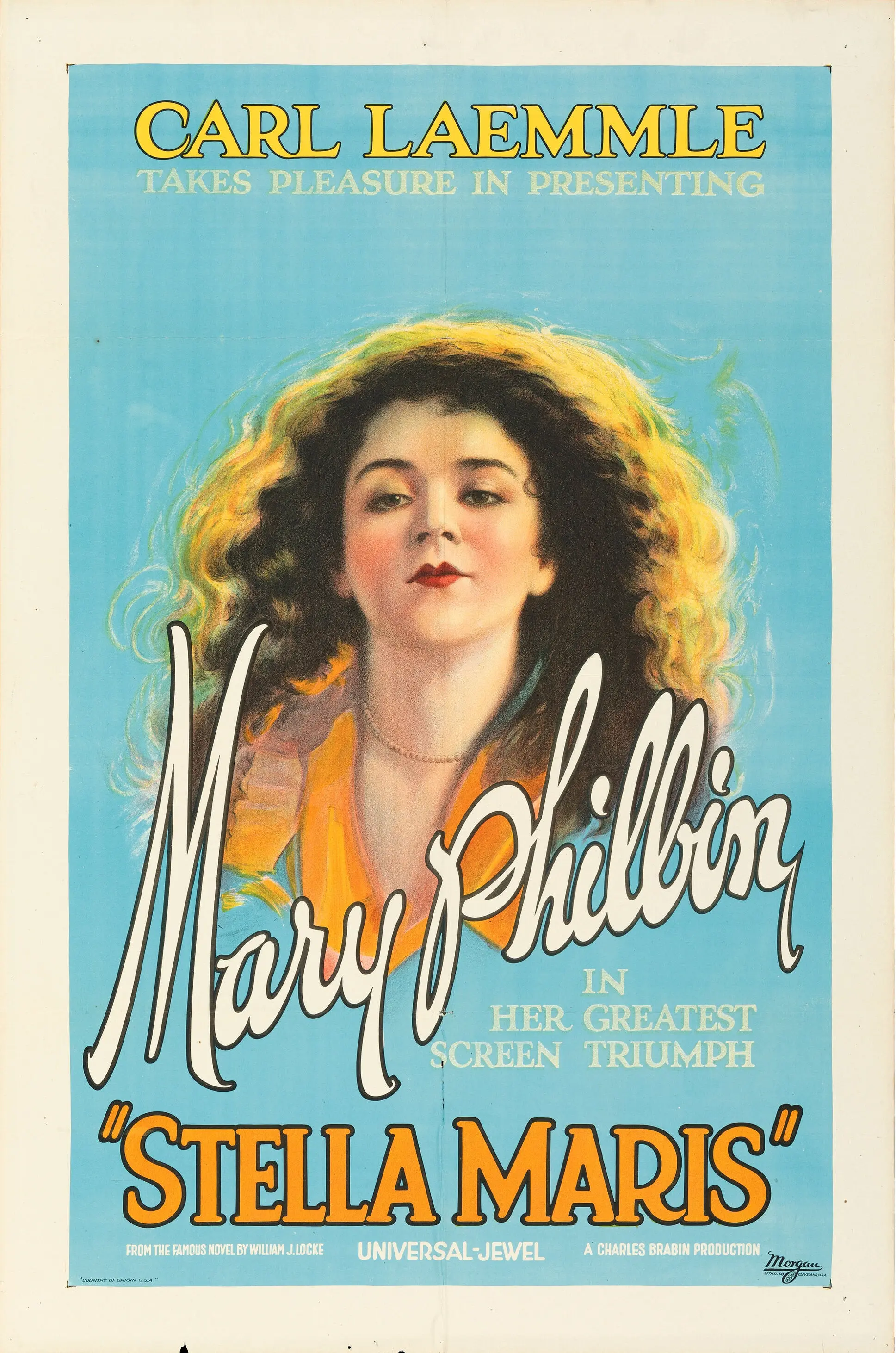
A definitive 6.3/10 rating for a film that redefined the boundaries of cult cinema. Stella Maris remains a cornerstone of transgressive art.
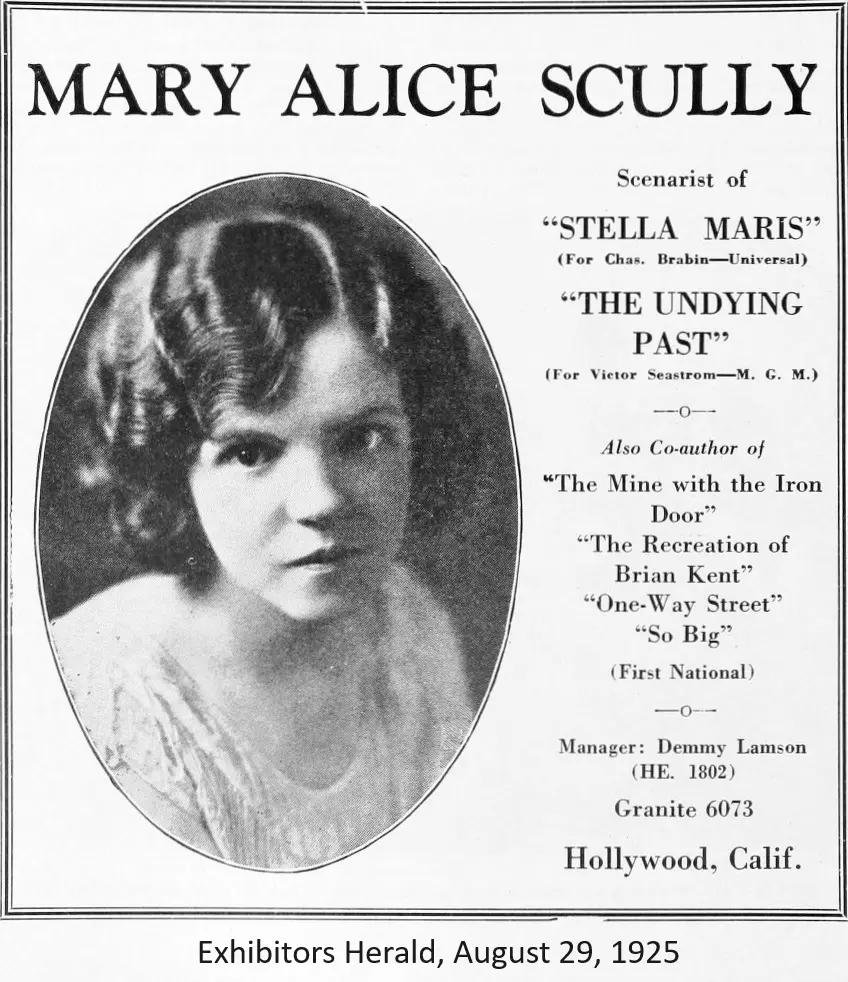
In the shimmering tapestry of early cinema, few narratives captured the intricate dance of human emotion and societal stratification with the profound poignancy of Stella Maris (1925). This silent era gem, penned by the collaborative talents of Charles Brabin, William J. Locke, and Mary Alice Scully, transcends a mere plot summary, evolving into a penetrating examination of love's myriad forms, the brutal realities of class disparity, and the ultimate, often devastating, consequences of selfless devotion. It is a film that, nearly a century after its premiere, continues to resonate, challenging viewers to contemplate the arbitrary cruelties of fate and the redemptive power of compassion.

The narrative unfurls with the introduction of Stella Maris, portrayed with ethereal grace, a young woman whose existence is a paradox of privilege and confinement. Born into an aristocratic lineage, she is simultaneously blessed with opulent surroundings and cursed by a crippling physical condition. Her world, a meticulously crafted idyll of gardens and rustic walks within a grand castle, is a testament to the tender solicitude lavished upon her. This insulated reality is further shaped by her two constant companions: Walter Herold and John Risca. These figures are not just friends but architects of her imagination, weaving daily tapestries of make-believe and fancy, ensuring her spirit remains unburdened by the limitations of her body. Their devotion paints a vivid picture of a love so profound it seeks to shield its object from every conceivable sorrow, creating a sanctuary where Stella can thrive in blissful ignorance of the harsher truths beyond her gilded cage.
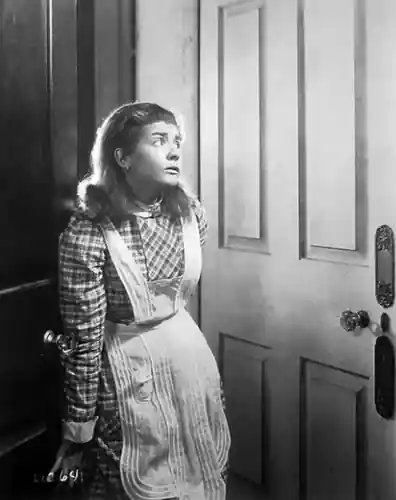
Parallel to Stella's sheltered existence, the film introduces us to a starkly contrasting reality, embodied by Unity Blake, a character whose life is a harrowing tableau of neglect and abuse. Unity is a 'slavey,' a term that in itself speaks volumes about her social standing and the dehumanizing conditions she endures. Her tormentor is John Risca's estranged wife, a woman whose malevolence is so profound it lands her in jail for three years. Upon his wife's incarceration, John assumes the reluctant guardianship of Unity. This act, initially born of obligation, slowly evolves into a profound sense of responsibility and, eventually, a deep, protective affection. Unity's journey from a cowering, traumatized child to a devoted, albeit tragically misguided, young woman forms the emotional core of the film's exploration of social injustice and the capacity for human connection to blossom in the most barren of circumstances. The stark juxtaposition of Stella's idyllic, albeit physically constrained, world with Unity's brutalized, impoverished existence serves as a potent commentary on the vast chasm of class and privilege in society, a theme that echoes the social conscience present in films like Man and Wife, which similarly explores the inequities and moral dilemmas arising from societal divisions.
The narrative takes a pivotal turn when Stella experiences a miraculous transformation. A great physician, a figure almost mythical in his efficacy, intervenes, and Stella is cured. This restoration of her physical faculties not only liberates her from her infirmity but also opens her eyes to a world she had only imagined. It is in this newfound freedom that John Risca, witnessing her blossoming, declares his love for her. His confession is not merely a romantic gesture but the culmination of years of unspoken devotion, a profound yearning brought to the surface by her radiant vitality. However, fate, ever a capricious master, interjects with cruel timing. John's wife, her prison sentence concluded, is released, returning to disrupt the fragile happiness that has begun to coalesce around Stella and John. Her vindictive spirit, far from being tempered by incarceration, is sharpened by jealousy and resentment. She confronts Stella, cruelly revealing the inescapable truth: John is not free to love her. This revelation shatters Stella's nascent dreams, plunging her back into a different kind of confinement—that of unrequited love and societal constraint.
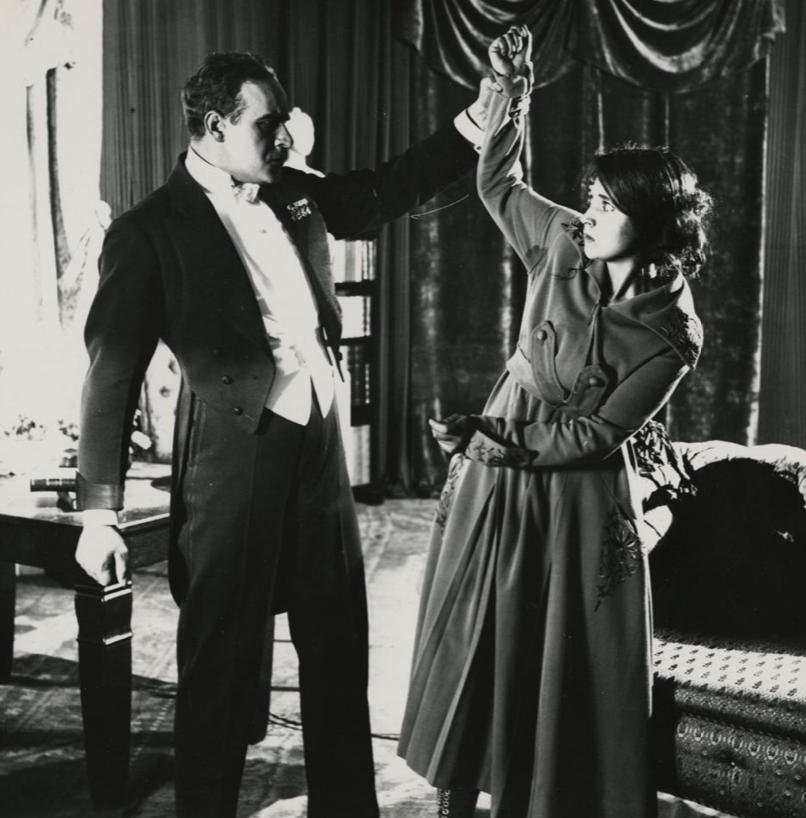
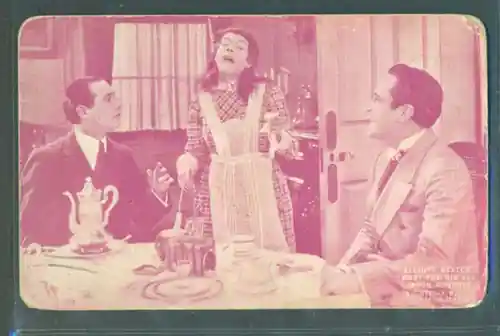
The ensuing emotional maelstrom sets the stage for the film's tragic climax. Unity Blake, who has silently observed John's devotion to Stella and has, in turn, developed an unwavering loyalty and affection for John, perceives his wife as the insurmountable obstacle to his happiness. In a desperate, misguided act of ultimate devotion, Unity takes the life of John's wife, believing she is clearing the path for John and Stella. Her act of violence, born of a twisted sense of loyalty and a deep-seated desire to protect the man who offered her kindness, is immediately followed by her own suicide. This double tragedy is a gut-wrenching moment, highlighting the devastating consequences of extreme devotion and the profound impact of a life lived on the fringes of society, where moral compasses can become distorted by trauma and fierce attachment. Unity's desperate self-sacrifice, while horrifying, also underscores the film's exploration of love's darker, more obsessive manifestations, a theme explored with different nuances in melodramas of the era. The sheer weight of this tragedy forces John to confront the true nature of Stella's heart. He comes to realize that Stella's affections, though deeply appreciative of his unwavering care, are truly directed towards Walter Herold. In a final, profoundly selfless act, John gives his blessing to their marriage, choosing Stella's happiness over his own desires, thereby completing a cycle of sacrifice that defines the film's emotional landscape.
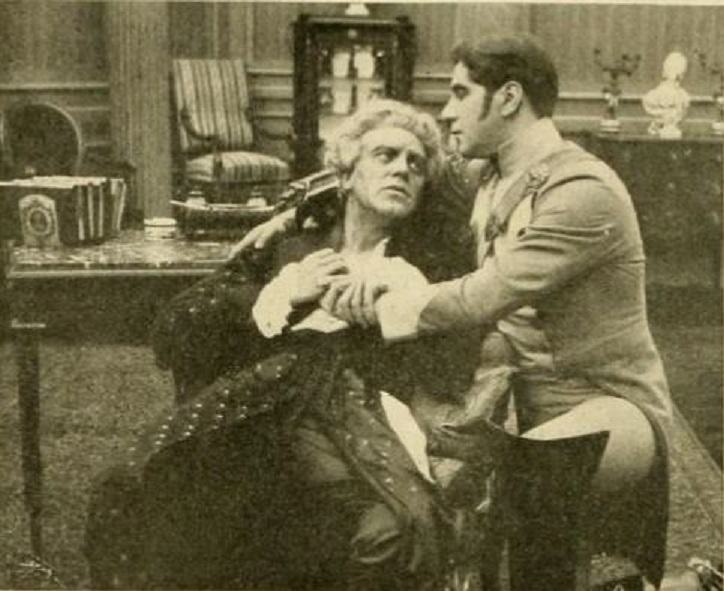
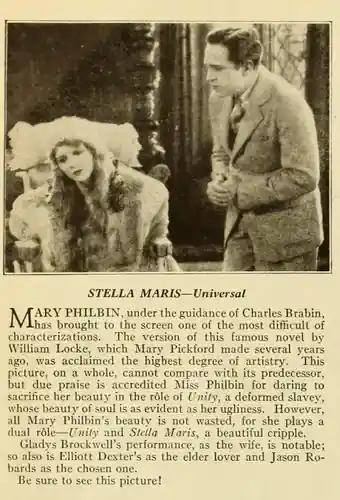
The performances in Stella Maris are nothing short of extraordinary, a testament to the power of silent acting to convey profound emotion without spoken dialogue. Aileen Manning, though perhaps in a supporting role, contributes to the film's emotional texture. Gladys Brockwell, as John's malevolent wife, delivers a chilling portrayal of vindictive cruelty, her every gesture and facial expression exuding a palpable sense of menace. Robert Bolder and Mary Philbin, in their respective roles, contribute to the ensemble, grounding the narrative in believable human interactions. Lillian Lawrence and Phillips Smalley, as integral parts of the supporting cast, help to flesh out the world of the film, adding depth to the aristocratic setting and the societal backdrop. Jason Robards Sr. and Elliott Dexter, as John Risca and Walter Herold respectively, embody the complex male figures caught in Stella's orbit. Robards Sr. imbues John with a quiet intensity, conveying his deep love and eventual self-sacrifice with remarkable subtlety. Dexter, as Herold, projects a different kind of devotion, one perhaps less burdened by the world's harshness, but equally sincere. The lead actress, whose name is not explicitly provided in the cast list but is central to the film, would have carried the emotional weight of Stella's transformation, from crippled innocence to a woman navigating a complex emotional landscape, a performance that undoubtedly required immense grace and expressive power. The success of silent films hinged on the ability of actors to communicate inner turmoil and joy through movement, gesture, and particularly, the eyes, and Stella Maris stands as a masterclass in this art form.
Cinematically, Stella Maris employs the visual language of its era to magnificent effect. The direction, likely overseen with a keen eye for dramatic impact, utilizes striking contrasts in its mise-en-scène. Stella's castle, with its sprawling gardens, is often bathed in soft, ethereal light, emphasizing its dreamlike quality and her sheltered existence. In stark opposition, the environments inhabited by Unity Blake are likely rendered with harsher, grittier realism, perhaps employing shadows and stark angles to underscore her bleak circumstances. Close-ups would have been used judiciously to capture the nuances of the actors' facial expressions, conveying the unspoken anguish, longing, and despair that are central to the narrative. The editing would have been paced to build suspense and emotional resonance, allowing moments of quiet reflection to breathe before plunging into dramatic confrontations. The use of intertitles, a crucial element of silent cinema, would have served not only to advance the plot but also to provide poetic commentary, enhancing the film's literary aspirations. While specific details of the cinematography are not provided, one can infer that the visual storytelling would have been paramount, relying on evocative imagery and symbolic framing to convey the film's profound themes. This visual artistry, characteristic of the period, elevated melodrama into a powerful form of social commentary, much like other thoughtful productions of the time that used visual cues to highlight class distinctions or moral quandaries.
Thematic depth is where Stella Maris truly shines. At its core, it is a story about the multifaceted nature of love. We witness the protective, almost paternal love of John and Walter for Stella, a love so pure it seeks to create a perfect world for her. Then there is John's romantic love for Stella, a powerful, consuming emotion that eventually forces him into a heartbreaking act of renunciation. Most complex, perhaps, is Unity's love for John—a fierce, possessive loyalty born from desperation and gratitude, leading to tragic extremism. The film also starkly illuminates the vast disparities of class and privilege. Stella's life of opulent innocence stands in brutal contrast to Unity's existence of abject suffering. This social commentary is not merely incidental; it is integral to the plot, driving the motivations and actions of the characters. The film probes questions of morality and justice: Is Unity's act unforgivable, or is it a desperate cry from a soul damaged by societal neglect? Can true happiness be built on the foundation of another's suffering? The story of Stella Maris, in its exploration of these intricate human dilemmas, echoes the timeless struggles found in literature and art, ensuring its continued relevance far beyond its initial release. It’s a narrative that compels us to ponder the inherent unfairness of life and the extraordinary lengths to which individuals will go for love, devotion, or even a semblance of justice, however distorted.
In conclusion, Stella Maris (1925) is far more than a period piece; it is a timeless exploration of the human condition, rendered with the expressive power unique to silent cinema. Its narrative, rich with emotional complexity and social commentary, weaves together disparate lives into a tapestry of love, sacrifice, and profound tragedy. The film's enduring power lies in its unflinching portrayal of characters caught in the vortex of circumstances beyond their control, forced to make choices that reverberate with devastating consequences. From Stella's journey of physical and emotional awakening to Unity's desperate, misguided acts of devotion, and John's ultimate selfless surrender, the film crafts a narrative that is both heartbreaking and deeply thought-provoking. For cinephiles and those interested in the social and emotional landscape of early 20th-century America, Stella Maris remains an indispensable viewing experience, a powerful reminder of cinema's capacity to transcend time and speak to the universal truths of the human heart. It’s a film that leaves an indelible mark, prompting reflection on the cost of love and the indelible scars left by societal indifference.
IMDb 6.2
1916
Community
Log in to comment.