DbcultAccessing Vault...
6.2/10
Senior Film Conservator
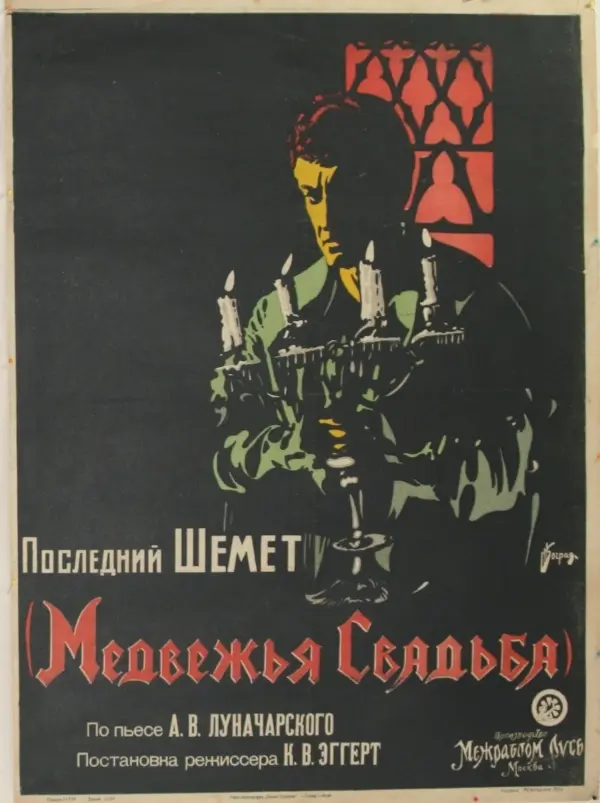
A definitive 6.2/10 rating for a film that redefined the boundaries of cult cinema. The Bear's Wedding remains a cornerstone of transgressive art.
In the annals of silent cinema, few works evoke the same sense of primordial dread and psychological complexity as The Bear's Wedding (1925). Emerging from the burgeoning Soviet film industry—an era more frequently associated with the montage theories of Eisenstein or the industrial fervor of Vertov—this film stands as a startling, Gothic outlier. Directed by Konstantin Eggert and Vladimir Gardin, it is an adaptation of Prosper Mérimée's novella Lokis, yet it transmutes its literary source into a phantasmagoria of atavistic fear and aristocratic decay that remains hauntingly relevant nearly a century later.
The 1920s were a period of radical experimentation, where the cinematic medium was being forged in the fires of revolution. However, while some filmmakers sought the future in the gears of the machine, Eggert looked backward into the shadows of the 19th-century Lithuanian wilderness. The film's narrative architecture is built upon a foundation of psychological trauma. The opening sequence, depicting the bear attack on the Countess, is not merely a plot device; it is a visceral interrogation of the fragility of the human mind. Unlike the lighthearted escapades found in All Wet, this film plunges the viewer into a world where the environment itself is predatory.
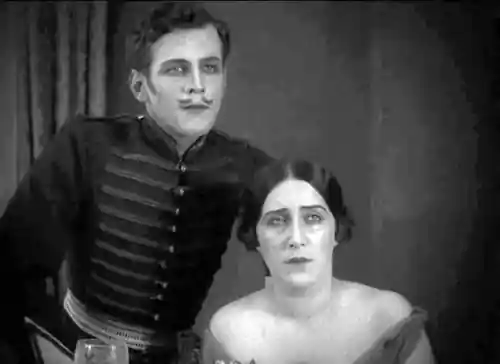
The script, co-written by the People's Commissar for Education, Anatoli Lunacharsky, imbues the horror with a socio-political subtext. The 'bear' is not just a biological anomaly but a metaphor for the inherent savagery of the old world—the nobility whose refinement is but a mask for a more ancient, brutal dominance. This thematic depth distinguishes the film from more conventional melodramas of the period, such as The Chorus Lady, which, while charming, lacks the existential weight of Eggert's vision.
Konstantin Eggert, who also portrays Count Casimir, delivers a performance of remarkable nuance. He navigates the duality of his character with a restraint that makes the eventual outbursts of bestiality all the more jarring. Casimir is a man caught between two worlds: the Enlightenment values of his education and the dark, thumping heart of the forest that calls to his blood. His performance is a masterclass in physical acting, utilizing subtle shifts in posture and gaze to suggest the lupine hunger beneath the silk cravat.
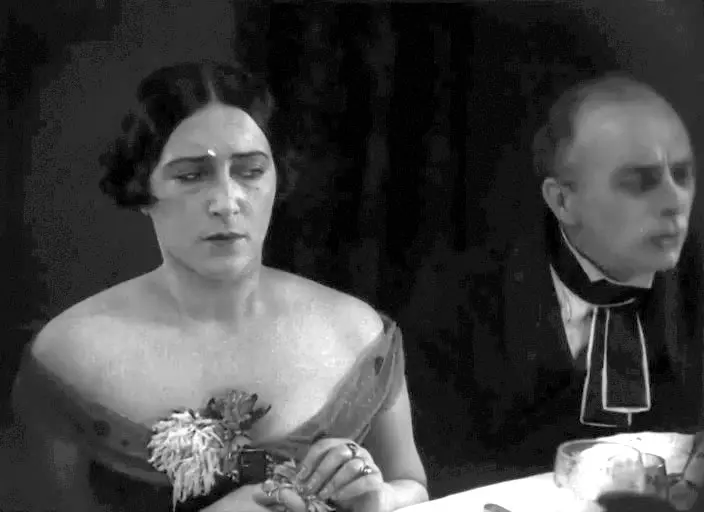
One cannot help but compare this internal struggle to the domestic tribulations seen in Madame X. While both films deal with secrets that threaten to annihilate the protagonist's social standing, The Bear's Wedding elevates the conflict to a cosmic, biological level. Where Breaking Into Society critiques the porous nature of class through satire, Eggert’s film critiques it through the lens of pathology—the idea that the 'blue blood' of the aristocracy is, in fact, tainted by a primordial rot.
Visually, the film is a triumph of lighting and set design. The ancient castle of Count Shemet is a character in its own right—a labyrinth of vaulted ceilings and deep, impenetrable shadows that seem to swallow the light. The cinematography utilizes high-contrast lighting to emphasize the protagonist's fractured psyche. It is a visual style that predates the American noir but shares its fascination with the darkness that lurks in the corners of the frame. This aesthetic sophistication is far removed from the bright, flat lighting of contemporary comedies like Smarty or the straightforward adventure of Under Crimson Skies.
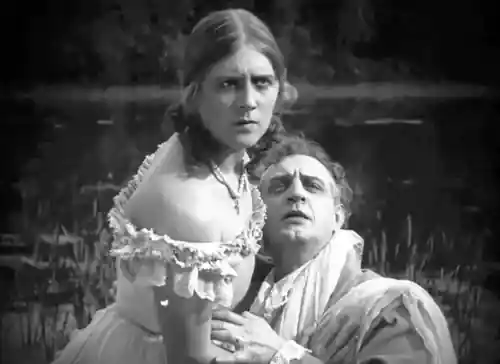
The forest sequences are particularly evocative. The Lithuanian woods are rendered not as a romantic landscape, but as a liminal space where the laws of man no longer apply. It is a setting that feels as alien and threatening as the speculative landscapes of Hello, Mars!, yet it is grounded in a folk-horror reality that makes the terror feel intimate and inevitable. The use of naturalistic textures—fur, stone, and mist—creates a sensory experience that was rare for the silent era.
The supporting cast provides a necessary counterpoint to Casimir’s descent. Gulbike Sherbatova, as the object of the Count's affection, portrays a vulnerability that is never mawkish. Her presence represents the civilization that Casimir desperately tries to cling to. Meanwhile, the elder Countess, portrayed with chilling intensity, serves as the physical manifestation of the trauma that birthed the horror. Her madness is not a loud, theatrical display but a quiet, pervasive presence that poisons the atmosphere of the castle.
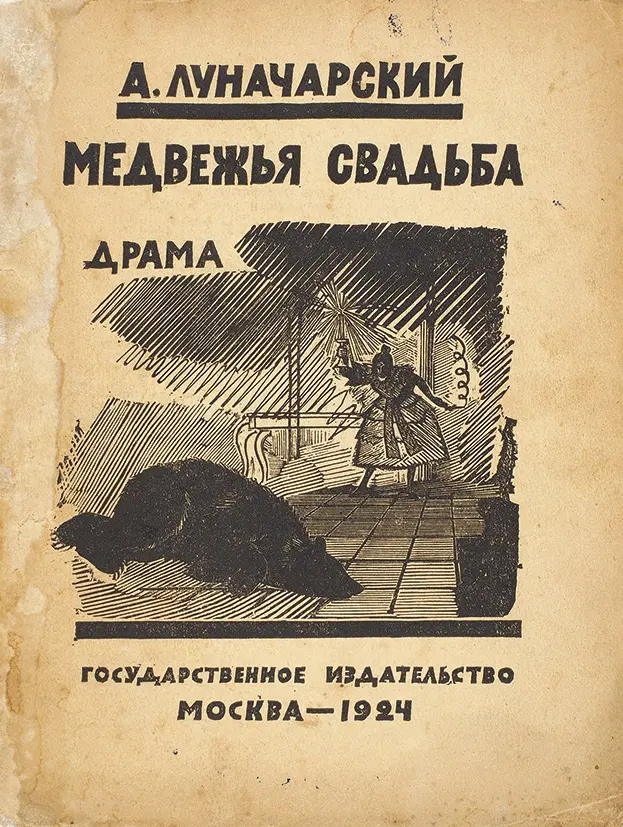
The ensemble, including Yuri Zavadsky and Boris Afonin, helps to ground the more fantastical elements of the plot in a recognizable social reality. Their interactions highlight the absurdity of the wedding festivities—a ritual of union that is destined to become a rite of blood. This tension between the social and the primal is a theme explored in Cheating the Public, though in a much more literal, economic sense. In The Bear's Wedding, the 'cheat' is the illusion of human supremacy over nature.
The film’s final act is a masterstroke of pacing and suspense. As the wedding ceremony approaches, the editing becomes more frantic, mirroring the Count’s losing battle with his instincts. The juxtaposition of the refined guests and the encroaching darkness creates a sense of dread that is almost suffocating. When the inevitable happens, it is handled with a restraint that allows the viewer's imagination to fill in the most gruesome details—a technique that modern horror directors would do well to study.
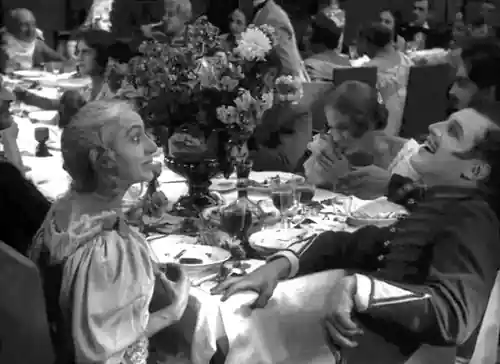
This climax is a stark contrast to the resolution of more traditional silent dramas like Unclaimed Goods or Reno or Bust, where conflicts are often neatly tied up. In The Bear's Wedding, there is no easy resolution. The 'wedding' is a permanent union with the beast, a final surrender to the pathology that was set in motion years before. It leaves the audience with a sense of lingering unease, a feeling that the bear is never truly gone, but merely waiting in the next shadow.
Comparing The Bear's Wedding to other films of the era reveals its unique position. While Hemsöborna explores the rugged life of the archipelago and Ever Since Eve deals with contemporary social mores, Eggert's film delves into the timeless, the archetypal, and the grotesque. It even stands apart from the exoticism of King Tut-Ankh-Amen's Eighth Wife, which uses the 'other' for spectacle; here, the 'other' is the self.
The film also serves as a fascinating precursor to the Universal Monsters of the 1930s. One can see the DNA of The Wolf Man and Dracula in the way Eggert handles the theme of the cursed lineage. Yet, there is a uniquely Russian/Soviet flavor to this Gothicism—a bleakness and a focus on the psychological toll of history that is entirely its own. It lacks the maritime optimism of Save the Ship or the whimsical mischief of Felix Puts It Over, choosing instead to dwell in the uncomfortable reality of our own animal nature.
The Bear's Wedding is a challenging, evocative, and deeply atmospheric work that deserves a prominent place in the pantheon of early horror. Its blend of high-society melodrama and visceral folklore creates a unique cinematic experience that still has the power to unsettle. The collaboration between Eggert, Gardin, and Lunacharsky produced a film that is as intellectually stimulating as it is visually arresting. It is a reminder that the monsters we fear most are not those that lurk in the woods, but those that we carry within us, born of trauma and nurtured by the very structures of civilization that claim to protect us.
For the modern viewer, the film offers more than just historical curiosity; it provides a window into a time when cinema was discovering its power to explore the darkest recesses of the human condition. It is a journey into the heart of darkness that remains as potent and haunting as the day it was first projected onto a screen in 1925.
IMDb —
1919
Community
Log in to comment.