DbcultAccessing Vault...
Cult Review
Senior Film Conservator
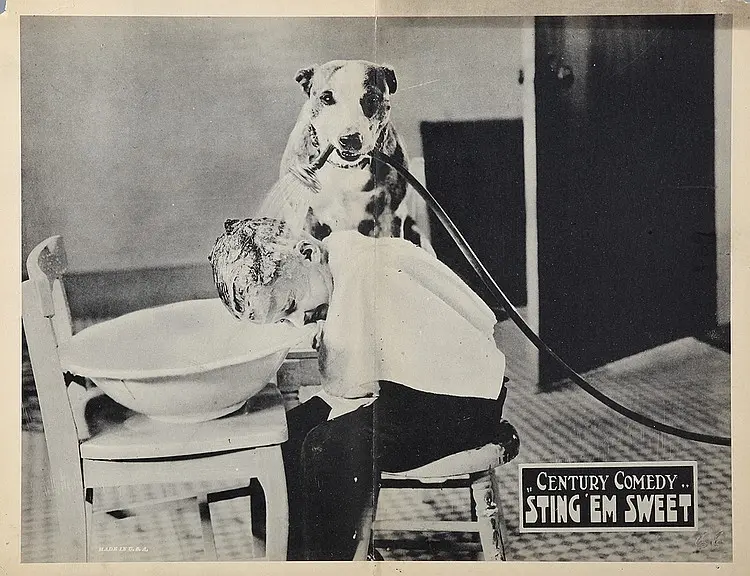
When *Sting 'Em Sweet* rolls onto the screen, it does so with the swagger of a silent-era prankster, inviting the audience into a world where romance is less a tender waltz and more a slapstick obstacle course. The film’s protagonist, Jackie (portrayed by the charismatic Jack Earle), is not merely a mischievous youth; he is a conduit for the film’s broader commentary on the performative nature of love in the Roaring Twenties. By weaponizing everyday objects—pepper, flowers, even a box of bees—Jackie transforms ordinary gestures into theatrical spectacles, thereby exposing the fragile egos of the two suitors.
Jack Earle’s performance is a masterclass in physical comedy. His expressive eyebrows and exaggerated gestures convey a spectrum of emotions without uttering a single word, a testament to the silent medium’s reliance on visual storytelling. Opposite him, Jack Cooper delivers a earnest, if slightly hapless, portrayal of one of the suitors, his earnestness amplified by the absurdity of his situation. Ena Gregory, as the sister caught between two admirers, exudes a quiet confidence; her glances convey both amusement and exasperation, anchoring the film’s chaotic energy with a steady, relatable center.
The first prank—sprinkling pepper into a lover’s bouquet—serves as a microcosm of the film’s thematic preoccupations. The scene is choreographed with meticulous timing: the suitor, oblivious, presents the bouquet; the camera lingers on the delicate petals before cutting to Jackie’s sly smile. As the pepper awakens the suitor’s nostrils, a cascade of sneezes erupts, turning a moment of intimacy into farcical disarray. This sequence not only showcases the actors’ timing but also underscores the fragility of romantic gestures when subjected to external interference.
Jackie’s escalation to a live box of bees is a bold narrative pivot that amplifies the stakes. The bees, captured in a rustic wooden crate, become a symbol of uncontrolled passion—buzzing, unpredictable, and potentially dangerous. The suitor’s reaction—a blend of terror and bewildered bravado—mirrors the audience’s own oscillation between amusement and anxiety. This set‑piece is reminiscent of the chaotic energy found in The Call of the Blood, where nature’s raw force intrudes upon human intent.
Director Herman C. Raymaker employs a series of static and panning shots that allow the physical comedy to breathe. The use of intertitles is sparing, letting the visual gags dominate. Raymaker’s framing often isolates Jackie within the composition, emphasizing his role as the puppeteer of chaos. The black‑background aesthetic, a common trait of the era’s silent films, is juxtaposed with the vivid costumes—particularly the sister’s pastel dress, which pops against the monochrome palette, drawing the viewer’s eye to the emotional core of the narrative.
Beyond its surface-level humor, *Sting 'Em Sweet* offers a subtle critique of gender dynamics in the 1920s. The sister’s agency—her silent observation and ultimate approval of Jackie’s pranks—suggests a shift from passive romantic tropes to a more empowered female presence. This aligns with the period’s broader cultural movements, where women were asserting newfound freedoms post‑suffrage. Moreover, the film’s emphasis on mischief reflects the era’s fascination with rebellion against social conventions, echoing the spirited defiance seen in The White Horseman and Waifs.
When juxtaposed with contemporaneous works such as Wild or The Strange Woman, *Sting 'Em Sweet* distinguishes itself through its relentless commitment to slapstick as a vehicle for narrative progression. While *Wild* leans into melodramatic tension and *The Strange Woman* delves into psychological intrigue, Jackie’s antics are pure kinetic energy, propelling the plot forward with each escalating gag.
The film’s influence can be traced to later comedic staples, where physical humor and romantic rivalry intertwine—think of the pratfalls in classic screwball comedies of the 1930s. Modern audiences may find the film’s pacing brisk, its humor timeless, and its commentary on love’s performative aspects surprisingly prescient. In an age where digital memes often parody romantic clichés, Jackie’s analog pranks feel both nostalgic and oddly contemporary.
*Sting 'Em Sweet* endures as a delightful artifact of silent cinema, marrying slapstick virtuosity with a nuanced subtext about affection’s fragility. Its vibrant performances, deft direction, and audacious set‑pieces coalesce into a film that is as entertaining today as it was a century ago. For scholars of early film comedy, it offers a fertile ground for exploring the interplay between visual gags and societal commentary. For casual viewers, it remains a joyous romp—pepper, bees, and all.

IMDb 7.2
1928
Community
Log in to comment.