DbcultAccessing Vault...
Cult Review
Senior Film Conservator
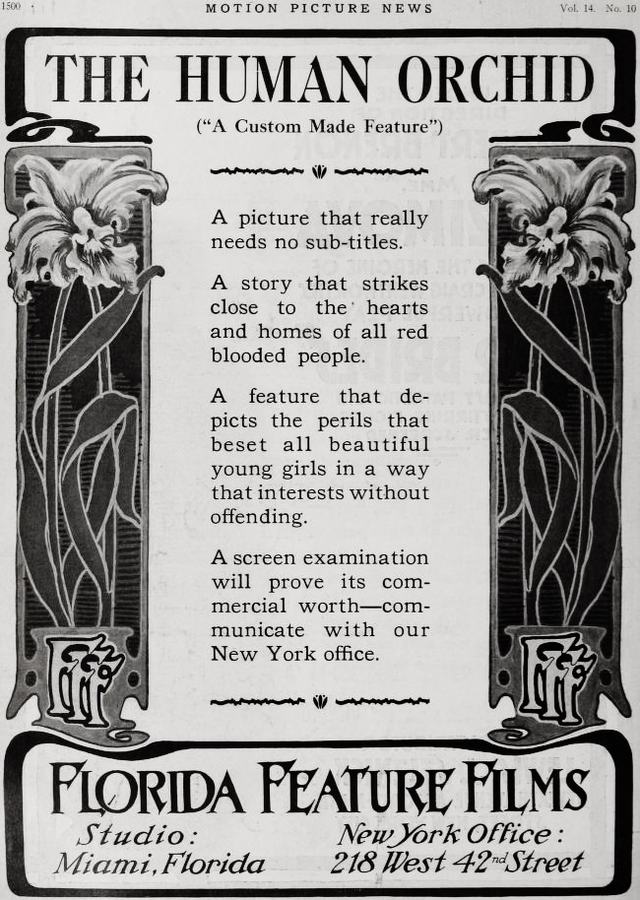
Stepping back into the hallowed halls of early 20th-century cinema, one encounters 'The Human Orchid' (1916), a silent melodrama that, despite its age, still resonates with a profound, almost unsettling relevance. Written by C.C. Field, this cinematic artifact is more than just a period piece; it’s a trenchant commentary on the commodification of beauty, the perils of societal aspiration, and the insidious nature of control masquerading as patronage. The film, a product of an era fascinated by grand gestures and moral quandaries, presents a narrative that feels both timeless and deeply rooted in its historical moment. It’s a delicate dance between innocence and corruption, a visual poem exploring the fragility of the human spirit when confronted with overwhelming forces of wealth and manipulation. The title itself is a metaphor that permeates every frame, suggesting a rare, exotic beauty cultivated in an artificial environment, vulnerable to external forces, yet possessing an inherent resilience. This isn't merely a story of a damsel in distress; it's a nuanced exploration of a woman's journey through a labyrinth of societal expectations and personal compromise, a journey that forces her to confront the true cost of her perceived good fortune. The film’s power lies in its ability to evoke deep empathy for its protagonist, Elara Vance, whose silent struggles speak volumes, making her plight universally understandable even without spoken dialogue. It's a testament to the evocative storytelling capabilities of the silent era, proving that profound human drama transcends the need for sound.
At the heart of 'The Human Orchid' lies the captivating, yet ultimately tragic, performance of Irva Ross as Elara Vance. Ross embodies the titular 'orchid' with a striking blend of ethereal beauty and understated vulnerability. Her every gesture, every flicker of expression across her face, communicates the character's journey from wide-eyed naiveté to a growing, painful awareness of her entrapment. One can observe the subtle shifts in her demeanor, from the initial wonderment at the luxuries bestowed upon her to the gradual hardening of her gaze as the emotional toll of her gilded cage becomes apparent. It’s a masterclass in silent acting, where the absence of dialogue necessitates a heightened reliance on physical presence and facial nuance. Ross manages to convey a complex emotional landscape – joy, confusion, despair, and ultimately, a nascent defiance – all without uttering a single word. Her portrayal is the anchor of the film, eliciting a visceral connection from the audience as they witness her spirit slowly being chipped away. Contrasting her delicate portrayal is Noah Beery's formidable turn as Silas Croft, the film's antagonist. Beery, a veteran of numerous silent films, brings a chilling, calculating menace to Croft. His presence alone exudes an aura of possessive power, a man who sees people as objects to be acquired and displayed. While not overtly villainous in a mustache-twirling sense, Beery’s Croft is perhaps more insidious, his control manifesting through charm and financial leverage rather than brute force. He represents the seductive danger of unchecked wealth and ambition, a force that can corrupt and diminish even the most beautiful of souls. The interplay between Ross's fragility and Beery's imposing will forms the central dramatic tension, a silent battle for Elara's very essence. The supporting cast, including Howard Hall as the principled artist Robert Thorne, Charles E. Graham, Jean Armour, Julia Calhoun, and Walter Miller, each contribute to the rich tapestry of Elara's world, whether as unwitting pawns or conscious participants in her plight, further cementing the film's powerful character dynamics.
C.C. Field's screenplay for 'The Human Orchid' is a remarkable piece of dramatic construction, weaving a complex narrative through visual storytelling that was groundbreaking for its time. The plot, while adhering to certain melodramatic conventions of the era, transcends them through its focus on psychological depth and social critique. Field’s writing, translated into compelling visuals, understands the power of symbolism – the opulent settings that become prisons, the lavish gifts that carry invisible chains, the very 'orchid' metaphor extending to the fragility of female agency in a patriarchal society. The pacing, a crucial element in silent film, is meticulously crafted, allowing moments of quiet reflection to punctuate the rising tension. The narrative arc is clear yet never simplistic, ensuring that Elara's journey of self-discovery feels earned and impactful. While a director is not explicitly listed beyond the writer, the visual language of the film speaks volumes. The cinematography, utilizing innovative framing and lighting techniques, creates a distinct atmosphere for each scene. Close-ups of Irva Ross's expressive face draw the audience directly into her emotional turmoil, while wider shots emphasize her isolation within vast, impersonal spaces. The use of chiaroscuro, a common technique in early cinema, effectively highlights the moral shadows lurking beneath the surface of high society. The film’s aesthetic choices are not merely decorative; they are integral to its storytelling, reinforcing its themes of concealment and revelation. The visual narrative is so compelling that one can almost hear the unstated thoughts and emotions, a testament to the power of the craft. Comparing it to other silent films dealing with societal pressures, like Lebenswogen or even The Strange Woman, 'The Human Orchid' distinguishes itself through its specific focus on the 'trophy wife' phenomenon, predating and perhaps influencing later cinematic explorations of similar themes. The film's structural integrity and its commitment to character-driven drama elevate it beyond mere sensationalism, cementing its place as a significant work of early cinema.
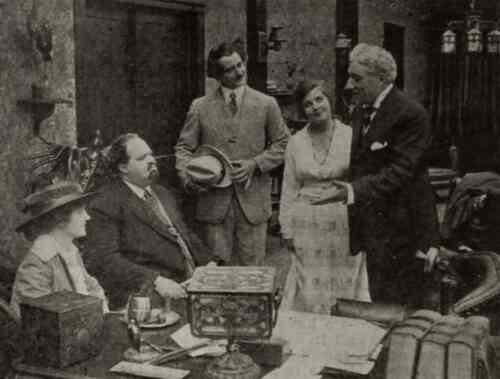
The thematic richness of 'The Human Orchid' is undoubtedly one of its most enduring qualities. Beyond the surface narrative of beauty and betrayal, the film delves into profound questions about identity, agency, and the corrupting influence of unchecked power. Elara Vance’s struggle is not just against a single antagonist, but against an entire societal structure that values women for their ornamental qualities rather than their intrinsic worth. This makes the film surprisingly modern in its critique, addressing issues that remain pertinent even today. The 'orchid' metaphor extends beyond Elara herself to symbolize the broader societal tendency to cultivate and then control that which is deemed beautiful or valuable, often stripping it of its essence in the process. The film implicitly critiques the moral bankruptcy of a high society that thrives on superficiality and transactional relationships, where genuine affection and respect are secondary to status and appearance. The contrast between Elara’s humble origins and her forced immersion into opulence serves to highlight the artificiality and emotional barrenness of her new environment. Howard Hall’s character, Robert Thorne, functions as the film's moral compass, representing an alternative path rooted in authenticity and genuine connection. His quiet defiance against Silas Croft’s manipulative tactics underscores the film’s message that true freedom lies not in wealth or status, but in self-possession and the courage to live by one’s own values. This thematic depth allows 'The Human Orchid' to transcend its genre, offering not just entertainment but also a thought-provoking commentary on the human condition. It prompts viewers to consider the true cost of societal pressures and the importance of preserving one's inner self amidst external temptations and coercions. The film's resonance is amplified when viewed alongside other silent era explorations of societal decay, such as Jim the Penman, which also delves into the moral complexities of wealth and deception.
In the grand tapestry of silent cinema, 'The Human Orchid' stands as a compelling testament to the era's sophisticated storytelling and its capacity for profound social commentary. It's a film that, despite its lack of spoken dialogue, speaks volumes about the human experience, particularly the challenges faced by women navigating a world eager to define and confine them. The performances, particularly that of Irva Ross, are a masterclass in non-verbal communication, conveying intricate emotional landscapes with remarkable clarity and depth. Noah Beery's portrayal of the manipulative Silas Croft remains a chilling study in quiet villainy, a character whose power lies in his ability to subtly erode rather than overtly destroy. The film's enduring power lies not just in its dramatic narrative, but in its ability to spark introspection. It forces us to question the nature of beauty, the price of ambition, and the true meaning of freedom. The meticulous writing by C.C. Field, coupled with what must have been an equally meticulous directorial vision, crafted a world that feels both fantastical in its melodrama and starkly real in its emotional truths. While films like Little Orphant Annie might evoke a different kind of innocence, 'The Human Orchid' specifically zeroes in on the vulnerability that accompanies a certain kind of striking, almost exotic, beauty. Its exploration of the 'gilded cage' motif is particularly potent, showing how even the most luxurious surroundings can become a prison when personal autonomy is sacrificed. The film's legacy is perhaps found in its contribution to the rich tradition of melodramas that dared to explore the darker undercurrents of society, paving the way for future cinematic narratives that would continue to challenge conventional notions of power, gender, and personal liberty. It remains a powerful reminder that some stories, particularly those centered on the human spirit's resilience, transcend the limitations of their medium and continue to resonate across generations, offering a mirror to our own societal values and moral dilemmas.
The visual artistry of 'The Human Orchid' deserves particular commendation. Even without the technological advancements of later decades, the film manages to create a deeply immersive experience. The set designs, whether depicting the stark simplicity of Elara's initial life or the overwhelming grandeur of Croft's estate, are meticulously crafted to enhance the narrative. Each location serves as more than just a backdrop; it becomes an active participant in the story, reflecting the character's internal state or the societal pressures bearing down upon them. The costumes, too, play a significant role, evolving with Elara's journey – from modest attire to elaborate gowns that symbolize her transformation into a societal showpiece, yet also her growing confinement. These details, often overlooked in a casual viewing, contribute immensely to the film's overall impact and its ability to convey complex themes through purely visual means. The skillful use of intertitles, far from being mere plot facilitators, often provide poetic or philosophical insights, adding another layer of depth to C.C. Field's narrative. They are not simply dialogue replacements but integral components of the storytelling, guiding the audience's emotional and intellectual engagement. The film's ability to maintain a consistent tone and thematic focus throughout its runtime, without the aid of spoken word or a complex musical score (beyond what would have been improvised by live accompanists), is a testament to the powerful synergy between writing, acting, and the implied direction. It’s a masterclass in economy of expression, where every frame, every gesture, and every intertitle is carefully chosen to propel the narrative and deepen its emotional resonance. This makes 'The Human Orchid' not just a historical curiosity, but a vibrant, living piece of cinematic art that continues to engage and provoke thought. It reminds us that the fundamental elements of compelling storytelling – compelling characters, profound themes, and evocative visuals – are timeless, independent of technological evolution. The film offers a fascinating counterpoint to more action-oriented silent films like The Border Legion, demonstrating the diverse range of narratives that captivated audiences during the silent era, proving that human drama, in all its forms, was always at the forefront of cinematic exploration. Its exploration of personal struggle and the search for authentic selfhood remains as poignant today as it was over a century ago.
IMDb —
1919
Community
Log in to comment.