DbcultAccessing Vault...
Cult Review
Senior Film Conservator
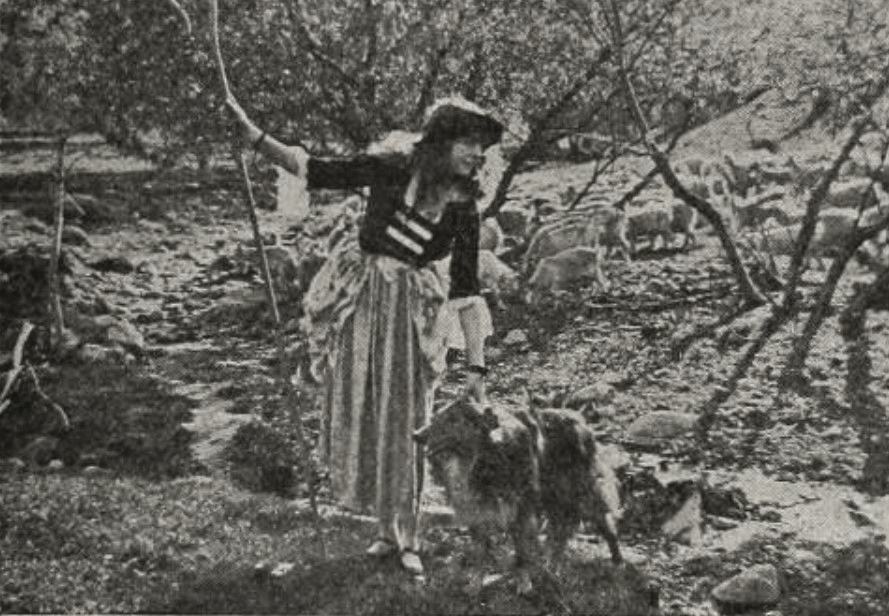
Stepping back into the flickering glow of a 1917 silent film offers a unique journey, a chance to witness the nascent art of cinematic storytelling in its purest form. 'Madame Bo-Peep,' a dramatic Western romance based on an O. Henry tale and penned for the screen by Chester Withey, is more than just a historical artifact; it's a fascinating window into the social mores, gender roles, and narrative conventions of its era. As a film critic, I'm always drawn to these forgotten gems, not just for their technical prowess (or lack thereof, by modern standards), but for the timeless human dramas they portray. And 'Madame Bo-Peep' delivers a surprisingly robust emotional punch, wrapped in a narrative that, while familiar in its broad strokes, still manages to captivate.
The premise itself is a delightful concoction of societal expectation and frontier grit. Our protagonist, Octavia, portrayed with a delicate yet burgeoning strength by Pauline Starke, is introduced as a society belle, entangled in the intricate dance of Edwardian courtship. Her initial rejection of Teddy Westlake, played with a brooding earnestness by James Harrison, is less a sign of disdain and more a reflection of a young woman navigating a world where marriage was often a strategic alliance rather than a passionate union. Her subsequent marriage to the elderly, wealthy Colonel Beaupree (F.A. Turner) speaks volumes about the pressures placed upon women of her standing. It’s a choice that echoes the pragmatic, if sometimes heartbreaking, decisions seen in other period dramas, where security often trumped sentiment. This setup immediately positions Octavia as a character ripe for transformation, a societal hothouse flower destined for a harsher, more authentic climate.
The Colonel’s death, rather than securing Octavia’s future in the lap of luxury, serves as the ultimate narrative pivot. His will, a masterstroke of ironic inheritance, leaves her not a grand estate or a bulging trust, but a working ranch out West. This is where 'Madame Bo-Peep' truly begins its exploration of self-discovery. The journey from the refined parlors of society to the dusty, unforgiving landscapes of Texas is not merely a geographical shift; it's a symbolic shedding of Octavia’s former identity. One can almost feel the stifling corsets of convention loosening with every mile traveled westward. This trope of the urbanite finding themselves in the wilderness is a perennial favorite, and for good reason. It forces characters to confront their true selves, stripped of superficialities, much like the protagonists in tales of endurance and self-reliance.
Upon arrival, the narrative delivers its most delicious twist: Teddy Westlake, the spurned suitor, is now the manager of her inherited ranch. This reunion is handled with a delicate balance of awkwardness, unspoken history, and simmering tension. Harrison’s portrayal of Teddy is particularly effective here; his quiet strength and underlying affection for Octavia are conveyed through subtle gestures and lingering gazes, a testament to the power of silent acting. The dynamic between them is instantly compelling. Teddy’s secret – that the ranch isn't even truly hers – adds another layer of complexity to his character. He’s not just a jilted lover; he’s a protector, a guardian of a truth he believes would only hurt Octavia. This selfless act, born of enduring love, sets him apart from the more overtly heroic figures of the era. It’s a nuanced portrayal that elevates the film beyond a simple melodrama, hinting at the deeper currents of loyalty and sacrifice.
Every good romance needs its antagonist, and 'Madame Bo-Peep' finds one in Jose Alvarez, the cruel overseer, played with palpable menace by Sam De Grasse. Alvarez embodies the darker, more predatory aspects of the frontier, a stark contrast to Teddy’s honorable stoicism. His attempts to exploit Octavia’s vulnerability, her inexperience with the harsh realities of ranch life, serve as the catalyst for the narrative's climax. It is through Alvarez’s villainy that Teddy’s true character shines brightest, and, more importantly, it is through facing this threat that Octavia’s own inner strength is forged. She is no longer just a society girl; she is a woman capable of resilience, of fighting for her place in this new world. This progression reminds me of the trials faced by protagonists in films like The Wild Girl, where a woman's mettle is tested against formidable odds, leading to profound self-discovery.
The ensemble cast, though not always given extensive screen time, contributes significantly to the film's texture. Jennie Lee as the housekeeper, Kate Bruce in a supporting role, and Seena Owen, though her character details are less prominent in the plot summary, all add to the authenticity of the world Withey and O. Henry created. These supporting players, even in silent cinema, often provide crucial emotional anchors and comedic relief, grounding the more dramatic arcs of the main characters. The subtle interactions and reactions of these background figures are vital for building a believable cinematic environment, a craft that was rapidly evolving during this period.
At its core, 'Madame Bo-Peep' is a story about the triumph of authentic love over superficiality and circumstance. Octavia’s initial choice was one of convenience, driven by societal pressures. Her journey westward, her confrontation with harsh realities, and the quiet devotion of Teddy force her to re-evaluate her priorities. The deception surrounding the ranch’s true ownership, while ethically questionable, is framed as an act of protective love, a narrative device common in many romantic dramas of the era. This kind of noble lie, intended to shield the beloved, is a recurring motif that audiences often embraced, understanding the underlying good intention, even if the method was circuitous. It’s a testament to the film’s ability to evoke empathy for Teddy’s predicament, even as he withholds critical information.
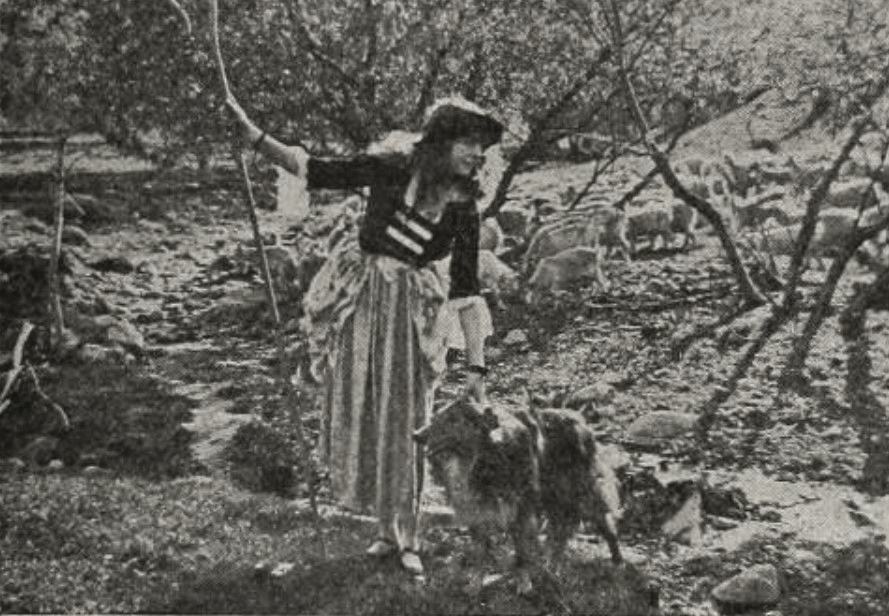
The climax, where Octavia finally grasps the depth of Teddy’s love and, more importantly, realizes her own reciprocal feelings, is handled with a tender urgency. Her chase after him, a reversal of traditional gender roles in pursuit, is a powerful visual metaphor for her newfound agency and emotional clarity. It’s a moment of pure cinematic romance, stripped of dialogue, relying solely on the actors’ expressions and physical commitment. This final admission of feelings, hard-won through trials and tribulations, provides a deeply satisfying resolution. It reinforces the idea that true love, unlike fleeting infatuation or societal dictate, can endure and blossom even in the most unexpected of places.
Directing a silent film required a keen understanding of visual storytelling, a mastery of mise-en-scène, and the ability to elicit nuanced performances without the aid of spoken dialogue. While specific directorial credits for this film aren't provided in the prompt, the execution of 'Madame Bo-Peep' suggests a director who understood the power of framing, gesture, and intertitles. The progression of Octavia's character, from a somewhat naive socialite to a woman of substance, is largely conveyed through Starke's evolving body language and facial expressions. Her initial fragility gives way to a determined resolve, a transformation that is subtly yet effectively charted on screen.
Similarly, Harrison’s Teddy Westlake is a study in restrained masculinity. His love for Octavia is evident in his protective actions, his watchful demeanor, and the quiet intensity of his gaze. This kind of understated performance is often more powerful in silent cinema than overt dramatics, allowing the audience to project their own emotions onto the characters. The physical comedy and dramatic tension, characteristic of the era, are also well-integrated, preventing the narrative from becoming overly saccharine or melodramatic. The film avoids the pitfalls of some of its contemporaries, which sometimes succumbed to exaggerated gestures or overly simplistic characterizations. For instance, while a film like The Great Circus Catastrophe might lean into overt spectacle, 'Madame Bo-Peep' maintains a more grounded, character-driven focus.
The narrative’s clever twists and turns, particularly the ironic inheritance and the revelation of Teddy’s secret, bear the unmistakable stamp of O. Henry, whose short stories were renowned for their surprise endings and poignant observations of human nature. Chester Withey's adaptation for the screen successfully translates this literary sensibility into a visual medium, maintaining the essence of O. Henry's wit and sentimentality. This lineage gives 'Madame Bo-Peep' a literary depth that elevates it beyond many genre films of its time. The film benefits immensely from this source material, allowing for a story that feels both familiar and refreshingly intricate.
The film's enduring appeal lies in its exploration of universal themes: love, identity, societal pressure, and the search for authentic connection. While the setting and specific circumstances are rooted in the early 20th century, the emotional journey of Octavia resonates even today. Her desire for genuine love, her struggle against circumstance, and her ultimate triumph are timeless. In an era where cinema was still finding its voice, 'Madame Bo-Peep' speaks volumes through its silent poetry. It’s a compelling reminder that even without dialogue, films can convey profound truths and evoke deep emotional responses. One might draw parallels to the emotional intensity found in silent European productions like Az éjszaka rabja or The Last Sentence, which also relied heavily on visual storytelling to convey complex human emotions.
Watching 'Madame Bo-Peep' today is not just an act of historical appreciation; it's an opportunity to reflect on how far cinema has come, and perhaps more importantly, how much has remained constant in human storytelling. The film's narrative structure, its character arcs, and its thematic preoccupations are still recognizable in contemporary cinema, albeit presented with different technological sophistication. The silent era, often dismissed as primitive, was in fact a period of immense creative innovation, where filmmakers were forced to be ingenious in conveying meaning without spoken words. 'Madame Bo-Peep' stands as a testament to this ingenuity, a film that uses its constraints to its advantage, crafting a narrative that is both moving and entertaining.
The film’s portrayal of the American West, while perhaps romanticized through a studio lens, still captures a sense of rugged individualism and the promise of new beginnings. It’s a backdrop that perfectly complements Octavia’s journey of self-discovery, allowing her to shed the restrictive layers of her past and embrace a more authentic future. This transformation, catalyzed by the environment and the people she encounters, is what makes 'Madame Bo-Peep' more than just a simple romance; it’s a quiet epic of personal evolution. It reminds me of how setting plays a crucial role in shaping destiny in films like Robin Hood or When Rome Ruled, where the environment is almost a character in itself.
In conclusion, 'Madame Bo-Peep' is a delightful and surprisingly profound silent film that deserves to be rediscovered. Its engaging plot, compelling characters, and timeless themes make it a valuable piece of cinematic history. For anyone with an appreciation for early cinema, or simply a love for a well-told story, this film offers a charming and insightful experience. It’s a poignant reminder that even over a century later, the power of a good story, well-acted and thoughtfully conceived, remains undiminished. Go seek out this little gem; you might just find yourself swept away by its quiet charm and potent romance. It stands as a testament to the enduring power of narrative, a power that transcends the limitations of its medium and speaks directly to the human heart, much like the enduring messages found in films such as The Secret Sin or The Lone Wolf, which delve into the hidden depths of human motivation and desire. The journey of Octavia is not just a quest for love, but for a true self, a journey that resonates profoundly even in our modern, often chaotic world.

IMDb 7.4
1919
Community
Log in to comment.