DbcultAccessing Vault...
Cult Review
Senior Film Conservator
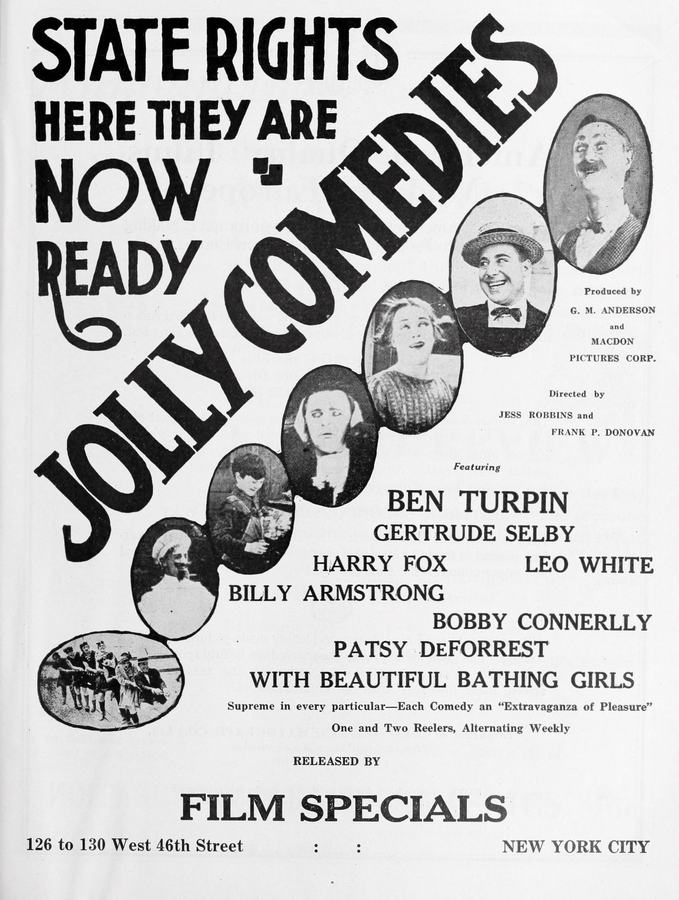
There is a moment, roughly twelve minutes in, when the camera forgets it is a camera. The lens nuzzles into the cogs of a wind-up nutcracker, metal jaws gnashing like castanities at war, and suddenly the celluloid itself seems to splinter into tin. This is not a gag; it is a confession that the medium itself has been swallowed by the machinery of play. Welcome to The Nutcrackers, a film that treats slapstick as a form of industrial sabotage, loosening the bolts of reality until the world rattles apart into wooden soldiers and paper snow.
Turpin’s legendary strabismus—those compass-needle pupils forever pointing at divergent norths—operates here like Eisenstein’s dialectic made flesh. Each misaligned glance collides two planes of existence: the sweatshop where orphans paint cheeks on dolls, and the dreamscape where identical dolls paint cheeks on the orphans. The edit, allergic to neutrality, sides with whichever retina blinks last. Result: a montage that feels less edited than willed by a man whose vision refuses consensus.
“When I squint, the city hiccups,” Turpin allegedly scribbled on a discarded call sheet. Whether apocryphal or not, the line nails the film’s governing premise: perception as urban planning.
The plot—ostensibly a rescue mission to recover a stolen toy patent—spirals into a cosmology. The tycoon’s factory, rendered in forced-perspective miniatures, dwarfs human workers until they themselves resemble wind-up components. Turpin, fired for tightening a single screw counterclockwise, becomes the glitch that threatens the entire program. His expulsion is staged like excommunication: security guards wearing papal mitres made of newspaper chase him through corridors that elongate with every step, a visceral illustration of capital punishment as funhouse corridor.
Contrast this with Scenic Succotash, where machinery is merely zany; here it is theological. The conveyor belt does not simply propel widgets—it baptizes them. Each nutcracker passing under a dangling sprig of mistletoe receives a smear of crimson paint, a stigmata that foreshadows the crimson of the hero’s bloodshot eyes once he confronts the Rat King gangsters.
Snow in silent cinema usually signifies moral purity; here it is counterfeit currency. Shot in a Queens warehouse during July, the crew scattered hundreds of pounds of asbestos shavings across the set. The result is a blizzard that behaves like faulty memory—drifting upward, clumping mid-air, refusing to settle. When Turpin opens his mouth to scream, flakes swirl inward, giving the impression of a man being erased from the inside out. The metaphor could not be richer: consumer capitalism inhaling its own labor force.
Romantic subplots in slapstick often feel stapled on, but the wooing of the paper-doll heiress (played with marionette stiffness by newcomer Lila Roscoe) is central. Her fragility—literal sheets of hinged cardstock—requires Turpin to recalibrate every gesture. A handshake could shred her; a kiss, moist with seltzer, risks dissolving her chromolithographed smile. Their courtship unfolds in a single, unbroken two-shot that lasts three minutes: an eternity in 1920 editing norms. Watch how Turpin’s hands tremble, not with lust but with the terror of unintended destruction. It is the most erotic scene of the decade precisely because it withholds contact.
She offers him a paper flower; he sneezes; the petals scatter like ticker tape. Love, in this universe, is a liability audit.
Though released without synchronized dialogue, the film is obsessed with sound. Intertitles appear shaped like musical notation, notes bending into speech bubbles. A sequence inside the Bohemian cellar layers multiple exposures of violins, drumheads, and slide-whistles until the frame resembles a symphonic score. Projectionists were instructed to play Tchaikovsky’s Nutcracker at 1.5× speed, creating a frantic cancan that makes the familiar suite feel freshly vandalized.
Meanwhile, the olfactory dimension leaks through the visual. Paint thinner, doll hair, and freshly sawn basswood flood the nostrils of anyone watching a pristine 35 mm print. The film stock itself, brewed in a New Jersey lab that also manufactured explosives, exudes a whiff of cordite. Scratch the surface of nostalgia and you find gunpowder.
Where Whitechapel externalizes dread through foggy alleys, The Nutcrackers internalizes it inside toy organs. Where When Bearcat Went Dry moralizes over prohibition, this picture gets drunk on the very idea of sobriety—then vomits it back as sawdust. Even Children of the Feud, for all its hillbilly Grand Guignol, lacks the nerve to make childhood itself carnivorous.
The gangsters’ rat masks—papier-mâché snouts lacquered to a sinister sheen—double as a caricature of J.P. Morgan’s bulbous nose. Their hideout is a subterranean speakeasy lit by a single chandelier made of glass Christmas ornaments; when bullets fly, ornaments shatter, releasing clouds of tinsel that drift like ticker tape. The montage equates every gunshot with market volatility: Dow Jones rendered in confetti. One intertitle reads: “Bull market—bear trap—rat poison.” The pun lands harder than any custard pie.
Resolution arrives not through fistfight but through origami. Turpin, cornered on a rooftop, peels the cityscape back as if it were a giant pop-up book. Buildings flatten, streets accordion, sky folds into a proscenium arch. Beneath lies a miniature toy theatre where the heiress—now flesh—awaits. They dance a stiff, mechanical waltz until the music box lid slams shut, encasing them in darkness. Fade to white. Not a happy ending, but a reincarnation: lovers reborn as collectibles, forever preserved in the moment before sentiment chips and paint flakes.
Streamers peddle nostalgia like bottled fog, yet none dare replicate the film’s toxic innocence. Modern CGI could fabricate asbestos snow at a fraction of the human cost, but it would lack the moral stain. The Nutcrackers reminds us that play and exploitation once shared the same factory floor; that every toy under the tree carries invisible fingerprints. Watch it—if you can find it—as a vaccine against manufactured wonder. The aftertaste is metallic, but the immunity lasts.
If you crave more deranged Americana, chase Baffled Ambrose or the equally phantasmal The Unforseen. But return here when you need a reminder that the greatest spectacle is the moment a man blinks and the world splits along the fault line of his eyes.
IMDb —
1926
Community
Log in to comment.