DbcultAccessing Vault...
Cult Review
Senior Film Conservator
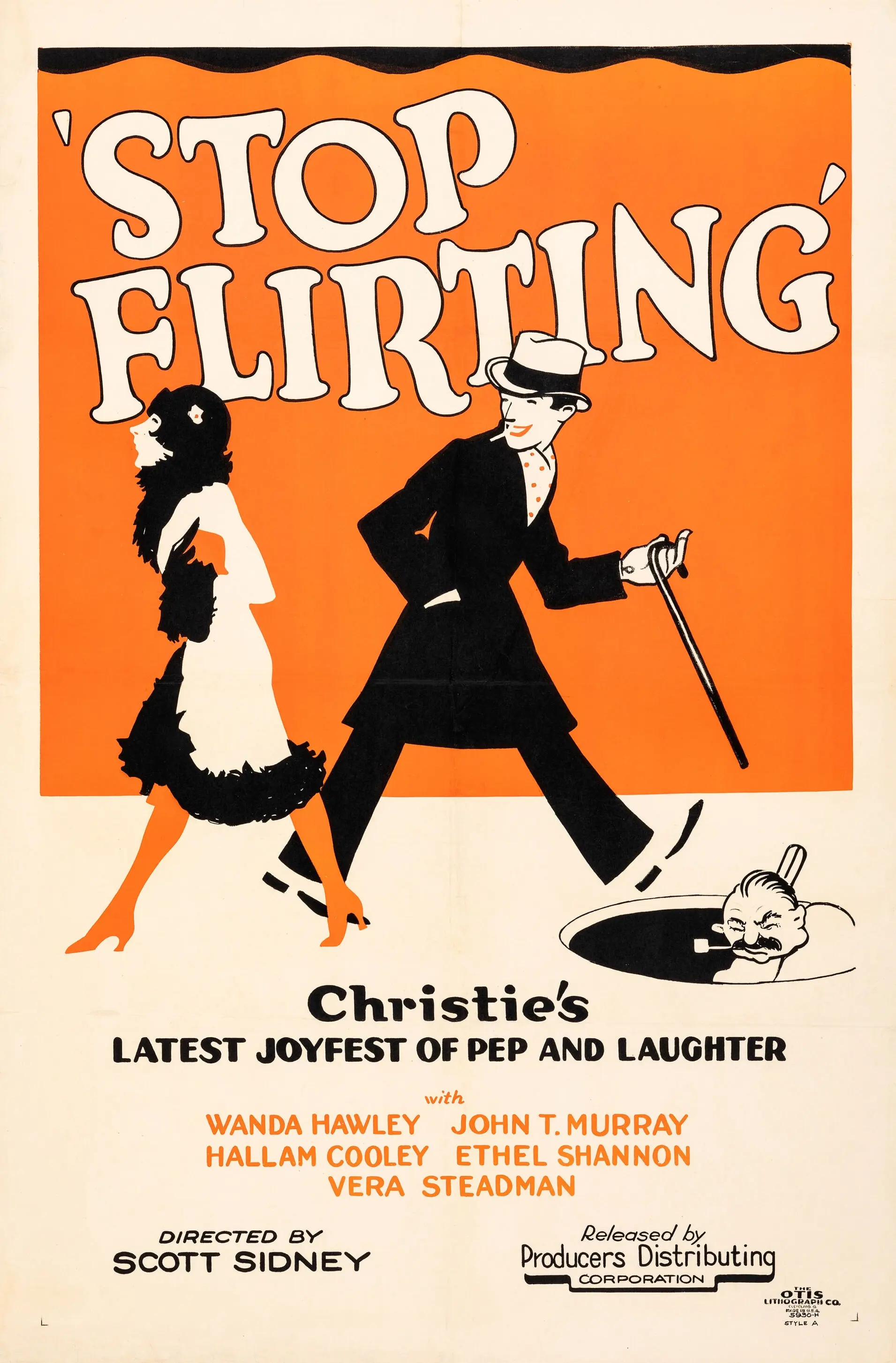
In the annals of silent cinema, where physical comedy reigned supreme and exaggerated expressions conveyed the subtlest nuances of emotion, Stop Flirting emerges as a boisterous, if somewhat predictable, romp through the treacherous landscape of marital fidelity and retaliatory mischief. Released in 1924, a year brimming with cinematic innovation and evolving comedic sensibilities, this film, penned by Frederick J. Jackson and Joseph Farnham, plunges its audience into a whirlwind of misunderstandings, grand deceptions, and a surprisingly morbid sense of humor, all culminating in a chaotic, yet ultimately heartwarming, reconciliation. It’s a testament to the era’s appetite for lighthearted farce, a cinematic confection designed to elicit guffaws and perhaps a knowing nod from anyone who has ever navigated the intricate dance of a jealous spouse.
The narrative unfurls with Perry (James Harrison) and Vivian Reynolds (Wanda Hawley) basking in the glow of their honeymoon, a period traditionally reserved for nascent bliss. However, this idyllic setting quickly gives way to a series of escalating comedic crises. The initial transgression is almost charming in its innocence: Vivian discovers Perry with another girl in his arms. His explanation, delivered with what we must assume is an earnest, if hurried, pantomime, is that he merely caught her mid-slip. Vivian, perhaps still enveloped in the honeymoon haze, accepts this, her faith in Perry’s fidelity momentarily restored. This scene, while brief, sets a crucial precedent: Perry’s propensity for finding himself in compromising positions, and Vivian’s initial, albeit fleeting, capacity for forgiveness. It’s a delicate balance, one that the film delights in upending with increasing vigor.
Yet, the fragile truce is short-lived. The second encounter is far less ambiguous, far more provocative. Vivian discovers Perry with a girl not merely in his arms, but comfortably ensconced upon his lap. This is no accident, no chivalrous rescue; this is a direct challenge, a perceived betrayal that shatters any lingering illusions of Perry’s unwavering devotion. It’s a pivotal moment, transforming Vivian from a trusting newlywed into a woman scorned, brimming with a fierce determination to teach her errant husband a lesson. The audience, having witnessed the progression from accidental contact to outright familiarity, understands the shift in Vivian’s perspective. Her reaction, while extreme, feels earned within the exaggerated reality of the silent comedy genre. This is the spark that ignites the film’s central conflict, setting the stage for a delightful, if destructive, game of cat and mouse.
Vivian’s response is immediate, comprehensive, and utterly devoid of subtlety: she decides to flirt with "everything in pants." Her campaign of retaliatory charm is indiscriminate, a whirlwind of winks and smiles aimed squarely at Perry’s increasingly frayed nerves. The comedic highlight of this phase involves a bewildered Scotsman, whose stoic demeanor likely crumbles under the unexpected onslaught of Vivian’s attention. This sequence showcases Wanda Hawley’s comedic timing, conveying through gesture and expression the delicious mischief of a woman enacting her revenge. Her performance here, without the aid of dialogue, must articulate both her anger and her newfound, albeit temporary, liberation, transforming her character from a victim into an agent of chaotic retribution.
Perry, understandably, is enraged. His own transgressions, though perhaps minor in his own mind, are now magnified by Vivian’s public display of disaffection. The tables have turned, and he finds himself caught in the very web of jealousy he likely spun. In his distress, he seeks counsel from his friend, Geoffrey (Rolfe Sedan), whose advice proves to be both dramatic and ill-conceived. Geoffrey, perhaps mistaking grand gestures for genuine solutions, suggests Perry board a small plane bound for Hawaii. This sudden, almost fantastical, escape plan is a hallmark of silent era farces, where logic often takes a backseat to spectacle. Perry, desperate, complies, setting in motion a chain of events that will push the boundaries of credibility and comedic tragedy. The absurdity of a husband fleeing his wife via a private plane to Hawaii rather than confronting her directly underscores the film's commitment to exaggerated scenarios for maximum comedic impact. It’s a narrative choice that, while stretching realism, perfectly encapsulates the over-the-top reactions expected in such a genre.
The plot takes a decidedly dark, yet undeniably farcical, turn with the next development. Geoffrey, ever the loyal (if misguided) friend, follows Perry’s plane in a boat. In a truly audacious move, Perry jumps out of the plane mid-flight, presumably into the water, and makes his way back to land, hiding in his own boathouse. This act of elaborate deception is designed to make Vivian believe he has perished, a dramatic ploy to evoke sympathy and perhaps end her flirting spree. The plane, now pilotless or otherwise compromised, crashes, and the news of Perry’s supposed demise reaches Vivian. Her reaction is predictably disconsolate; the weight of her retaliatory actions suddenly feels crushing, her flirtations now seem cruel in the face of such tragedy. This sequence, though playing with genuinely serious themes of death and grief, is handled with a comedic detachment characteristic of the era, where emotional stakes often served as mere springboards for further plot complications. It's a bold narrative choice, one that risks alienating the audience but ultimately serves to heighten the eventual comedic payoff. The scene might draw comparisons to the dramatic, often exaggerated, plot twists found in contemporary films like The Prodigal Liar, where deception often takes center stage in personal relationships, albeit with varying degrees of seriousness.
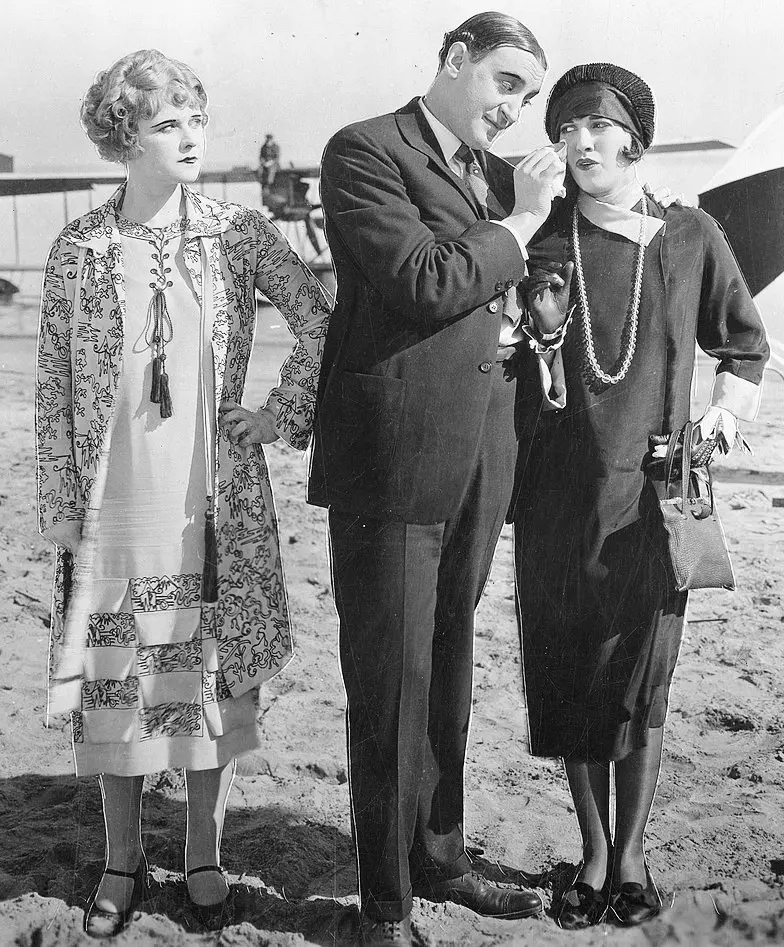
However, the specter of death proves fleeting in the world of Stop Flirting. Vivian, still in mourning, later discovers that Perry is, in fact, alive. The initial relief quickly gives way to a renewed sense of betrayal and, predictably, a resumption of her mad flirting. This cyclical nature of their conflict is one of the film’s enduring charms; no sooner is one crisis averted than another, often more outlandish, takes its place. Perry’s elaborate scheme, intended to bring Vivian to heel, has backfired spectacularly, only fueling her defiant spirit. This reversal of fortunes is crucial to the film’s comedic engine, ensuring that the audience remains engaged in the ever-escalating battle of wills. It showcases a certain resilience in Vivian’s character, a refusal to be easily manipulated, even by the feigned death of her husband. Her character, much like the spirited protagonists in films such as Flying Pat, embodies a certain independent streak that challenges traditional gender roles, even within the confines of a comedic narrative.
As if the narrative hadn't already embraced enough absurdity, a new element is introduced: a policeman reports that there is a lunatic on the loose. This seemingly unrelated detail becomes the perfect narrative hook for Perry’s next, and most spectacular, gambit. Deciding to crash one of Vivian's wild parties, Perry adopts an outlandish disguise: the Hunchback of Notre Dame. This choice, perhaps a nod to the iconic character popularized by Lon Chaney a year prior, is a stroke of comedic genius. The image of a supposedly dead husband, now resurrected and masquerading as a grotesque literary figure, infiltrating his wife's social gathering, is inherently hilarious. James Harrison's portrayal, undoubtedly relying on exaggerated physicality and a commitment to the bit, would have been central to the success of this climax. The party scene itself, a classic setting for comedic chaos, provides the ideal backdrop for mistaken identities, near misses, and general pandemonium. The sheer audacity of the disguise, coupled with the underlying tension of Perry’s true identity, creates a fertile ground for slapstick and situational humor. This kind of elaborate, almost theatrical, deception is a staple of early 20th-century comedies, often serving as the grand finale where all plot threads converge in a glorious mess.
Amidst the confusion, the Hunchback’s antics – whether intentional or accidental – lead to a series of comedic misunderstandings. Guests are likely terrified, amused, or utterly bewildered. The climax of the film hinges on this chaotic energy, as Perry’s true identity is eventually revealed. The confrontation between Perry and Vivian, after such an elaborate and emotionally draining journey, is the moment of truth. The reconciliation, when it finally arrives, is not a quiet, dignified affair, but one born out of exhaustion, exasperation, and perhaps a shared recognition of their mutual folly. It’s a testament to the resilience of their bond, however tempestuous, that they can navigate such extreme emotional highs and lows and still find their way back to each other. The film suggests that beneath all the elaborate pranks and retaliatory flirtations, a genuine affection, however obscured by pride and jealousy, still exists. This final scene, characteristic of silent comedies, often concludes with a triumphant embrace, leaving the audience with a sense of resolution and lighthearted satisfaction, even if the path to get there was utterly bonkers. It’s a classic example of how silent films, even with their dramatic flair, ultimately aimed for a feel-good conclusion, much like other comedies of its time such as Bluff, which also explored the humorous side of human foibles and misdirection.
The success of Stop Flirting hinges largely on the performances of its lead actors, James Harrison as Perry and Wanda Hawley as Vivian. In an era devoid of spoken dialogue, their ability to convey a wide spectrum of emotions – from playful affection to furious jealousy, from profound grief to mischievous glee – through physical comedy, exaggerated facial expressions, and precise body language is paramount. Harrison, as the perpetually beleaguered husband, must navigate moments of genuine frustration and elaborate deception, often appearing as the architect of his own misfortune. Hawley, in turn, carries the film’s emotional weight and much of its comedic drive, transforming Vivian from a wronged wife into a formidable, playful avenger. Their chemistry, though often expressed through conflict, is essential to making their eventual reconciliation believable and satisfying. The supporting cast, including Rolfe Sedan as the well-meaning but often unhelpful Geoffrey, and John T. Murray, Jimmie Adams, David James, Vera Steadman, Hallam Cooley, Ethel Shannon, and Jack Duffy in various roles, contribute to the bustling energy of the film, providing foils, comic relief, and additional layers to the chaotic narrative. Their collective efforts create a vibrant tapestry of character interactions, crucial for sustaining the audience's engagement without the benefit of spoken words. The direction, while not overtly flashy, effectively uses close-ups for emotional emphasis and wider shots to capture the physical comedy and the grandeur of the party scenes. The pacing, a critical element in silent film, keeps the narrative moving at a brisk, engaging clip, preventing any scene from overstaying its welcome.
Frederick J. Jackson and Joseph Farnham’s screenplay, while designed for broad comedic effect, subtly touches upon themes of trust, jealousy, and the often-absurd lengths to which individuals will go to test or reaffirm their marital bonds. The film is a fascinating artifact of its time, reflecting the social mores and anxieties of the roaring twenties, even as it exaggerates them for comedic purposes. The flapper era, with its burgeoning sense of female independence and changing social dynamics, is subtly echoed in Vivian’s defiant flirtation, challenging traditional expectations of wifely submission. While not as overtly dramatic or morally complex as films like Forbidden Fruit, which explored societal constraints and marital dissatisfaction with a more serious tone, Stop Flirting nonetheless offers a humorous commentary on the push-and-pull of relationships. It suggests that sometimes, the most convoluted paths, paved with grand deceptions and outrageous disguises, can paradoxically lead back to a place of understanding and renewed affection. The film, in its own lighthearted way, reminds us that love and marriage are often messy, complicated, and utterly ridiculous, but ultimately enduring. Its place in silent film history is secured not by profound artistic innovation, but by its successful execution of a classic comedic formula, delivering consistent entertainment to audiences eager for a good laugh. It’s a charming relic, a testament to the enduring power of physical comedy and the timeless appeal of a good old-fashioned marital spat, albeit one taken to the nth degree.
Stop Flirting stands as a delightful example of early silent comedy, a film that embraces its farcical premise with gusto and never looks back. While its plot is a convoluted tapestry of misunderstandings and elaborate pranks, its charm lies in its unwavering commitment to lighthearted entertainment. Harrison and Hawley deliver performances perfectly attuned to the demands of the genre, ensuring that even the most outrageous plot points feel grounded in their characters' escalating frustrations and desires for resolution. It’s a film that doesn’t demand deep analysis but rewards viewers with consistent laughter and a charming, if chaotic, journey towards marital harmony. For those seeking a glimpse into the comedic sensibilities of the 1920s, and a testament to the enduring appeal of physical humor, Stop Flirting offers an engaging and thoroughly enjoyable experience, proving that sometimes, the best way to mend a broken bond is through a little bit of madness and a whole lot of laughter.
IMDb —
1927
Community
Log in to comment.